



Choosing the right comforter can feel a bit baffling with all the sizes out there, but it is simpler than you might think. It all comes down to matching your comforter to your bed. A Double comforter is designed for a Double bed, a King for a King, and so on. Getting this part right is your first step towards a perfectly cosy and beautifully made bed.
Finding Your Perfect Comforter Size Made Simple
A new comforter is one of the quickest ways to bring new life into your bedroom. But the right size offers much more than just a style update, it is about creating a sense of luxury and pure comfort. When a comforter drapes just right over the sides of your bed, it creates that plush, inviting look you find in a high-end hotel.
A comforter that is too small can look a bit stingy and often leads to a nightly tug of war over the covers. If it is too large, you will find it dragging on the floor, gathering dust. The sweet spot is finding that perfect balance between cosy function and effortless style.
Why The Right Fit Matters
A well-fitting comforter is truly a game changer for your sleep. It guarantees you have enough coverage to stay snug all night without feeling tangled up. Plus, it gives your bed that finished, polished look that pulls the whole room together.
The most common comforter sizes UK retailers stock are made to fit our standard beds perfectly:
- Single: Perfect for children's beds, bunk beds, or the spare room.
- Double: The go to choice for the UK's most popular mattress size.
- King: Offers a more generous overhang on a double bed or a standard fit for a king.
- Super King: The ultimate in luxury, providing maximum coverage for larger beds.
UK sizing standards are designed to make shopping easy, with comforter dimensions closely following our mattress sizes. It’s no surprise that sales patterns for comforters directly mirror the popularity of Single, Double, King, and Super King mattresses. To learn more, take a look at our comprehensive guide to bedding sizes in inches.
To make things even clearer, here’s a quick reference chart showing the standard UK bed sizes and the comforter dimensions we recommend for a perfect fit.
UK Comforter Sizes At A Glance
| UK Bed Size | Standard Comforter Size (cm) | Standard Comforter Size (inches) |
|---|---|---|
| Single | 135cm x 200cm | 53" x 79" |
| Double | 200cm x 200cm | 79" x 79" |
| King | 230cm x 220cm | 91" x 87" |
| Super King | 260cm x 220cm | 102" x 87" |
This table should help you quickly identify the size you need, whether you prefer working in centimetres or inches.
Your Definitive UK Comforter Size Chart
Choosing the right comforter can feel a bit like a puzzle, but it all starts with getting the size right. This guide is here to take the guesswork out of the equation, giving you a clear rundown of all the standard comforter sizes UK homes use. We will make sure you can confidently match your bed with the perfect comforter for a truly restful night's sleep.
Whether you are dressing a child's very first bed or putting the finishing touches on a luxurious master bedroom, the dimensions are everything. A well-fitting comforter does not just provide the right amount of warmth, it drapes beautifully and completes the entire look of your room.
Standard UK Comforter and Bed Dimensions
To get straight to the point, we have broken down every standard UK bed size, from the smallest single to the most spacious Super King. Here’s a quick visual guide to help you see how bed and comforter sizes relate to one another.
As you can see, the comforter is always designed to be larger than the mattress. This is the secret to getting that generous coverage that looks so inviting and, more importantly, keeps you cosy all night long.
The Golden Rule of Comforters: Your comforter should always be wider and longer than your mattress. This ensures it hangs beautifully over the edges and keeps you completely covered, even if you or your partner tends to toss and turn.
Having these standard sizes handy means you can shop with confidence, whether you are browsing online or in a physical store. For a more comprehensive look at how all your linens fit together, you can explore our detailed overview of UK bedding size dimensions.
For those who love the details, this table gives you a complete breakdown of mattress dimensions and the corresponding comforter sizes, including options for a more generous, hotel style drape.
Comprehensive UK Bed and Comforter Dimensions
| Bed Size | Mattress Dimensions (cm) | Standard Comforter Size (cm) | Generous Comforter Size (cm) | Generous Comforter Size (in) |
|---|---|---|---|---|
| Single | 90cm x 190cm | 135cm x 200cm | 200cm x 200cm (Double) | 79" x 79" |
| Small Double | 120cm x 190cm | 200cm x 200cm | 230cm x 220cm (King) | 91" x 87" |
| Double | 135cm x 190cm | 200cm x 200cm | 230cm x 220cm (King) | 91" x 87" |
| King | 150cm x 200cm | 230cm x 220cm | 260cm x 220cm (Super King) | 102" x 87" |
| Super King | 180cm x 200cm | 260cm x 220cm | N/A | N/A |
Sizing up your comforter, for example using a King comforter on a Double bed, is a great interior design trick for creating an extra plush, luxurious feel.
Comforter Sizes for Children's Beds
Getting the bedding just right for the little ones is crucial for their comfort and safety. From their first cot to their 'big kid' bed, here are the dimensions you’ll need.
- Cot Bed: Look for a comforter around 120cm x 150cm (47" x 59"). This size provides plenty of warmth without being too bulky or overwhelming for a small child.
- Toddler Bed: This is usually the same size as a cot bed, so the same 120cm x 150cm comforter works perfectly. It’s neatly proportioned for their smaller frame.
- Single Bed: A standard Single comforter, which measures 135cm x 200cm (53" x 79"), is the ideal choice. It offers more than enough coverage for growing children and teenagers.
Comforter Sizes for Adult Beds
For adult beds, the aim is to strike a perfect balance between a comfortable night's sleep and a stylish, well put together look. The right size prevents the nightly tug of war for the covers and gives your bed that plush, inviting appearance.
- Small Double (Three-Quarter): A standard Double comforter at 200cm x 200cm (79" x 79") is your best bet here. It provides a generous and cosy drape on the slightly smaller mattress.
- Double: As the UK's most popular bed size, it pairs perfectly with a Double comforter, also measuring 200cm x 200cm (79" x 79"). The square shape gives you a neat, even overhang.
- King: A King size bed needs a King comforter, which is 230cm x 220cm (91" x 87"). That extra width and length are essential to properly cover the larger mattress.
- Super King: For the ultimate in luxury and space, a Super King comforter at 260cm x 220cm (102" x 87") is a must. This wonderfully generous size ensures even the largest bed looks and feels magnificent.
How to Choose the Right Comforter for Your Bed
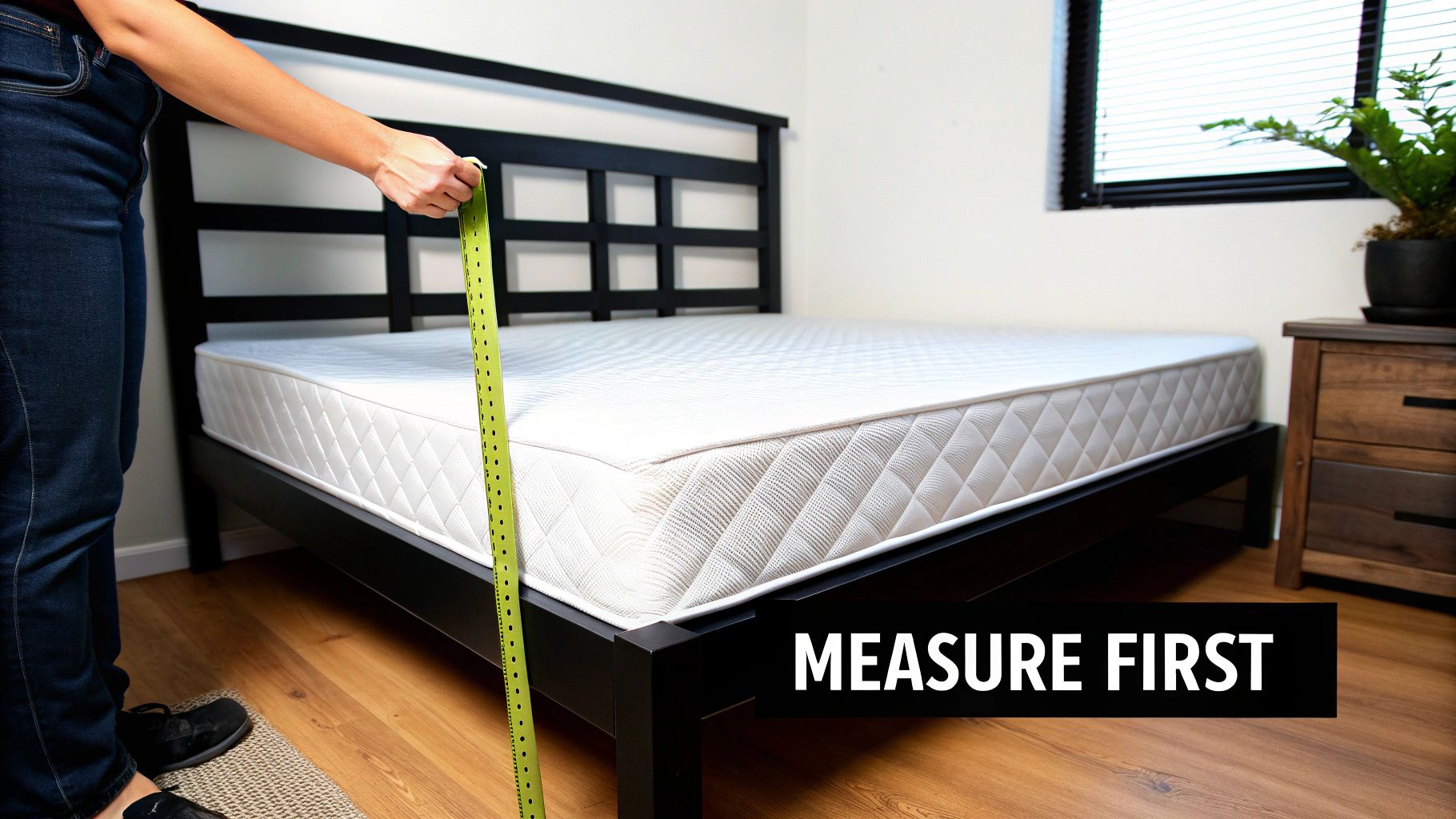
Picking the right comforter is about much more than just matching a King size label to a King size bed. It is really about personal style and getting that perfect, polished finish for your bedroom. Things like your bed frame's design, how thick your mattress is, and your own taste all play a huge part in how a comforter will ultimately look and feel.
Think of it like getting a suit tailored. The numbers on a size chart are your starting point, but the final decision comes down to the look you’re trying to create. Do you dream of a luxurious comforter that drapes all the way to the floor, or do you prefer a crisp, tidy, tucked in appearance?
Getting this detail right is the secret to a bed that looks just as inviting as it feels. Let's walk through how to measure your bed properly so you can decide whether to stick to your standard size or go one up for an extra touch of opulence.
Measuring for the Perfect Drape
Before you start shopping, it’s a brilliant idea to grab a tape measure. Just two simple measurements will tell you everything you need to know to find the perfect comforter.
-
Measure the Mattress Depth: Modern mattresses, especially those with lovely thick pillow tops, can be much deeper than older styles. Measure from the bottom edge right to the very top surface.
-
Measure the Bed Height: Next, measure from the top of your mattress all the way down to the floor. This number is your key to achieving that long, elegant drape that completely hides the bed frame.
Armed with these figures, you can easily visualise how different comforter sizes UK options will hang on your bed. A deeper mattress, for instance, naturally uses up more of the comforter's width just to cover the sides, which leaves you with less overhang.
Achieving Your Desired Style
Now that you have your measurements, you can start thinking about the style you're aiming for. Everyone's preference is a little different, so consider what makes a bedroom feel cosy and complete to you. When considering the right comforter, understanding the dimensions and materials of your bed, whether a standard frame or a specialized sleeping surface, is key for a proper fit and comfort, as outlined in this helpful guide to selecting a twin floor mattress.
Here are the two most popular looks and how to get them just right:
-
The Neat and Tidy Look: If you have a beautiful bed frame you want to show off or just prefer a more minimalist style, stick with the comforter size that matches your bed. A Double comforter on a Double bed, for example, gives you plenty of coverage for comfort without overwhelming the frame.
-
The Plush Hotel Look: For that indulgent, five star hotel feel, sizing up is a fantastic trick. Using a King comforter on a Double bed creates a much more generous, lavish drape. All that extra fabric makes the bed look incredibly plush and inviting, and it’s a very practical choice for couples who tend to pull the covers from each other!
A Quick Tip for Style: The height of your bed frame is a huge factor here. A low, modern platform bed might be swamped by a comforter that is too oversized. On the other hand, a high divan bed can look absolutely stunning with that extra length and width draping gracefully towards the floor.
At the end of the day, the goal is to choose a comforter that not only keeps you warm but also reflects your personal style. By taking a few moments to measure and think about your preferred look, you can guarantee your new bedding transforms your bedroom into a true sanctuary. That personal touch is what makes a house feel like home.
Choosing the Right Warmth and Materials

While getting the size right is a brilliant first step, the real secret to a blissful night’s sleep is what’s inside your comforter. The materials and warmth level can transform your bed from a simple piece of furniture into your own personal sanctuary. Here, we move beyond just measurements and get into how you want to feel when you climb into bed.
Think of a comforter as an investment in your well being. With more options available than ever, navigating choices like tog ratings and different fillings can feel a bit technical at first glance. But it is actually quite straightforward. It’s all about matching the comforter to your body, your bedroom, and the changing seasons to ensure you’re never too hot or too cold, just right.
Demystifying Tog Ratings
In the UK, you’ll constantly see the term tog when shopping for duvets and comforters. It’s nothing more than a simple scale for warmth. A low tog number means a lighter, cooler comforter, while a high number means it’s much warmer and more insulating. Easy.
Once you get the hang of it, this scale makes finding your perfect match a breeze:
- Summer Comfort (3.0 to 4.5 Tog): Wonderfully lightweight and breathable, these are perfect for keeping you comfortable during those sticky summer nights without causing you to overheat.
- Spring and Autumn (7.0 to 10.5 Tog): This is the ideal mid range for most of the year. It gives you that comforting, cosy feeling without being too heavy as the seasons turn.
- Winter Warmth (12.0 to 15.0 Tog): When the frost sets in, a high tog comforter is your best friend. These are designed to trap warmth efficiently, keeping you snug and warm on even the coldest nights.
If you love simplicity, an ‘all seasons’ set is a clever move. These usually consist of a 4.5 tog and a 9.0 tog comforter. You can use them separately or fasten them together to create a super warm 13.5 tog option, giving you perfect comfort all year round. To learn more about picking the right weight, you might find our guide on what GSM comforter is best for winter helpful.
Choosing Your Perfect Filling
What’s inside your comforter is what truly gives it character. The filling affects everything, from how it drapes over you to how easy it is to look after. Every material brings something different to the table, so the right choice really comes down to what you personally prefer.
Think of a comforter's filling as the heart of your bedding. Natural fibres are often more breathable, while synthetic options tend to win on practicality and being allergy friendly. The best choice is simply the one that fits your lifestyle.
Let's look at a few of the most popular options:
-
Down and Feather: For pure, unadulterated luxury, you can’t beat a natural filling. Down gives you incredible warmth with very little weight, creating that classic 'sleeping on a cloud' feeling. Feathers add a little more substance and are usually more budget friendly. These comforters are also exceptionally breathable, helping to regulate your temperature as you sleep.
-
Wool: As a natural insulator, wool is fantastic at wicking moisture away from your body. This makes it a brilliant choice if you tend to get a bit clammy at night, as it helps keep you dry and comfortable. It’s also naturally hypoallergenic.
-
Microfibre and Hollowfibre: These modern synthetic fillings are the heroes of practicality. They are incredibly soft, light, and offer fantastic warmth. Most importantly, they are hypoallergenic, making them the go to choice for anyone with allergies or asthma. On top of that, they’re usually a doddle to wash and dry at home.
Practical Tips for Every Sleeper
Finding the perfect comforter sometimes means thinking about your own sleeping habits, or those of your partner.
If you’re a hot sleeper, look for lower tog ratings and highly breathable materials like cotton or a down alternative microfibre. These fillings let air circulate freely, stopping that trapped, stuffy feeling from building up.
For cold sleepers, a higher tog rating of 13.5 or more is a must. Natural fillings like down are brilliant at trapping heat, giving you a deep, consistent warmth that lasts all night.
And for couples with different temperature needs? The all seasons comforter is a game changer. You can even find specialist duvets with different tog ratings on each half. Alternatively, layering is your friend. Start with a mid weight comforter and simply add a stylish throw on the colder person's side for easily adjustable comfort.
Styling Your Bed with Matching Linens
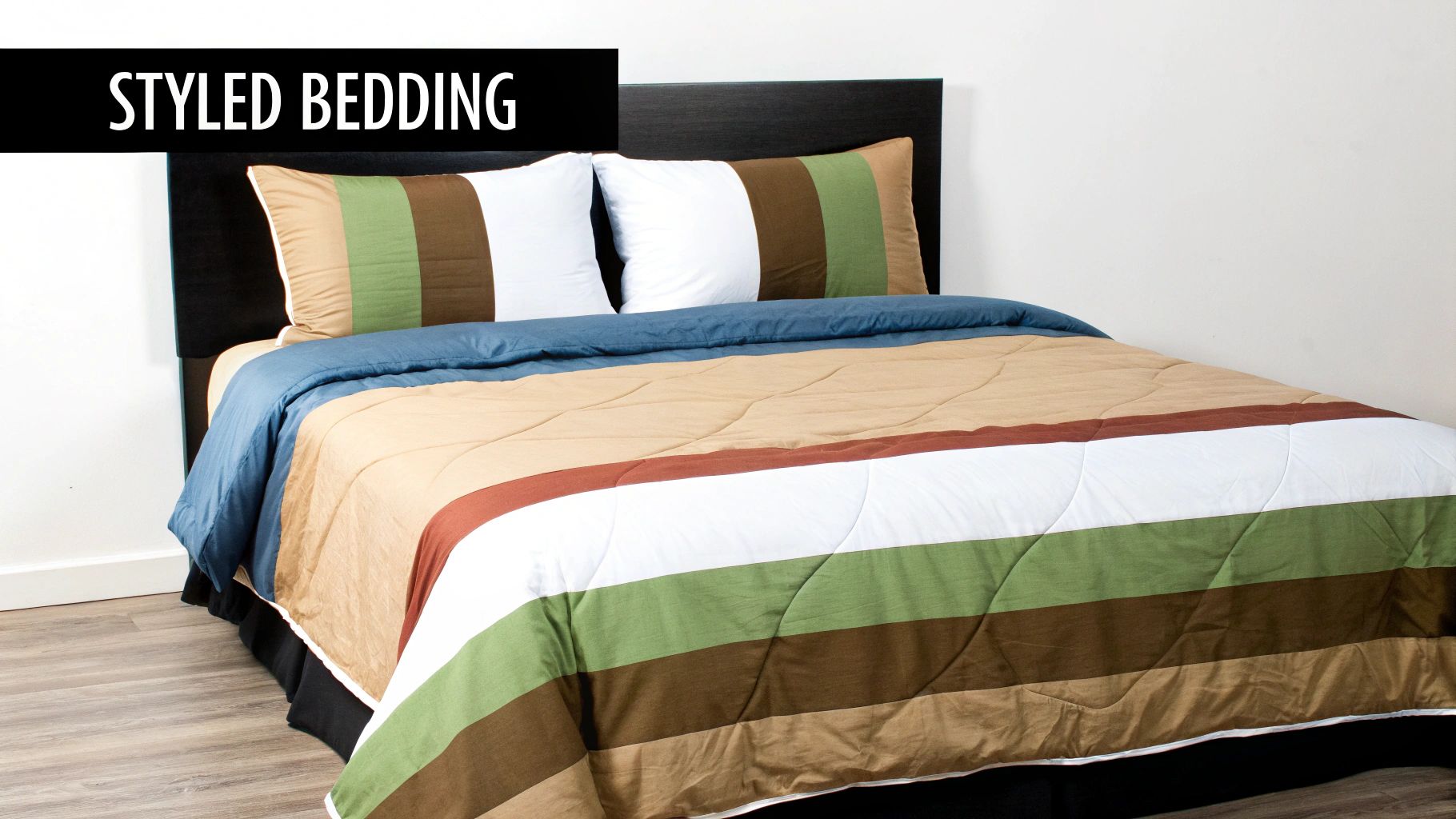
Once you’ve found the perfect comforter, the real fun begins, pulling the whole look together with coordinated linens. This is your chance to let your personal style shine and create a bed that’s not just comfortable, but beautiful too. A well layered bed is simpler to achieve than you might think, and the secret lies in getting the sizing right for your duvet cover, sheets, and pillowcases.
Think of a well dressed bed as the centrepiece of your bedroom. It’s what transforms the space from just a room to a proper retreat. Nailing the sizes is the first step to achieving that polished, inviting look and avoiding the small but mighty frustration of a baggy duvet cover or a fitted sheet that pings off the corners every night.
Matching Covers and Sheets to Your Comforter
Thankfully, UK bedding brands have made this part incredibly simple. Duvet covers are made to match standard comforter dimensions, so if you have bought a Double comforter, you just need a Double duvet cover. It’s that easy.
Resist the temptation to buy a size up. A larger cover will just cause your comforter to swim around inside, leading to annoying empty spots and uneven warmth. The same principle applies to your sheets, a King fitted sheet is designed to perfectly hug a King mattress, giving you that smooth, taut base for a great night's sleep.
As a rule of thumb, always match the label size. A King comforter takes a King duvet cover, and a Double mattress needs a Double fitted sheet. This guarantees a clean, tailored fit every single time.
Simple Tips for a Beautifully Styled Bed
Styling your bed is an art form, but one without strict rules. It is all about layering different textures, colours, and patterns to create a cosy, inviting look that makes you want to jump right in.
Here are a few ideas to get you going:
- Play with Textures: Don’t stick to one material. Mix things up by pairing a soft fleece comforter with crisp cotton sheets, or toss a chunky knit throw over the top for an extra layer of warmth and visual interest.
- Mix and Match Colours: Step away from the perfectly matched set if you fancy it. Pull a primary colour from your comforter, then choose one or two complementary shades for your pillows or throws to add a bit of depth.
- Layering is Everything: The most inviting beds almost always have multiple layers. Start with your fitted sheet, add a flat sheet if you use one, then your comforter. Finish it off with decorative cushions and a throw blanket artfully draped at the end of the bed.
A coordinated set can make styling effortless. For example, our Morgan & Reid Snuggle Comforter range is designed to take the guesswork out of creating a chic look. With matching pillowcases and accessories, you can achieve that designer feel with minimal fuss. For more ideas on creating your perfect sleep space, take a look at our guide to choosing luxurious bed linens.
Ultimately, your bed should feel like your own personal sanctuary. By matching the correct comforter sizes UK linens with a few creative styling touches, you can easily turn your bedroom into the most comfortable room in the house.
Caring for Your Comforter to Ensure It Lasts
A quality comforter is a real investment in your comfort, and with a little care, you can keep it feeling soft and inviting for years. Looking after it properly is far simpler than you might think and is the key to keeping it fresh, fluffy, and hygienic.
First things first, always check the care label. This is your direct line to the manufacturer's specific advice, tailored exactly for your comforter. The good news is that most modern comforters, especially those with microfibre fillings, are designed to be conveniently machine washable.
Washing and Drying Tips
Keeping your comforter clean does not just feel nice, it genuinely protects its lifespan. A few simple steps can make all the difference between a flat, tired looking duvet and one that feels brand new.
- Go Gentle: Always choose a gentle or delicate wash cycle and stick to a mild, liquid detergent. This approach is much kinder to both the fabric and the filling inside.
- Give It Space: Your comforter needs room to tumble freely in the machine to get a proper clean. If it is too crammed in, it will not wash or rinse effectively.
- Low and Slow Drying: Tumble dry on a low heat setting. Here's a great tip, toss in a couple of clean tennis balls or wool dryer balls. They will bounce around, helping to fluff up the filling and prevent any annoying clumps from forming.
If you're looking for more detailed instructions, this resource offers a complete guide to cleaning your comforter and making the most of your machine's delicate settings.
Storing Your Comforter
When the seasons change and it’s time to swap out your bedding, correct storage is crucial. Make sure your comforter is completely clean and dry before packing it away in a breathable storage bag. This shields it from dust and potential dampness while still allowing air to circulate, preventing any musty smells.
For specific advice tailored to our products, be sure to check out our dedicated Snuggle Comforter care guide. Ultimately, proper care is the real secret to enjoying that cosy, like new feeling for many nights to come.
Your Top Questions About Comforter Sizes Answered
To finish up, let's tackle some of the most common questions we get asked about finding the right comforter. Consider this your final checklist to sort out any last minute uncertainties, so you can make your choice with total confidence.
What’s the Difference Between a Duvet and a Comforter?
This is a classic point of confusion, and for good reason! The terms are often used interchangeably, but they are actually two different things.
A duvet is essentially an insert, typically plain white and filled with down or a synthetic alternative. It's designed to be slipped inside a separate duvet cover. This setup makes it really easy to switch up the look of your bedroom just by changing the cover, and it is simple to pop the cover in the wash.
A comforter, on the other hand, is an all in one piece of bedding, just like our Snuggle Comforter. The filling and the decorative outer fabric are stitched together into a single, ready to use piece. The real beauty of a comforter is its simplicity, no cover needed. It is the perfect solution if you want warmth and style without any fuss.
Can I Use a Double Comforter on a Small Double Bed?
Yes, you definitely can! In fact, we often recommend it. Using a standard Double comforter, which measures 200cm x 200cm, will give you a much more generous and cosy drape over a Small Double mattress. It’s a fantastic way to get a fuller, more luxurious look and to make sure there is plenty of cover to share.
This little "sizing up" trick works brilliantly for other bed sizes, too. For example, putting a King size comforter on a Double bed is a popular choice for anyone who loves that plush, hotel style feel and extra snuggle room. It is a simple hack for adding a touch of luxury to your sleep space.
How Do I Get That Full, Fluffy Hotel Look?
Getting that wonderfully plush, inviting look you find in boutique hotels is much easier than you might think. It all comes down to a few clever styling techniques.
The secret to a fluffy looking bed isn’t just about one single item, it’s about creating volume and drape through smart layering.
Here are a few of our favourite tips for creating that cloud like effect:
- Go One Size Up: As we mentioned, using a comforter that is one size bigger than your bed is the fastest way to create a generous overhang and a sumptuous feel.
- Give It a Good Shake: Before you make the bed, grab the comforter by the end and give it a really good, vigorous shake. This simple action helps to plump up the filling and trap air inside, which instantly boosts its loft and volume.
- Fold and Layer: Instead of just pulling the comforter up flat, try folding the top quarter back on itself. This simple fold adds dimension and texture, making the bed look much fuller and more inviting.
Hopefully, by answering these key questions about comforter sizes in the UK, you feel ready to find the perfect bedding for your home.
Experience the ultimate in cosy, stylish bedding with Morgan and Reid. Discover our signature Snuggle Comforters and transform your sleep at https://www.morganandreid.com.
Share:
What GSM Comforter is Best for a Cosy UK Winter?
How to Choose Bedding for Dreamy Comfort