


For a perfectly cosy UK winter, a comforter with a rating between 400 and 600 GSM is the ideal choice for most homes. This range gives you that wonderfully warm and substantial feeling we all want, much like a traditional 10.5 to 13.5 tog duvet, making sure you stay snug on even the frostiest nights.
Your Guide to a Perfectly Warm Winter Comforter
Choosing a new comforter for winter can feel a bit confusing, especially with terms like GSM and tog on the labels. Finding that perfect layer of warmth does not have to be complicated. Our goal is to guide you through the essentials, helping you understand what these numbers truly mean for your comfort.
Think of this as your friendly map to a better night's sleep. We will cut through the jargon and focus on what really matters, so you can confidently choose a comforter that feels just right for you and your home. After all, the perfect winter bedding is all about creating your own sanctuary of warmth and rest.
What Is GSM and Why Does It Matter?
So, what exactly is GSM? The term stands for Grams per Square Metre. It is simply a way to measure the weight, or density, of the filling inside your comforter.
A higher GSM number means the filling is denser and heavier, which almost always results in a warmer comforter. It is a straightforward way to understand how substantial a comforter will feel.
Understanding this one simple measurement helps you make a much more informed choice. It lets you compare different options and get a real sense of how warm they will feel before you even bring them home. It is the key to unlocking consistent cosiness all season long.
Connecting GSM to the Familiar Tog Rating
Here in the UK, most of us are used to seeing a tog rating. This measures thermal resistance, or in other words, how well a duvet traps heat. While GSM measures weight, tog measures warmth. The two are very closely related, and knowing both can be incredibly helpful.
Here is a quick breakdown of how they generally compare for winter bedding:
- 10.5 Tog: Often considered a good all rounder, this provides plenty of warmth for milder winter nights. It typically corresponds to a GSM of around 350 to 450.
- 13.5 Tog: A classic winter choice, this rating offers significant warmth and is ideal for colder houses. This aligns with a GSM range of about 450 to 600.
- 15.0 Tog and Above: Reserved for the coldest conditions or for those who really feel the chill, this corresponds to a GSM of 600 and higher.
By understanding both systems, you gain a complete picture of what you are buying. For those interested, you can learn more about the differences and similarities between duvets and comforters right here: https://morganandreid.com/blogs/journal/duvet-and.
Additionally, for a broader perspective on all elements of your bed, you might consider consulting this complete guide to bedding, mattress protectors, and comforters.
What Comforter GSM Really Means for Your Comfort
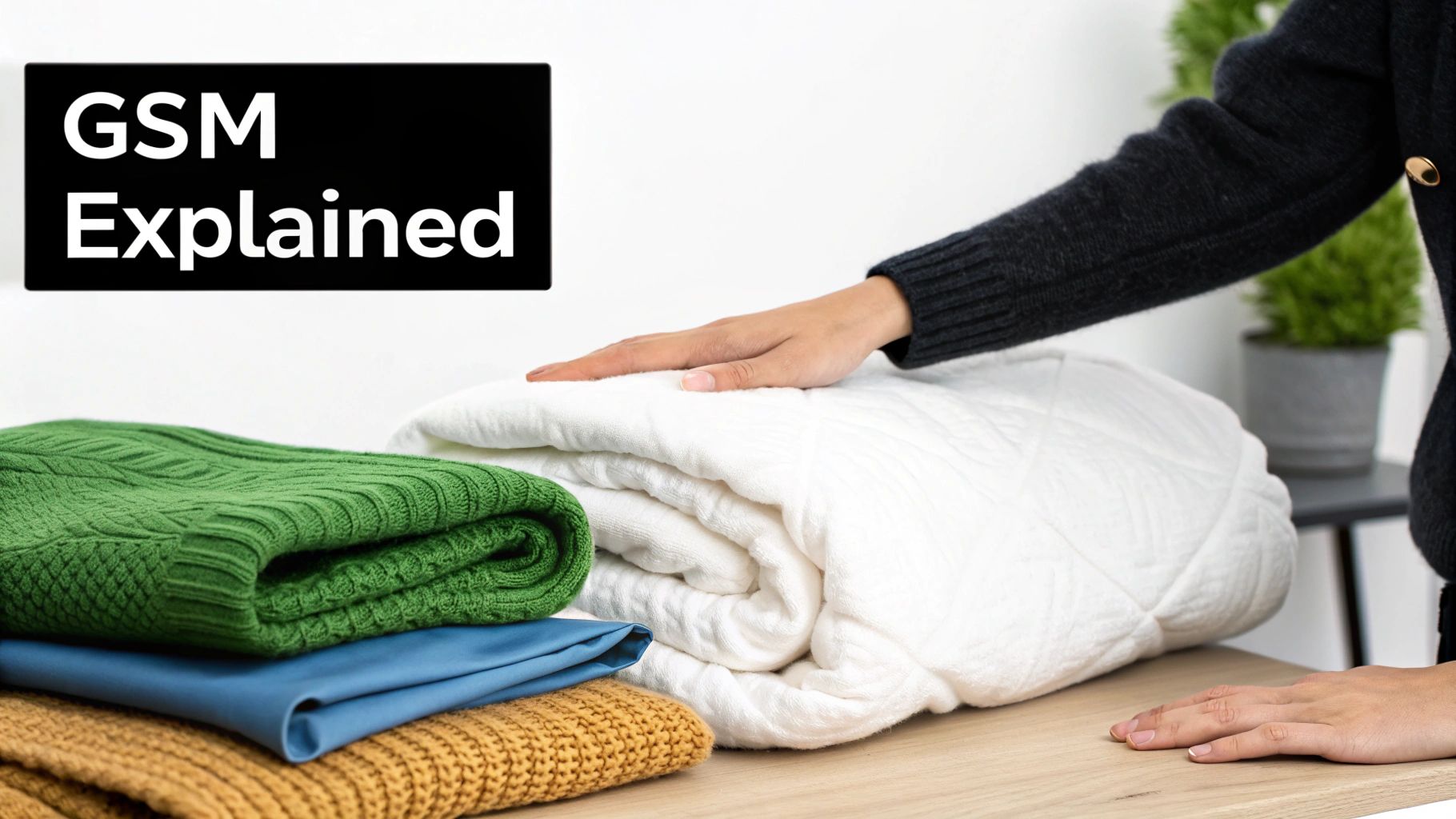
When you start shopping for a new winter comforter, you will come across the term GSM. It stands for Grams per Square Metre, and it is a wonderfully straightforward way to understand the weight and density of the filling inside your bedding. In simple terms, it tells you exactly how much cosy filling is packed into every square metre.
Think of it like choosing a woolly jumper. A light, fine gauge knit is perfect for a crisp autumn afternoon, but when a real chill sets in, you will reach for a thick, chunky cable knit. In the same way, a higher GSM number means a heavier, denser filling. This is fantastic at trapping air and providing the insulation you need to stay toasty warm all night long.
This measurement is one of the most reliable indicators of warmth you will find. It cuts through the marketing fluff and lets you easily compare the substance and potential cosiness of different comforters side by side.
How GSM Translates to a Good Night's Sleep
Knowing what GSM comforter for winter is right for you means connecting the numbers to the actual feeling you want when you climb into bed. A higher GSM value often delivers that wonderful, substantial feeling of being gently hugged by your bedding, a quality many of us want during the colder months. It is that reassuring weight that can help you relax and drift off to sleep.
A denser filling does not just provide more warmth, it also contributes to the overall plushness of the comforter. This is what creates that beautifully full and inviting look, turning your bed into a true sanctuary.
A comforter with a higher GSM doesn’t just keep you warmer; it transforms your bed into a plush, cloud-like retreat, perfect for hibernating through the winter.
By checking the GSM, you get an immediate sense of how a comforter will feel, both in terms of warmth and weight. It puts the power in your hands, allowing you to choose based on the genuine comfort it will provide, not just its looks.
Why It Is a Practical Measurement
The real beauty of GSM is its simplicity. It is a direct calculation of weight per area, which makes it an excellent guide, especially when you are comparing comforters with synthetic fillings like microfibre or hollowfibre. With these materials, more weight almost always means more warmth in a very predictable way.
This no nonsense measurement helps you avoid confusion and make a confident choice. Knowing the GSM allows you to find that perfect balance, a comforter that is warm enough for the coldest nights but not so heavy that it feels restrictive. For more tips on getting that ideal cosy feeling, take a look at our guide to achieving a truly fluffy comforter.
Ultimately, think of GSM as your best friend when navigating the world of winter bedding. It is a clear, straightforward number that tells you exactly what you need to know about a comforter's potential for warmth and comfort.
Finding Your Ideal Winter Comforter: GSM and Tog Ratings for a UK Winter
So, let's get practical. What GSM and tog rating should you actually be looking for to get through a British winter? Getting this right is all about matching your bedding to our climate, making sure you stay wonderfully comfortable from those first chilly autumn evenings right through to the frostiest nights of the year.
For most UK homes, the sweet spot for a winter comforter is in the 400 to 600 GSM range. This provides that substantial, reassuring weight and excellent insulation we all want, but without making you overheat, especially if you have reliable central heating. It is the key to that perfectly snug feeling on a cold night.
The Sweet Spot for UK Homes
Think of a 400 GSM comforter as your go to for most of the season. It offers plenty of warmth for the average winter night. But when a real cold snap hits, or if you live in an older, draughtier house, stepping up to 600 GSM will give you that extra layer of deep, cosy insulation you need.
This is not just our opinion, it is backed by wider industry standards. In the UK, duvets labelled as extra warm or designed for winter typically have a fill weight equivalent to over 500 g/m². This shows that the 400 to 600 GSM range is precisely what the experts recommend for staying properly warm.
How Tog Ratings Fit In
Of course, here in the UK, we are all very familiar with the tog rating. It is a handy measurement of how well a duvet traps air, giving you a clear picture of its insulating power. For a snug winter, you will want to look at these two options:
- 10.5 Tog: Often considered a great all rounder for winter, especially in well insulated, modern homes. This generally corresponds to a GSM of around 400 to 450.
- 13.5 Tog: The classic choice for a truly cold winter. It delivers exceptional warmth and lines up with a GSM of about 500 to 600.
For the ultimate cosy experience, a 13.5 tog duvet is a fantastic benchmark. It provides that deeply comforting warmth that makes it much easier to leave a window cracked open for fresh air, even on the coldest of nights.
Making It Personal
Ultimately, the perfect comforter is a very personal thing. If you are someone who always feels the cold, you might want to aim for the higher end of the scale, perhaps even looking at something over 600 GSM. Our guide on the best comforter for cold sleepers has more specific advice if that sounds like you.
Your central heating habits also play a huge role. If you prefer to keep the thermostat low overnight to save on energy bills, a higher GSM comforter is a brilliant investment in your comfort. It is all about finding a balance. To truly master winter warmth, combine a great comforter with smart heating. Exploring these strategies to lower heating costs can help create a home that is both warm and cost effective.
How Your Comforter's Filling Affects Warmth
While GSM gives you a great starting point, the material inside your comforter is what truly defines its character. Think of the filling as the engine of your duvet, it is what does the real work of keeping you snug. Understanding the difference between the main types is the secret to finding your perfect winter companion.
You generally have two choices for comforter fillings, the time honoured natural options like down, and the wonderfully practical modern synthetics. Each has its own benefits. The right choice for you will depend on what you value most, whether it is budget, ease of care, or that specific feeling you want when you climb into bed.
The Classic Choice: Natural Down
Natural down, that delicate, fluffy layer found beneath the feathers of ducks and geese, is nature’s own master insulator. It is famous for being incredibly light while packing a serious punch when it comes to warmth. The secret is in its structure. The down clusters are brilliant at trapping countless tiny pockets of air, which creates a highly efficient thermal barrier.
This natural efficiency is why a down comforter can often feel just as warm as a much heavier synthetic one, despite having a lower GSM. It delivers exceptional warmth without the weight, giving you that luxurious, cloud like feeling many people love.
When shopping for down, you will also come across the term fill power. This is simply a measure of the down's fluffiness and quality. A higher fill power number means larger, loftier clusters that can trap more air, providing better insulation with even less weight.
The Modern Alternative: Synthetic Fillings
Engineered for comfort and practicality, synthetic fillings like microfibre and hollowfibre are fantastic modern alternatives. They are designed to deliver excellent warmth and have become a brilliant choice for many households across the UK.
Here is why a synthetic filling might be the perfect fit for you:
- Hypoallergenic: If you suffer from allergies or sensitivities, synthetic options are a great help. They do not create the kind of environment that dust mites love, which can be a problem with some natural fillings.
- Easy to Care For: Most synthetic comforters are a breeze to look after. You can typically pop them in your home washing machine, making them an incredibly practical choice for busy families or anyone who appreciates low maintenance bedding.
- Great Value: Synthetic filled comforters usually offer impressive warmth and cosiness at a more accessible price point than their high quality down counterparts.
These man made fibres are cleverly designed to mimic the insulating properties of down, providing a lofty and comfortable feel. To see how different materials can completely change your bedding experience, take a look at the unique appeal of a fleece comforter in the UK.
Choosing a filling isn’t about which is ‘better’ in general, but which is better for you. Let your lifestyle, budget, and personal comfort preferences be your guide.
In the end, whether you are drawn to the airy luxury of down or the fuss free practicality of synthetics, understanding how the filling influences the feel is crucial. It allows you to look beyond the numbers on the label and choose a comforter that promises the exact kind of warm, restorative sleep you need.
How to Choose the Perfect Winter Comforter for You
We have covered the technical side of things, like GSM, tog ratings, and different fillings. Now it is time to put that knowledge to work. Choosing the right winter comforter is not about chasing the highest number on a label, it is about understanding your own sleep habits to create a truly restful sanctuary.
The best place to start is with yourself. Are you the one who always seems to be kicking off the covers, even in January? Or do you find yourself reaching for an extra blanket when everyone else seems comfortable? Your own body temperature is the single most important guide in this process.
Consider Your Sleep Style
Your personal needs will always be the best indicator of which comforter will feel right. Do not just assume more is better.
- For the ‘Hot Sleeper’: If you tend to wake up feeling too warm, a comforter at the lighter end of the winter spectrum is your best bet. Look for something around 400 GSM or a 10.5 tog. This gives you that comforting, cosy feeling without trapping too much heat.
- For the ‘Cold Sleeper’: If you are perpetually chilly and love to be properly bundled up, aim higher. A comforter with 600 GSM or more, which is about a 13.5 tog, will deliver that deep, insulating warmth you are looking for.
- For Couples with Different Preferences: This is a classic dilemma. When one of you runs hot and the other runs cold, a mid range comforter of around 500 GSM is often the perfect compromise. The colder sleeper can always add a personal throw on their side for that extra touch of warmth.
The Importance of Quality Construction
Even the most luxurious filling is useless if it all ends up bunched at your feet by morning. That is why the construction of your comforter is so crucial. The gold standard to look for is a baffle box stitch.
This clever design creates a grid of small, stitched pockets that hold the filling in place, making sure it is distributed evenly from corner to corner. No more clumping or cold spots, just consistent, reliable warmth, night after night.
While GSM is a useful metric, it is good to know that here in the UK, tog ratings are what most people are familiar with. A winter duvet is typically between 10.5 to 13.5 tog, which roughly translates to a 400 to 800 g/m² GSM range, depending on the fill material. You can explore more about these trends in the UK bedding market insights from Grandview Research.
This decision guide can help you see how your material preferences might lead you to the right choice.
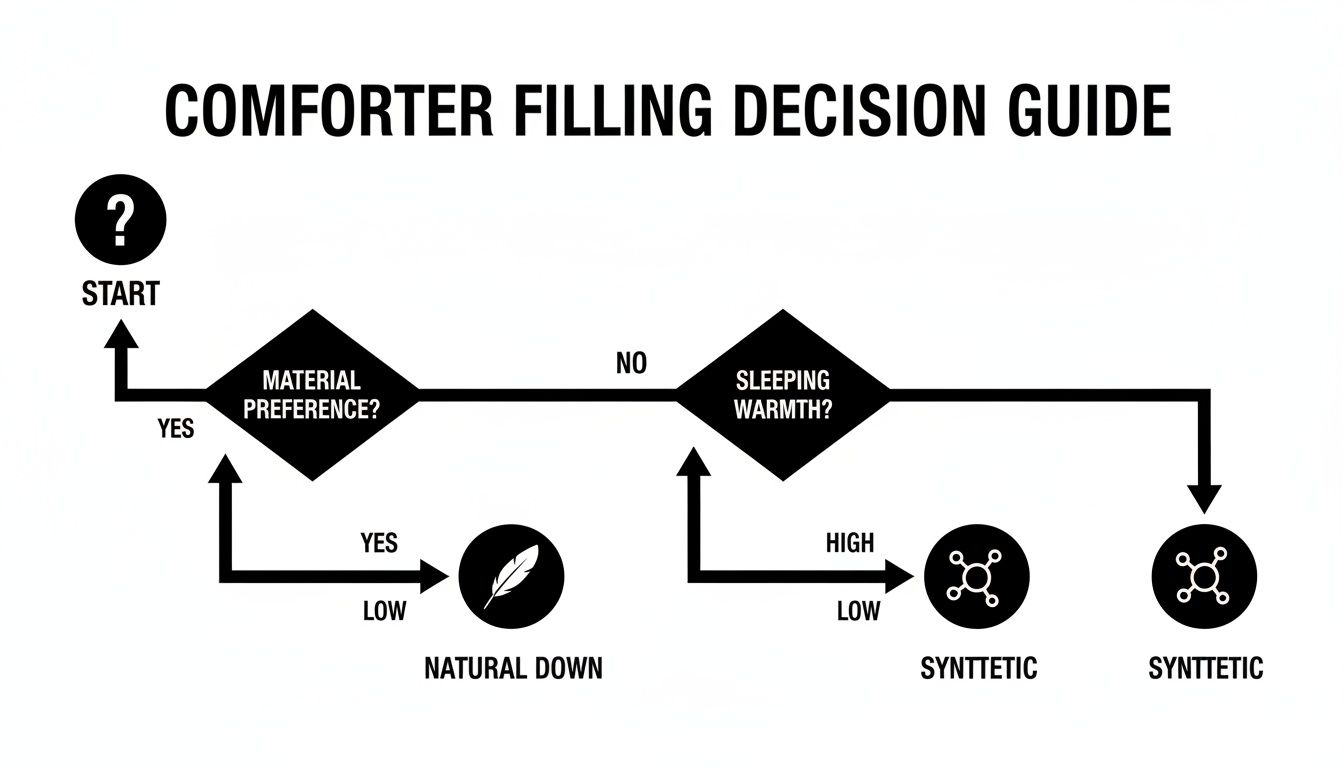
As the flowchart shows, whether you prefer natural down or modern synthetics, there is a perfect path to a warm and comfortable winter’s night. It all comes down to what you value most.
Common Questions About Winter Comforters
To help you feel completely confident in your choice, we have put together a few of the most common questions we hear when people are looking for their perfect winter comforter. Here are some clear, straightforward answers to help with those final decisions.
Is 1000 GSM Too Warm for a UK Winter?
For the vast majority of people in a centrally heated UK home, a 1000 GSM comforter will almost certainly be far too warm. That level of dense insulation is really designed for extremely cold climates or homes with no central heating, and it could easily lead to overheating and a restless night.
A much better range for a typical British winter is between 400 and 600 GSM, which is roughly equivalent to a 10.5 to 13.5 tog rating. This provides all the luxurious warmth you need to feel properly cosy without ever feeling stuffy. If you know you are a very cold sleeper or live in an old, draughty house, you might consider something up to 800 GSM, but 1000 GSM is rarely necessary.
What Is the Difference Between a Comforter and a Duvet?
Here in the UK, we tend to use ‘duvet’ and ‘comforter’ to mean the same thing, that lovely, filled bedding you pop inside a decorative cover. In everyday conversation and while shopping, the terms are essentially interchangeable.
If we want to be technical, a traditional American style comforter is a single, stitched piece that does not need a separate cover. However, when you see a British or European brand use the word ‘comforter’, it almost always refers to what we would call a standard duvet insert. If you are curious about the finer points, we have a helpful guide that explains the difference between a comforter and a duvet in more detail.
How Should I Care for a High GSM Winter Comforter?
Looking after your winter comforter properly is the key to keeping it feeling plush and inviting for years to come. The right method really depends on the filling.
-
Synthetic Comforters: Most synthetic options are conveniently machine washable. Just be aware that a dense, high GSM comforter can be too bulky for a standard home machine, so using a large capacity washer at a local launderette is often your best bet.
-
Natural Down Comforters: For natural fillings like down and feathers, professional cleaning is usually the way to go. This protects the delicate clusters from damage and, crucially, makes sure they are dried thoroughly to prevent clumping, which would ruin their wonderful insulating properties.
No matter the filling, a simple but effective tip is to air your comforter out regularly. Just draping it over a bannister for a few hours helps release any trapped moisture and keeps it feeling fresh between washes.
When the warmer months roll around and it is time to store your winter bedding, always use a breathable storage bag. This prevents moisture from building up, ensuring your comforter stays fresh and ready for when the cold weather returns.
At Morgan & Reid, we believe a great night's sleep begins with the perfect comforter. Our Snuggle Comforters are crafted with buttery soft fleece and a cloud-like filling to keep you and your family wonderfully warm all winter long. Find your dream comforter and transform your sleep at https://www.morganandreid.com.
Share:
The Best Duvet Alternative For A Perfect Night's Sleep
Comforter Sizes UK: A Guide to Finding Your Perfect Fit