








Polyester bedding gets questioned a lot online, usually in one breath: it comes from petroleum, so it's plastic, so it must be harmful. Each of those steps deserves a closer look. Here's what the evidence says, where the real trade-offs are, and why we use the fabrics we do.
Where polyester comes from
Polyester is made from raw materials that come from petroleum. That's accurate. During manufacturing, those raw materials go through significant chemical processes and become something entirely different, with different properties and different behaviour from the original inputs.
Many everyday materials begin as petroleum derivatives, including those used in medical devices, food packaging, sports equipment and spectacle lenses. In every case, what matters is the finished material and how it behaves in use, not what its starting ingredients were.
Is polyester just plastic?
Polyester is a synthetic fibre, but calling it plastic doesn't tell you much that's useful. Plastic is a broad term covering thousands of different materials with very different properties and uses. Polyester, as used in bedding and clothing, has been engineered into a soft, flexible textile fibre. It shares some chemistry with other synthetic materials, but that doesn't mean it behaves the same way.
All textiles are processed
One common assumption is that natural fibres arrive in your home chemical-free and synthetic fibres don't. In practice, almost all textiles, natural and synthetic, go through dyeing, washing and finishing before they reach you. The safety of a finished textile depends on the finished product and the processes used to make it, not simply whether the fibre started out as cotton or polyester.
What current evidence says about skin contact
Polyester has been one of the world's most widely used textile fibres for decades, across clothing, bedding and many everyday products. Current scientific evidence does not demonstrate that normal use of polyester bedding causes harm through skin contact in the general population. Polyester fibres are stable during normal use and are not considered to be absorbed through intact skin.
"Current evidence does not demonstrate harm" is not the same as saying something has been proven safe in every circumstance for every person. Individual sensitivities vary, so if you have a specific skin condition, it's worth considering your own circumstances. Science builds knowledge over time, and we follow the research as it develops.
Microplastics are worth talking about honestly
There is a legitimate environmental concern about synthetic textiles. They shed tiny fibres during washing, and those particles can enter waterways and build up in the environment. This is real and it's an active area of research. Scientists are also studying what broader microplastic exposure means for human health over time.
The question of microplastic pollution is separate from whether sleeping on polyester bedding causes direct harm, and the evidence for those two questions is at different stages. We think it's important to keep them distinct. A microfibre-catching wash bag is a simple, practical way to reduce shedding in the meantime.
What about PFAS and "forever chemicals"?
PFAS are a specific class of chemicals used in waterproofing coatings and stain repellents. They are not a characteristic of standard polyester textiles. PFAS, microplastics and polyester are separate topics that often get grouped together online, and understanding each one on its own terms leads to clearer conclusions.
Cotton and polyester compared
Both are good materials, and both have trade-offs.
- Cotton: natural, soft, breathable and biodegradable, with a long history in bedding. It absorbs moisture into the fibre, so it can feel damp as it saturates, takes longer to dry, and can shrink or crease.
- Polyester: durable, quick to dry, holds its shape and colour, and resists shrinking. It sheds microfibres when washed and isn't biodegradable, and some people simply prefer natural fibres.
Current evidence doesn't support the idea that cotton is inherently healthier than polyester for normal bedding use. The right choice depends on what you want from your bedding and your own preferences.
Why we use synthetic fabrics
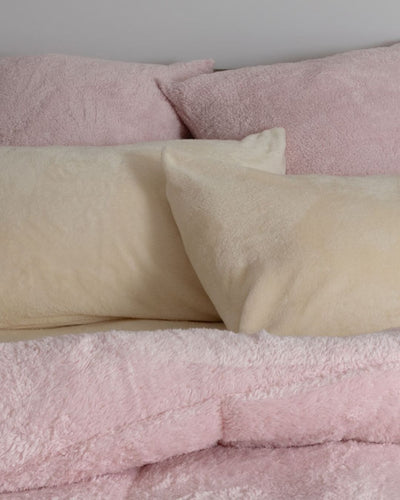
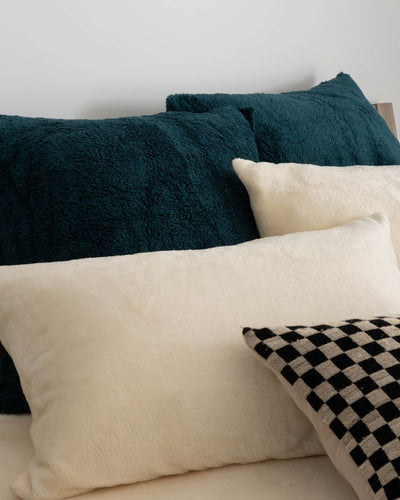
We choose materials for what they do well, at a price that works for real homes. Snuggle Fleece gives warmth and softness that's hard to match at the same price, and a polyester fill stays light, dries quickly and is easy to care for. Every material has trade-offs, including the environmental questions around microfibre shedding, and we'd rather explain them honestly than make claims the evidence doesn't support.
For a fabric-by-fabric guide to everything we make, see our materials. If you have a question we haven't answered, contact us and a real person will reply.
Share:
Cosy bedding ideas to create a restful retreat