



If you've ever slipped into a hotel bed and marvelled at how incredibly crisp and fresh the sheets feel, you've likely experienced cotton percale. It's a classic for a reason. Often described as the "perfect white shirt" of bedding, it's timeless, comfortable, and has an effortlessly smart look.
What Gives Percale That Signature Crisp Feel?
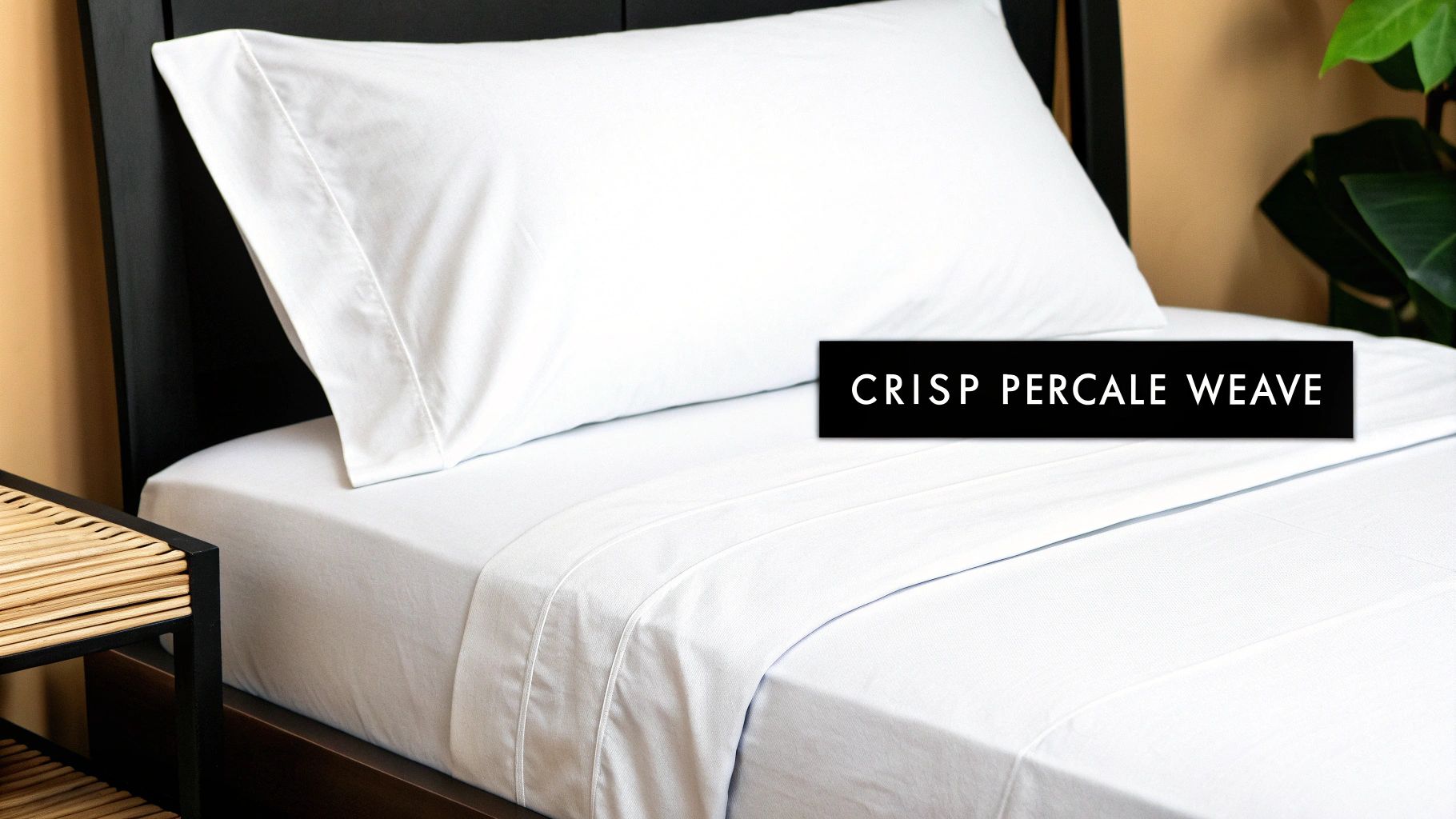
The secret to percale is all in the weave. It is constructed with a simple yet incredibly effective one thread over, one thread under technique.
Picture a classic checkerboard pattern. This tight, grid like structure is what gives the fabric its signature crispness and a modern, matte finish, a world away from the silky sheen you would find on a sateen sheet. It is this structure that feels so cool and refreshing against the skin.
Designed for Breathability
That straightforward weave is also the key to percale's most celebrated quality: its breathability. The tight, uniform construction leaves microscopic spaces between the threads, allowing air to circulate freely all night long.
This makes it an absolute game changer for anyone who tends to sleep warm or for those of us living in milder climates. It's like having built in climate control, wicking away moisture and helping you stay cool and comfortable from dusk till dawn.
This is why so many people swear by percale as the perfect foundation for their bed. It offers that cool, clean layer against your skin that perfectly complements the cosy warmth of a duvet or comforter on top.
This winning combination of coolness, crispness, and durability makes cotton percale a brilliant, practical choice for creating a truly restful sleep sanctuary.
To sum it all up, here’s a quick look at what makes cotton percale so special.
Cotton Percale at a Glance
| Characteristic | Description |
|---|---|
| Feel | Crisp, cool, and smooth to the touch, often compared to a high quality cotton shirt. |
| Finish | A modern, flat matte appearance with no sheen or lustre. |
| Weave | A simple one over, one under grid pattern that is tight and durable. |
| Breathability | Excellent airflow, making it ideal for warm sleepers or summer months. |
| Durability | A strong and resilient fabric that actually gets softer with every wash. |
These qualities work together to create a fabric that's as practical as it is comfortable, explaining its enduring popularity for high quality bedding.
The Real Feel of Sleeping in Percale
All the talk about weaves and thread counts is helpful, but what really matters is how your bedding feels when you slide in after a long day. This is where cotton percale truly comes into its own, delivering a comfort that’s hard to capture in technical details alone. It simply turns your bed into a cool, calm sanctuary.
You know that satisfying feeling of climbing into a freshly made bed at a lovely hotel? The sheets are cool to the touch, crisp, and so inviting. That's the essence of percale. It has a smooth, almost papery crispness that feels wonderfully clean and refreshing against your skin.
This distinct texture means the fabric does not cling. Instead, it lightly drapes over you, giving you plenty of room to move and letting air circulate freely. It’s a feeling of pure, simple comfort that never feels heavy or restrictive.
Your Personal Climate Control
One of percale's standout features is its incredible breathability. If you’re a hot sleeper who often wakes up feeling stuffy, this fabric could be a game changer. The tight, one over, one under weave lets heat and moisture escape, which helps regulate your body temperature all night long.
You stay comfortably cool, but not cold. It’s like having a personal climate control system woven right into your bedding. For anyone looking to really lean into this, exploring different types of cooling bedding can offer even more solutions for a restful night.
This natural airflow is what stops that clammy, humid feeling that can ruin a good night's sleep, especially during warmer months. You wake up feeling refreshed and dry, not sticky and overheated.
The real magic happens when you pair this coolness with warmth. Crisp percale sheets create the perfect foundation for a cosy Morgan & Reid Snuggle Comforter. You get the best of both worlds, the cool freshness from the sheets below and the plush, gentle warmth from the comforter above.
This combination creates a perfectly balanced sleep environment. It allows you to snuggle down and feel cosy without ever overheating, making it an ideal setup for year round comfort here in the UK.
A Smart Investment in Lasting Comfort
Beyond how it feels tonight, cotton percale is an incredibly practical choice for the long run. Its strong, durable weave stands up to the rigours of daily life and frequent washing, which is a must for any busy household.
In fact, one of the best things about high quality percale is that it actually gets better with age. With each wash, the cotton fibres relax, and the fabric becomes progressively softer and smoother, all without losing that signature crispness. It’s bedding that truly grows with you.
This durability makes it a smart investment. Cotton percale has been a cornerstone of British bedding for centuries, prized for its crisp, breathable feel. In the UK home textile market, cotton still holds a commanding 66.39% share, easily outpacing other materials. This enduring popularity shows why percale remains a top choice for families wanting durable, easy care bedding that can handle weekly washes without pilling.
Ultimately, choosing percale is about more than just buying sheets. It’s about investing in a consistently cool, crisp, and comfortable night’s sleep for years to come.
Comparing Percale with Sateen and Other Fabrics
Choosing the right bedding can feel a bit overwhelming with so many different fabrics on offer. It helps to think of them in a way you can instantly relate to. If cotton percale is your classic, crisp white shirt, then sateen is more like a silky blouse. Flannel is your favourite cosy jumper, and jersey feels just like a soft, well loved t-shirt.
Each one offers a completely different sleep experience, so finding the best fit really comes down to what you prefer. The main differences lie in how they feel against your skin, how they look, how well they regulate temperature, and the effort needed to care for them. Getting to know these distinctions is the key to creating your ideal bed.
Percale vs Sateen: The Classic Choice
When you're shopping for cotton sheets, the most common comparison you'll come across is percale versus sateen. While both start life as cotton, their unique weaves create two completely different fabrics.
Percale's simple one over, one under grid gives it that signature matte, crisp feel that’s exceptionally breathable. It’s what gives high end hotel beds their cool, inviting touch.
Sateen, on the other hand, uses a three or four over, one under weave. This clever technique exposes more threads on the surface, resulting in a silkier, smoother feel with a noticeable sheen. This denser structure also makes sateen feel a touch heavier and warmer than percale, which is why it’s often preferred by those who love a cosier, more luxurious drape. If you’re curious to explore this further, you can find out more about what is sateen and what makes it unique.
This infographic neatly sums up the key qualities that define the feel of cotton percale.
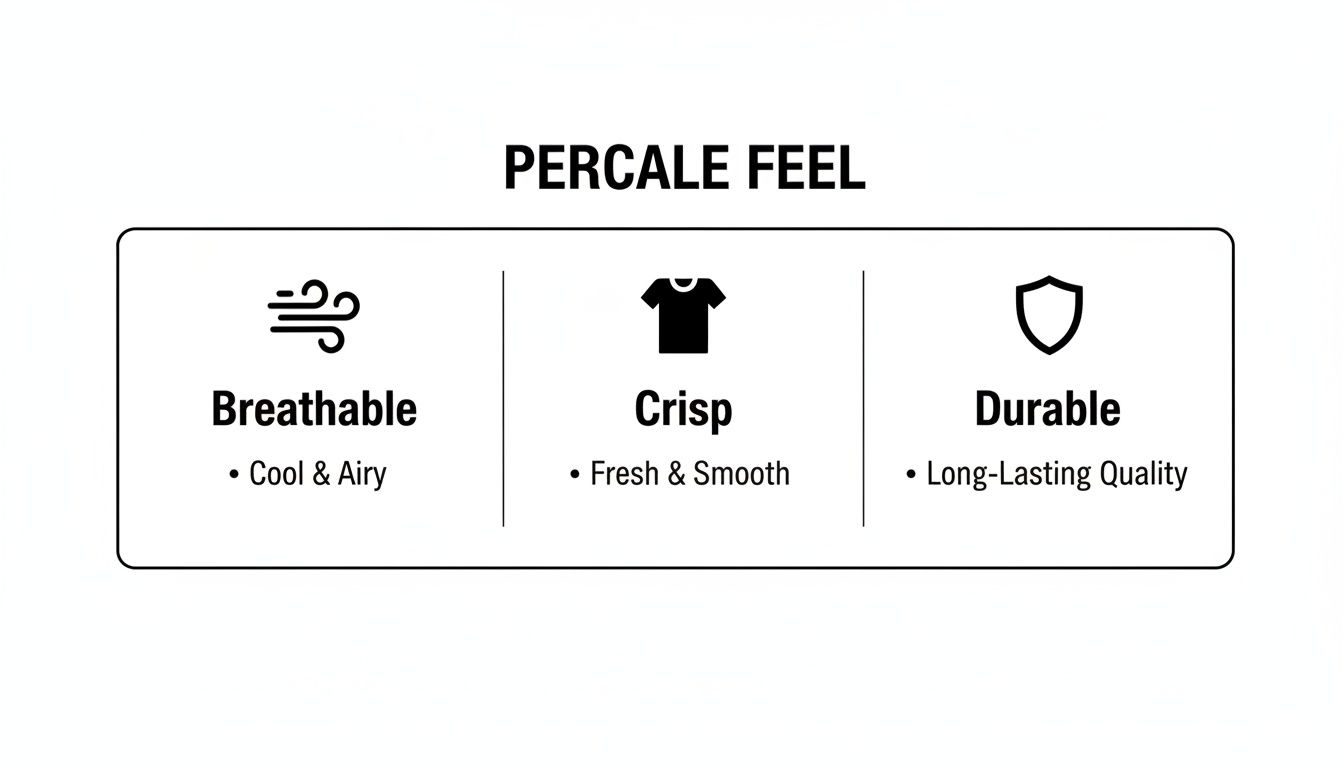
As you can see, it's this brilliant combination of breathability, crispness, and durability that makes percale such a standout choice for comfortable and long lasting bedding.
Adding Flannel and Jersey to the Mix
Beyond those classic woven options, you also have fabrics like flannel and jersey, which bring completely different textures and benefits to the bedroom.
-
Flannel is all about warmth. It's a cotton fabric that has been brushed to raise the fibres, creating a soft, fuzzy surface that traps air for excellent insulation. It’s the perfect choice for cold winter nights when you want to feel instantly snug the moment you get into bed.
-
Jersey is a knit fabric, not a woven one, just like your favourite t-shirt. This construction gives it a natural stretch and a very soft, relaxed feel. It’s breathable and drapes closely to the body, offering casual, easy going comfort all year round.
Ultimately, your choice depends on the experience you're looking for. Do you want the cool, crisp embrace of percale, the silky luxury of sateen, the instant warmth of flannel, or the relaxed softness of jersey?
A Side by Side Comparison
To make the decision even clearer, let's break down how these four popular bedding fabrics stack up against each other across the most important factors.
Bedding Weaves Compared: Percale vs Sateen vs Flannel vs Jersey
Here's a side by side look at how different bedding fabrics feel and perform to help you choose the right one for your home.
| Feature | Cotton Percale | Cotton Sateen | Flannel | Jersey |
|---|---|---|---|---|
| Feel | Crisp, cool, and smooth | Silky, drapey, and soft | Fuzzy, cosy, and warm | Stretchy, soft, and relaxed |
| Appearance | Modern matte finish | Subtle, elegant sheen | Soft and slightly fuzzy | Casual, like a t-shirt |
| Temperature | Very breathable and cool | Warmer and less breathable | Very warm and insulating | Moderately breathable |
| Maintenance | Prone to wrinkling | Resists wrinkling well | Low maintenance | Resists wrinkling well |
| Best For | Hot sleepers, summer nights | A luxurious, silky feel | Cold sleepers, winter months | Casual, year round comfort |
This table makes it clear there is no single "best" fabric, only the one that is best suited to you. If you sleep hot and love that clean, crisp hotel bed feel, percale is an excellent choice. But if you prioritise a silky touch and a wrinkle resistant finish, sateen might be your winner.
Beyond traditional bedding, these kinds of comparisons can be helpful for other textiles too, such as understanding the differences between fleece and plush fleece when choosing throws and blankets.
How to Choose the Best Cotton Percale Bedding
Walking into a bedding shop or browsing online can feel a bit daunting. With all the different terms and numbers thrown around, it's easy to get overwhelmed. But once you know a few key things to look for, choosing the perfect cotton percale bedding becomes much simpler. It really just comes down to focusing on what delivers that signature crisp, cool comfort you’re after.
This practical guide will help you shop with confidence, empowering you to find high quality bedding that will last for years. By understanding what makes a great percale sheet, you can make a smart investment in better sleep.
Demystifying Thread Count
One of the first things you’ll see advertised is thread count. It’s often touted as the ultimate measure of quality, but when it comes to percale, higher isn't always better. Thread count simply refers to the number of threads woven into one square inch of fabric.
For cotton percale, the sweet spot is generally between 200 and 400. This range provides the perfect balance, giving you that light, crisp feel and excellent breathability. If you go much higher, the weave can become too dense and less airy, which kind of defeats the purpose of choosing cool percale in the first place.
Instead of just chasing a high number, think of the 200 to 400 thread count range as the ideal recipe for that classic percale experience. It ensures the fabric is strong and smooth without sacrificing the coolness you want.
Look for Long Staple Cotton Fibres
Far more important than thread count is the quality of the cotton itself. Always look for bedding made from long staple cotton. This simply refers to the length of the individual cotton fibres used to spin the thread.
Why does it matter so much? Because longer fibres can be spun into smoother, stronger, and finer yarns, which has a direct impact on how your bedding feels and how long it lasts.
- Superior Softness: Long staple cotton creates a fabric that feels noticeably smoother and softer against your skin right out of the package.
- Increased Durability: The threads are stronger, so the fabric is far less likely to pill or fray, even with regular washing.
- Lived In Luxury: Here's the best part. Bedding made from these fibres gets even softer and more comfortable with every wash. It genuinely improves over time.
Choosing long staple cotton is one of the surest ways to know you’re buying a product built for lasting comfort. For an even more detailed breakdown, you might be interested in our guide to the best fabric for sheets, which explores this topic further.
Check the Labels for Peace of Mind
When you’re buying something you’ll be sleeping in every night, it’s good to know it’s safe for you and your family. Looking for certifications on the packaging can give you this reassurance.
One of the most common and trusted labels is OEKO-TEX. This certification means the fabric has been rigorously tested and found to be free from harmful levels of more than 100 substances known to be damaging to human health. It’s an excellent indicator of a high quality, responsibly made product.
Choosing certified bedding is an easy way to ensure your sleep sanctuary is as healthy as it is comfortable. For a holistic approach to outfitting your bed, you can also delve into this complete guide to bedding, mattress protectors, and comforters.
Caring for Your Cotton Percale Bedding
One of the best things about high quality cotton percale is just how durable it is. It's woven to last, but a bit of thoughtful care will go a long way, not just in extending its life but in coaxing out even more of that signature softness it’s known for.
The good news? Looking after percale is refreshingly simple. There's no need for complicated routines or special treatments. In fact, one of its greatest charms is that it gets softer and more inviting with every single wash, becoming more yours over time.
Simple Washing and Drying Tips
To keep your percale in prime condition, a gentle touch is always best. This approach helps protect the long staple cotton fibres that give the fabric its incredible strength and smooth, crisp feel.
For the best results, stick to a cool or warm wash cycle, somewhere around 30 to 40 degrees Celsius. This is more than enough to get your bedding perfectly clean without being harsh on the material. We've actually put together a complete guide on how to wash bed sheets that goes into even more detail.
When it's time to dry, you have a couple of fantastic options:
- Line Drying: If you have the space, drying your percale bedding on a line outside is the absolute best method. The fresh air gives it an extra touch of crispness that you just cannot replicate.
- Tumble Drying: If you're using a machine, always opt for a low heat setting. High temperatures can cause the cotton fibres to become brittle over time, so a gentle cycle is the way to go.
A tell tale sign of genuine, 100% cotton percale is its tendency to wrinkle. This is not a flaw; it's a natural characteristic of the weave. Many people love this relaxed, lived in look, but if you prefer a smoother finish, it’s easy to achieve.
Keeping Wrinkles at Bay
That slightly rumpled, casual look is part of percale’s relaxed charm, but if you're after a neater appearance, a few simple tricks make all the difference. The real secret is to act quickly as soon as the drying cycle ends.
Try to catch your bedding while it's still warm from the dryer. Taking it out promptly, giving it a good shake, and folding it right away will prevent most deep creases from setting in.
For that perfectly crisp, hotel worthy finish, a quick iron while the sheets are still slightly damp works wonders. The moisture helps the iron glide effortlessly, giving you that immaculate look without the fuss.
So, Is Cotton Percale Right for Your Home?
After exploring its signature crispness and durable nature, you might be wondering if cotton percale is the perfect match for your bedroom. The truth is, the best way to decide comes down to what you value most in your bedding. Is it a cool night’s sleep, lasting quality, or a particular style you're after?
To help you figure it out, let's look at who tends to fall in love with percale. It really shines for certain needs and lifestyles, making it a brilliant addition to countless homes.
The Perfect Fit for Different Sleepers
Cotton percale's unique qualities make it a standout choice for a few specific types of people. See if any of these sound like you.
- Hot Sleepers: If you’re someone who often kicks off the covers or wakes up feeling too warm, percale’s breathability is a game changer. Its light, airy weave allows heat to escape, helping you stay comfortably cool all night long.
- Busy Families: Life is demanding, and you need bedding that can keep up. Percale is famously tough and resilient, standing up beautifully to frequent washing and the rigours of daily life. It’s a smart, practical choice that will not let you down.
- Lovers of Classic Style: If you appreciate that clean, hotel inspired look, percale’s crisp, matte finish is exactly what you need. It creates a smart, tidy bed that feels both timeless and effortlessly modern.
This fabric is a brilliant foundation for a balanced bed. The cool crispness of the sheets provides a refreshing base layer, which contrasts beautifully with the plush warmth of a Morgan & Reid Snuggle Comforter on top. It’s a fantastic combination for hitting that perfect ‘just right’ temperature, no matter the season. If you're still weighing your options, our comparison of linen vs cotton might offer more useful insights.
A Sustainable and Sensible Choice
Choosing durable bedding is also a thoughtful decision for your wallet and the planet. When it comes to sustainability, it’s not just about the material itself. With UK households discarding a huge volume of textiles yearly, choosing items built to last is key. Percale’s robust weave means it often lasts two to three times longer than softer knits, positioning it as a more sustainable pick. It's about buying better, so you can buy less often.
Ultimately, if you're looking for bedding that feels cool, looks smart, and is truly built to last, then cotton percale is almost certainly the right choice for you. It’s a simple investment in years of comfortable nights.
Your Percale Questions, Answered
Even after getting to know the basics of cotton percale, a few practical questions often pop up. It's completely normal. To make sure you feel totally confident about bringing it into your home, I've gathered the most common queries I hear and answered them plainly.
Think of this as clearing up any last little uncertainties. These quick answers will firm up what you’ve learned and help you get the most out of this wonderful fabric.
Does Cotton Percale Wrinkle Easily?
In a word, yes. Because it's a 100% natural cotton with that classic, tight weave, percale is prone to wrinkling. But honestly, many of us have come to love that slightly lived in, relaxed look. It’s a hallmark of authentic, high quality cotton and adds to its charm.
If you’d like to minimise the creases, try taking your bedding out of the dryer the moment it’s done. For that immaculate, hotel style finish, ironing while the fabric is still slightly damp works like a charm. You'll also find that the fabric softens with every wash, and the wrinkling tends to become less noticeable over time.
Is a Higher Thread Count Always Better for Percale?
Not necessarily, and this is a common misconception. When it comes to percale, the sweet spot is usually a thread count between 200 and 400.
With a sateen weave, a higher thread count often translates to a silkier feel. But for percale, going too high can actually work against its best features. A thread count over 400 can make the weave so dense that it starts to lose that signature crispness and fantastic breathability we love it for.
The real secret is not the number, but the quality of the cotton fibres themselves. Long staple cotton is what truly delivers that genuine softness and long term durability, far more than a high thread count ever could.
Will Cotton Percale Keep Me Warm in Winter?
Percale is definitely best known for being cool and breathable, which makes it an absolute dream on summer nights or for anyone who tends to sleep warm. On its own, it might feel a touch too crisp for a chilly UK winter evening.
But that’s where its versatility shines. Percale is a brilliant year round fabric when you learn how to layer it. The magic is all in what you pair it with.
By teaming your crisp percale sheets with a warm, insulating layer on top, you strike the perfect balance. Imagine a cosy Morgan & Reid Snuggle Comforter over your percale sheets, you get the best of both worlds. You'll have that cool, breathable layer right against your skin, with all the plush, gentle warmth you need from above. It's the ideal way to create a perfectly regulated sleep environment, no matter the season.
How Does Cotton Percale Feel Compared to Linen?
Both linen and percale are champions of breathability and durability, but they feel quite different to the touch. They're both fantastic for warmer sleepers, but the textural experience is distinct.
- Cotton Percale has a smooth, crisp finish that feels very clean and classic, a bit like a freshly pressed, high end cotton shirt.
- Linen offers a more textured, slightly rustic feel that relaxes and becomes incredibly soft after many washes. It has a more casual, laid back character.
Ultimately, it just comes down to personal taste. If you're after that classic, smooth, and clean feeling against your skin, percale is your perfect match. If you prefer a more natural, relaxed texture, you'll probably adore linen.
Ready to experience the perfect balance of cool comfort and cosy warmth? Discover how a Morgan & Reid Snuggle Comforter can transform your sleep when paired with your favourite crisp sheets. Explore our collection and create your dream bed today.
Share:
What Thread Count Really Means for Your Sheets and Comfort
Your Guide to the Perfect Feng Shui Bedroom for Restful Sleep