


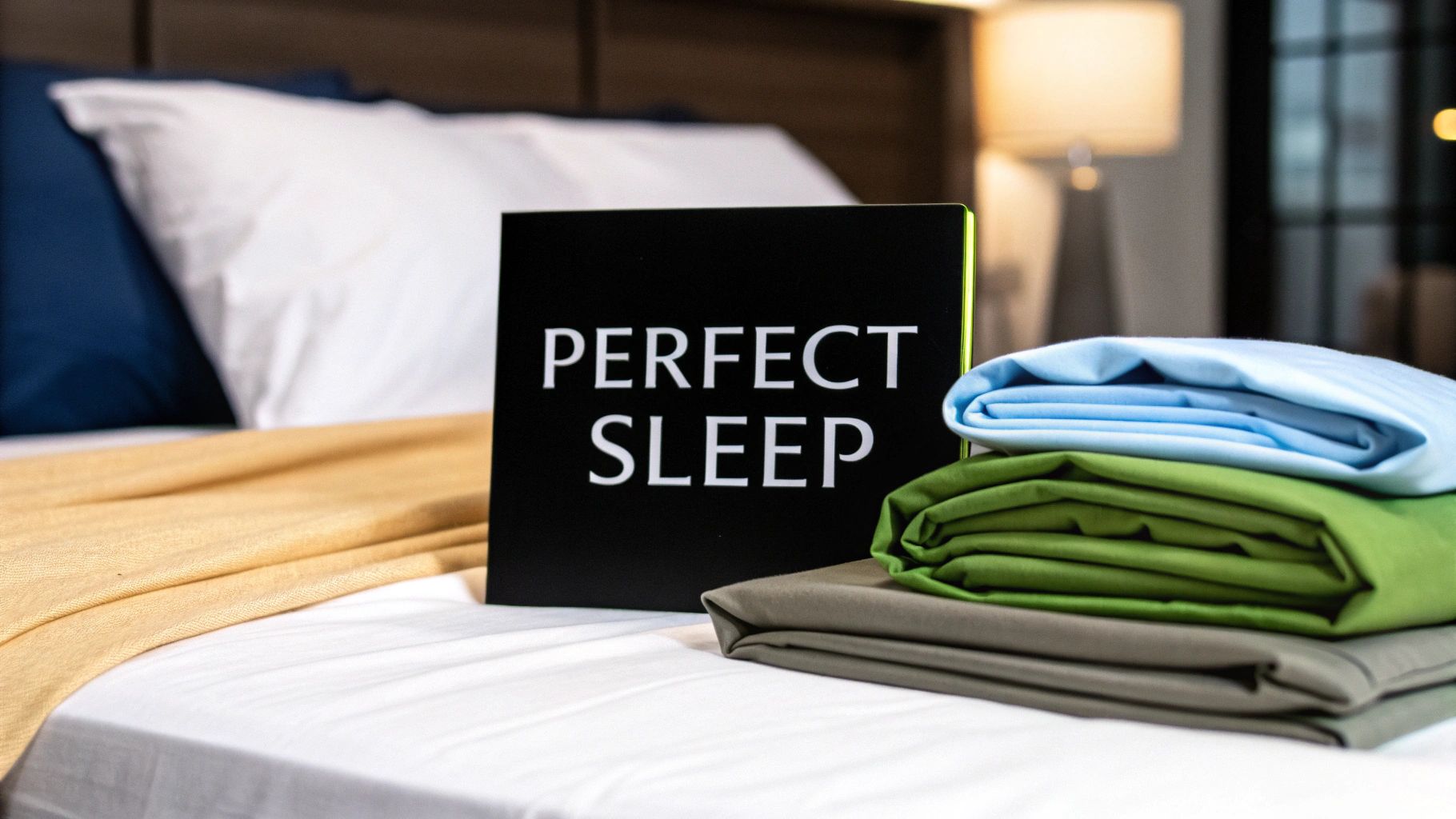
When you are looking for the best fabric for sheets, most people find that high quality cotton hits the sweet spot. It offers a brilliant blend of softness, durability, and breathability. The perfect choice really comes down to your personal comfort, as materials like airy linen and silky bamboo also bring unique benefits for different types of sleepers.
Your Guide to Choosing the Perfect Sheet Fabric
Choosing new bed sheets can feel surprisingly complex, yet it is one of the simplest ways to completely transform your sleep. The right fabric can be the difference between a restless night and waking up feeling truly refreshed. Think of your sheets not just as a covering, but as a crucial part of your sleep environment.
This guide is your friendly starting point. We will walk you through the most popular options out there, explaining what makes each one special. Our goal is to make the choices clear and help you find the material that feels just right for you.
What to Expect in This Guide
We are going to explore everything from classic fabrics to modern alternatives, helping you understand the real world benefits of each one. Forget the confusing jargon. We will focus on what matters most, which is your comfort.
Here’s what you will discover:
- The Comfort of Cotton: Why this timeless fabric remains a favourite in so many UK homes and how to pick the right type for your needs.
- The Casual Luxury of Linen: Learn what makes linen sheets so wonderfully breathable and why they get even better with age.
- Modern Fabric Choices: An introduction to practical options like microfibre and bamboo, perfect for specific needs and lifestyles.
- Understanding Weave and Thread Count: We will break down, in simple terms, how the construction of a sheet affects its feel against your skin.
By the end, you will have the confidence to choose the best fabric for sheets that perfectly suit your sleeping style, budget, and home. This is your first step towards creating a bed you cannot wait to climb into at the end of a long day.
The Timeless Comfort of Cotton Sheets
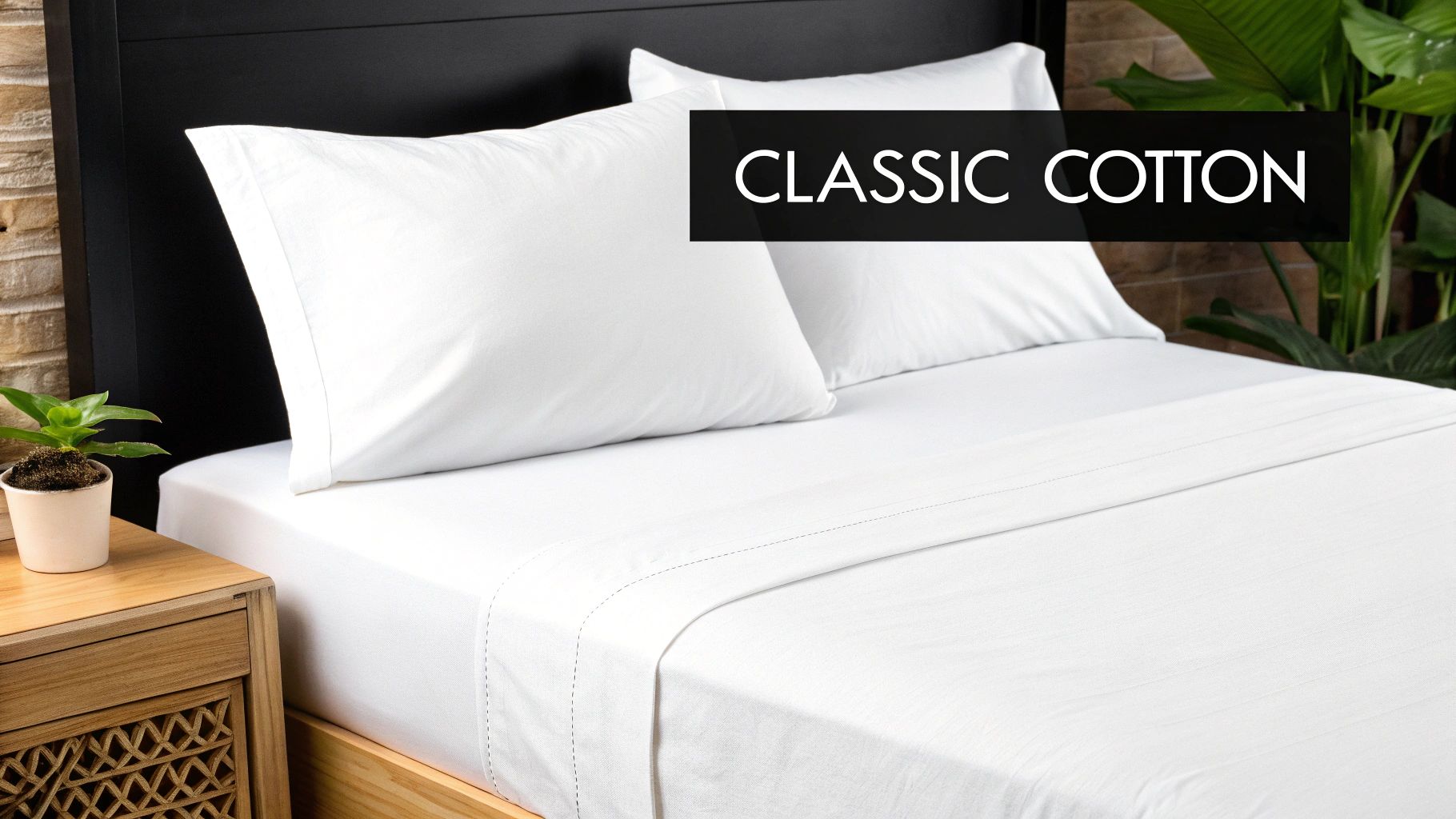
When you picture the perfect set of sheets, what comes to mind? For most of us, it is classic cotton. It is the go to choice for bedding here in the UK, and for good reason. There is a familiar, reliable comfort to cotton that just feels like coming home.
Cotton’s biggest advantage is that it is naturally breathable. The fibres allow air to circulate, which is fantastic for helping to regulate your body temperature while you sleep. This means cotton sheets can keep you cool on a warm summer evening but still feel cosy and inviting when the weather turns chilly.
This all season adaptability makes it a brilliant choice for the unpredictable British climate. It is no surprise that cotton dominates the market. In the UK home textile sector, it holds a remarkable 66.39% market share.
Finding Your Perfect Feel With Weave
Now, not all cotton sheets feel the same, and the secret to their texture is the weave. The weave is simply how the threads are woven together, and it completely changes the character of the fabric. Think of it like baking. The same ingredients can produce a light, airy sponge or a dense, rich fruitcake, all depending on how you combine them.
To get the most out of this wonderful material, it helps to understand its different types. You can find a detailed look at cotton fabric and its properties, but understanding the weave is the perfect place to start.
The two most common weaves you will find are percale and sateen.
-
Percale Weave: This uses a simple one thread over, one thread under grid pattern. The result is a light, crisp fabric with a cool, matte finish, very much like a freshly ironed shirt. It is incredibly breathable, making it a dream for anyone who tends to sleep warm.
-
Sateen Weave: This weave follows a one thread under, three or four threads over pattern. This clever technique exposes more threads on the surface, creating a fabric that feels exceptionally smooth and silky with a subtle, elegant sheen. Sateen feels a little heavier and warmer than percale, offering a more luxurious, drapey feel.
Your choice between percale and sateen really comes down to personal taste. Do you love the feeling of slipping into a cool, crisp hotel bed? Percale is for you. Or do you prefer a silky softness that glides against your skin? In that case, you will likely adore sateen.
Why Quality Matters So Much
Beyond the weave, the quality of the cotton fibre itself is crucial for how your sheets will feel and how long they will last. You might come across the term long staple cotton, which simply refers to the length of the individual cotton fibres.
Longer fibres can be spun into stronger, finer, and smoother threads. This results in sheets that are not just softer but are also far more durable, less likely to pill, and will hold up beautifully wash after wash. They might be more of an investment upfront, but high quality cotton sheets are truly built to last.
Choosing well is an investment in years of comfortable sleep.
Linen: The Luxury of Breathable Bedding
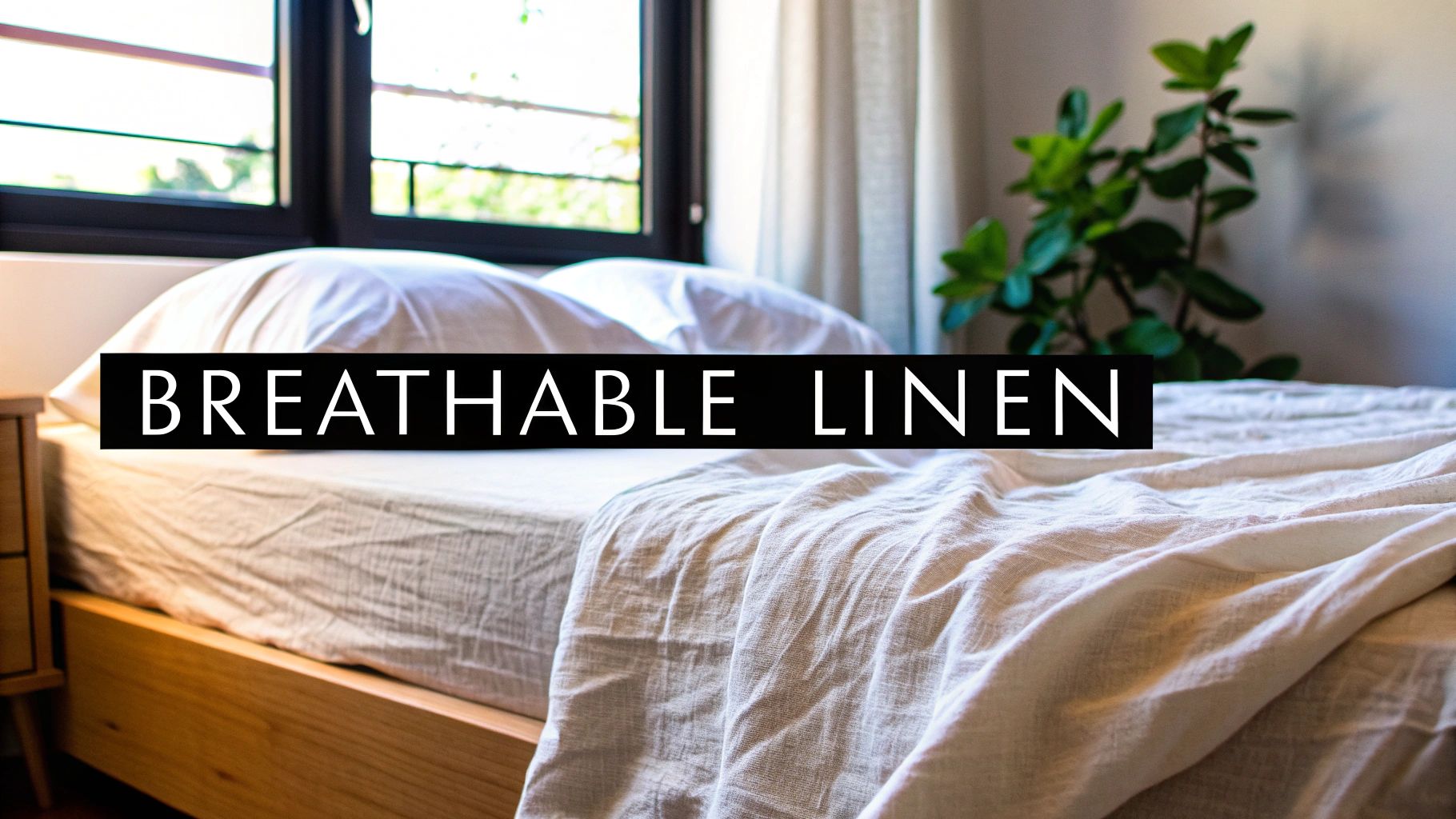
If you are drawn to a relaxed, effortlessly chic look, then linen sheets will likely capture your heart. This fabric offers a unique blend of casual style and pure comfort, turning your bedroom into a genuine retreat. Linen feels worlds away from the polished smoothness of sateen. It has a distinctive, slightly textured feel that is both comforting and incredibly sophisticated.
Made from the fibres of the flax plant, linen is one of the oldest textiles known to us, valued for centuries for its remarkable qualities. Its real beauty lies in that relaxed, lived in appearance. While some fabrics strive for a crisp, perfect finish, linen celebrates its gentle, natural crumple, which adds so much character and warmth to a room.
This unique aesthetic is gaining serious momentum. Linen is becoming a premium choice for bedding across the UK, which now holds a 9% share of the global linen fabric market. This growth is partly fuelled by how brilliantly linen performs in our variable climate, with everyday home buyers driving 79.50% of the home textile market.
The Magic of Breathability
Linen’s standout quality is its exceptional breathability. The flax fibres are naturally hollow, which allows air to circulate freely and makes linen a fantastic temperature regulator. Think of it as a clever natural thermostat for your bed.
On warm, humid nights, linen wicks moisture away from your skin, helping you stay cool and dry. It is an absolute game changer for anyone who tends to sleep hot. But come winter, these same properties work to retain your body heat, keeping you surprisingly cosy without ever feeling stuffy or overheated.
- Summer Comfort: Keeps you cool by letting heat escape and absorbing moisture.
- Winter Warmth: Acts as a natural insulator, trapping warm air close to your body.
This year round comfort makes linen an incredibly practical investment. It adapts beautifully to the seasons, ensuring you sleep comfortably no matter what the weather is doing outside.
Durability That Improves With Age
One of the most wonderful things about linen is that it just gets better over time. While other fabrics might wear out or go bobbly, linen actually becomes softer and more beautiful with every single wash. It is an investment that truly pays you back with years of comfort.
Linen is one of the strongest natural fibres available. This inherent strength means your sheets will be incredibly durable and resistant to pilling, so you can enjoy them for a long, long time. They are truly built to last, becoming a cherished part of your home.
Think of linen sheets like a favourite pair of jeans. They might start off a little crisp, but with each wash and wear, they soften up beautifully, moulding to a perfect, comfortable fit that feels uniquely yours.
If you are trying to decide between these two classic natural fabrics, our guide comparing linen vs cotton sheets can help you choose the perfect fit for your sleeping style. Both are fantastic choices, but they offer very different sleep experiences.
Caring For Your Linen Sheets
Looking after linen is simpler than you might think. Its relaxed nature means you can, and should, embrace its natural texture, so there is absolutely no need to worry about achieving a perfectly pressed finish.
For the best results:
- Wash Gently: Use a warm, gentle cycle to protect the fibres.
- Dry Naturally: Air drying is ideal and really enhances linen's natural softness. If you must use a tumble dryer, choose a low heat setting and pull the sheets out while they are still slightly damp to minimise wrinkling.
- Embrace the Look: Forget the iron! The beauty of linen lies in its casual, slightly crumpled texture. It is all part of its charm.
Beyond Cotton: A Look at Microfibre, Bamboo, and Other Modern Fabrics
While cotton and linen have a timeless charm, the world of bedding has expanded to include some fantastic modern fabrics, each with its own set of unique perks. These materials are often designed for performance, focusing on specific qualities like durability, silky softness, or exceptional warmth. Let's look at a few of the most popular choices, starting with the incredibly practical microfibre.
Microfibre: The Practical Choice
Microfibre is a man made fabric, usually made from polyester, woven from incredibly fine threads which are even finer than a strand of silk. This super fine weave is what gives the fabric its surprisingly soft and smooth handle.
Think of microfibre as the go to bedding for a bustling family home, a student flat, or anyone who values practicality above all else. Its tight structure makes it naturally resistant to stains and wrinkles, so it comes out of the wash looking fantastic with minimal fuss. On top of that, it is remarkably strong and holds its colour beautifully, even after countless washes.
The no nonsense benefits of microfibre are a huge part of its appeal. While cotton often dominates the conversation, polyester, the main component of microfibre, is a serious contender for the best sheet fabric in the UK. It actually commands the largest revenue share in the market, thanks to its unbeatable durability, stain resistance, and low maintenance nature. For busy households, polyester sheets are a sensible choice.
If you would like to dig a little deeper, our guide on what makes microfibre bedding a great option has you covered.
Bamboo: The Silky Soft Alternative
If you adore a silky, smooth feel against your skin, you will fall in love with sheets made from bamboo derived fabrics like viscose or lyocell. These materials are celebrated for their incredible softness, often drawing comparisons to high end silk or Egyptian cotton, but without the premium price tag.
The magic of bamboo extends far beyond its luxurious texture. It is a brilliant choice for anyone who tends to sleep warm. The fabric is highly breathable and excellent at wicking moisture away from the body, helping you stay cool, dry, and comfortable all night long. This makes it a fantastic weapon against those humid summer nights.
Bamboo derived fabrics are also naturally hypoallergenic and gentle, making them a wonderful choice for people with sensitive skin. Their smooth fibres are less likely to cause irritation, providing a soothing and peaceful sleep environment.
To better grasp what makes this material so special, you can explore resources on the unique properties and benefits of bamboo fibers. These insights really break down why it creates such a comfortable bedding material.
Flannel: The Ultimate in Cosiness
When the temperature drops and all you crave is to be warm and snug, nothing beats flannel. Flannel is usually made from cotton that has been brushed on one or both sides. This technique, called napping, raises the surface fibres to create that signature soft, fuzzy texture we all know and love.
That brushed finish does more than just feel soft. It also creates tiny pockets that trap air. This turns the fabric into an excellent insulator, holding onto your body heat to keep you wonderfully warm through the coldest winter nights.
- Exceptional Warmth: Its fuzzy surface traps heat, making it perfect for cold sleepers and chilly climates.
- Incredibly Soft: The brushing process gives it a comforting, velvety texture that feels lovely against the skin.
- Durable and Long Lasting: Good quality flannel is sturdy and will keep you cosy for many winters to come.
Ultimately, choosing flannel is like giving your bed a warm hug. It is the perfect fabric to switch to when you want to transform your bed into a snug, inviting sanctuary for the colder months.
What Thread Count and Weave Really Mean
When you are looking for the perfect sheets, the term "thread count" is impossible to avoid. For years, we have been led to believe that a higher number automatically equals better, more luxurious bedding. While it can be a helpful guide, it is not the whole story, and sometimes, it can be misleading.
So, what exactly is it? Thread count is simply the total number of threads woven into one square inch of fabric, counting both the vertical (warp) and horizontal (weft) threads. The theory is that a higher number means a tighter weave, resulting in a softer, more durable sheet.
The problem is, the quality of the threads themselves is far more important. A 300 thread count sheet made from high quality, long staple cotton will feel miles softer and last much longer than a 1000 thread count sheet made from flimsy, short staple fibres. For a deeper dive, our guide explains the full meaning of thread count and how to actually use it when you shop.
Why Weave Matters More
Instead of getting hung up on numbers, it is much more useful to think about the weave. The weave is all about how those horizontal and vertical threads are woven together, and it has the single biggest impact on how the sheets feel against your skin. It is the secret ingredient that can make the very same cotton feel either crisp and cool or silky and smooth.
The two most common weaves you will come across are percale and sateen.
-
Percale Weave: This is a classic one thread over, one thread under pattern. This simple grid like structure creates a light, crisp fabric that feels cool to the touch and has a modern matte finish. If you love that fresh, clean feeling of slipping into a hotel bed, percale is for you.
-
Sateen Weave: This weave is a little more complex, typically using a one thread under, three or four threads over pattern. This technique exposes more threads on the surface, giving the fabric its signature silky smooth feel and a subtle, elegant lustre. Sateen drapes beautifully and feels slightly warmer and weightier.
Think of it this way. Percale is like your favourite crisp cotton shirt, classic, breathable, and always cool. Sateen is more like a beautiful silk blouse, incredibly smooth, drapey, and with a touch of luxury. Neither is better. It just comes down to the texture you prefer to sleep in.
Making the Right Choice for You
Ultimately, understanding the difference between weave and thread count helps you shop smarter. You can look right past the marketing hype and focus on what truly matters, which is the feel of the fabric.
A good rule of thumb is to look for a thread count between 200 and 500 in a high quality fibre like long staple cotton. Within that range, you will find incredible options in both percale and sateen weaves that strike the perfect balance of softness, breathability, and durability. By prioritising the quality of the material and choosing the weave that suits your personal preference, you are guaranteed to find sheets you will love for years to come.
How to Choose the Right Sheets for Your Bed
Choosing the right sheets is about more than just colour or pattern. It is about crafting your own personal sanctuary. Think of your bed as the place you recharge. The final details, especially the fabric you sleep on every night, truly matter.
Now that you have a feel for the relaxed elegance of linen and the classic comfort of cotton, you are ready to bring it all together. The goal is to create a bed that feels every bit as good as it looks, turning every night into a genuinely restful retreat.
Matching Fabric to Your Sleep Style
Let’s start with a simple question. How do you really sleep? Be honest. Are you constantly kicking off the covers, or do you find yourself pulling up an extra blanket in the middle of the night? Your answer is the best guide you have.
-
For Hot Sleepers: If you often wake up feeling too warm, breathability is your best friend. Linen is an absolute champion here, as is a crisp cotton percale. Both fabrics allow air to move freely, wicking moisture away and helping you stay cool and dry all night long.
-
For Cold Sleepers: Always feeling a bit chilly? You will want sheets that trap warmth. Flannel is the undisputed king of cosiness for winter, while a buttery cotton sateen offers a lovely touch of warmth and a comforting weight that never feels too heavy.
-
For Sensitive Skin: If your skin is easily irritated, natural, gentle fabrics are essential. Organic cotton, silky bamboo derived viscose, and of course, natural linen are all fantastic choices. Their smooth fibres are far less likely to cause irritation, creating a soothing environment for a peaceful night's sleep.
This little decision tree can help you visualise the feel you are after.
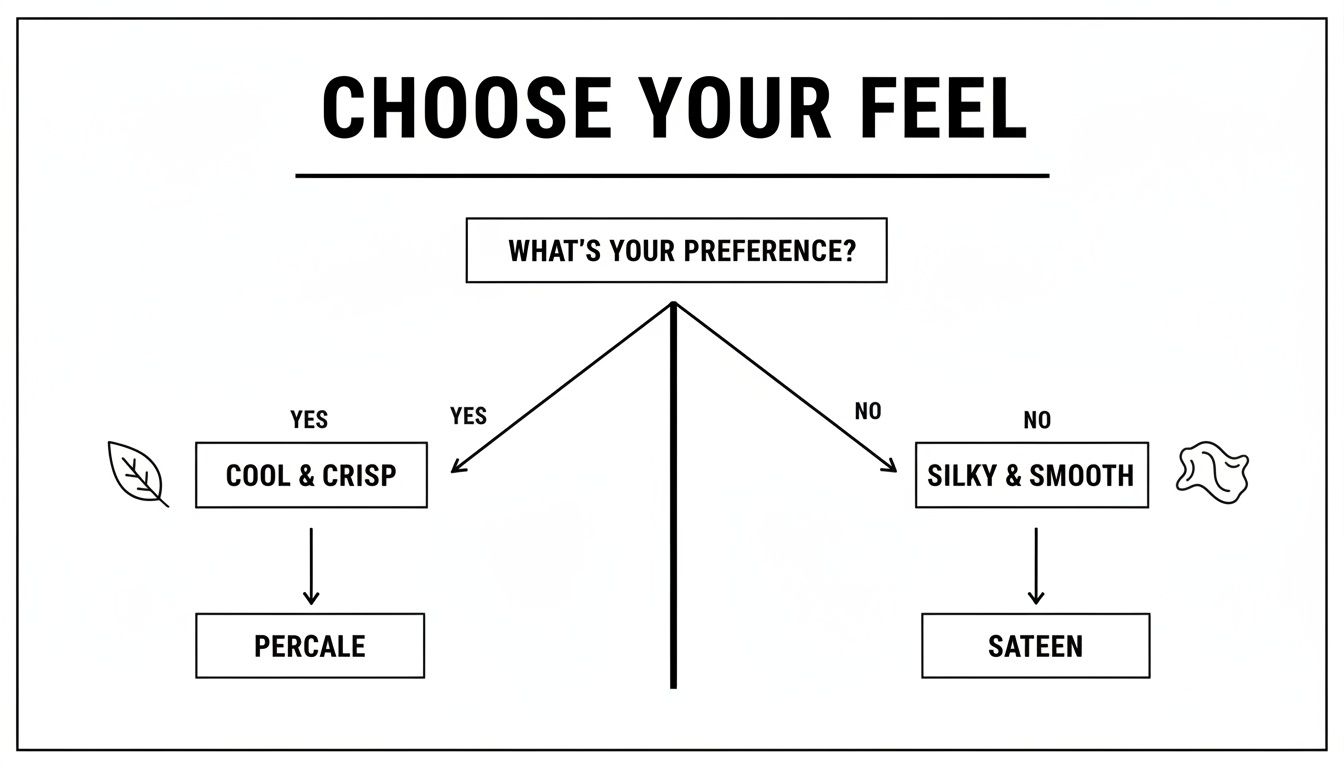
It is a simple way to decide between the two most popular cotton weaves, showing how percale gives you that cool, crisp hotel sheet feel, while sateen delivers a smoother, silkier touch.
Completing Your Bedding Ensemble
Once you have landed on your perfect sheet fabric, it is time to think about the bigger picture. This is your chance to layer textures and build the ultimate sleep setup. After all, a beautiful set of sheets deserves the right duvet and pillows to bring it all together.
Your bedding should work as a complete system. The sheets are the foundation, but the layers you add on top are what create that truly inviting, cannot wait to climb in feeling.
Getting the sizes right is also crucial for both comfort and looks. There is nothing more frustrating than a fitted sheet that will not stay put. For a little extra help, our article on the right size of bed sheets has some great tips to ensure a perfect fit.
Ultimately, choosing your ideal sheets is a personal journey. By thinking about your sleep habits and what feels good to you, you can cut through the noise and find bedding that genuinely improves your rest. Trust your own sense of touch. The right fabric is the one that makes you feel instantly relaxed the moment you slip into bed.
A Few Common Questions About Bed Sheets
We get asked all the time about the little details that make a big difference in choosing and looking after new sheets. To help you feel completely confident, we have put together answers to some of the questions we hear most often.
What Is the Best Fabric for Sheets If I Have Sensitive Skin?
For anyone with sensitive skin, sticking with natural, hypoallergenic fabrics is your best bet for a truly comfortable night. Gentle materials are far less likely to cause irritation, letting you rest easy.
Look for fabrics that are grown and processed without harsh chemicals. Organic cotton is always a wonderful choice, prized for its softness and purity. In the same vein, bamboo derived viscose is fantastic. It has an incredibly smooth, silky texture that just glides over the skin. Do not forget linen either. It is another brilliant pick thanks to its natural antibacterial qualities and incredible breathability.
It is usually a good idea to steer clear of synthetic fabrics like polyester if your skin is easily upset. They do not breathe as well and can trap heat and moisture, which can sometimes lead to discomfort.
How Often Should I Wash My Bed Sheets?
To keep your bed feeling fresh and hygienic, we always recommend washing your sheets once a week. This simple habit takes care of the natural build up of sweat, body oils, and skin cells that happens over time.
Of course, if you have allergies or a furry friend who shares the bed, you might want to wash them a bit more frequently, maybe every three to four days. Regular washing is a great way to keep allergens like dust mites in check, making for a healthier sleep space overall.
Always take a quick look at the care label before you put your sheets in the wash. Following the specific instructions for your fabric is the secret to keeping them soft and vibrant for years to come.
Does a Higher Thread Count Always Mean Better Quality?
This is a classic myth! While thread count has been a big marketing buzzword for years, it is only a tiny part of the picture. The quality of the fibre itself and the type of weave are far more important when it comes to how sheets actually feel and how well they last.
Think of it this way. A 300 thread count sheet made from high quality, long staple cotton will feel infinitely more luxurious and last much longer than a 1000 thread count sheet woven from cheap, short staple fibres. So, instead of getting caught up in the numbers game, focus on the feel of the fabric and the weave that you know you love.
What Is the Difference Between Percale and Sateen Weaves?
It really all comes down to the feel and finish. These are two of the most popular cotton weaves, but they offer completely different experiences.
- Percale: Made with a simple one thread over, one thread under grid pattern. This creates that classic crisp, cool to the touch hotel sheet feel with a clean matte finish. It is incredibly breathable, which makes it a dream for hot sleepers or for those warm summer nights.
- Sateen: This weave uses a one thread under, four threads over structure. By exposing more of the thread's surface, you get a much silkier, smoother feel with a beautiful, subtle sheen. Sateen drapes beautifully, feels a bit warmer than percale, and is naturally more resistant to wrinkles.
Ready to build your perfect sleep sanctuary? Explore the beautiful range of duvets and bedding at Morgan and Reid and find the ideal layers to complement your new sheets. Discover your perfect match at https://www.morganandreid.com.
Share:
What Thread Count Really Means for a Better Night's Sleep
What Is Fleece Material Made Of? A Complete Guide