


We’ve all been there, wrestling with a fitted sheet that pings off a corner in the middle of the night, or a flat sheet that comes untucked with the slightest movement. Choosing the right bed sheets is the first, most crucial step to creating a bed that’s not just comfortable, but also looks impeccably styled. Think of it as the foundation for your personal sleep sanctuary.
This guide is here to end that frustration for good.
Why the right sheet size matters so much
Getting your sheet size spot on is the key to an inviting and genuinely relaxing bed. When sheets fit properly, they lie smooth, stay put, and contribute to an uninterrupted night's sleep. It's a small detail that makes a world of difference to your daily comfort. For busy families and anyone who values a good night's rest, getting this right means less hassle and more relaxation.
A poorly fitting sheet is a constant annoyance. If it's too small, the corners will be under constant strain, ready to pop off at any moment. Too large, and you’ll be dealing with uncomfortable bunches and wrinkles that disrupt your rest. The goal is that perfect, seamless fit that feels like it was made just for your bed.
Building your sleep sanctuary
The right bedding can elevate your bedroom from a simple place to sleep into a true retreat. Once you have the sizing sorted, you can explore the vast variety of bedding sheet sets available, considering everything from the feel of the material to the thread count and weave. A well fitting sheet is the base layer for this transformation, ensuring everything else, from your duvet to your pillows, looks and feels fantastic.
Here in the UK, our bed sheet sizes are thankfully standardised to match our common mattress dimensions. This makes it much easier to find that perfect fit for a cosy night under your favourite Morgan & Reid comforter. In fact, with 40% of UK households now favouring King size beds or larger, deep pocket fitted sheets have become a game changer, minimising sheet slippage by as much as 25%. You can find more details on UK bedding sizes and their benefits. Discover more insights about UK bedding sizes on ebbandweave.co.uk.
A guide to standard UK bed sheet sizes
Trying to figure out UK bedding sizes can feel a bit like cracking a code, but it's actually much more straightforward than you might think. Getting the basics right is the first step to making your bed look and feel perfect. It all comes down to one simple thing, matching your sheets to your mattress.
Think of it like buying a new pair of jeans. Too tight, and they're uncomfortable. Too baggy, and they just don't look right. The same logic applies to your bedding. A perfectly sized sheet is the foundation for a comfortable and tidy looking bed.
Once you understand the standard sizes, you can shop with complete confidence, whether you're decorating a new home or just treating your bedroom to a little refresh.
UK bedding dimensions at a glance
The good news is that UK bed and sheet sizes are standardised. This means that once you know the name of your bed size, be it a cosy Single or a sprawling Super King, finding sheets that fit is easy.
Here's what you need to know about the two main types of sheets.
- Fitted Sheets: These are your mattress's best friend. They're designed to match the exact width and length of your mattress, with elasticated corners that grip it for a smooth, snug fit.
- Flat Sheets: A flat sheet is intentionally larger than the mattress. This gives you plenty of extra fabric to tuck in tightly, creating that crisp, layered look you see in hotels.
To help you out, we’ve put together a quick reference chart with all the standard UK measurements. It's a great tool to have on hand next time you're shopping for bedding. If you need an even more detailed breakdown, you can dive into our complete guide to bedding size dimensions.
UK standard bed and sheet size chart
This table lays out the common UK mattress dimensions and shows you exactly which fitted and flat sheets you'll need for each.
| Bed Size | Mattress Dimensions (cm) | Fitted Sheet Size (cm) | Flat Sheet Size (cm) |
|---|---|---|---|
| Single | 90 x 190 | 90 x 190 | 180 x 260 |
| Small Double | 120 x 190 | 120 x 190 | 220 x 260 |
| Double | 135 x 190 | 135 x 190 | 220 x 260 |
| King | 150 x 200 | 150 x 200 | 265 x 275 |
| Super King | 180 x 200 | 180 x 200 | 305 x 275 |
As you can see, the fitted sheet dimensions mirror the mattress size, while the flat sheet offers generous overhang for tucking.
Recent trends show that many of us are opting for more space and comfort, especially in family homes.
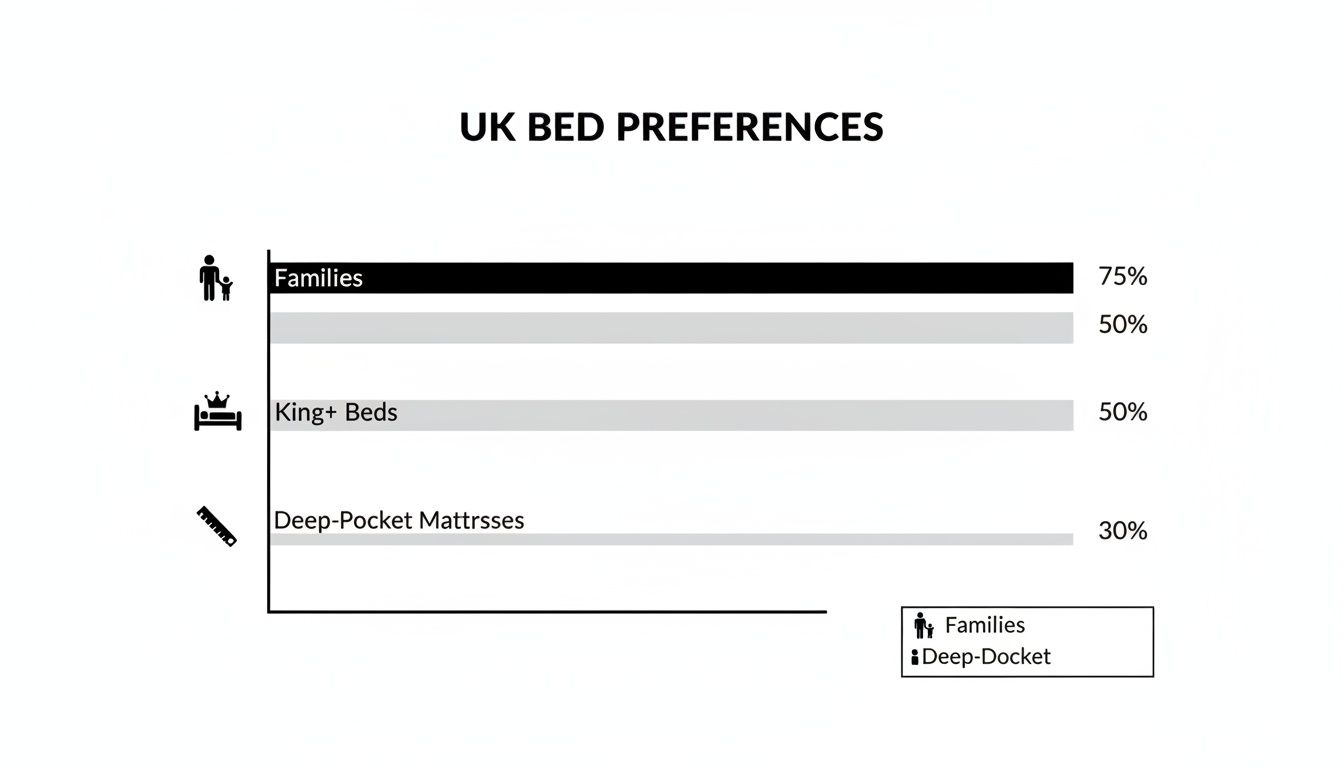
The data speaks for itself, with over 50% of families now choosing King size beds or larger, getting the sheet size right has become more important than ever for a well made bed.
Making the right choice
Now that you're armed with these standard sizes, you're well on your way. Just remember the golden rule. Your fitted sheet should match your mattress dimensions precisely, while your flat sheet should be larger to allow for a neat, secure tuck.
The secret to a beautiful bed isn't just about the numbers. It's about the feeling you get when you slip into sheets that fit just right. It's a simple detail that can turn your bed into a genuine sanctuary for rest and relaxation.
By understanding these common UK sizes, you can finally put an end to the frustration of ill fitting sheets. You'll not only save time and effort but also guarantee yourself a much more comfortable night's sleep.
Why mattress depth changes everything
Have you ever bought a fitted sheet in the right size, say, a King for a King bed, only to find it just will not stretch over the corners? You’re not alone. The culprit is almost always the mattress depth, an often overlooked measurement that makes all the difference.
It’s a common frustration. You spend time choosing the perfect colour and fabric, but if the sheet’s pocket is too shallow for your mattress, it will constantly ping off at the corners. This is especially true today, with pillow tops, memory foam toppers, and deep modern mattresses becoming the norm.
A standard mattress used to be around 25cm deep, but many newer models can easily reach 30cm or even 40cm. That extra height is precisely why a standard fitted sheet might not be up to the job.
The importance of pocket depth
Think of a fitted sheet's pocket like the waistband on a pair of trousers. If it isn’t deep enough, it simply won't stay put. A sheet with the right pocket depth, however, will hug your mattress snugly, stay in place all night, and give you that smooth, wrinkle free surface that looks so inviting.
This is the secret to achieving that polished, hotel quality feel at home. A secure sheet doesn't just look better. It feels more comfortable, preventing annoying bunching and shifting while you sleep. The importance of mattress depth for a proper sheet fit extends to all bed types, even specialised products like dual-sided crib mattresses.
For those with thicker mattresses, finding the right bedding is key. If your mattress is particularly deep, you’ll want to look for specially designed options like our extra deep brushed cotton fitted sheets, which are made to solve this exact problem.
How to get it right
To avoid this all too common pitfall, grab a tape measure before you even think about shopping for new sheets. And remember to measure your mattress with any toppers you use, as they add to the overall height.
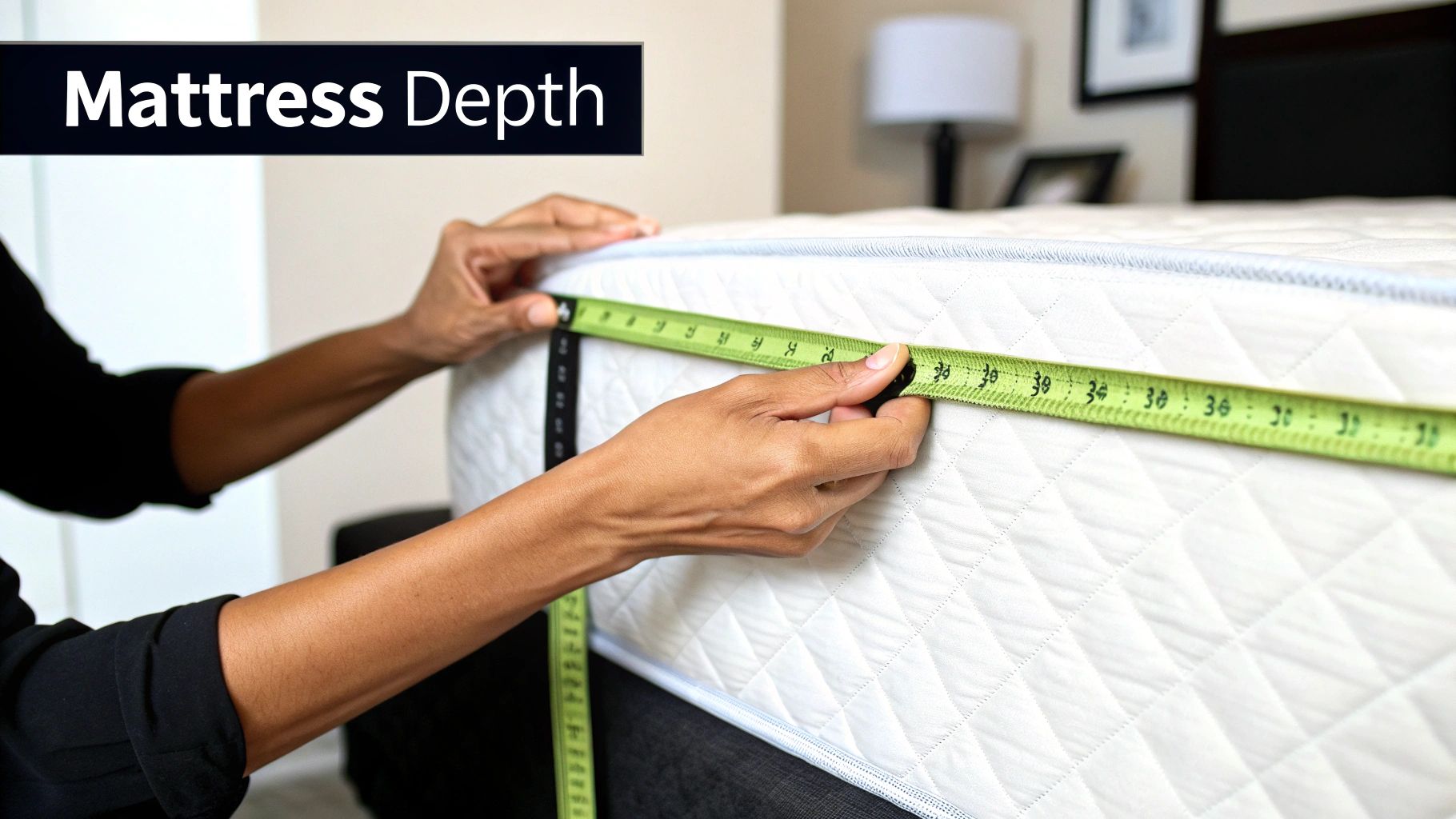
Here's a simple guide to follow.
- Measure your mattress: Place a ruler or measuring tape flat against the side, from the bottom seam to the very top. Don't press down, you want the full height.
- Add extra room: Look for a fitted sheet with a pocket depth that is at least 5 to 8 cm deeper than your mattress measurement.
That extra fabric isn't just for show. It’s what allows the sheet to tuck securely right under the mattress, creating enough tension to hold it firmly in place all night long.
This small step ensures your sheet has enough material to grip the underside of your mattress properly. Taking a moment to measure guarantees you'll choose the right size of bed sheets every time, transforming your bed into a true haven of comfort.
How to measure your bed in three simple steps
Getting bed sheets that fit perfectly is much easier than you’d think. It really just comes down to taking three quick measurements. Spending five minutes now will save you the headache of returning sheets that just won't cooperate, and you'll get that crisp, snug hotel feel right from the start. All you need is a tape measure.
Think of it as creating a custom profile for your bed. Once you've got these three numbers, you can shop with absolute confidence, knowing precisely what will work.
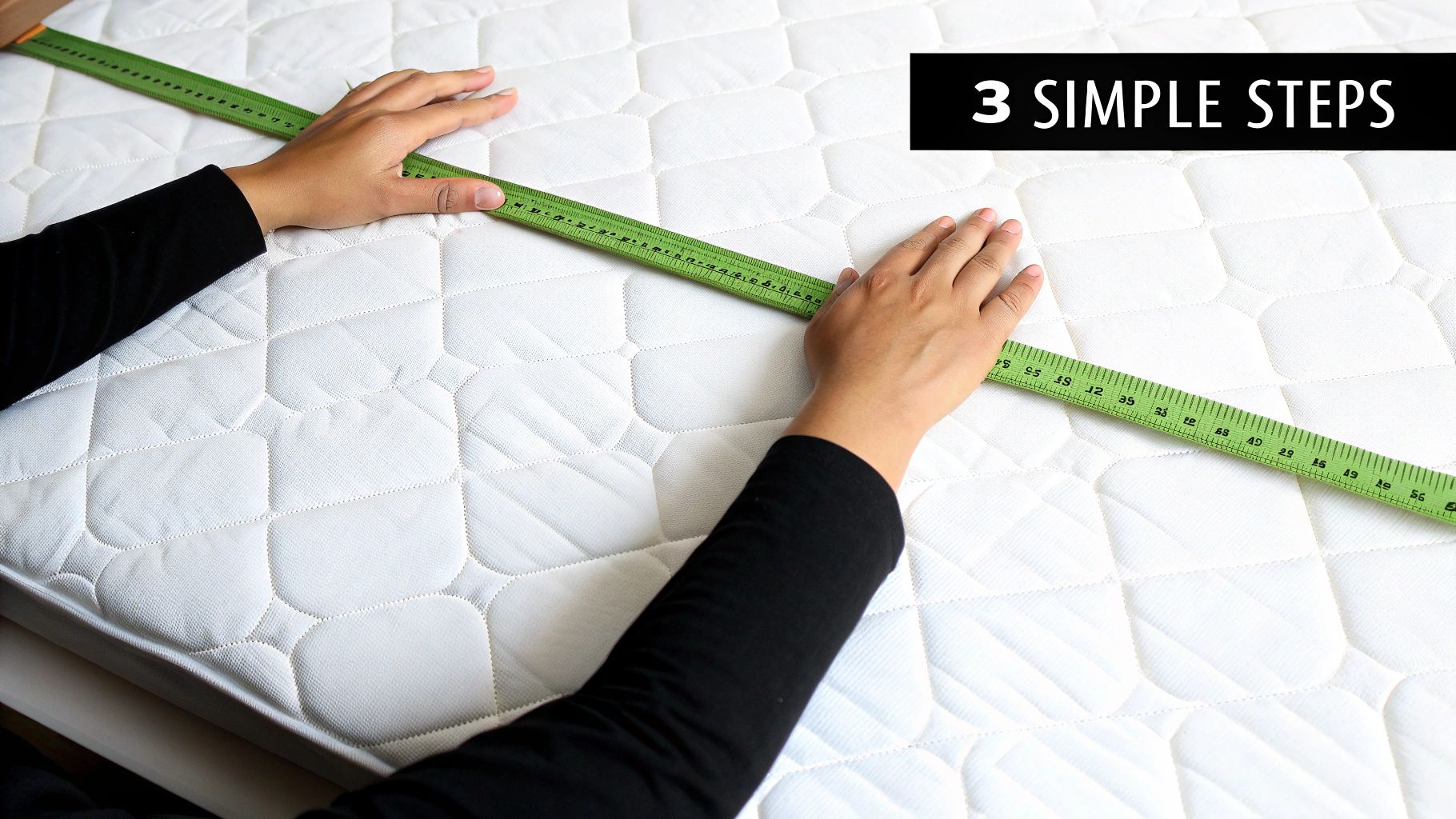
Step 1: Measure the width
First up, let’s get the width. Lay your tape measure flat at one side of the mattress and pull it straight across to the other. To get a true reading, make sure it’s not dipping or sagging in the middle.
Jot that number down. This is the cornerstone measurement for both fitted and flat sheets and tells you whether you're looking for a Single, Double, or King.
Step 2: Measure the length
Now for the length. Place the end of your tape measure at the head of the mattress and extend it all the way to the foot. Just like with the width, keep the tape pulled taut to ensure you’re not adding any extra length.
This dimension, paired with the width, gives you the basic footprint of your mattress. If you're curious how your figures stack up against standard sizes, our guide to bedding sizes in inches is a great resource to have handy.
Step 3: Measure the depth
This is the step everyone forgets, but it’s the secret weapon for finding sheets that actually stay put. To measure the depth, or height, simply hold your tape measure vertically from the bottom edge of the mattress to the very top.
Crucial Tip: Always measure the depth with any mattress toppers or protectors you use. A thick topper can easily add 5-8 cm, which is more than enough to turn a perfect fit into a wrestling match.
With these three simple measurements in hand, you’re fully equipped to find the right bed sheets every time. No more guessing games or frustrating sheets that ping off in the middle of the night, just a perfect fit.
Solving common bed sheet problems
Even when you’ve got the right size sheets, a few common frustrations can get in the way of that perfectly made bed. We’ve all been there. The fitted sheet that pings off a corner in the middle of the night, or the flat sheet that ends up in a tangled mess by morning. These little annoyances can be surprisingly disruptive.
Fortunately, they’re all easily fixed with a bit of know-how. By tackling these issues head on, you'll not only get more life out of your bedding but also enjoy a much more comfortable, well kept bed every single day. Let's dive into the usual suspects and how to sort them out for good.
The shrinking sheet dilemma
It's one of the most frequent complaints we hear. A sheet that fits like a glove straight out of the packet, only to shrink after its first trip through the washing machine. This almost always comes down to two things, the quality of the fabric and how it's being cared for. Natural fibres like cotton are brilliant, but they are prone to a bit of shrinkage, especially if they encounter high heat.
To keep your sheets fitting perfectly, just follow these simple rules.
- Check the Label: Before you even buy, look for terms like 'pre-shrunk cotton' or consider blends with a little polyester, as they tend to be more stable. Most importantly, always read the care instructions.
- Wash Cooler: A 30°C or 40°C wash is plenty to get your sheets clean without shocking the fibres into tightening up and shrinking.
- Avoid High Heat Drying: Line drying is your best friend here. If you need to use a tumble dryer, stick to the low heat setting to be kind to the fabric.
Understanding the link between quality and care makes all the difference. To get a better handle on choosing durable materials from the start, you can explore our helpful guide on what makes a good thread count for bed sheets.
When fitted sheets lose their grip
A fitted sheet really is only as good as its elastic. Over time, things like high heat, harsh detergents, and the simple act of stretching it over the mattress can cause the elastic to weaken and lose its snap. The result is a sheet that constantly slips, slides, and bunches up while you’re trying to sleep.
A snug, taut fitted sheet is the very foundation of a comfortable bed. Once that elastic gives way, the whole experience is compromised, often leading to a restless night spent fighting with wrinkled fabric.
To help your elastic last longer, be gentle. Try not to overstretch the corners when you're making the bed, and always opt for a mild detergent. If the elastic has already lost its fight, don't despair. You can easily find sheet suspenders or clips online. These clever straps clip onto the corners and run diagonally under the mattress, pulling everything taut and keeping your sheet firmly in its place.
The untuckable flat sheet
Ah, the age old struggle with the flat sheet that just won't stay tucked in. You go to bed with it perfectly smooth, only to wake up with it wrapped around your legs. This issue usually points to one of two things, either the sheet is a bit too small for the bed, or your tucking technique could use an upgrade.
For that crisp, secure finish you see in hotels, give hospital corners a try. It’s a simple folding method that neatly locks the sheet in place at the foot of the bed, ensuring it stays smooth and secure all night long. A quick search online will give you plenty of tutorials, and it might just transform your bed making routine forever.
Styling your bed with sheets and comforters
A beautifully made bed is more than just a place to sleep, it's the heart of your personal sanctuary. Once you've nailed down the perfect sheet size, the real fun of styling can begin. Layering your bedding is a simple art form that can transform your bedroom into a retreat that feels every bit as good as it looks.
It all starts with that perfectly sized flat sheet. When you get the dimensions right, it drapes generously over the sides of your mattress. That extra fabric isn't just for a neat tuck. It’s meant to be folded back over your quilt or comforter, creating that inviting, layered look that adds so much depth and texture. It’s a small detail that makes a world of difference.
Creating an inviting look
Picture this. You fold back the top edge of a plush, cosy comforter to reveal a crisp, contrasting flat sheet. This classic technique instantly brings a touch of hotel style elegance into your room. It also has a practical side, it protects your comforter from daily wear, meaning you won’t have to wash it as often. It’s the perfect blend of beauty and convenience.
This is also your chance to play with colour and texture. You could create a calm, cohesive look with complementary shades or inject some personality with a vibrant pattern peeking out. For more inspiration on pulling together the perfect sleep space, you can find great ideas in our detailed guide on how to choose bedding.
Choosing the right combination is key to achieving both comfort and style.
- Complementary Comfort: The flat sheet acts as a soft, breathable barrier between you and a heavier comforter, which is perfect for helping to regulate your temperature all night long.
- Visual Appeal: That simple fold down breaks up the solid block of colour from your comforter, making the entire bed look more polished and thoughtfully composed.
- A Personal Touch: This is where you can truly express yourself, turning a functional bed into a statement centrepiece that reflects your unique taste.
Ultimately, the aim is to craft a beautiful escape where you can truly relax and recharge. Every night should feel like a little luxury, and it all begins with getting those layers just right.
Got questions? We've got answers
Still have a few questions about getting the right sheet size? You're not alone. Here are some of the most common queries we hear, along with some straightforward advice to help you make the perfect choice.
Can I use a double sheet on a small double bed?
Absolutely, this is a common workaround that usually does the trick. A standard double mattress measures 135cm across, while a small double is a bit trimmer at 120cm.
When using a double fitted sheet, you'll have a little extra fabric, but it’s nothing a good, firm tuck can't fix. As for a double flat sheet, it will simply feel more generous, giving you plenty of drape and material to tuck in for a cosy, secure feel.
What's the real difference between UK and European bed sizes?
This is a classic trap for the unwary! UK and European sizes can be deceptively similar but just different enough to cause a poor fit. For instance, an EU King is typically 160cm x 200cm, while its UK counterpart is a full 10cm narrower at 150cm x 200cm.
The golden rule? Always go by the exact measurements in centimetres. Never rely on the name alone, especially if your mattress or bed frame came from a European brand like IKEA.
How much deeper should my fitted sheet be?
For a secure, slip free fit, aim for a fitted sheet that's at least 5cm to 8cm deeper than your mattress.
Think of that extra fabric as your insurance policy against a scrunched up, uncomfortable bed. It allows the elasticated corners to wrap snugly underneath the mattress, holding everything taut and in place, no matter how much you toss and turn.
At Morgan & Reid, we know that the right bedding is the secret to a truly restorative night's sleep. From perfectly fitted sheets to our snuggly comforters, explore our collection and start building your dream sleep sanctuary. Find your perfect fit at Morgan & Reid
Share:
How to put on a duvet cover in minutes
The Ultimate Guide to Single Duvet Size in cm