


Ask anyone what the best bed sheet fabric is, and you will get a dozen different answers. While Egyptian cotton often gets the top prize for its incredible softness, breathability, and durability, the truth is, the "best" fabric is the one that feels right to you. If you love that crisp, hotel bed feeling, percale is your go to. If you are after a silkier, smoother touch, sateen is probably your perfect match.
Your guide to choosing the perfect bedding
Finding the right bed sheets can honestly change your sleep for the better, but navigating the world of bedding can feel a bit overwhelming. This guide is here to demystify the fabrics without confusing jargon, helping you turn your bed into the sanctuary it should be. We will explore everything from the crisp, cool feel of classic cotton to the relaxed, lived in charm of linen.
Your perfect bedding really comes down to personal preference. Do you tend to overheat at night, or do you love the feeling of being wrapped in a cosy cocoon? Answering that simple question is the first step in finding your ideal sheets.
Finding your ideal feel
The texture of your sheets is where personal taste really comes into play. Some of us love the feeling of sliding into smooth, silky sheets, while others crave the fresh, crisp sensation you get from classic cotton. Think about what you find most inviting. This simple decision tree can help you narrow it down.
As you can see, it really boils down to two main camps, which are cool and crisp versus soft and smooth. Figuring out which one you belong to makes the rest of the process much easier.
Why your sheets matter so much
Choosing your bedding is about so much more than just style. It is a crucial part of your sleep hygiene. The right material can help regulate your body temperature, soothe sensitive skin, and create a calming environment that cues your body it is time to rest.
It is no wonder bed linen is such a significant part of the home textile market in the United Kingdom. In fact, it accounts for approximately 63.27% of the entire bed and bath linen market revenue. This is a growing area, as more of us are realising the value of investing in premium, comfortable, and sustainable products for our homes. You can find more fascinating UK bedding trends over on Mordor Intelligence.
A great night's sleep starts with the right foundation. Choosing a fabric that aligns with your body's needs, whether that means staying cool or feeling snug, is the secret to waking up refreshed and ready for the day.
Ultimately, the best bed sheets are the ones that make you genuinely look forward to getting into bed each night. Throughout this guide, we will give you the practical knowledge you need to:
- Understand different materials and what they offer.
- Match a fabric to your sleeping style and the season.
- Feel confident you are choosing sheets you will love for years to come.
Understanding thread count and weave
When you are on the hunt for the perfect bed sheets, two terms inevitably pop up, which are thread count and weave. Let us pull back the curtain on these concepts, because they are not as straightforward as they seem.
Many of us have been led to believe that a higher thread count is the ultimate sign of quality, but the real story is a bit more nuanced. It is less about the sheer quantity of threads and much more about the quality of the yarn itself.
Think of it like baking a cake. You could use ten average eggs, or you could use five high quality, free range ones. Which cake do you think will taste better? It is the same with sheets. The quality of the cotton fibres makes a world of difference. A sheet crafted from strong, long staple cotton with a 300 thread count will feel far more luxurious and last much longer than a 1,000 thread count sheet made from weaker, shorter fibres.
What is thread count, really?
At its most basic, thread count is the total number of threads woven into one square inch of fabric. This figure counts both the vertical threads, the warp, and the horizontal threads, the weft. While it is a helpful metric, it is certainly not the only thing that matters.
A good rule of thumb is to look for a thread count between 200 and 500. This range typically hits the sweet spot, offering a fantastic balance of softness, durability, and breathability, especially when you are dealing with high quality cotton. For a closer look at this, you can learn more about finding the best thread count for sheets in our detailed guide.
The secret to luxurious bedding is not just a high number on the package. It is the combination of excellent quality fibre, a thoughtful thread count, and the right weave for your personal comfort.
The two most popular weaves
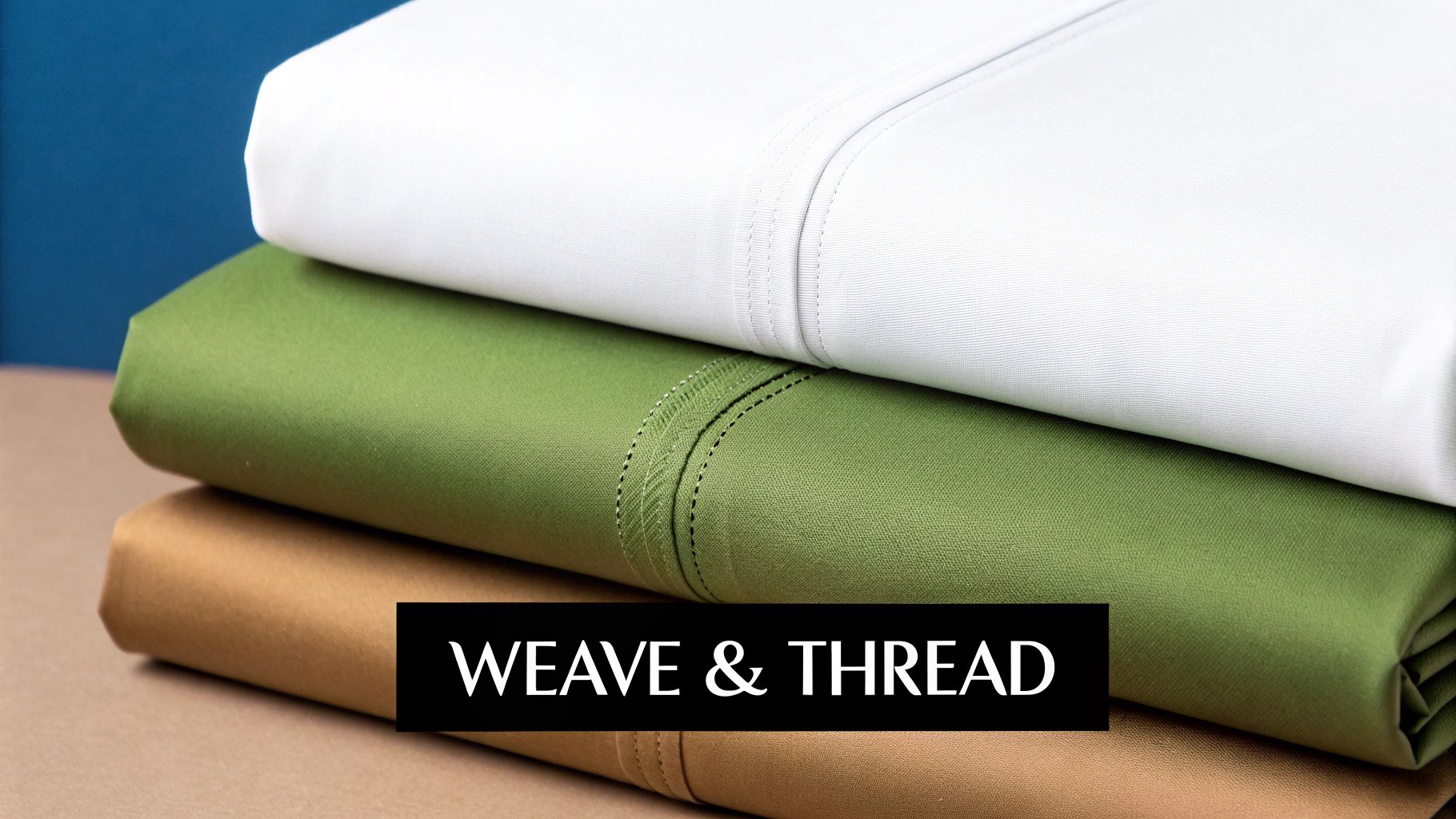
Just as crucial as thread count is the weave, which is the specific pattern in which the threads are interlaced. The weave is what truly dictates the final feel, look, and performance of your sheets. For cotton, the two most common weaves you will encounter are percale and sateen, and they offer completely different sleep experiences.
Percale weave
If you adore that cool, crisp feeling of slipping into a freshly made hotel bed, percale is your dream come true. It is woven using a simple one thread over, one thread under grid pattern, creating a light and airy fabric.
- Its feel: Crisp, cool, and breathable, very similar to a perfectly ironed cotton shirt.
- Best for: Hot sleepers or anyone living in a warmer climate. Its breathable nature is fantastic for staying cool all night long.
- Appearance: It has a classic, clean matte finish that looks effortlessly tidy and inviting.
Sateen weave
For those who crave a silky smooth touch, sateen is the go to. This weave uses a one thread under, three or four threads over pattern, which exposes more thread surface on the top of the fabric.
- Its feel: Incredibly soft and smooth with a buttery texture that drapes beautifully over the body.
- Best for: Anyone looking for a warmer, cosier feel. It is an excellent choice for the colder months or for those who simply love a more sumptuous sensation.
- Appearance: It has a subtle, elegant sheen, giving it a more glamorous look than its percale counterpart.
Getting to grips with these differences allows you to look beyond just the numbers on a label. Now, you can choose sheets based on the real life comfort and style you actually want for your bedroom.
Comparing the different types of cotton
When it comes to bedding, cotton is the classic choice, and for good reason. It is naturally breathable, feels soft against the skin, and is wonderfully durable. It is a reliable favourite in homes across the UK for a reason. But here is the thing, not all cotton is created equal, and understanding the differences is the key to finding sheets that feel truly exceptional.
The secret to premium cotton lies in the length of its fibres, a quality we call the staple. Cottons with longer staples produce a yarn that is smoother, stronger, and far more resistant to pilling. Think of it like braiding hair. Longer strands create a sleek, strong plait, whereas lots of short, flyaway pieces result in a weaker, frizzier braid.
This is precisely why investing in high quality cotton makes such a tangible difference to your sleep. Sheets woven from long staple cotton not only feel more luxurious from the very first night, but they also have that wonderful quality of getting progressively softer with every single wash.
Egyptian cotton: the gold standard
Egyptian cotton is probably the most famous of all, celebrated for its superior quality. Grown in the unique, fertile climate of the Nile River Delta, its extra long fibres create a fabric that is both incredibly soft and remarkably strong.
- Why it feels so special: Those long fibres mean fewer joins within the yarn, creating a flawlessly smooth surface that feels gentle and comforting.
- Built to last: Its inherent strength means Egyptian cotton sheets are a lasting investment, resisting wear and tear far better than standard cottons.
- Breathability: The fabric allows air to circulate freely, helping to regulate your body temperature for a comfortable sleep, no matter the season.
Pima cotton: a luxurious contender
Pima cotton is another premium, long staple variety, primarily grown in the USA, Australia, and Peru. It shares many of the wonderful qualities of its Egyptian counterpart, offering a similar silky softness and impressive durability.
Honestly, choosing between them often comes down to personal preference, as both deliver a top tier sleep experience. The most important thing is to ensure the product is certified, as the names are sometimes used for lower quality blends. If you are interested in sustainability, you might also want to explore the benefits of organic cotton bed sheets and how they contribute to a healthier sleep environment.
Standard cotton: the everyday choice
Standard cotton, often called Upland cotton, has much shorter fibres. While it is still a great natural material for bedding, it does not quite reach the luxurious heights of its long staple relatives.
The real luxury in cotton bedding comes from the length of the fibre. Longer fibres mean a smoother, stronger, and softer fabric that only improves with time, turning your bed into a genuine retreat.
This distinction is more important than ever as the UK bed linen market expands. The market reached USD 4.11 billion recently and is projected to grow significantly, driven by our collective desire for higher quality and more varied bedding options. As we invest more in our home comfort, understanding these fabric differences becomes invaluable. While we're focused on cotton for bed sheets, you might find it insightful to also explore the qualities of quilting cotton fabric.
Exploring natural alternatives like linen and bamboo
While cotton might be the first fabric that comes to mind, let us not overlook two other fantastic natural fibres: linen and bamboo. Each offers a completely different experience and feel, perfect if you are looking for something beyond the traditional. They are becoming incredibly popular for good reason, offering unique benefits for different types of sleepers.
Linen, which comes from the versatile flax plant, is famous for its relaxed, almost rustic charm. It has a unique, slightly textured feel that, quite wonderfully, gets softer and more welcoming with every single wash. But its real magic lies in its incredible breathability.
The secret is in the hollow flax fibres. They act like a natural ventilation system, letting air flow freely and wicking moisture away from your body. This makes linen an absolute dream for hot sleepers or anyone trying to stay comfortable through those stuffy summer nights. No more waking up feeling damp and sticky.
The rustic charm of linen
There is an effortless, lived in elegance to linen that is a style statement all on its own. It has a natural, gentle crumple that brings a sense of warmth and character to a bedroom, creating an atmosphere that feels both cosy and chic.
- Incredibly durable: Do not let its soft look fool you. Linen fibres are incredibly strong. A good set of linen sheets is a true investment that can last for years, even decades.
- Naturally hypoallergenic: It is a gentle choice, making it ideal for anyone with sensitive skin or allergies.
- Gets better with age: Unlike fabrics that degrade over time, linen genuinely improves with use, becoming softer and more comfortable the longer you own it.
If you are intrigued by this ancient yet timeless fabric, you can learn more about the specific benefits of French linen. And to see how it truly stacks up against the classic, check out our deep dive into linen versus cotton sheets.
The silky smoothness of bamboo
At the other end of the sensory spectrum, we have bamboo. Fabrics made from bamboo, like viscose or lyocell, are prized for their modern, silky smooth feel and beautiful drape. If you adore the buttery softness of a sateen weave but are curious about other options, bamboo is an outstanding alternative.
It delivers a sleek, luxurious feel against the skin that many compare to high end silk or even cashmere. But it is not just about softness. Bamboo is also brilliant at temperature regulation, working to keep you comfortable whether the night is warm or cool.
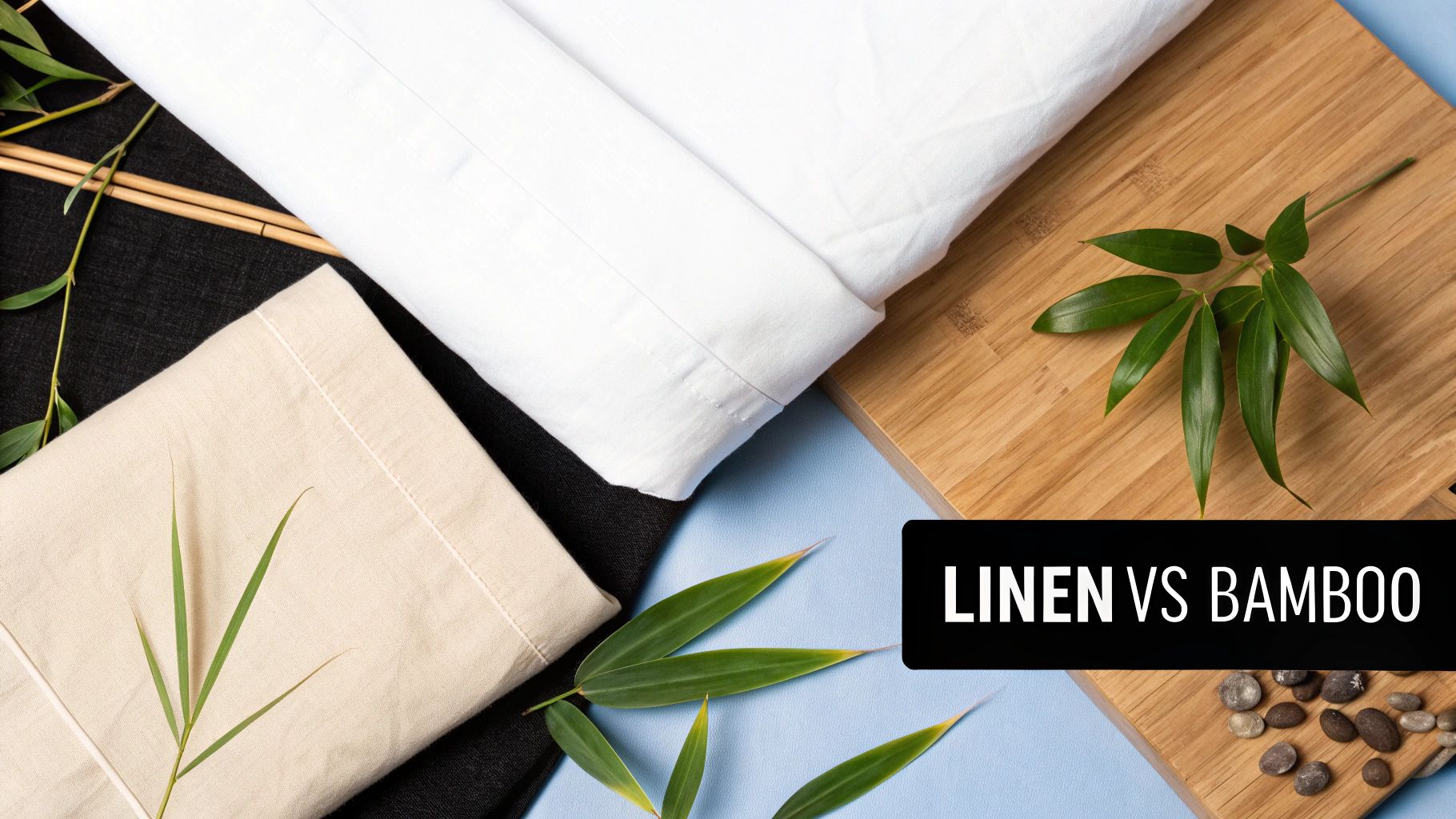
Choosing between linen and bamboo often comes down to the feeling you crave most: the earthy, breathable texture of linen or the sleek, smooth glide of bamboo.
The growing demand for sustainable and eco friendly choices is really changing the bedding world. These natural materials are gaining ground, and it is clear people are looking for quality and innovation. In fact, the UK bed linen market volume recently hit around 92.45 million kilograms, making it the largest in Europe. It is a clear signal that comfort, quality, and sustainability are more important than ever.
Finding cosy sheets for colder nights
When the temperature drops and the evenings draw in, your bed should feel like a warm, comforting hug. One of the simplest ways to make your bed snug is by changing your sheets for something better suited to the UK’s colder months. The best fabric for winter is one that feels instantly warm and inviting the moment you slide in.
We are going to look at two fantastic choices for achieving that perfect cosy feeling, which are classic flannel and modern microfibre. Each offers a different kind of warmth and comfort, and they both pair beautifully with your favourite Morgan & Reid comforter when you need that extra layer of snugness.
The classic comfort of flannel
Flannel is the undisputed champion of winter bedding, and for very good reason. It is usually made from cotton which has been carefully brushed on one or both sides. This gentle brushing process lifts the tiny fibres from the fabric's surface, creating that wonderfully soft, slightly fuzzy texture we all know and love.
That signature finish is where flannel's magic really lies. The brushed surface traps countless tiny pockets of air, which work as a natural insulator. This means that when you slip into a bed made with flannel sheets, it feels warm right away, holding onto your body heat to keep you comfortable all night long.
Flannel is not just soft, it is smart. The brushed texture actively creates an insulating layer, turning your bed into a warm sanctuary from the moment you get in.
If you are someone who dreads that initial shock of climbing into cold sheets, flannel is the answer. It provides a gentle, breathable warmth that feels like a constant, soft hug.
The modern softness of microfibre
For a more contemporary, and often more budget friendly option, microfibre is a brilliant choice. This fabric is crafted from incredibly fine synthetic fibres, usually polyester, which are woven together to create a material that is exceptionally soft and surprisingly lightweight.
The main draw of microfibre is its velvety, plush feel. It drapes beautifully and feels incredibly smooth against the skin, offering a different kind of cosiness to the more textured feel of flannel. Here is what makes it a great winter alternative:
- Effortless care: Microfibre is famously low maintenance. It resists wrinkles, dries in a flash, and holds its shape well, which certainly makes laundry day a lot easier.
- Durable and lightweight: Do not let its light feel fool you. The fabric is strong and resistant to pilling, so your sheets will stay looking and feeling great wash after wash.
- Hypoallergenic properties: The tight weave of the fibres helps to keep dust mites and other allergens at bay, making it a good choice for anyone with sensitivities.
Both flannel and microfibre are fantastic for creating a warm, inviting bed. Your choice really comes down to personal preference. Do you lean towards the classic, breathable warmth of brushed cotton, or the sleek, easy care softness of microfibre? Either way, you will be perfectly set for a wonderfully cosy night's sleep.
How to care for your bed sheets
You have invested in beautiful, comfortable sheets, and the good news is that with the right care, you can keep them feeling like new for years. Making your bedding last is not about complicated routines. It is about simple, consistent habits that protect the fabric's softness, colour, and integrity.
Proper care does more than just extend the life of your sheets. It keeps them hygienic and inviting. Most experts suggest washing your sheets once a week to remove the natural build up of body oils, skin cells, and dust. This simple act keeps your sleeping environment fresh and helps maintain the fabric's quality.
General washing and drying tips
While every fabric has its own quirks, a few universal rules apply to most types of bedding. Following these guidelines will help you sidestep common laundry mistakes like shrinking, fading, or pilling.
- Read the care label first: This is always the best starting point. The manufacturer’s instructions are your most reliable guide for the specific sheets you own.
- Wash in lukewarm water: A temperature around 40°C usually hits the sweet spot. It is warm enough to clean thoroughly but cool enough to be gentle on the fibres.
- Use a gentle detergent: Harsh chemicals can strip fabrics, so opt for a mild, liquid detergent. You will probably find you need less of it than you think, too.
- Do not overload the machine: Your sheets need room to move freely in the drum. This not only gets them cleaner but also helps prevent them from becoming a tangled, wrinkled mess.
Tailoring care to your fabric
Different materials need slightly different approaches to look their best. For example, a crisp cotton percale can handle a bit more heat than delicate linen, while a sateen weave needs a gentle touch to protect its signature sheen.
The secret to long lasting sheets is treating them with the same care you would a favourite piece of clothing. A little bit of attention goes a long way in preserving the fabric’s feel and comfort.
Take linen, for instance. It is best washed at cooler temperatures, around 30°C, to prevent shrinkage and keep its lovely, relaxed texture. For cotton sateen, tumble drying on a low heat setting is crucial for protecting its silky finish.
If you have invested in natural fibres, you might find our guide to looking after organic bed linens helpful for more detailed advice. Following these simple, fabric specific steps will ensure your investment continues to pay off in comfortable nights for years to come.
Frequently asked questions about bedding
We get a lot of questions about choosing the perfect bed sheets, so we have put together answers to some of the most common ones. Think of this as your quick start guide to feeling completely confident in your final choice.
What is the best fabric for hot sleepers?
If you are someone who often kicks the covers off during the night, the right sheets can be a game changer. For hot sleepers here in the UK, two fabrics stand out for their ability to keep you cool.
- Linen: This is a true champion of breathability. Linen naturally wicks moisture away from your skin, which is just a fancy way of saying it helps you stay dry and comfortable all night long.
- Cotton Percale: Famous for its light, crisp feel, percale allows air to circulate freely. That airflow is key to preventing you from overheating while you sleep.
Both are fantastic options for creating a refreshing sleep environment, especially when the weather starts to warm up.
Is a higher thread count always better?
This is easily one of the biggest myths in the bedding world. It seems logical that a higher number would mean higher quality, but that is not the whole story.
The truth is, the quality of the fibre matters far more than the number on the packaging. A set of sheets with a 300 to 500 thread count made from beautiful long staple cotton, like Egyptian or Pima, will feel infinitely softer and last much longer than a sheet boasting a 1,000 thread count made from cheap, short fibres. Always prioritise the quality of the material over the thread count.
How often should I wash my bed sheets?
For a fresh and hygienic bed, a weekly wash is the gold standard. This simple routine is the best way to remove the natural build up of sweat, skin cells, and allergens that gather over time.
We find a weekly wash hits the sweet spot. It keeps your bedding pristine without over stressing the fibres, ensuring your bed remains an inviting sanctuary.
Of course, if you have pets sharing your bed or suffer from allergies, you might want to wash them a bit more often. For a deeper dive into this and other topics, please feel free to browse our complete frequently asked questions page.
Ready to transform your sleep with the ultimate in comfort? Discover the buttery soft feel and cosy warmth of a Morgan and Reid comforter, the perfect centrepiece for your dream bed. Explore our collection at https://www.morganandreid.com.
Share:
10 Calming Bedroom Ideas for a Peaceful UK Home
What Is Sateen Cotton? Your Guide to Silky-Soft Bedding