



Your bedroom should be your personal retreat, a place where the noise and demands of the day fade away. It is more than just a room for sleeping. It is where you begin and end each day, a space that should actively help you feel well. However, turning a cluttered or uninspiring room into a peaceful haven can feel like a big task. Many people struggle to know where to start, getting lost in endless design choices. This guide simplifies the process, giving you clear, practical steps to create a truly restful environment.
We have put together a list of effective and calming bedroom ideas to help you craft a space that encourages relaxation and deep sleep. This article provides specific, achievable steps you can use straight away. We will look at everything from the calming effect of certain colours and the importance of layered lighting, to the subtle power of texture and scent. You will learn how to arrange furniture for better flow, choose the right fabrics to soothe your senses, and bring in natural elements for a sense of peace. Whether you are planning a complete redesign or just looking for quick updates, these tips will help you create a bedroom that not only looks beautiful but feels deeply serene.
1. Embrace the Peace of Soft, Neutral Colours
The colours you choose are the foundation of a tranquil bedroom and the most impactful first step you can take. Using a soft, neutral palette helps your mind switch off from the day's stresses. Gentle, warm tones like beige, off-white, and soft grey create a serene backdrop. This deliberate reduction in visual noise allows your eyes and brain to relax, which is essential for encouraging deeper, more restorative sleep.
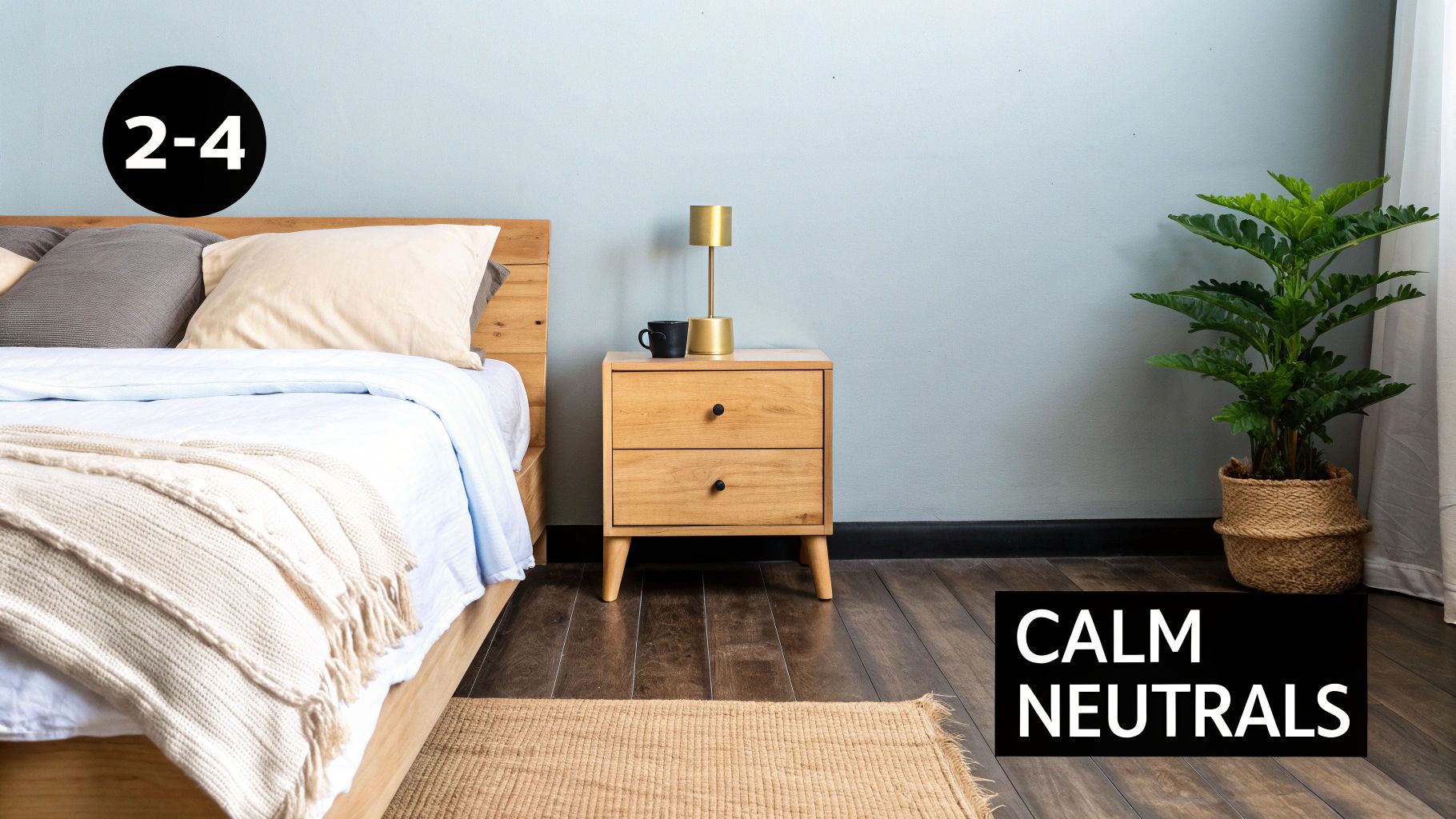
This approach works so well because neutral colours are less stimulating than bright ones. They create feelings of safety, comfort, and quiet, signalling to your nervous system that it is time to wind down. This is why you will often find these palettes in luxury hotels and peaceful Japanese zen bedrooms, where rest and rejuvenation are the main focus.
How to use a neutral colour scheme
Creating a sophisticated and calming bedroom with neutrals is about more than just painting the walls beige. The key is to build layers of tone and texture to avoid a flat or boring look.
- Layer different shades: Combine several neutral shades to create depth. For example, you could pair warm white walls with a soft grey headboard, oatmeal-coloured linen bedding, and a cream-toned rug.
- Introduce rich textures: A neutral room comes alive with texture. Bring in materials like chunky knit throws, linen curtains, bouclé cushions, and natural wood furniture. These elements add visual interest and a real sense of cosiness.
- Warm up with lighting: Enhance the inviting feel of your neutral palette with warm lighting. Choose bulbs with a lower kelvin rating (around 2700K) to cast a soft, golden glow that makes the space feel intimate and secure.
- Add muted accents: If you would like a touch of colour, choose one or two muted accent shades like dusty rose, sage green, or soft terracotta. Use these sparingly in cushions, artwork, or a single throw to add personality without disrupting the peaceful atmosphere.
2. Manage Light with Sheer and Blackout Curtains
Controlling the light in your bedroom is one of the most powerful calming bedroom ideas because it directly influences your body's natural sleep, wake cycle. Using natural light during the day and blocking it out completely at night helps to regulate your internal body clock. This promotes alertness in the morning and signals your brain to produce melatonin for deep, restorative sleep when it gets dark.
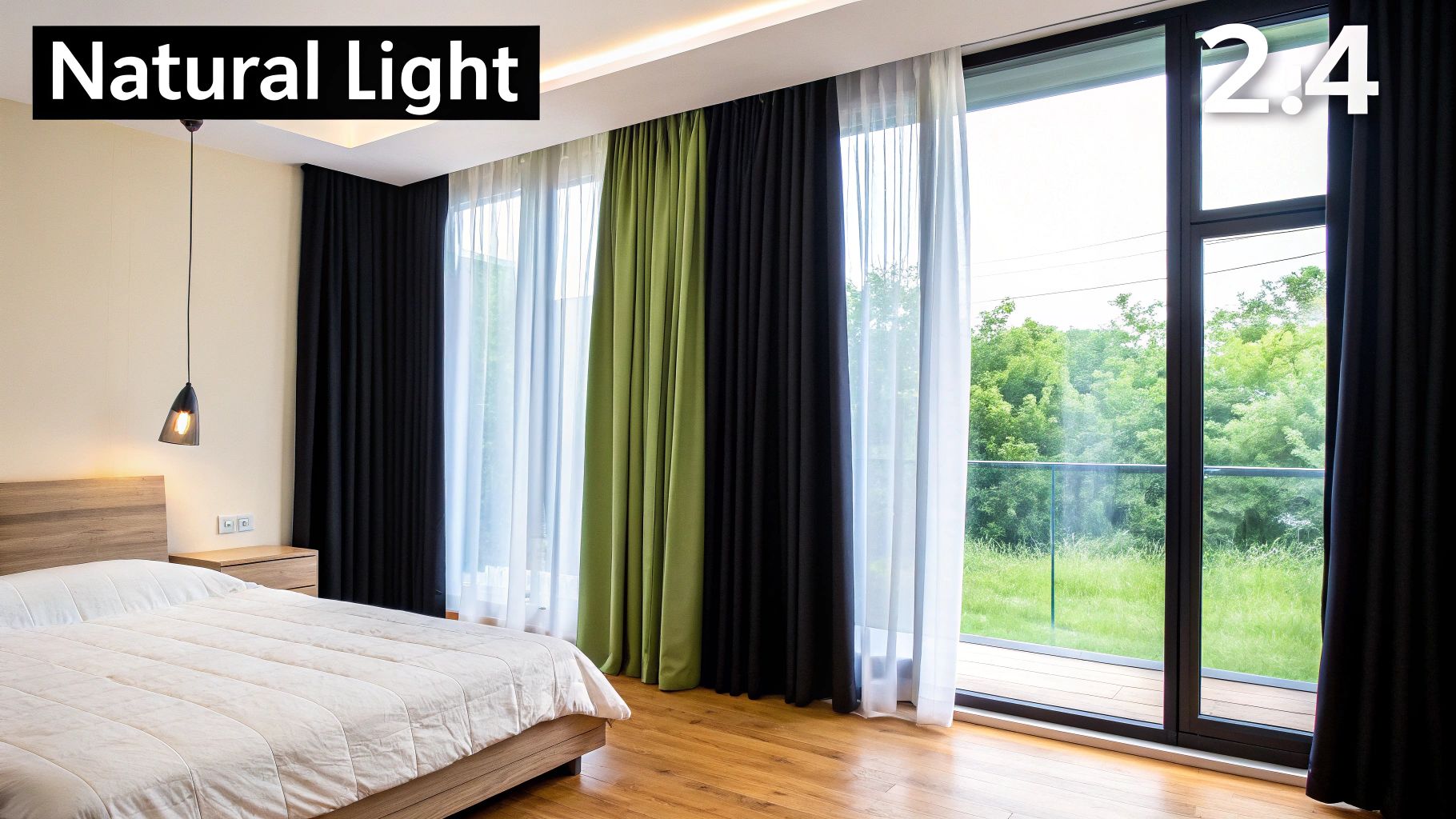
This dual approach is highly effective because it aligns your body clock with the natural environment. Sunlight in the morning can boost your mood and energy levels, while complete darkness at night is essential for uninterrupted, high quality sleep. This principle is used in luxury hotel suites and minimalist Scandinavian designs, where controlling light is key to creating a truly restful sanctuary.
How to create a balanced lighting strategy
Achieving the perfect balance between light and dark involves more than just a standard pair of curtains. It requires layering treatments and making thoughtful choices to create a flexible and soothing environment.
- Layer sheer and blackout curtains: Combine a lightweight, sheer curtain with a heavier blackout one. During the day, the sheer layer softens harsh sunlight, filling the room with a gentle glow. At night, the blackout layer ensures complete darkness.
- Ensure full coverage: For total darkness, choose blackout blinds or curtains that are wider and longer than the window frame. This prevents light from seeping in around the edges, which can disturb your sleep.
- Consider smart solutions: Motorised or smart blinds are a fantastic investment for convenience. You can schedule them to open with your alarm, allowing you to wake up naturally with the morning light.
- Position your bed thoughtfully: Arrange your furniture so your bed benefits from morning light without direct glare. Facing away from the window can prevent the sun from waking you too early on a weekend.
To learn more about selecting the perfect window treatments for your sleep, explore this ultimate guide to the best blackout curtains for your bedroom.
3. Create Space with a Minimalist Furniture Layout
The physical layout of your room plays a huge part in shaping its atmosphere. A minimalist furniture arrangement is a powerful way to create a calm bedroom, as it focuses on reducing visual clutter and creating open space. This thoughtful approach means including only essential pieces, which helps to promote mental clarity and create a true sanctuary for rest.
A cluttered or crowded room can subconsciously make you feel stressed and confined. By carefully choosing your furniture and leaving plenty of 'breathing room', you create a sense of order and freedom. This principle is central to serene design styles like Japanese minimalism and Scandinavian functionalism, where every object has a purpose and the environment supports a peaceful state of mind.
How to create a minimalist layout
Creating a calm, uncluttered space is about making smart, deliberate choices with your furniture. The goal is to maximise both function and floor space, ensuring the room feels spacious and serene.
- Plan and measure: Before you buy or move anything, measure your room and plan the layout. Aim to leave plenty of open floor space to create an airy, uncluttered feel.
- Choose multipurpose pieces: Select furniture that serves more than one function. A bed with built in storage drawers, or a stylish ottoman that can hold spare blankets, helps to eliminate the need for extra bulky items.
- Go vertical: Make the most of your wall space to keep the floor clear. Tall, narrow bookshelves or floating shelves draw the eye upward and provide storage without taking up valuable floor space.
- Quality over quantity: Invest in a few high quality, well designed pieces rather than filling the room with lots of smaller items. A beautiful, solid wood bed frame makes a greater impact than several mismatched pieces.
For more detailed guidance on making the most of your space, you can discover expert tips on how to arrange bedroom furniture.
4. Layer Soft Textures and Natural Fabrics
Beyond colour, the way your bedroom feels to the touch is vital for creating a truly calming atmosphere. Including a rich variety of soft, layered textures and fabrics provides a soothing sensory experience that encourages relaxation. Materials like linen, wool, bouclé, and organic cotton add depth and warmth, making your bedroom a sanctuary you will want to sink into after a long day. This tactile approach turns a visually pleasant space into a physically comforting one.

This method is highly effective because it engages your sense of touch, which is deeply linked to feelings of comfort and security. Think of the sumptuous, multi layered beds in luxury hotels or the cosy, natural feel of Scandinavian design. These spaces are intentionally designed to be inviting and restorative. By layering different textiles, you create visual interest and a deep sense of cosiness.
How to use soft, layered textures
Mastering texture involves more than just adding a throw blanket. It is about thoughtfully combining different materials to build a cohesive and comforting environment.
- Invest in quality bedding: Start with a high quality base. Choose bed linen made from natural fibres like long staple cotton or linen for a soft and breathable foundation.
- Mix and match textures: Create a wonderful tactile experience. Pair the smoothness of sateen sheets with the gentle texture of a linen duvet cover, a chunky knit wool throw, and plush velvet cushions. The contrast makes each texture stand out.
- Embrace natural fibres: Prioritise natural materials such as cotton, linen, wool, and silk. These fabrics are not only soft and luxurious but also breathable, helping to regulate your body temperature for a more comfortable night's sleep.
- Extend beyond the bed: Apply texture throughout the room. Consider a soft, deep pile rug underfoot, linen curtains that diffuse light beautifully, and a comfortable bouclé or upholstered armchair in a reading corner.
5. Welcome Nature Indoors with Plants and Natural Materials
Bringing the outdoors in is a powerful way to create a calming bedroom. The practice of using plants and natural materials, known as biophilic design, is proven to reduce stress, improve air quality, and foster a sense of wellbeing. This connection to nature introduces a living, breathing element into your space, adding visual softness and a quiet, restorative energy.

This approach works because it taps into our deep human connection with the natural world. The presence of greenery can lower your heart rate and blood pressure, signalling to your brain that you are in a safe and nurturing environment. It is a core principle in wellness focused spaces, from luxury spa retreats to serene Scandinavian homes, where the goal is to create a sanctuary for both body and mind.
How to introduce natural elements
Creating a green sanctuary is about more than just placing a single plant on a windowsill. It is about thoughtfully integrating natural textures, shapes, and life into your décor to build a tranquil atmosphere.
- Choose air purifying plants: Start with plants known for their air cleansing properties. Studies have shown that species like the Snake Plant, Peace Lily, and Spider Plant are excellent at removing common household toxins, promoting healthier air while you sleep.
- Select low maintenance varieties: For a bedroom, choose plants that thrive in indirect light and require minimal care, such as a Pothos or ZZ plant. This ensures your green additions reduce stress rather than create more chores.
- Incorporate natural materials: Beyond plants, introduce elements like a jute rug, a rattan lampshade, or a solid wood bedside table. These textures add warmth and ground the space.
- Group for impact: Create a small feature by grouping two or three plants of varying heights and leaf shapes in a corner. This creates a stronger focal point and a mini oasis feel. For a lovely fragrance as well as beauty, consider some of the easiest herbs to grow indoors.
6. Create Quiet with Sound Management
A truly calming bedroom appeals to all the senses, including what you hear. Creating a peaceful sound environment is a crucial, often overlooked, part of designing a restful sanctuary. Unwanted noise from traffic, neighbours, or even other parts of your home can disrupt sleep and prevent deep relaxation. Thoughtful sound management helps to absorb, block, and mask these disturbances, creating a quiet haven where your mind can truly switch off.
This principle is why luxury hotels and wellness retreats invest heavily in soundproofing. By controlling the sound, they ensure guests experience uninterrupted rest. Applying these same ideas to your bedroom transforms it from just a room into a genuine escape. It signals to your brain that it is a safe and quiet space, which is essential for reducing stress and improving sleep quality.
How to improve the acoustics in your bedroom
You do not need to build a recording studio to get a quieter bedroom. Simple, thoughtful additions can make a significant difference to the room’s acoustics and your overall sense of peace.
- Layer soft materials: Sound waves bounce off hard surfaces like wooden floors and bare walls. Soft furnishings absorb sound, so layer them generously. Add a thick, plush rug, hang heavy, lined curtains, and choose an upholstered headboard. Even adding extra cushions and a thick throw to your bed will help dampen noise.
- Seal gaps: The smallest gaps can let in a surprising amount of noise. Use affordable weatherstripping around your window frames and door to create a tighter seal. A draught excluder at the bottom of your bedroom door is also highly effective at blocking sound from the rest of the house.
- Introduce white noise: Sometimes, masking background noise is more effective than trying to block it completely. A white noise machine, a quiet fan, or an app that plays calming nature sounds can create a consistent, soothing backdrop. This helps to drown out sudden, jarring noises that might otherwise wake you.
- Rearrange your furniture: A large wardrobe or a bookcase placed against a shared wall can act as an extra barrier. This can help to absorb sound from an adjoining room and contribute to your calming bedroom ideas.
7. Create a Scent Sanctuary with Aromatherapy
The power of scent is a profound yet often overlooked element in creating a calming bedroom. Using aromatherapy and carefully chosen scents can directly influence your mood and promote relaxation. Specific aromas can trigger the brain's limbic system, the area linked to emotion and memory, helping to reduce stress and prepare the body for deep, restorative sleep.
Introducing a subtle, soothing fragrance transforms your bedroom from just a physical space into an immersive sensory sanctuary. It is a powerful psychological cue that signals the end of a busy day and the beginning of a peaceful night. This technique is used expertly in luxury spas and high end hotels, where a signature scent instantly puts guests at ease.
How to use aromatherapy in your bedroom
Designing your bedroom's scent should be a gentle and personal process. The goal is to create a subtle background aroma that enhances tranquillity, rather than an overpowering fragrance.
- Choose natural scents: Opt for high quality, pure essential oils like lavender, chamomile, bergamot, or sandalwood. These are known for their relaxing properties. You can use an ultrasonic diffuser to disperse a fine, scented mist into the air.
- Establish a scent routine: Use your diffuser for 15 to 30 minutes before you get into bed. This fills the room with a gentle aroma and becomes a powerful part of your bedtime routine, signalling to your brain that it is time to unwind.
- Consider scented candles: A natural soy or beeswax candle can add both a beautiful scent and a soft, warm glow. Ensure you choose candles made with essential oils rather than synthetic fragrances.
- Use fabric and linen sprays: Lightly misting your pillows and bedding with a calming, natural spray is a simple way to envelop yourself in a soothing scent as you drift off to sleep. Be sure to select a spray designed for fabrics to avoid any staining.
- Safety first: Always use diffusers and candles safely. Keep them away from pets and young children, and never leave a burning candle unattended. If using essential oils, avoid applying them directly to your skin unless they are properly diluted.
8. Use Strategic Lighting with Warm Tones
The lighting in your bedroom has a huge impact on your ability to relax and prepare for sleep. A strategic lighting design, focusing on warm, gentle tones, can transform your space from a functional room into a serene sanctuary. By mimicking the soft, warm glow of a sunset, you signal to your body's internal clock that it is time to unwind. This supports the natural production of melatonin, the sleep hormone.
This approach is expertly used in environments designed for ultimate relaxation, like luxury spas and five star hotels. Harsh, bright, or cool toned overhead lighting can be jarring and stimulating, disrupting your body’s preparation for rest. In contrast, layered, warm lighting creates a calming atmosphere that encourages peace and tranquillity, making it one of the most effective calming bedroom ideas.
How to use strategic warm lighting
Creating a layered and adaptable lighting scheme is key to achieving a truly restful bedroom. The goal is to have multiple light sources that you can adjust to suit your mood and needs throughout the evening.
- Install dimmer switches: Giving yourself control over brightness is crucial. Install dimmer switches for all your bedroom lights, from the main overhead fixture to bedside lamps, allowing you to lower the intensity as you get closer to bedtime.
- Choose warm bulbs: Opt for LED bulbs with a warm colour temperature, specifically around 2700K. This measurement, in Kelvins, indicates the colour of the light. Lower numbers produce a cosy, yellowish glow rather than a harsh, blue white light.
- Create multiple light layers: Avoid relying on a single overhead light. Instead, build layers of light. Use soft bedside table lamps for reading, elegant wall lights for general light, and perhaps a stylish floor lamp in a corner to create a warm, inviting glow.
- Embrace smart lighting: Consider a smart lighting system that allows you to schedule changes in light temperature and brightness. You can program your lights to gradually warm and dim throughout the evening, creating the perfect wind down environment automatically.
For more expert advice on crafting the ideal atmosphere, discover a wide range of inspiring bedroom lighting ideas on morganandreid.com.
9. Invest in High Quality Bedding
The centrepiece of any bedroom is the bed, and its comfort is essential for creating a truly calming sanctuary. Investing in a high quality mattress, supportive pillows, and a solid bed frame is not just a luxury. It is a crucial element for restorative sleep. A comfortable bed directly impacts your sleep quality, which in turn affects your mood, energy, and overall wellbeing.
A comfortable and supportive bed signals to your body that it is in a safe, nurturing environment designed for rest. This physical comfort helps to release muscle tension and quieten the mind, allowing you to drift off more easily and enjoy deeper, uninterrupted sleep. This is why luxury hotels place so much importance on providing the perfect bed for their guests.
How to build the perfect bed
Choosing the right bed is a personal journey, as comfort is different for everyone. The goal is to find a combination that provides the best support and pressure relief for your specific needs.
- Test before you commit: When possible, test mattresses in a shop by lying down for at least 15 minutes in your usual sleeping position. Many online brands offer generous trial periods, allowing you to ensure the mattress is a perfect fit.
- Prioritise pillow support: Your pillow is just as important as your mattress. Select one that suits your sleeping position, whether you are a back, side, or front sleeper, to ensure proper neck and spine alignment.
- Do not forget the base: A quality mattress needs a proper support system, such as a sturdy bed frame or a compatible base, to perform at its best and prevent premature sagging.
- Protect your investment: Always use a high quality mattress protector to shield it from spills, dust, and allergens, which will significantly extend its life. Remember to rotate your mattress every few months to ensure even wear.
10. Control the Temperature for Better Sleep
The physical climate of your bedroom plays a critical role in creating a calming sanctuary. Maintaining an optimal temperature and humidity level is one of the most scientifically backed calming bedroom ideas for promoting deep, restorative sleep. A cool, well regulated environment signals to your body that it is time to rest. It helps to lower your core body temperature, which is a natural part of falling asleep.
This principle is widely used by sleep experts and in premium environments like five star hotels, where precise climate control is a standard feature. By optimising your room's temperature, you align your environment with your body's natural rhythm, reducing restlessness and preventing sleep disruptions caused by being too hot or too cold. This ensures your bedroom is not just visually peaceful but also physically primed for high quality rest.
How to optimise your bedroom's climate
Achieving the perfect sleep climate involves a few strategic adjustments to temperature, airflow, and humidity. These small changes can make a significant difference to your sleep quality and overall sense of calm.
- Set the ideal temperature: For optimal sleep, aim for a bedroom temperature between 15 and 19°C. Use a programmable or smart thermostat to automatically lower the temperature an hour before you go to bed.
- Improve air circulation: A ceiling fan can gently circulate air, creating a cooling effect without the noise of an air conditioner. This constant, gentle breeze can be very soothing and prevent stuffiness.
- Manage humidity levels: The ideal humidity for a bedroom is between 30 and 50%. In dry winter months, a humidifier can prevent dry sinuses, while a dehumidifier is essential in damp climates to stop the air from feeling heavy and uncomfortable.
- Choose breathable bedding: The materials you sleep on are crucial. Fabrics like bamboo, Tencel, and linen are naturally moisture wicking and breathable, helping to regulate your body temperature throughout the night. Explore our guide to the best cooling bedding options on morganandreid.com.
Your Journey to a More Peaceful Bedroom Starts Tonight
Transforming your bedroom into a tranquil sanctuary is not an impossible dream. As we have explored, creating a peaceful retreat is a journey of small, intentional choices that add up to make a profound impact on your wellbeing. It is not about taking on a huge renovation overnight. Instead, it is about thoughtfully creating a space that supports your need for rest, relaxation, and rejuvenation.
The path to a serene bedroom is paved with simple, actionable steps. You have learned how a foundation of soft, neutral colours can soothe the mind, and how managing natural light with effective blackout solutions is crucial for restorative sleep. We have seen the importance of a minimalist furniture layout to reduce mental clutter and the profound comfort that comes from layering soft, natural textures like linen and cotton. Each of these elements works in harmony to build an atmosphere of peace.
Key takeaways for lasting calm
Reflecting on the strategies we have discussed, several core principles stand out as the cornerstones of a restful environment.
- Engage all senses: A truly calming bedroom appeals to more than just the eyes. Consider the gentle whisper of a sound machine, the soothing scent of lavender from a diffuser, the soft touch of high quality bedding, and the clean air from indoor plants. A multi sensory approach creates a deeply immersive and calming experience.
- Prioritise simplicity and intention: The most peaceful spaces are often the least cluttered. Every item in your bedroom should serve a purpose or bring you genuine joy. This principle ensures that your environment is a source of calm, not distraction.
- Harness the power of nature: Bringing in natural elements is one of the most effective calming bedroom ideas. Whether through air purifying plants, the use of natural materials like wood, or maximising natural light, connecting with nature indoors has a proven restorative effect.
Your actionable next steps
Feeling inspired but not sure where to begin? The key is to start small. Do not feel pressured to implement everything at once. Select one or two ideas that resonate most with you and begin there. Perhaps this week you could focus on improving your lighting by swapping harsh, cool bulbs for warm, dimmable LEDs. Or maybe your first step is to declutter your bedside table, leaving only the essentials.
A practical starting point: Choose the one area that causes you the most stress. Is it the tangled mess of cables? The harsh overhead light? The uncomfortable bedding? Address that single point first, and you will immediately feel the benefits, motivating you to continue your journey.
By taking this step by step approach, you build momentum and create lasting change without feeling overwhelmed. Remember, the goal is not perfection, it is progress. Each small adjustment is a step towards a more peaceful, restful you. You are not just redecorating a room, you are investing in your health, happiness, and overall quality of life. The serene sanctuary you deserve is within reach, and your journey can begin tonight.
Ready to take the first, most impactful step? A beautifully made bed with premium, comfortable bedding is the heart of any sanctuary. Find your perfect bedding at Morgan and Reid today and feel the difference that true comfort can make.
Share:
UK King Duvet Size: Your Guide to a Perfect Bed
What's the best bed sheet fabric? Your guide to a perfect night's sleep