


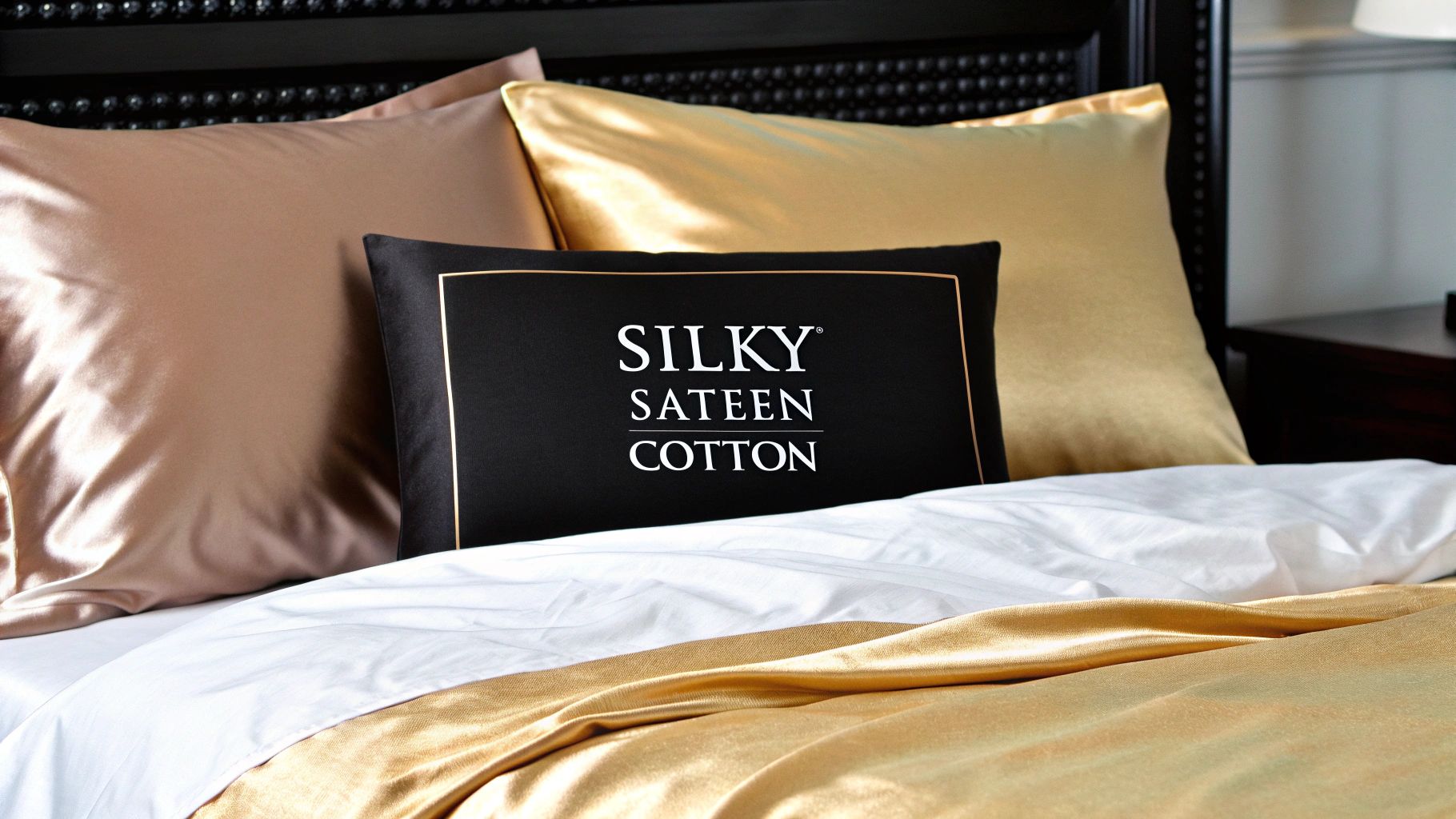
If you've ever found yourself wondering, what is sateen cotton, you are not alone. The simple truth is, it is not a type of cotton at all. Instead, sateen refers to a special weaving technique that turns ordinary cotton into a fabric with a signature silky-smooth feel and a subtle sheen. It is this unique finish that makes it such a popular choice for truly luxurious bedding, bringing a touch of everyday elegance and comfort into the bedroom.
The Secret Behind Sateen's Silky Touch
Many people mistake sateen for a fibre, like silk, but its magic lies entirely in the way the cotton threads are woven together. Think of it like a baker using the same flour to create two very different things: a crusty, rustic loaf and a soft, delicate cake. The method changes everything, and it is exactly the same with cotton weaves.
The sateen weave follows a distinctive ‘four-over, one-under’ pattern. This means that for every one thread that goes under, four threads float over it on the surface. It is this structure, with more threads exposed on the top, that creates the famously smooth and lustrous finish people adore. This has made it an incredibly popular choice in the United Kingdom for high-quality bedding and home furnishings.
Why Choose Sateen for Your Bedding?
The real draw of this weave is how it feels against your skin. That incredibly smooth surface reduces friction, giving it a buttery softness that feels gentle and comforting. It is a sensory experience that can turn a simple bed into a serene retreat.
Sateen also has a heavier, more substantial drape compared to other cotton weaves. This means it hangs beautifully and envelops you in a cosy cocoon, making it absolutely perfect for anyone who loves to feel snug and secure at night.
A key benefit of sateen is its natural resistance to wrinkles. Thanks to its fluid drape and smooth surface, it looks effortlessly neat and inviting on the bed with minimal fuss, a real bonus for busy households.
The Benefits of Sateen Cotton
Beyond its luxurious feel, sateen brings a host of practical advantages, making it an excellent choice for any home. It really does strike that perfect balance between elegance and everyday usability.
To give you a quick overview, we've put together a simple table outlining what makes sateen special for your home.
Sateen Cotton at a Glance
This table offers a quick summary of sateen's key characteristics to give you an immediate overview for your home.
| Characteristic | Description for Your Home |
|---|---|
| Feel & Texture | Buttery soft and silky smooth, offering a luxurious feel against the skin every night. |
| Appearance | A subtle, elegant sheen that gives your bedding a sophisticated, hotel-like look. |
| Drape | Heavier and more substantial, creating a full, inviting appearance on the bed. |
| Warmth | The denser weave retains a little more warmth, making it ideal for cooler sleepers. |
| Care | Naturally wrinkle-resistant, which means less ironing and a neater look with less effort. |
As you can see, the combination of feel, appearance, and practicality is what makes sateen a standout choice.
Here are a few more reasons why sateen is so loved:
- Luxurious Feel: The silky-smooth surface provides that touch of hotel-style luxury every single night, making your bed feel incredibly special.
- Beautiful Drape: It hangs elegantly, giving your duvet cover or sheets a full, sumptuous, and inviting appearance.
- Cosy Warmth: The slightly denser weave provides a gentle warmth, which is ideal for the UK climate or for sleepers who tend to feel the cold.
- Wrinkle Resistant: Sateen stays looking smoother for longer, which means less time spent ironing and more time enjoying your beautiful bed.
Ultimately, choosing the right bedding is all about creating a personal sanctuary. For those seeking that perfect blend of softness, warmth, and timeless style, understanding the benefits of sateen is the first step. To delve deeper into creating your perfect sleep environment, you might be interested in our guide to luxurious bed linens.
Comparing Sateen and Percale for Your Bed
When you are on the hunt for new bedding, the choice often boils down to two heavyweights in the cotton world: sateen and percale. While both are fantastic options, they deliver completely different experiences. Getting to know their unique personalities is the secret to creating a bed you cannot wait to climb into each night.
Imagine a classic, freshly-ironed dress shirt, that is percale. It has a cool, crisp, and airy feel that is incredibly light against your skin. This comes from its straightforward one-thread-over, one-thread-under weave, which creates a breathable, grid-like structure.
Sateen, however, is all about silky softness and a cosy, enveloping feel. Its distinct weave produces a smoother, more substantial fabric that drapes beautifully and hugs the body. If your idea of heaven is a buttery-soft cocoon that feels warm and luxurious, sateen is calling your name.
Choosing Your Feel: Sateen vs Percale
To make the decision a little easier, a side-by-side look at their core differences can be really helpful. This table breaks down how their unique construction translates into a tangible feel and look for your bedroom.
| Feature | Sateen Cotton | Percale Cotton |
|---|---|---|
| Feel Against Skin | Silky, smooth, and buttery-soft. | Crisp, cool, and airy. |
| Appearance | A subtle, elegant lustre or sheen. | A clean, modern matte finish. |
| Best For Sleepers Who | Prefer a cosy, warmer sleep. | Tend to sleep hot or prefer a cooler bed. |
| Drape and Weight | Heavier, drapes closely to the body. | Lighter, feels more weightless and open. |
| Wrinkle Factor | Naturally resistant to wrinkles. | More prone to wrinkling after washing. |
At the end of the day, it is all about what feels best to you. Do you dream of slipping into a cool, refreshing bed on a warm night? Percale is your perfect match. Or do you crave that sumptuous, silky embrace that turns your bed into a five-star retreat? Then sateen is definitely the way to go.
This simple guide can help you visualise the choice if luxury is your top priority.
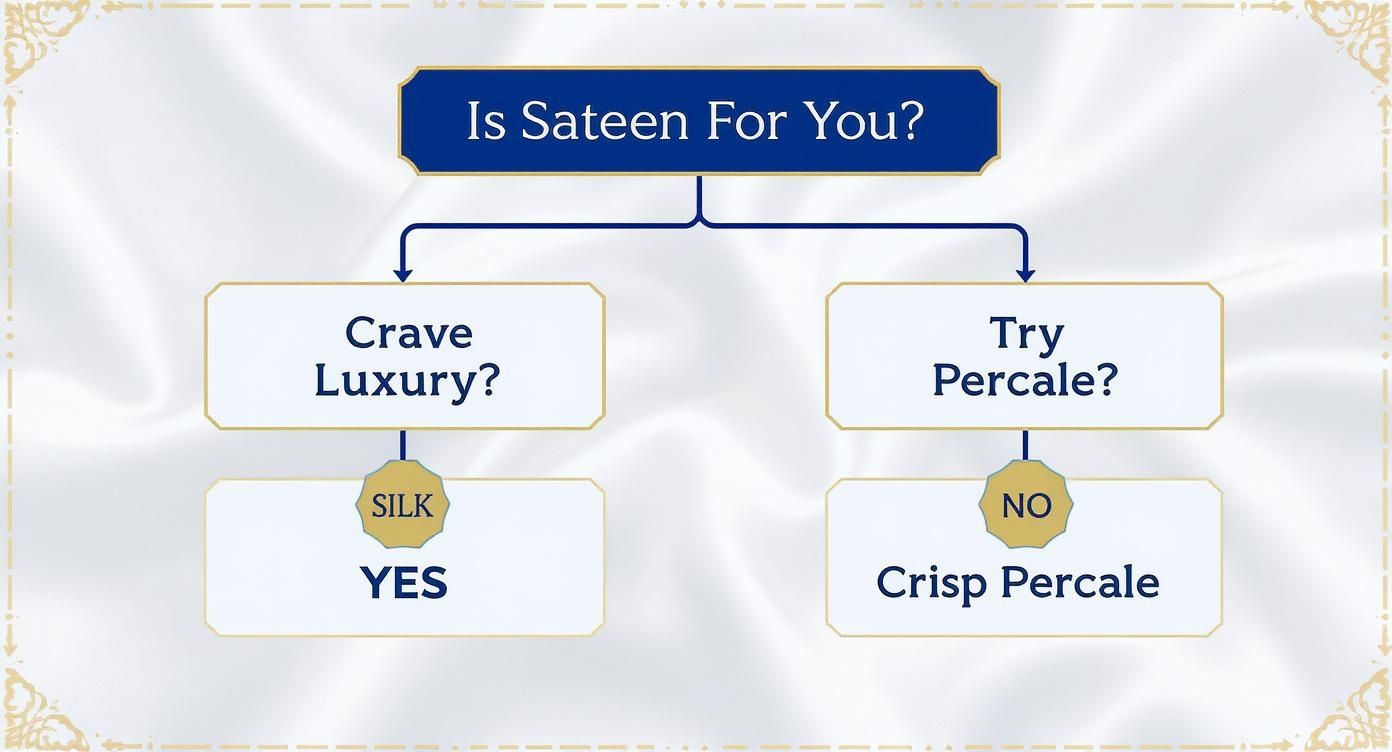
As you can see, if a silky, indulgent feel is what you are after, sateen is the clear winner.
Thread Count in Sateen and Percale
While the feel is the most immediate difference, it is worth understanding how thread count fits into the picture. As a general rule, sateen sheets tend to have a higher thread count, usually somewhere between 300 and 600. This denser weave is a big part of what gives them that signature softness and warmer feel.
Percale, on the other hand, typically sits in the 200 to 400 thread count range. This slightly lower number is intentional, as it helps the fabric stay light and breathable. It is a common myth that a bigger number automatically means better sheets. In reality, the ideal thread count really depends on the weave and the specific texture you are trying to achieve. If you want to go deeper on this, our guide on the best thread count for sheets has all the details.
Sateen vs Satin: What's the Real Difference?
It is incredibly easy to get sateen and satin mixed up, their names are practically twins. But the real difference between them is surprisingly simple and boils down to one crucial thing: the fibre. This single distinction changes everything about how the fabric feels, breathes, and performs, especially when it comes to your bedding.
Sateen is always made from cotton, a natural fibre we all know and love for its breathability. This is precisely what makes it such a brilliant choice for sheets and duvet covers. You get that wonderfully silky-smooth feel against your skin, but with all the airy comfort of cotton, so you are far less likely to overheat during the night.
Satin, on the other hand, is usually woven from long, synthetic filaments like polyester, rayon, or nylon. While it boasts a very high-gloss shine, it just does not have the natural breathability of cotton. This can sometimes make it feel a bit clammy or trap heat, which is not ideal for a comfortable night's sleep.
A Lustre, Not a Shine
You can also spot the difference just by looking at them. Satin has a very glossy, almost mirror-like surface that can feel quite slippery to the touch. It reflects a lot of light, giving it that unmistakable high-glamour look.
Sateen offers something much more subtle and, frankly, more elegant. Instead of a hard shine, it has a soft, buttery lustre. Think of it as a gentle, pearly glow that gives your bedding a warm and inviting feel without being flashy.
The bottom line is this: sateen gives you the best of both worlds. You get the luxurious, silky hand-feel that is reminiscent of satin, but with the practical, breathable comfort that only natural cotton can deliver.
Ultimately, sateen strikes that perfect balance between everyday luxury and real-world comfort. If you are weighing up your options, our guide to the best fabric for a duvet cover can help you explore different materials to find your perfect match.
How to Choose Quality Sateen Bedding
Shopping for sateen bedding can feel a bit overwhelming. There is a lot of talk about thread count, and it is easy to get lost in the numbers. But here is the secret: choosing truly high-quality sateen is much simpler than you might think. It is less about the figures on the packaging and more about what really makes a fabric feel soft and last for years.
The single most important factor is the length of the cotton fibre itself. Think of it like making a rope. Longer, smoother fibres can be spun into a much stronger and finer thread. That is why you should always look for bedding made from long-staple cotton varieties, like Egyptian or Pima cotton.
These premium cottons produce threads that are not only incredibly soft but also far more durable. What does that mean for you? Your sheets will resist pilling, feel smoother for longer, and stand up beautifully to regular washing. It is a true investment in lasting comfort.
Finding the Sweet Spot for Thread Count
While fibre quality is king, thread count does play a supporting role. For sateen bedding, the ideal range is generally between 300 and 600. This really is the sweet spot. It provides that perfect balance of silky softness and breathability without feeling too heavy or becoming wildly expensive.
It is tempting to believe that a bigger number always equals better quality, but that is a common misconception. Be wary of extremely high thread counts, especially anything over 800. Sometimes, manufacturers achieve these inflated numbers by twisting together thinner, weaker threads. The result is often a less durable fabric that does not breathe as well.
When you choose a sateen fabric in the 300 to 600 thread count range made from long-staple cotton, you are getting the best of both worlds: a product designed for luxurious comfort and practical longevity.
What to Look for on the Label
When you are ready to buy, a quick check of the label can tell you everything you need to know. Keep an eye out for these key indicators of quality.
- 100% Long-Staple Cotton: This is your number one sign of quality. Look for terms like Egyptian cotton or Pima cotton.
- Thread Count: Aim for that sweet spot between 300 and 600 for the perfect sateen feel.
- OEKO-TEX Certification: This label ensures the fabric has been tested for harmful substances, making it a safe and healthy choice for your home.
- Fibre Origin: Knowing where the cotton comes from can be another sign of quality. For more insights, you can explore the benefits of organic cotton bed sheets to make a truly informed decision.
By focusing on the quality of the cotton fibre first and using thread count as a helpful guide, you can confidently see past the marketing hype. This approach ensures you choose sateen bedding that not only feels incredible tonight but will continue to bring you comfort for many nights to come.
Caring for Your Sateen Sheets and Duvet Covers
You have brought that touch of hotel luxury home with beautiful sateen bedding, and the good news is, keeping it that way is surprisingly simple. Sateen cotton does not ask for much, just gentle care. Get that right, and you will protect its signature silky feel and subtle lustre for years.
A few easy habits are all it takes to keep your sheets and duvet covers feeling as soft and inviting as the day you first fell in love with them.
The secret is just avoiding any harsh treatment. Stick to these guidelines, and your bedding will stay in pristine condition, wash after wash.
Washing and Drying Your Sateen
To keep those delicate cotton fibres happy and prevent shrinking, always wash your sateen bedding in cool or warm water. Forget the hot cycle. A temperature around 30°C is perfect for getting everything fresh while being kind to the fabric. Extreme heat is the enemy here, it can weaken the very long-staple threads that give sateen its strength and buttery softness.
As for detergent, a mild liquid one is your best bet. Give bleach and aggressive stain removers a wide berth, as they can strip the fabric of its natural softness and cause colours to fade. On that note, UK textile makers follow strict quality controls, with dyes needing a lightfastness rating of 4 or above (on a scale of 5) to ensure colours do not wash out. You can learn more about these UK textile manufacturing standards if you are curious.
A Quick Tip for Fewer Wrinkles: Before tossing your bedding in the dryer, give each piece a good, firm shake. It is a tiny step, but it makes a huge difference by separating the fabric, helping air to circulate, and dramatically cutting down on creases.
Simple Steps for Long-Lasting Softness
For the best results, try to follow this straightforward routine every time you launder your sateen. It is a simple process that really pays off in the long run.
- Go Gentle: Always choose the gentle or delicates cycle on your machine. This minimises stress on the sateen weave.
- Do Not Overcrowd: Give your sheets and covers plenty of room to move. This ensures they get properly clean and helps prevent them from twisting into a wrinkled mess.
- Low and Slow in the Dryer: If you use a tumble dryer, stick to a low heat setting. High temperatures are what damage soft cotton. Pull the bedding out as soon as it is dry to keep it smooth.
- Embrace the Line: Even better, if you have the space, line drying is a fantastic alternative. It is the gentlest method of all and leaves your sheets smelling wonderfully fresh.
Following these tips proves that enjoying luxurious sateen bedding does not have to mean complicated upkeep.
Is Sateen Cotton the Right Choice for You?
Choosing the perfect bedding is a deeply personal decision, and by now, you probably have a gut feeling about whether sateen is your perfect match. It really all comes down to what you want from your sleep experience.
If you dream of slipping into a bed that feels sumptuously soft and silky against your skin, then sateen is a fantastic choice. Its smooth surface and elegant drape create a wonderfully cosy, cocooning feel. It is especially lovely for anyone who tends to feel a bit chilly at night or simply prefers a warmer, more substantial fabric.
When Sateen Is the Perfect Fit
You will likely fall in love with sateen bedding if you are someone who:
- Craves a touch of luxury. You want that five-star hotel feeling every single night, with sheets that are buttery-soft and look effortlessly elegant.
- Dislikes wrinkles. The naturally wrinkle-resistant nature of sateen means your bed looks neat and inviting with very little fuss.
- Prefers a cosier sleep. You enjoy feeling snug and warm, and you love bedding that drapes closely around you for that tucked-in feeling.
Ultimately, sateen is for the comfort-seeker who values a blend of everyday elegance and practicality. It delivers a rich, sensory experience that turns your bed into a true sanctuary.
Of course, no single fabric is perfect for everyone. If you are a particularly hot sleeper or just love the crisp, airy feel of a classic hotel shirt, you might find that percale is a better fit. You can learn more about finding the right material in our guide to the best bedding for night sweats.
It is also worth noting that choosing ethically produced cotton is becoming easier than ever. The sustainable cotton movement has made huge strides in the textile industry, and as of 2023, Better Cotton now makes up 22 percent of global cotton production. This brilliant initiative supports 2.2 million licensed farmers with training in vital areas like water stewardship and soil health. You can discover more insights about this positive change from the Textile Exchange report.
Your Sateen Questions, Answered
To help you feel completely confident in your choice, let us tackle some of the most common questions people have about sateen. These quick answers should clear up any lingering doubts and help you decide if this wonderfully soft fabric is the right fit for your bed.
Does Sateen Cotton Feel Hot to Sleep In?
It is true that sateen’s tighter weave makes it a touch warmer than airy percale, but it is still 100% cotton at its core, which means it is naturally breathable. For most of the year here in the UK, it provides a lovely, cosy warmth without making you feel stuffy or causing you to overheat.
That said, if you are someone who consistently runs hot at night, you might find the crisp, cool-to-the-touch feel of percale a more comfortable choice.
Is Sateen Durable and Will It Pill?
Absolutely. A high-quality sateen woven from long-staple cotton is a durable fabric, perfectly suited for everyday luxury. The only thing to keep in mind is its signature weave, which exposes more threads on the surface. This can make it slightly more prone to snagging compared to a percale sheet.
You can easily sidestep any pilling issues by simply following the proper care instructions. A gentle wash cycle and avoiding harsh chemicals or rough surfaces will keep your sateen looking smooth and beautiful for years to come.
Will the Sheen on Sateen Sheets Fade Over Time?
The beautiful lustre you see on sateen is a natural result of its unique weave structure, not some artificial chemical finish. While the initial high-shine might gently soften into a more subtle, pearly glow after many washes, a well-made sateen will always keep its elegant character.
The best way to preserve that gorgeous look is to wash it in cool water with a mild detergent. This gentle approach protects the cotton fibres, helping the fabric maintain its original softness and sheen for as long as possible.
At Morgan and Reid, we believe that true comfort transforms your home into a sanctuary. Discover the cosy, luxurious feel of our Snuggle Comforters and find your perfect night's sleep. Explore our collection today.
Share:
What's the best bed sheet fabric? Your guide to a perfect night's sleep
A Guide to Fabric Care Symbols