


Ever slipped into a hotel bed and marvelled at how incredibly crisp and cool the sheets feel? That luxurious, fresh-from-the-laundry experience is the hallmark of percale cotton.
In simple terms, percale is a fabric defined by its signature one-thread-over, one-thread-under weave. This straightforward, grid-like pattern creates a material that's famous for its cool, crisp feel and a sophisticated matte finish, much like a freshly pressed cotton shirt.
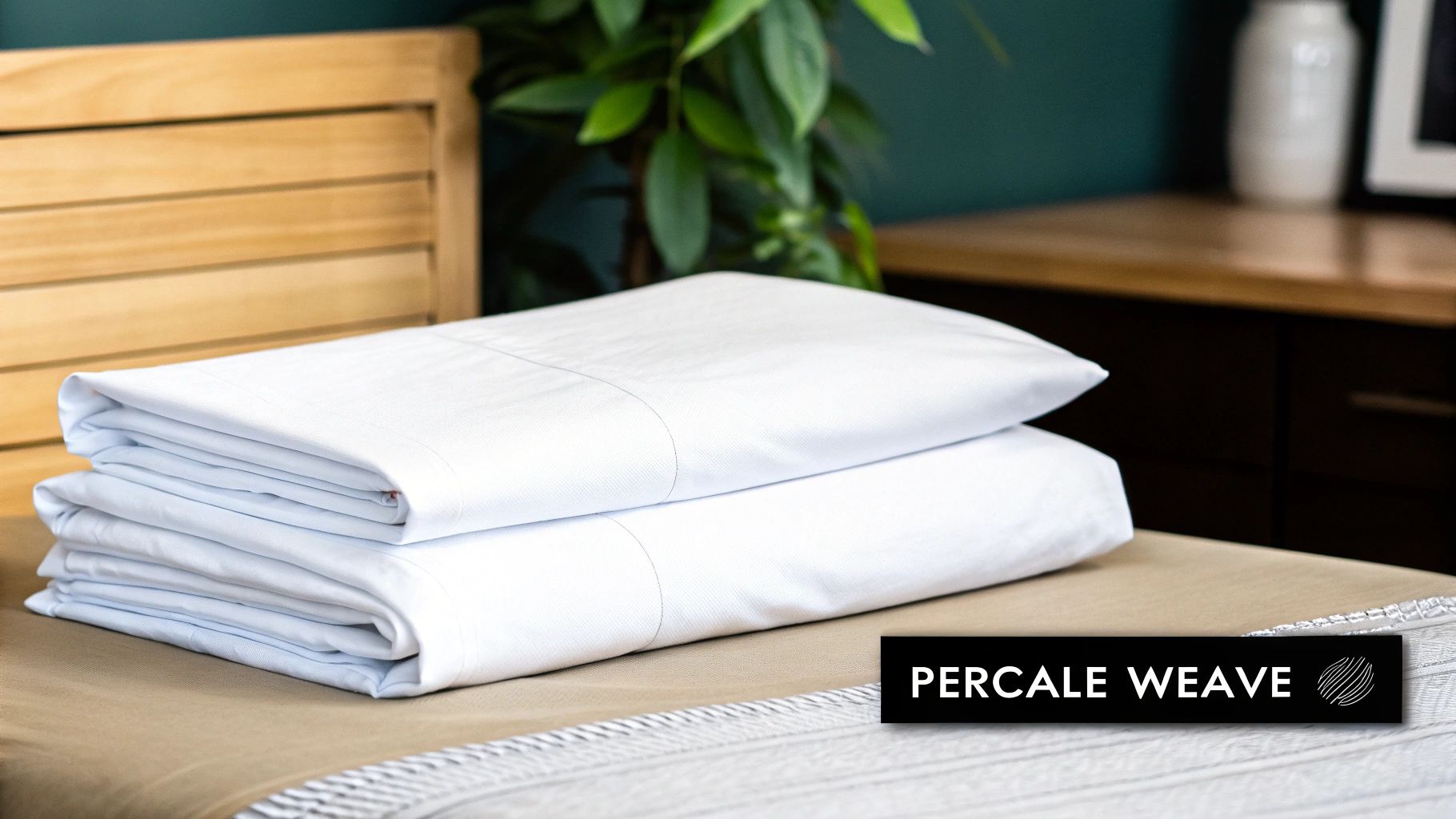
The benefit of this tight weave is a fabric that feels light yet is remarkably strong. Unlike the silky sheen of sateen, percale offers an elegant, flat finish that brings a clean, contemporary look to any bedroom. More importantly, that structure is what makes it so breathable. Air can circulate freely through the material, which is a real bonus for anyone who tends to sleep warm. It naturally wicks moisture away, keeping you dry and comfortable all night long, particularly through the warmer months.
The Feel and Performance
What truly makes people fall in love with percale is how it feels against the skin. It starts with a distinct crispness when brand new, but it has the wonderful quality of softening beautifully with every single wash.
This means your bedding doesn't just last, it genuinely gets better with age. That impressive durability makes percale a sensible, practical investment for any home, as it stands up effortlessly to regular use and washing.
To get a clearer picture, here’s a quick summary of what makes percale cotton stand out.
Percale Cotton at a Glance
| Characteristic | What It Means for Your Comfort |
|---|---|
| Simple Weave Structure | The one-over, one-under weave creates a light, crisp and breathable fabric. |
| Cool & Crisp Feel | Offers a refreshing, clean sensation, perfect for hot sleepers or summer nights. |
| Matte Finish | Provides a modern, elegant look without the shine of sateen. |
| Gets Softer Over Time | Becomes increasingly smooth and comfortable with each wash. |
| Highly Durable | The tight weave resists pilling and wear, ensuring your bedding lasts for years. |
As you can see, the unique combination of breathability, a crisp feel, and lasting durability is what makes percale a consistent favourite for those seeking a refreshing sleep experience.
A Weave with History
The pursuit of high-quality fabrics has deep roots in the UK. The British cotton industry, which reached its peak around 1912 producing an astonishing 8 billion yards of cloth annually, laid the groundwork for refining weaves like percale. This style of cloth typically has a thread count starting around 180 to 200, focusing on the quality of the yarn over sheer density.
While percale is an excellent choice for many, it’s always wise to explore other types of bedding, such as allergy-friendly options, to create a truly personal sleep sanctuary. Getting to know the different materials is the first step, and if you would like to explore further, take a look at our guide on finding the best fabric for sheets.
The Signature Feel of Percale Bedding
Knowing the technical details of a one-over, one-under weave is one thing, but the real magic of percale cotton happens the moment you slip into bed. It’s a sensory experience unlike any other, defined by a signature blend of crispness, coolness and comfort.
The first thing you’ll notice is its light, almost starched texture. Think of the satisfying feeling of putting on a freshly pressed cotton shirt, that’s the essence of percale. It feels clean, airy and structured, rather than silky or heavy. This crispness gives your bed a tidy, hotel-like finish that feels inviting every single night.
A Breath of Fresh Air for Sleepers
For anyone who tends to get a bit warm at night, percale is a game changer. Its unique weave is naturally breathable, allowing air to circulate freely. This simple feature has a powerful benefit: it helps regulate your body temperature while you sleep.
Instead of trapping heat and moisture, percale lets them escape. This means you’re far less likely to wake up feeling clammy or overheated, especially during warmer months or in a well-insulated home. The result is a more stable, comfortable and less humid sleep environment that helps you rest deeply.
The tight, plain weave of percale fabric is exceptionally breathable, which is why studies on thermal comfort often highlight its effectiveness in promoting airflow and reducing humidity next to the skin. This makes it an ideal choice for maintaining a cool and dry microclimate throughout the night.
Built to Last and Gets Better with Time
Beyond its immediate comfort, percale bedding is an incredibly practical and sensible investment for your home. That same tight weave giving it that signature crisp feel also makes it remarkably strong and durable. It’s highly resistant to pilling, those tiny, annoying balls of fabric that can form on lower-quality sheets over time.
This durability means percale stands up beautifully to the demands of daily life and frequent washing. For busy families, this is a huge plus. You can trust that your bedding will maintain its quality and feel for years to come.
What's really special about high-quality percale, though, is that it doesn’t just last, it actually improves with age.
- Softens with Every Wash: While it starts out crisp, each wash cycle gently softens the cotton fibres, making the sheets feel smoother and more lived-in.
- Maintains Its Coolness: The breathable structure remains intact, so you can enjoy that refreshing feel for the entire life of the bedding.
- A Lasting Investment: Unlike fabrics that wear out quickly, percale is a long-term choice that delivers consistent comfort, making it a wonderful addition to any collection of luxurious bed linens.
Ultimately, choosing percale is about embracing a specific kind of comfort. It’s for those who love the feeling of freshly laundered sheets, the sensation of coolness against their skin, and the reassurance of investing in quality that’s truly designed to last.
Percale vs Sateen: A Simple Comparison
When you're looking for new cotton bedding, the choice often boils down to two main contenders: percale and sateen. It can seem a bit technical, but the decision gets a lot easier when you ask yourself one simple question: how do you want your sheets to feel?
Think of percale as that favourite crisp, white shirt in your wardrobe. It’s light, airy and has a clean, matte finish. Sateen, on the other hand, is much more like a silk blouse. It drapes beautifully, feels incredibly smooth and has a subtle sheen. Neither is better than the other, they just offer two completely different sleep experiences.
The Main Differences in Feel and Performance
The real distinction between percale and sateen lies in how they are woven. As we’ve covered, percale uses a straightforward one-over, one-under grid pattern. Sateen is woven differently, usually with a one-under, three or four-over structure, which lets more threads sit on the surface. This single change is what creates their unique textures and benefits.
Percale is famous for its breathability, making it a dream come true for anyone who gets a bit warm at night. The open weave lets air flow freely, keeping you cool and comfortable. Sateen’s denser weave, however, feels warmer against the skin, offering a cosier experience that’s perfect for cooler nights or for those of us who are always a little chilly.
This little guide sums it up perfectly. Percale's cool-to-the-touch feel is a massive plus for hot sleepers.
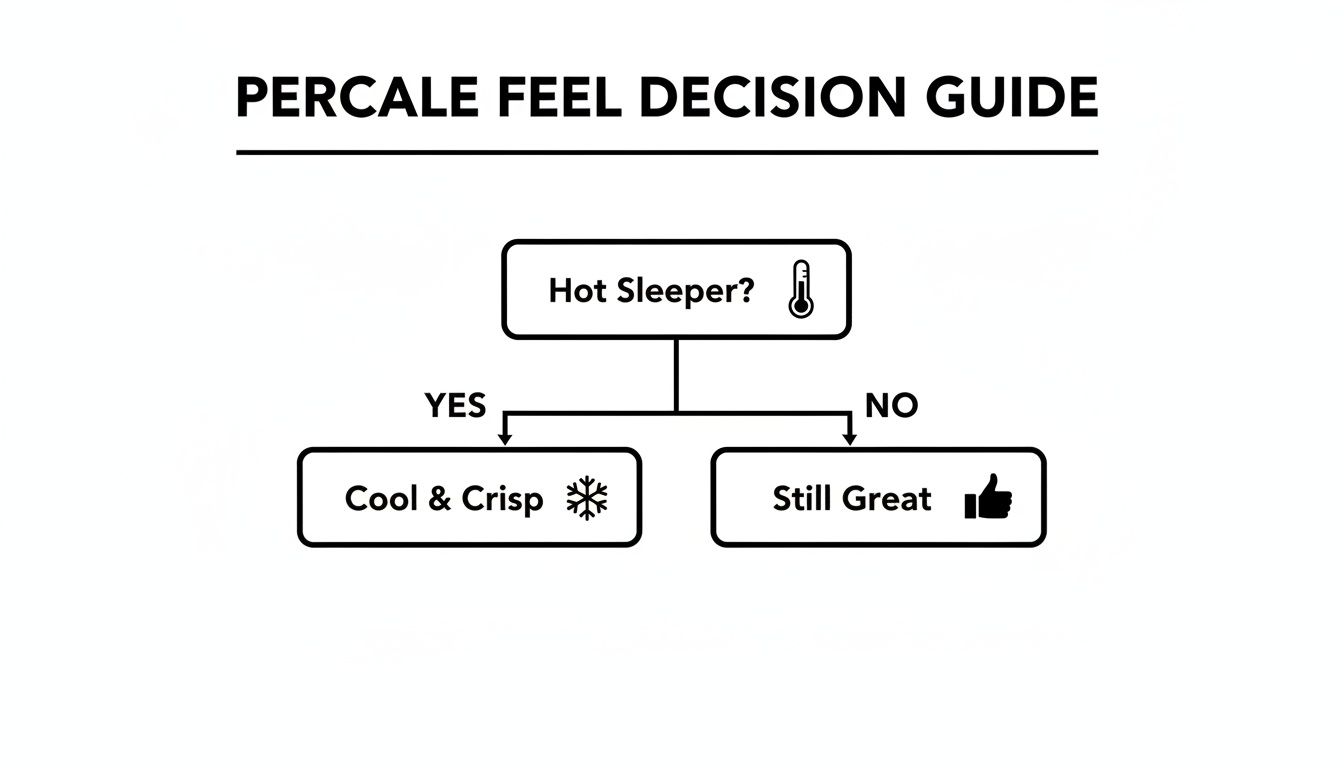
As you can see, while percale is a fantastic choice for staying cool, its comfortable and durable nature makes it a great all-round option for just about anyone.
A Side-by-Side Look at Your Options
To make your decision even simpler, let's lay out the key characteristics of each fabric. This should help you line up your own preferences with the right kind of bedding.
Choosing between percale and sateen is entirely a matter of personal preference. It's about deciding whether you prioritise the cool, crisp feel of percale or the silky, smooth warmth of sateen to create your ideal sleeping environment.
Here’s a straightforward comparison table to help you weigh up the benefits.
Choosing Your Perfect Cotton Weave Percale vs Sateen
| Feature | Percale Cotton | Sateen Cotton |
|---|---|---|
| The Feel | Famously crisp, cool and light, like a freshly laundered shirt. | Silky, smooth and drapey with a slightly heavier feel. |
| Appearance | A sophisticated, modern matte finish that looks clean and elegant. | A subtle lustre or gentle sheen that provides a more luxurious look. |
| Breathability | Exceptional. The weave allows air to circulate freely, ideal for hot sleepers. | Less breathable. The tighter surface traps more warmth, making it cosier. |
| Wrinkle Resistance | More prone to wrinkling due to its crisp structure, creating a relaxed look. | Naturally wrinkle-resistant, maintaining a smooth appearance on the bed. |
| Best For | Warm sleepers, summer months, and anyone who loves a fresh, airy feel. | Cold sleepers, winter months, and those who prefer a silky, warm touch. |
At the end of the day, it all comes down to the sensation you want when you slip into bed. If you adore that clean, hotel-fresh feeling and need bedding that helps you stay cool, percale is the clear winner.
But if you’re drawn to a smoother, more opulent feel that offers a little extra warmth, you might want to learn more about what sateen has to offer to see if it’s the right fit for you. Both weaves create beautiful, high-quality bedding, so you can feel confident choosing the one that best suits your personal style of comfort.
Why Thread Count Isn't The Full Story
Let's clear the air on one of the biggest myths in the world of bedding. For years, we’ve all been led to believe that a higher thread count is the ultimate sign of luxurious, top-quality sheets. It sounds logical, but the truth is, this is mostly clever marketing. It doesn't tell the whole story.
So, what exactly is thread count? It’s simply the number of threads woven into a single square inch of fabric, counting both the lengthwise (warp) and widthwise (weft) threads. A higher number points to a denser fabric, but it's far from the only, or even the most important, indicator of quality.
Quality Over Quantity
When it comes to percale cotton, the real hero isn't the thread count. It's the quality of the cotton fibres themselves. You could buy a sheet with a 1,000 thread count, but if it's woven from short, coarse cotton fibres, it will feel rough and start to fall apart after a few washes.
Now, contrast that with a sheet in a modest thread count made from premium long-staple cotton, like Egyptian cotton. This one will feel incredibly smooth, strong and breathable. Why? Because those long, silky fibres can be spun into finer, stronger yarns. That’s the secret to a truly luxurious feel that lasts for years.
With percale, the entire point of the weave is to be crisp and breathable. Pushing the thread count sky-high often means using thinner, multi-ply threads that actually get in the way of airflow. This completely defeats the purpose, resulting in a heavier, hotter fabric.
In short, fixating on thread count is like judging a book by its cover. It's what's inside, the quality of the fibre, that truly makes for comfortable, long-lasting bedding.
Finding the Sweet Spot for Percale
Okay, so if fibre quality is king, what’s the best thread count for authentic percale cotton? You might be surprised. The ideal range is typically between 200 and 400. This is the genuine sweet spot that delivers everything we love about percale.
Here’s why this range is perfect:
- Peak Breathability: A count between 200 and 400 provides just the right amount of space in the weave for air to circulate, giving you that cool, refreshing feeling percale is famous for.
- Lasting Durability: The fabric is dense enough to be robust and stand up to frequent washing, but not so dense that it feels heavy or stiff.
- Signature Crispness: This is how you achieve that light, hotel-crisp texture that only gets softer and more inviting with every wash.
Some brands manage to advertise astronomical thread counts by twisting multiple, thinner strands of lower-grade cotton together into a single thread. It technically inflates the number, but it does absolutely nothing for the feel or longevity of the sheets. Sticking to the 200 to 400 range is your best bet for genuine, high-quality percale. To explore this further, you can learn more about finding the best thread count for sheets in our detailed guide.
By prioritising the quality of the cotton and aiming for this ideal thread count, you can shop with total confidence. You'll be investing in bedding that strikes the perfect balance of softness, strength and that incredible breathability that defines the classic percale experience.
How to Care for Your Percale Cotton Bedding
One of the best things about high-quality percale cotton is that it only gets better with age. It actually becomes softer and more inviting with every single wash. To make sure your beautiful bedding lasts for years to come, all it takes is a little thoughtful care. Luckily, looking after it is incredibly straightforward.
The secret is to treat the natural cotton fibres gently. This preserves their strength and helps maintain that signature crispness and breathability you fell in love with. With just a few simple steps, you can keep your sheets feeling fresh, clean and comfortable for a very long time.
Simple Washing and Drying Tips
Your laundry routine doesn’t need to be complicated. The best approach is to wash your percale bedding in cool or warm water, think 30 to 40 degrees Celsius. Using a gentle, pH-neutral detergent will protect the fibres and prevent any unnecessary wear and tear.
It’s also a good idea to wash your sheets separately from towels or heavier items. This stops them from getting tangled or stretched out of shape and allows the machine to give them a more thorough, even clean.
When it comes to drying, you have a couple of great options:
- Tumble Dry on a Low Heat: This is the quickest way. Just be sure to use a low temperature setting to avoid damaging the fibres or causing too much shrinkage.
- Line Dry for Ultimate Freshness: If you have the space, line drying is a fantastic choice. It leaves your bedding with a natural, fresh scent and is the gentlest method of all.
For a more detailed breakdown of laundry best practices, you can explore our full guide on how to wash bed sheets correctly.
Managing Wrinkles Naturally
The crisp structure of a percale weave means it's naturally prone to wrinkling, which is a huge part of its relaxed, lived-in charm. If you prefer a smoother look, however, there are a few simple tricks you can use to minimise creases without having to pull out the iron.
The secret is to catch the wrinkles before they have a chance to set. Try to remove your sheets from the dryer while they’re still very slightly damp. Give them a good shake and either put them straight on the bed or fold them neatly. As the fabric finishes drying, the residual moisture helps the wrinkles fall out.
Embracing the slight wrinkling of percale is part of its appeal. It signals a natural, high-quality cotton and contributes to a casual, effortlessly elegant bedroom style that feels both comfortable and authentic.
Long-Term Care and Storage
When you’re not using your percale bedding, store it in a cool, dry and well-ventilated place. A linen cupboard or a fabric storage bag works perfectly for this. Just try to avoid storing sheets in plastic containers, as this can trap moisture and lead to mustiness or discolouration over time.
By following these simple care instructions, you’re doing more than just cleaning your sheets. You’re helping them on their journey to becoming even softer and more comfortable, the true beauty of an investment that genuinely improves with every single use.
Your Percale Questions Answered
To wrap things up, let's tackle some of the most common questions people have about percale. These quick answers should clear up any lingering doubts and help you feel totally confident when choosing your next set of bedding.
Does Percale Cotton Wrinkle Easily?
In a word, yes. Because percale is so crisp, it does tend to wrinkle more than a silkier fabric like sateen. But honestly, many people love this about it! It gives the bed a relaxed, inviting and beautifully 'lived-in' look that feels incredibly welcoming.
If you're not a fan of the crumpled look, there's an easy fix. Try pulling your sheets from the dryer when they're still just a tiny bit damp. Give them a good shake and either fold them or pop them straight back on the bed. Most of the wrinkles will fall out as they finish air-drying. Of course, line drying in the fresh air is another brilliant way to get a smooth, crisp finish.
Is Percale Cotton Good for All Seasons in the UK?
It really is. Percale is a fantastic choice for year-round comfort, especially with the unpredictable UK weather. Its incredible breathability is a real game changer on those humid summer nights, wicking away moisture to keep you cool and comfortable.
Come autumn and winter, it’s the perfect foundation. Just layer your percale sheets with a higher-tog duvet or a cosy comforter. This setup traps warmth beautifully while still letting air circulate, so you won't overheat under all those snuggly layers. It’s this adaptability that makes it such a clever, practical choice for every season.
Because the percale weave is designed for airflow, it provides thermal comfort across a wide range of temperatures. It keeps you cool when it's warm but doesn't feel cold in winter, making it a truly adaptable, all-season fabric.
How Long Do Percale Sheets Last?
Good quality percale is known for being incredibly hard-wearing. That tight, one-over-one-under weave creates a really strong, stable fabric that stands up brilliantly to pilling and general wear and tear. It can handle regular use and frequent washing without a problem.
With proper care, a great set of percale sheets will last for years. In fact, one of the best things about percale is that it gets softer and more comfortable with every wash. It’s a wonderful investment that genuinely gets better with age, delivering comfort that improves over time.
Is Egyptian Cotton Percale Better?
This is a great question, as it touches on two different things: the weave and the fibre. Remember, percale is the name of the crisp, matte weave. Egyptian cotton, on the other hand, describes the origin and type of cotton fibre used.
Egyptian cotton is famous for its extra-long staple fibres. These long, fine fibres can be spun into yarn that is exceptionally smooth, strong and soft.
So, when you see "Egyptian cotton percale," it means you’re getting the best of both worlds. You get the light, breathable percale weave combined with the superior softness and strength of a premium cotton fibre. It’s without a doubt one of the top choices for anyone looking for luxurious, long-lasting bedding.
At Morgan & Reid, we're passionate about creating a comfortable and stylish sleep experience for the whole family. From our signature Snuggle Comforters to the perfect sheets that complete your bed, we bring modern design and practicality together. Explore our collections to find your perfect sleep solution at https://www.morganandreid.com.
Share:
What Is Fleece Material Made Of? A Complete Guide
Bed Sheets Best Material: A UK Guide to Choosing Your Perfect Fabric