



Choosing new bed sheets can feel like a chore, but finding the right material for you is simpler than it seems. It all comes down to personal comfort. Do you love a crisp, cool feel against your skin, or do you prefer sinking into something silky and warm? While cotton, linen, and bamboo often steal the spotlight, each offers a completely different sleep experience.
Your Guide to Choosing the Perfect Bed Sheet Material
Picking the right bed sheets is one of the quickest ways to seriously upgrade your sleep. This is the material your skin is in contact with all night long, so its texture, breathability, and feel will have a huge impact on your comfort. The wrong sheets can leave you feeling clammy and hot or even irritate your skin, while the right fabric instantly tells your body it is time to relax.
This guide isn't about finding a single "best" material, because that doesn't exist. Instead, it is about finding the perfect match for you. We will explore what works best if you tend to overheat at night, have sensitive skin, or just need something durable enough to handle a busy family home. A little insight here will help you make a choice you will be happy with for years.
A Quick Comparison of Popular Bed Sheet Materials
Before we get into the details, this simple table offers a snapshot of how the most popular materials stack up against one another. Use this as a starting point to see which fabric aligns with what you are looking for in your ideal bedding.
| Material | Best For | Texture and Feel | Temperature Regulation |
|---|---|---|---|
| Cotton | All-round comfort and reliability | Soft, breathable, and versatile | Good breathability, suitable for most seasons |
| Linen | Hot sleepers and warm climates | Crisp, airy, and gets softer with each wash | Excellent airflow keeps you cool and dry |
| Bamboo | Sensitive skin and year-round comfort | Silky, smooth, and drapes beautifully | Wicks moisture and adjusts to your body temperature |
| Tencel™ | Luxury feel and eco-conscious shoppers | Exceptionally soft, smooth, and gentle | Superior moisture-wicking for a cool, dry feel |
This quick overview should give you a general idea, but the real magic is in understanding the details of each fabric, which we will explore next.
The Timeless Comfort of Cotton Sheets
When you think of classic, reliable bedding, your mind probably goes straight to cotton. It is the go-to choice for good reason, offering a familiar softness and breathability that feels just right in almost any season. But not all cotton is created equal, and understanding the small differences can completely change your sleep experience.
The benefit of cotton lies in its natural fibres. They allow air to circulate freely, which helps to move moisture away from your skin as you sleep. This means you are far less likely to wake up feeling clammy on a mild night, making cotton a brilliant all-rounder for the UK climate. It is also incredibly durable, standing up well to regular washing.
In the UK, the question of the best material for bed sheets is often answered at the checkout, with cotton still being the most popular choice. However, shoppers are becoming more discerning, with a growing interest in premium, more breathable weaves. Bed linen already makes up about 63.3% of all UK bed and bath linen revenue, which shows just how much we value our sheets. Families and young professionals, who account for roughly 68.3% of this spending, often see bedding as a key part of their home's style.
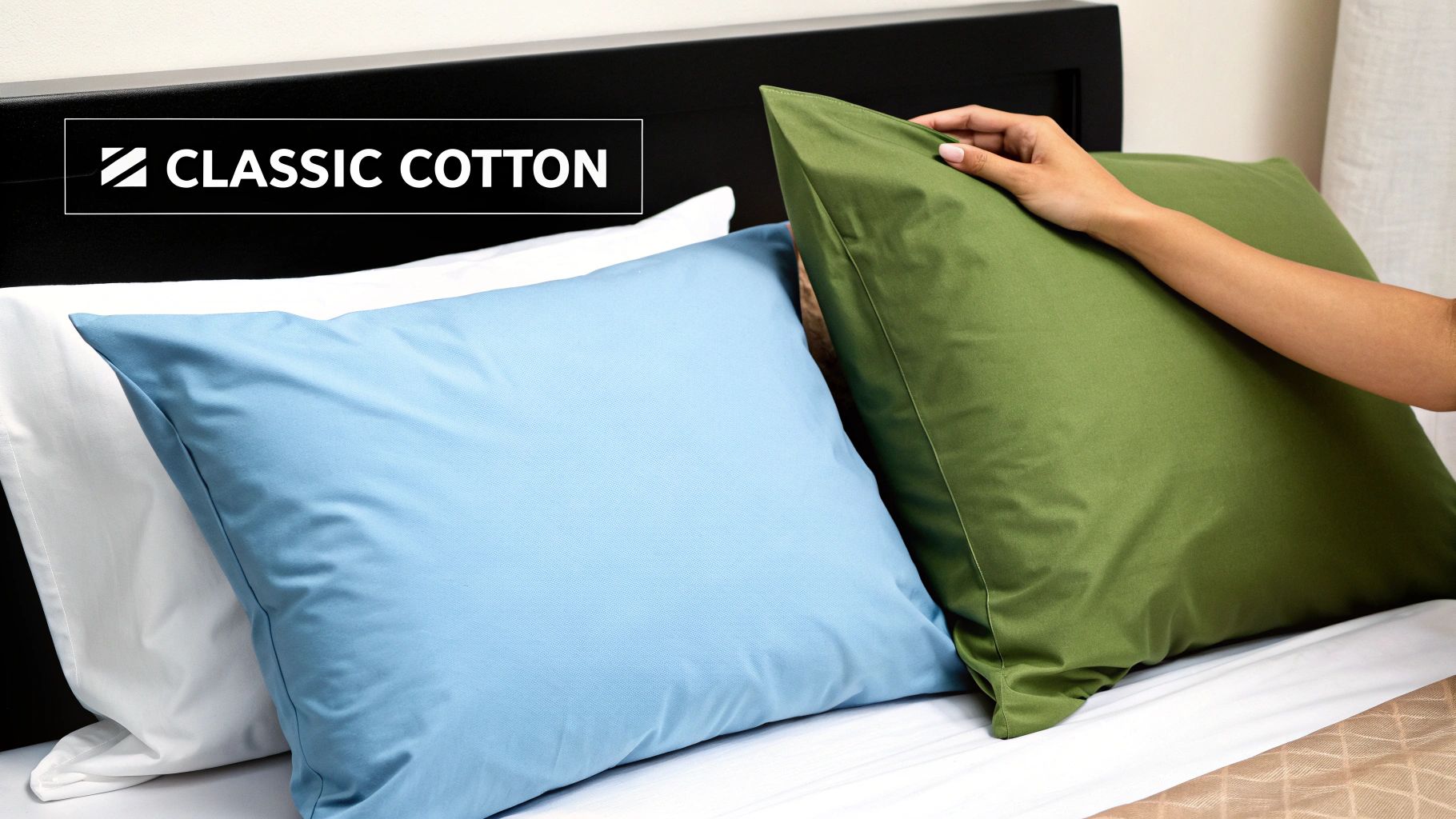
Different Types of Cotton Fibre
The real secret to truly luxurious cotton sheets lies in the length of the plant’s fibres, what is known as the 'staple'. Longer staples can be spun into finer, stronger, and much smoother yarns.
- Egyptian Cotton: This is widely regarded as the gold standard. Grown in the Nile River Valley, its extra-long-staple fibres create sheets that are incredibly soft, strong, and breathable. They have a wonderful habit of getting even softer with every wash, making them a worthwhile long-term investment.
- Pima Cotton: Very similar to Egyptian cotton, Pima is a long-staple cotton grown primarily in the US and Australia. It offers a wonderfully soft and durable finish, giving you a touch of luxury without quite the same premium price tag.
- Upland Cotton: This is the most common type of cotton, accounting for the vast majority of production. While its fibres are shorter, good-quality Upland cotton still makes for very comfortable and reliable everyday bedding.
When you are shopping, keep an eye out for terms like "long-staple" or "extra-long-staple" as a clear clue to higher quality. You can dive deeper into the benefits in our guide to organic cotton bed sheets.
Weave Wars: Percale vs Sateen
Beyond the type of cotton, the way it is woven has the biggest impact on how the sheets feel against your skin. The two most popular weaves are percale and sateen, and they offer completely different experiences.
Key Takeaway: Choosing between percale and sateen is purely down to personal preference. Do you want the cool, crisp feel of a freshly ironed shirt, or the silky, smooth glide of luxury hotel bedding?
Percale Weave
Imagine slipping into a bed made with perfect hotel sheets, crisp, light, and cool to the touch. That is the feeling of a percale weave. It is created using a simple one-thread-over, one-thread-under pattern.
This simple structure allows for maximum airflow, making percale the ideal choice for anyone who tends to get warm at night. Its matte finish gives it a clean, classic look that feels wonderfully refreshing, especially in summer.
Sateen Weave
If you prefer something with a silkier, more luxurious drape, then sateen is for you. It uses a one-thread-under, three or four-threads-over pattern. This technique exposes more of the thread’s surface, resulting in a subtle sheen and a buttery-soft feel.
Sateen sheets feel slightly heavier and warmer than percale, making them a cosy option for the colder months. They are also naturally more resistant to wrinkling, so they look smooth and inviting straight from the dryer.
Linen vs Bamboo: A Comparison of Natural Fibres
When you are ready to move beyond traditional cotton, linen and bamboo are two fantastic natural choices, but they offer completely different experiences. Think of it as choosing between rustic, lived-in charm and sleek, modern luxury. Both are brilliant materials, but they cater to very different preferences and sleeping styles.
Linen, spun from the fibres of the flax plant, is legendary for its incredible durability and airy, breathable feel. It has a unique, slightly textured character that only gets softer and more inviting with every single wash. This makes it an absolute godsend for anyone who tends to overheat at night or for those long, warm summer evenings.
On the other hand, bamboo fabrics, typically viscose or lyocell, have a silky, fluid drape that feels exceptionally smooth against the skin. They are masters at wicking away moisture, which helps keep your body temperature stable no matter the season. Let's dig into how they compare in feel, care, and sustainability to help you decide which is the right fit for your bedroom.
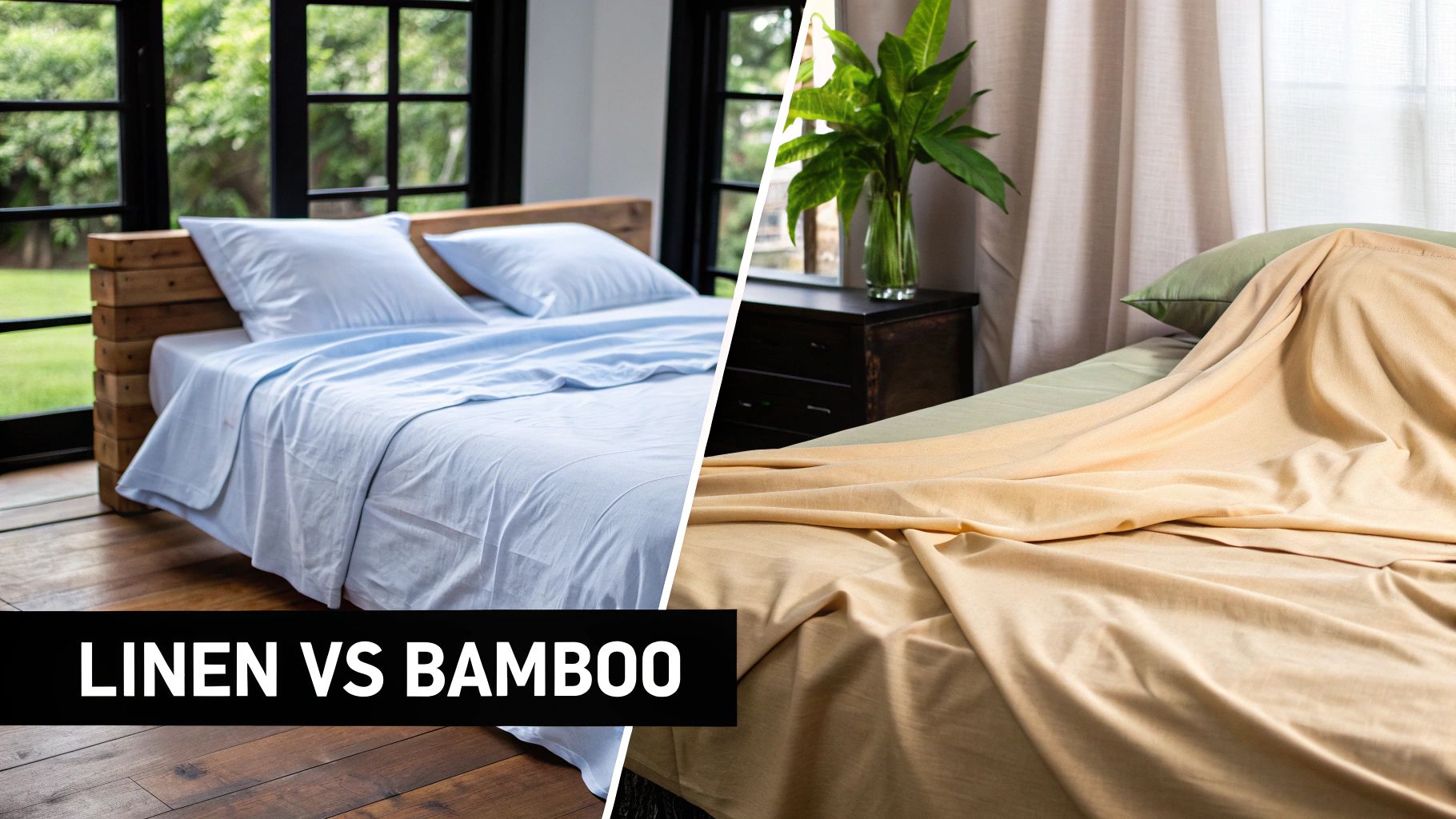
The Feel and Texture
The most immediate difference you will notice between linen and bamboo is how they feel to the touch. Your choice here really boils down to personal preference. Do you want a crisp, natural texture or a sleek, silky one?
Linen has a distinctive, slightly coarse feel when brand new, but do not let that initial impression fool you. That texture is part of its charm. With each wash, the fibres begin to relax and soften beautifully, developing a lived-in comfort that you just cannot fake. It has a satisfying weight without feeling heavy and never clings, letting air circulate effortlessly.
Bamboo, by contrast, feels unbelievably soft right out of the package. It glides over your skin with a silky smoothness, often compared to high-end sateen but with a lighter, more fluid drape. This makes it a wonderful option for anyone with sensitive skin.
Key Difference: Linen offers a relaxed, breathable, and slightly textured feel that improves with age. Bamboo delivers instant, silky-smooth softness that drapes beautifully over the body.
Performance for Hot Sleepers
If you often wake up feeling too warm, both linen and bamboo are superb choices, but they tackle the problem in slightly different ways. Finding the bed sheets best material for temperature regulation can be a complete game-changer for getting a good night's sleep.
Linen is the undisputed champion of breathability. Its hollow fibres and naturally loose weave create tiny airways, allowing body heat to escape and cool air to flow freely. This unique structure means linen can also absorb a remarkable amount of moisture before it even starts to feel damp, keeping you feeling crisp and dry. For a deeper dive on this, check out our guide comparing linen vs cotton.
Bamboo is also highly effective at keeping you cool. Its fibres are exceptional at wicking moisture away from your skin, spreading it out so it can evaporate quickly. While it does not have the same open, airy weave as linen, its moisture-management skills are brilliant for preventing that clammy feeling if you sweat.
- Linen is ideal for: Those needing maximum airflow and a dry, cool-to-the-touch sensation, particularly in summer.
- Bamboo is ideal for: Sleepers who want a soft fabric that actively pulls moisture away from the body for year-round comfort.
Care and Durability
Your lifestyle and how much time you want to dedicate to laundry should play a part in your decision. Both materials are built to last, but their care routines and how they age are quite different.
Linen is famously strong, it is one of the most durable natural fibres you can buy, and it actually gets stronger when wet. It handles a warm wash well and is best line-dried or tumble-dried on a low setting to protect the fibres. That relaxed, slightly wrinkled look is part of linen's aesthetic, which means you can happily skip the ironing.
Bamboo fabrics are also durable but need a gentler touch. To maintain their silky sheen and softness, they should be washed in cool or lukewarm water on a delicate cycle. High heat can damage the fine fibres over time, so line drying or a low tumble dry is non-negotiable. The upside is that bamboo is naturally more wrinkle-resistant than linen.
Getting to Grips with Modern Fabrics: Microfibre and Tencel
Stepping away from traditional cotton and linen, textile innovation has brought us some fantastic modern materials. Two of the most popular are microfibre and Tencel, and they could not be more different. Each one is engineered for a specific purpose, whether you are after incredible softness on a budget or sustainable, silky luxury.
These fabrics often tick all the boxes for busy families or anyone looking for simple, effective bedding that just works. Let's break down what makes each a popular choice and see how they stack up.
What Is Microfibre Bedding?
Microfibre is a synthetic fabric made from incredibly fine polyester fibres, each one is actually thinner than a strand of silk. Weaving these threads together creates a dense fabric with a signature velvety softness that feels instantly warm and cosy. If you love that feeling of sinking into a plush bed, especially on a cold night, microfibre is hard to beat.
Its practicality is a massive benefit. That tight weave makes it naturally resistant to wrinkles, so your bed looks tidy with almost zero effort. It is also exceptionally durable and holds its colour brilliantly through countless washes, making it a reliable workhorse for kids' rooms or the spare bed. You can dive deeper in our complete guide explaining what microfibre bedding is.
Who is microfibre best for? It is the perfect fit for anyone who wants maximum cosiness and warmth without breaking the bank. Its durability and low-maintenance nature also make it a smart choice for busy households with children.
The one thing to keep in mind is that while it is wonderfully soft, it is not as breathable as natural fibres. This makes it an excellent insulator for winter but can feel a bit too warm for anyone who tends to sleep hot.
The Gentle Luxury of Tencel Lyocell
Tencel is a brand name for a type of lyocell, a truly remarkable fabric derived from sustainably sourced wood pulp, typically from eucalyptus trees. It is produced in an environmentally sound "closed-loop" process, where over 99% of the water and solvents are captured and reused. This makes it a standout choice if you want to blend pure luxury with a much lighter environmental footprint.
The real magic of Tencel is how it feels. It has an exceptionally smooth, silky surface that drapes beautifully and feels incredibly gentle on the skin, making it a dream for anyone with sensitive skin or allergies.
But what truly sets Tencel apart is its incredible moisture management. It is more absorbent than cotton and actively moves moisture away from your body, helping to regulate your temperature and keep you feeling cool and dry all night. This also creates a less hospitable environment for bacteria, contributing to a healthier, more hygienic sleep.
Comparing Microfibre and Tencel
While they are both modern fabrics, they are built for very different sleepers. Here is a simple head-to-head to help you decide which material is right for your bed sheets.
- Feel and Comfort: Microfibre is plush, velvety, and warm. Tencel is silky, smooth, and cool to the touch.
- Temperature Regulation: Microfibre traps heat, making it a great friend to cold sleepers. Tencel is a champion at wicking moisture and keeping you cool, perfect for hot sleepers.
- Care and Durability: Both are durable and easy to look after. Microfibre is highly wrinkle-resistant, whereas Tencel prefers a gentler, cooler wash to protect its silky texture.
- Sustainability: Microfibre is a petroleum-based synthetic. Tencel is a plant-derived, biodegradable fibre made using an eco-friendly process.
Ultimately, the choice comes down to your personal priorities. If you are looking for affordable, warm, and no-fuss bedding, microfibre is an excellent choice. But if you value a luxurious feel, green credentials, and superior cooling, Tencel is a worthy investment in your comfort. UK consumer trends show that for many, the "best material" increasingly means sustainable and hypoallergenic. Analysts highlight that the bed linen market is growing because shoppers are prioritising hygiene and healthier fabrics, especially for those with allergies or skin sensitivity. You can learn more from research on the UK home textile market.
Matching the Material to Your Sleeping Style
Finding the right bed sheets is not about chasing trends, it is about understanding your own body and what makes you comfortable. The perfect fabric for a friend who is always cold could be your worst nightmare if you tend to overheat. This is where we get personal and match the material to your lifestyle, ensuring you get that "just right" feeling every single night.
The most important step is to think about how you sleep. Do you kick off the covers, or do you find yourself bundling up even in the summer? Answering this simple question will point you in the right direction and make the whole process much simpler.
For Those Who Sleep Hot
If you often wake up feeling too warm, you need bedding that breathes. Your priority should be fabrics that allow air to circulate freely and move moisture away from your skin, helping your body regulate its temperature without breaking a sweat.
Here are the top choices for staying cool and comfortable:
- Linen: This is the undisputed champion of breathability. Its natural, hollow fibres create space for air to move, which is why it feels so cool and crisp all night long.
- Percale Cotton: A classic for a reason. Its simple one-over, one-under weave is light and airy, preventing heat from getting trapped and offering a wonderfully refreshing feel against the skin.
- Tencel and Bamboo: These materials are brilliant at managing moisture. They actively pull sweat away from your skin before it can make you feel clammy, helping you stay dry and comfortable.
A Quick Tip for Hot Sleepers: Keep an eye out for descriptions like "breathable" or "moisture-wicking". These are features specifically designed to prevent overheating and can make a huge difference to your sleep quality.
For Those Who Feel the Cold
If you are the one always reaching for an extra blanket, the right sheets can create a cosy sanctuary. You will want a material that retains a little body heat, giving you a gentle, insulating warmth without ever feeling stuffy or restrictive.
Brushed cotton, often sold as flannel, is a fantastic option. The brushing process creates a soft, fluffy surface that traps a thin layer of air, providing instant warmth the moment you slip into bed. Similarly, microfibre’s dense weave is excellent at holding in heat, offering a plush and snuggly feel that is just perfect for chilly nights.
Comfort is where material choice really shines, and recent data shows people are willing to invest in it. The UK home bedding market generated about USD 6.75 billion in 2023. As British winters feel longer, many are choosing warmer top layers combined with soft, temperature-balancing sheets instead of just cranking up the heating.
This decision tree helps visualise which modern fabric might suit your primary need for warmth or coolness.
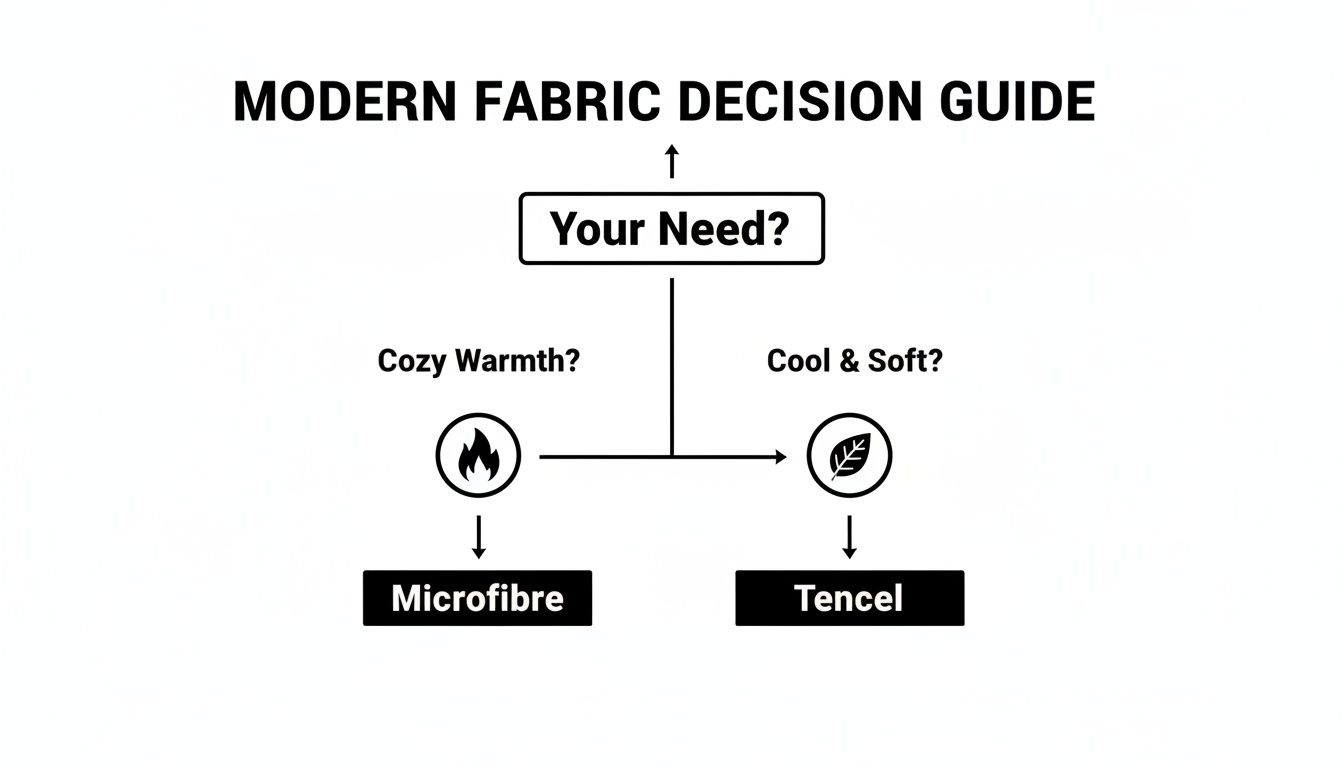
As you can see, for that cosy warmth, microfibre is a go-to choice, while Tencel is ideal if you are after a cool and soft experience.
For Sensitive Skin and Allergy Sufferers
When your skin is easily irritated, the texture and purity of your sheets matter immensely. The goal is to find fabrics that are exceptionally smooth and naturally hypoallergenic to avoid any unnecessary aggravation.
High-quality bamboo and Tencel are standouts here. Their fibres have a uniquely rounded and smooth structure that glides over the skin without causing friction or irritation. They are also naturally resistant to dust mites and bacteria, which helps to create a much healthier sleeping environment overall.
Of course, it is not just about personal comfort. Health considerations like allergies can steer your choice. For those looking to create a healthier home, understanding and managing pet allergies can also be a big help. Ultimately, choosing a fabric that feels both gentle and clean is the key to a restful, itch-free night.
How to Care for Your Bedding to Make It Last
You have invested time and money in finding the perfect bed sheets, so naturally, you will want them to stay soft and beautiful for years to come. The secret is not complicated, but proper care is key, and it does vary a little between fabrics. Following a few simple guidelines for washing, drying, and storing will preserve that quality and feel you first fell in love with.
These straightforward tips will help keep your favourite sheets feeling luxurious night after night, ensuring your investment in comfort truly pays off.
Washing Your Sheets the Right Way
The first step to making your sheets last is getting the wash right. While it is tempting to turn up the heat for hygiene, a cooler wash is often much kinder to the fabric, and the planet. Most modern detergents are formulated to work brilliantly at 30°C or 40°C.
Cooler water protects the delicate fibres in materials like Tencel or bamboo, preventing them from shrinking or losing their signature silky feel. A warm wash is generally fine for sturdy cotton and linen, but it is always wise to double-check the care label first.
For the best results every time, keep these points in mind:
- Choose a Gentle Detergent: Harsh chemicals can strip natural fibres. A mild, pH-neutral liquid detergent is always a good bet, particularly for delicate weaves like sateen or Tencel.
- Do Not Overload the Machine: Sheets need space to tumble freely to get properly clean. Giving them their own load prevents tangling, stretching, and unnecessary wear and tear.
- Skip the Fabric Softener: It sounds strange, but fabric softeners often leave a waxy residue on sheets. Over time, this buildup can reduce their natural breathability and absorbency.
For a deeper dive into achieving that perfect clean, our dedicated guide explains how to wash bed sheets correctly.
Drying and Storing for Lasting Softness
How you dry your sheets is just as crucial as how you wash them. High heat from a tumble dryer is one of the fastest ways to break down fabric fibres, which can lead to shrinkage and that dreaded loss of softness.
Whenever you can, line drying is the gold standard. Fresh air leaves them smelling incredible, and the gentle drying process is kind to the fabric. If you must use a tumble dryer, stick to a low heat setting and pull the sheets out as soon as they are dry to stop deep wrinkles from setting in.
If your bedding needs a serious refresh or you are short on time, a professional bedding cleaning service guide can offer some expert advice.
A Pro Tip for Linen: To bring out linen's beautiful, relaxed texture, pull it from the dryer while it is still slightly damp. This simple step helps it stay soft and prevents it from feeling stiff or starchy.
Common Questions About Bed Sheet Materials
Even with all this information, picking the right bed sheets can still feel a bit daunting. To help you make that final decision with total confidence, we have put together answers to a few questions we hear all the time.
What Is the Best Bed Sheet Material for Hot Sleepers in the UK?
If you are someone who often feels too warm at night, especially during those surprisingly mild UK spells, your best bet is a fabric that breathes well and moves moisture away from you. You need something that will not trap your body heat.
Linen is a fantastic choice. Its naturally open weave allows for incredible airflow, which is brilliant for keeping you cool. Another great option is percale cotton, which feels crisp and cool to the touch from the moment you get into bed. Do not overlook modern fabrics either. Tencel™ Lyocell and high-quality bamboo are both excellent at drawing moisture away from the skin, ensuring you stay dry and comfortable all night long.
Does Thread Count Really Matter When Choosing Sheets?
This is a classic question, and the short answer is that the quality of the fibre is far more important than the thread count. While that number can be a rough guide, it should never be the deciding factor on its own.
Think of it this way, a 300 thread count sheet made from premium, long-staple cotton will feel infinitely softer and last much longer than a 1000 thread count sheet woven from short, coarse fibres. A high number of weak threads simply cannot compete with a lower number of strong, silky ones. We dive deeper into this in our guide on finding the best thread count for sheets.
Focus on the material and the weave first. Consider thread count a secondary indicator of quality, not the defining feature.
How Often Should I Wash My Bed Sheets?
To keep your bedding hygienic and feeling fresh, we recommend washing your sheets once a week. This simple habit removes the natural build-up of sweat, body oils, and skin cells that inevitably accumulate.
If you have sensitive skin, allergies, or a pet who loves to share the bed, you might want to wash them even more often. Regular washing does not just create a healthier place to sleep, it also helps preserve the fabric’s integrity and softness, keeping your favourite sheets feeling lovely for years.
At Morgan and Reid, we are dedicated to creating a truly comfortable and stylish sleep experience for the whole family. Explore our collection of Snuggle Comforters and essentials to build the cosy bed of your dreams at https://www.morganandreid.com.
Share:
What Is Percale Cotton a Guide to Crisp Bedding
What Is a Double Duvet Size? A Complete UK Bedding Guide