


Washing your mattress cover is surprisingly straightforward. For most, a gentle cycle in the machine with a mild detergent will do the trick. But here's the golden rule, always check the care label first. The material, especially if it is waterproof or quilted, will tell you exactly what it needs. This one simple step is the key to a fresher, healthier bed.
Your Guide to a Cleaner, Healthier Sleep
Think of your mattress cover as the unsung hero of your bed. It is the first line of defence against everything from a morning coffee spill to dust and allergens, making it absolutely vital for a hygienic and comfortable night's sleep.
We all stay on top of washing our sheets, but the cover beneath often gets overlooked. Over time, it quietly absorbs sweat, body oils, and skin cells. This guide is all about giving it the attention it deserves with practical, simple steps that work even for the busiest of us.
Following a proper cleaning routine does more than just get rid of a few stains, it directly contributes to better rest. When you eliminate allergens and irritants from your immediate sleeping environment, you are paving the way for a more peaceful night.
A clean sleeping environment is a cornerstone of good sleep hygiene, helping to reduce nighttime disruptions and improve overall restfulness. Consistently cleaning your bedding is one of the easiest ways to support this.
Beyond your regular wash, adding an extra layer of protection, like a quality mattress encasement for bed bugs, can make a huge difference in maintaining a truly clean space. We will walk you through everything you need to know to ensure your bed remains the cosy haven it is meant to be.
Do Not Skip These Pre,Wash Checks
Before your mattress cover goes anywhere near the washing machine, a few quick checks can be the difference between a successful wash and a laundry disaster. Taking a moment now saves you from shrinking, tearing, or otherwise ruining a perfectly good cover.
Your first port of call should always be the care label. Think of it as the manufacturer's instruction manual in miniature.
First, Read the Care Label
That little tag tucked away in a seam is your single most important guide. It spells out exactly what your cover can handle, from water temperature to the right spin cycle. Guessing is a risky game, you would not bake a cake without a recipe, so do not wash your expensive mattress cover without checking the instructions first.
The symbols can look a bit like hieroglyphics, but they are easy to decode once you know what you are looking for. If you are not familiar with them, this guide to fabric care symbols is a brilliant resource to have on hand. It takes the mystery out of laundry day.
Different materials have very different needs, for instance:
- Waterproof Covers: These usually need a cooler wash to protect the waterproof membrane from delaminating.
- Quilted Covers: A gentle or delicates cycle is often best to stop the padding from bunching up.
- Natural Fibres: Materials like cotton or bamboo react to heat differently than synthetics, so paying attention to the temperature is key.
Your Pre,Wash Checklist
To make it even simpler, here is a quick table to run through before you start. It is a handy habit to get into for any significant laundry item.
| Check | Why It Matters | What to Do |
|---|---|---|
| Care Label | Prevents shrinking, melting, or colour run. It is the official guide. | Read it carefully. Note the recommended water temperature and cycle. |
| Zips/Fasteners | Open zips can snag fabric, and metal parts can damage your machine. | Zip all zips and fasten any buttons or poppers completely. |
| Tears or Rips | The vigorous motion of a wash cycle can turn a tiny hole into a huge tear. | Do a quick visual scan. Stitch up any small rips before washing. |
| Stubborn Stains | Some stains need pre,treatment or they will set permanently in the wash. | Spot,treat any noticeable stains with an appropriate stain remover first. |
Following these simple steps ensures your mattress cover comes out looking its best and ready for many more nights of comfortable sleep.
Inspect for Damage and Zip It Up
Finally, give the cover a quick once,over for any loose threads or small tears. The washing machine's agitation can easily worsen minor damage, so a few stitches now can save the cover later.
And do not forget the zips. Always zip them up completely. This stops the metal teeth from catching on the fabric and prevents them from clanging against the inside of your machine's drum. It is a tiny step that protects both your cover and your washing machine.
The Best Way to Wash Your Mattress Cover
Alright, with the pre,wash checks out of the way, it is time to get that cover properly clean. The good news is that most modern mattress covers are designed to go straight into the washing machine, which is a real lifesaver. Whether you machine wash or need to do it by hand, the goal is the same, a fresh, hygienic cover without damaging the material.
If you are using a machine, the golden rule is to be gentle. A heavy,duty cycle is far too aggressive and can easily shorten the life of your cover, especially if it has a special waterproof layer or delicate quilting. You want to clean it, not wear it out.
Choosing the Right Machine Settings
The safest bet is always the gentle or delicates cycle on your machine. This setting uses a slower spin and less agitation, which is much kinder to the fabric and stitching.
When it comes to the water temperature, warm is usually best. A setting around 30,40°C is perfect for killing off most germs and bacteria without being so hot that it risks shrinking the material or damaging any protective membranes. Of course, always defer to the care label if it says otherwise, but this temperature is a solid starting point for most covers.
This simple decision tree can help you decide on the best pre,wash approach based on your mattress cover's care instructions.
As you can see, checking that label is your non,negotiable first step. It is the only way to know for sure what your specific cover can handle.
Selecting a Gentle Detergent
The detergent you use is just as critical as the cycle you choose. Go for a mild, non,biological liquid detergent. These are formulated without the harsh enzymes found in biological powders, which can degrade delicate fibres and waterproof coatings over time.
A gentle detergent not only protects your mattress cover but is also kinder to sensitive skin. It ensures your sleeping surface is free from potential irritants, contributing to a more peaceful and comfortable night's rest.
You will also want to skip the fabric softener. It might seem like a good idea, but it can leave a residue that clogs the pores of breathable fabrics and reduces the effectiveness of waterproof layers. The thinking here is very similar if you need to know how to wash a mattress protector, as both items rely on gentle care to do their job properly.
Tackling Stains Before the Wash
If you have got specific stains, a bit of spilt tea or a small accident, dealing with them before the main wash makes a huge difference. The key is to act quickly before the stain has a chance to set.
- For general stains: A simple paste made from baking soda and a bit of water is surprisingly effective. Just apply it to the stain, leave it for about 30 minutes, and then gently brush it off before washing.
- For tougher, organic stains: Try a solution of equal parts white vinegar and water. Pop it in a spray bottle, spritz the area, and let it sit for 15,20 minutes before the cover goes into the machine.
A quick word of caution, always test any stain remover on a small, inconspicuous spot first. This simple check ensures you will not end up with a discoloured patch.
Drying and Refitting Your Cover Correctly
Getting your mattress cover perfectly dry is just as important as getting it clean. I cannot stress this enough, a damp cover is a breeding ground for mildew and musty smells, which completely defeats the purpose of washing it in the first place. The final step is all about making sure your cover is bone dry before it goes anywhere near your bed.

You have got two main routes here, the tumble dryer or the classic air dry. The best choice really depends on what your cover is made of, so let us defer to the wisdom of that care label one last time.
Using a Tumble Dryer
If the label gives you the green light for tumble drying, the golden rule is to use a low heat or no heat (air fluff) setting. High heat is the arch,nemesis of waterproof linings and delicate fibres, it can cause serious shrinkage and damage, making the cover a nightmare to refit.
To help it dry evenly and stay fluffy, especially if it is a thicker, quilted style, here are a couple of my go,to tricks:
- Toss in Some Dryer Balls: Wool or rubber dryer balls are fantastic. They bounce around inside the machine, preventing the cover from tangling into a big, damp ball. This creates space for air to circulate, speeding up the process and keeping any filling nice and soft.
- Do a Mid,Cycle Check: Do not just set the timer and walk away. I always pause the dryer every 30 minutes or so to pull the cover out, give it a good shake, and reposition it. This simple step makes a huge difference in achieving an even dry.
The Benefits of Air Drying
Honestly, air drying is the safest and gentlest method for any mattress cover, hands down. It completely eliminates any risk of heat damage or shrinkage. If you have got the time and the space, I would always recommend this route.
Hanging your cover outside on a bright, breezy day is perfect. The fresh air works wonders, and a bit of sunlight acts as a brilliant natural sanitiser. If you are drying it indoors, drape it over a large clothes horse or across a couple of dining chairs to get as much airflow around it as possible.
Before you even think about putting it back on the bed, do a thorough touch test. Feel along the thicker seams and check the quilted corners, these are always the last spots to dry. Even the slightest hint of dampness can lead to problems down the line.
Once you are 100% sure it is dry, refitting it is the final piece of the puzzle. Thankfully, this is much easier than wrangling a duvet cover. If you happen to need a few pointers on that particular chore, our guide on how to put on a duvet cover has some great tips.
With your fresh, clean cover back in place, your bed is officially ready for a truly comfortable and hygienic night’s sleep.
How Often Should You Be Washing Your Mattress Cover?
Figuring out the sweet spot for washing your mattress cover is key to a truly clean and inviting bed. We are all pretty good at keeping our sheets on a regular laundry rotation, but that cover underneath often gets overlooked. Yet, it is a critical barrier protecting your mattress.
As a general rule, popping your mattress cover in the wash every two to three months is a solid routine for most people. This is enough to tackle the slow, steady accumulation of dust, dead skin cells, and body oils that is just a normal part of life. It strikes a good balance, keeping things fresh without adding another weekly chore to your list.
Of course, a "one,size,fits,all" approach does not really work for laundry. Sometimes, you will need to wash it more often, and that is perfectly fine.
When to Wash Your Cover More Frequently
There are a few common scenarios where bumping up the wash schedule to once a month makes a real difference to your sleep hygiene.
Think about giving it a monthly clean if any of these sound familiar:
- You deal with allergies: A more frequent wash is your best defence against dust mites and pet dander, which can be a nightmare for allergy and asthma sufferers.
- A pet sleeps on the bed: We would not trade them for the world, but our furry companions leave behind a lot of hair and dander. A monthly wash is pretty much non,negotiable.
- Someone's been unwell: After a bout of illness, it is a smart move to wash all your bedding, cover included, to help banish any lingering germs.
- You're a hot sleeper: If you tend to sweat at night, washing the cover more often will stop unpleasant odours and bacteria from settling into the fabric.
This is not just our advice, it is a common recommendation from experts. Consumer champions like Which? suggest washing mattress protectors every couple of months as standard. Meanwhile, many specialist bedding brands advise a monthly wash for anyone with allergies or who sweats a lot. It is interesting to see how these recommendations line up with general UK bedroom hygiene habits.
In the end, it is about finding a rhythm that works for you. The goal is to maintain a clean, comfortable sanctuary, and being a bit flexible with your laundry schedule ensures your mattress cover gets the attention it needs, right when it needs it.
Keeping Your Bed Fresh Between Washes
Maintaining that lovely, clean feeling does not have to wait for the next big laundry day. A few simple habits can keep your entire bed feeling fresh and inviting, making those major washes feel less like a chore. Honestly, these little steps make a surprisingly big difference to your sleep comfort.
One of the easiest tricks I have learned is to simply air the bed each morning. Before you rush to make it, just fold back the duvet for an hour or so. This lets any moisture from the night evaporate, which goes a long way in stopping things from feeling stuffy.
Quick Freshness Tips
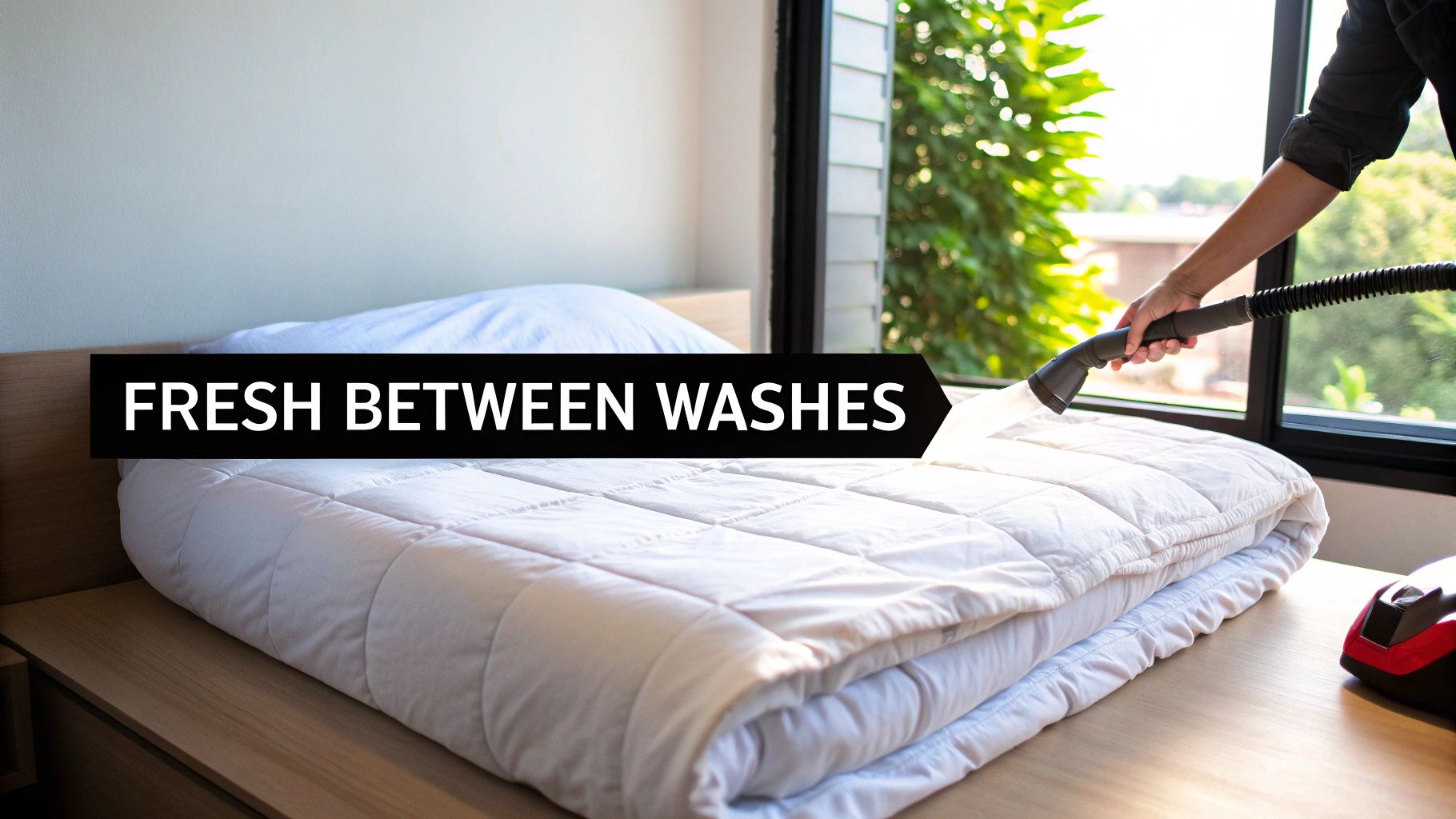
For day,to,day upkeep, a quick vacuum can work wonders. Just grab the upholstery attachment for your hoover and run it over the mattress surface every couple of weeks. It is a simple action that pulls out the dust and allergens that inevitably build up.
Keeping on top of allergens is especially important. Allergy UK points out that dust mites are a major trigger for asthma, and a proper wash at 60°C is what it often takes to get rid of them completely. For a deeper dive, the guidance from Which? on how often to wash bedding is well worth a read, as it explains how different temperatures impact hygiene.
For minor spills, the key is to act fast. A damp cloth with a mild cleaner should be your first port of call to stop a stain from setting. A light mist of a gentle fabric freshener can also do a brilliant job of reviving your bedding between washes.
These consistent habits do not just feel good, they extend the life of your bedding and contribute to a much more restful sleep. And remember, clean bedding starts with a clean machine, learning how to clean a washing machine properly is a game,changer for getting the best results.
Got Questions About Washing Your Mattress Cover? We Have Got Answers.
Tackling a bulky item like a mattress cover for the first time can leave you with a few questions. It is completely normal. Let us walk through some of the most common queries to make sure you feel confident from start to finish.
Can I Put a Waterproof Mattress Cover in the Washing Machine?
Yes, absolutely. The vast majority are designed to be machine washable, but the trick is to protect that waterproof layer.
Stick to a cool wash, around 30,40°C, on a gentle or delicate cycle. The two biggest enemies of a waterproof cover are fabric softener and high heat.
- Fabric Softener: It can leave a film that clogs up the waterproof membrane, making it less effective. It is best to skip it altogether for this wash.
- High Heat: Whether in the wash or the dryer, too much heat can cause the waterproof lining to bubble, crack, or even melt.
For drying, letting it air dry is your safest bet. If you are in a hurry and need to use the tumble dryer, be sure to use the lowest heat setting or a no,heat, air,fluff cycle.
What if My Mattress Cover Is Too Big for My Machine?
This is a common issue, especially with deep,sided or quilted covers. Whatever you do, do not force it into your home machine. An overloaded drum means the cover will not get properly clean, and you could damage both the cover's seams and your washing machine.
Your best bet is a quick trip to a local launderette. Their commercial,sized machines are built for bulky items like duvets and mattress protectors. If that is not an option, you can always hand wash it in a clean bathtub using a gentle detergent. Just be ready for a bit of a workout when it is time to rinse and squeeze out all that water.
How Do I Get Rid of Those Stubborn Yellow Stains?
Ah, the dreaded yellow stains. They are usually just a build,up of sweat and natural body oils over time, and thankfully, you can often get them out with a good pre,treatment.
A simple mix of equal parts white vinegar and water in a spray bottle works wonders. Just spritz it onto the stained areas and let it sit for about 30 minutes before washing.
For tougher, set,in marks, try making a paste from baking soda and a small amount of water. Apply it directly to the stain, allow it to dry completely, and then brush or scrape off the residue before putting the cover in the wash. As a rule of thumb, always test any cleaning solution on a small, inconspicuous area first.
For bedding that combines modern style with irresistible comfort, explore the full collection at Morgan and Reid. Discover our signature Snuggle Comforters and essentials designed for families and comfort seekers who want their homes to feel as good as they look at https://www.morganandreid.com.
Share:
What Is a Double Duvet Size? A Complete UK Bedding Guide
A Guide to Standard Pillow Size in the UK