
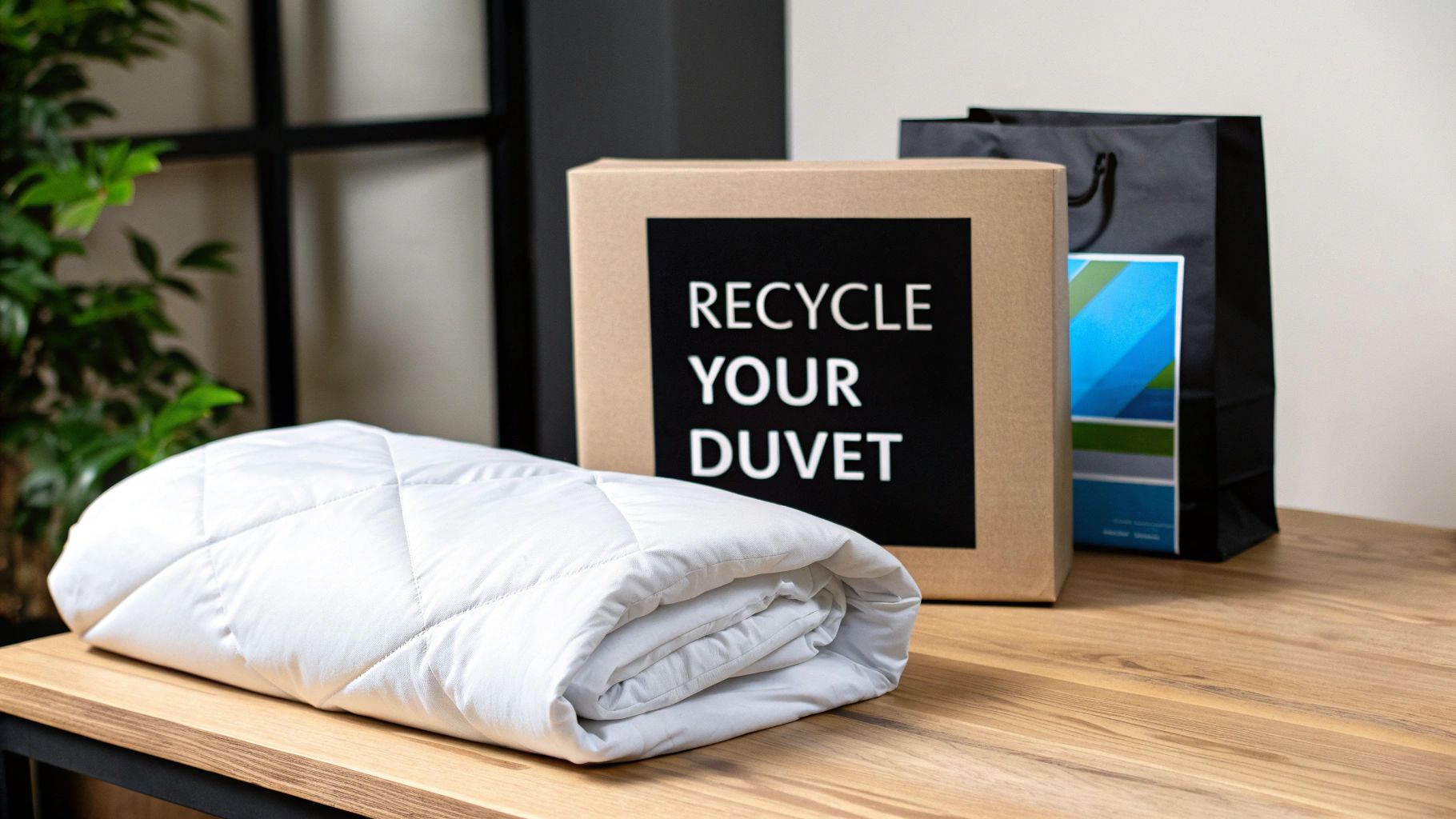
The simplest way to recycle a duvet is to donate it to an animal shelter if it's clean, take it to a local textile recycling bank, or use a retailer's take back scheme. One thing is crucial, though: never put a duvet in your kerbside recycling bin. It can get tangled in the sorting machinery and cause serious problems.
Why Your Old Duvet Deserves a Second Chance
That cosy duvet has served you well, but what do you do when it’s time for an upgrade? While tossing it in the bin might feel like the easiest option, it adds to the millions of tonnes of textile waste that end up in UK landfills every year. Giving your old duvet a new purpose is a surprisingly simple choice that benefits both the planet and your community.
Thinking sustainably goes far beyond sorting your plastics and glass. It is about looking at bigger household items, like bedding, which contain valuable materials that do not belong in a landfill. When you choose to recycle or donate, you are taking part in a circular economy, keeping useful resources in circulation instead of letting them go to waste.
It is a small effort with a big impact, helping to reduce landfill pressure and conserve the energy required to make new materials from scratch. This is a key part of making your home more eco friendly, a process that can start with simple changes like finding a better way to declutter your bedroom.
Natural vs Synthetic Duvets
What your duvet is made of plays a huge role in its next chapter. The two main types, natural and synthetic, follow very different recycling paths.
-
Natural Fillings (Feather and Down): These are surprisingly sought after materials. After being professionally cleaned and sterilised, feathers and down can be given a new lease of life in other high end products, like insulated jackets or even brand new bedding. It is a brilliant example of how we can regenerate a quality natural resource.
-
Synthetic Fillings (Polyester): While they cannot be regenerated in the same way, synthetic fillings are still incredibly useful. They are often shredded down and repurposed into things like carpet underlay, industrial insulation, or furniture padding.
Simply knowing what is inside your duvet helps you make a smarter, more effective decision. This quick check ensures your old bedding ends up in the right place to be properly processed, maximising its potential for a second life.
To get the most out of your efforts for duvets and other household items, have a look at these expert tips for recycling more effectively for some excellent general advice.
Is Your Duvet Right for Donation or Recycling?
Before you bag up your old duvet, it is worth taking a few minutes to give it a proper look over. Think of it as a quick MOT. This honest assessment is the crucial first step in deciding whether it has got enough life left for a new home or if it is destined for a second act as recycled material.
Getting this right makes a real difference. It means charities and animal shelters receive donations they can actually use, and textile recyclers get clean materials they can process effectively. It is a small step that ensures your good intentions do not end up creating more work for someone else.
This handy decision tree can help you visualise the best path forward for your duvet.
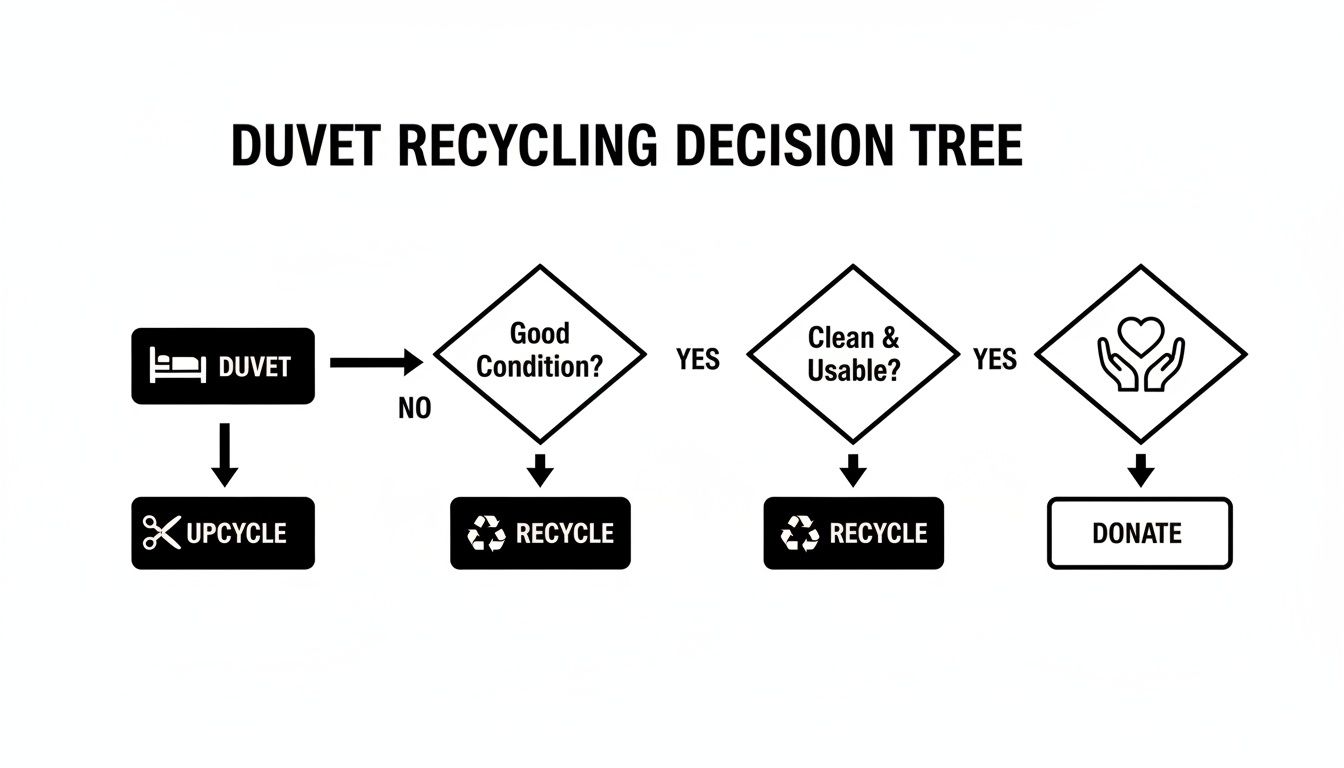
As you can see, it all comes down to the duvet's condition and what it is made from. Let's break that down.
Check the Duvet's Condition
First things first, spread the duvet out somewhere with good light and be honest about its state. Is it still relatively fresh, or is it showing its age?
Minor, washable stains are usually fine for donation, but large, set in marks or heavy discolouration often mean it is a better candidate for recycling. Run your hands over the surface and check carefully for any rips, tears, or burst seams where the filling could escape.
Here is a quick guide to help you make the call.
Duvet Condition Checklist: Donation vs Recycling
Use this quick guide to decide the best path for your old duvet based on its condition and material.
| Condition Check | Good for Donation | Best for Recycling or Upcycling |
|---|---|---|
| Stains & Discolouration | Clean with only minor, washable marks. | Has permanent stains, significant yellowing, or large patches of discolouration. |
| Rips & Tears | No holes, tears, or broken stitching. The structure is fully intact. | Contains rips, holes, or frayed seams that expose the filling. |
| Filling Condition | Evenly distributed, fluffy, and not compacted. | The filling is clumpy, lumpy, or has gone completely flat in areas. |
| Overall Freshness | Still looks and feels comfortable. It is in a state you would be happy to receive. | Looks worn, tired, and has clearly reached the end of its useful life as bedding. |
Ultimately, if you would not feel comfortable giving it to a friend, it is probably not suitable for donation.
Identify the Filling Material
Next up, you need to play detective and figure out what is on the inside. This is the most important part of recycling your duvet correctly.
The care label is your best bet here; it should list the materials for both the filling and the outer casing. Getting familiar with these fabric care symbols is a great habit for looking after all your textiles, not just your bedding.
What if the label is long gone? You can usually tell by touch and sight. Grab a section and hold it up to a bright light. If you can feel, or even see, the pointy little quills of feathers, it is a natural filling. Down, by contrast, is much softer and lighter, without any of those poky bits.
Synthetic fillings, like polyester or microfibre, tend to have a more uniform, springy feel. If it feels like a single, consistent sheet of wadding inside, it is almost certainly synthetic. This distinction is key, as it determines whether the material can be regenerated into new fibres or needs to be shredded for other uses like insulation.
Where to Recycle Your Duvet in the UK
Ready to find a new home for your old duvet? Thankfully, figuring out where to take it in the UK is much easier than you might think. From your local council services to compassionate animal charities, there are plenty of options that keep your duvet out of landfill.
The trick is simply knowing where to look. Your first port of call should always be your local council’s website. They will have the most accurate, up to date information on nearby facilities, which can save you a wasted trip.
Your Local Council and Recycling Centres
Most areas have a Household Waste Recycling Centre (HWRC), what many of us still call ‘the tip’, and these are usually your best bet for textile recycling. Many have dedicated containers or ‘bring banks’ specifically for textiles, which often include duvets, pillows, and other bedding.
Before you head out, it is always a good idea to check their website. A quick search for your local council's name followed by "textile recycling" should tell you exactly what they accept. Some councils are even making it easier to do the right thing right from your doorstep.
For instance, some local schemes have had a huge impact. Oxford's kerbside textile collection, launched in January, gathered an incredible 510kg of pillows and duvets in its very first month. This result just goes to show how much demand there is for convenient, eco friendly disposal. You can explore how successful Oxford's recycling scheme has been to see what is possible.
Animal Shelters and Sanctuaries
If your duvet is clean but perhaps a bit too worn for human donation, local animal shelters are often delighted to receive them. Old duvets make wonderfully warm and comforting bedding for animals awaiting their forever homes.
Places like the RSPCA, Dogs Trust, or smaller, independent shelters are almost always in need of bedding. This is a fantastic way to give your old duvet a truly meaningful second life, providing a bit of comfort to a creature in need.
Expert Tip: Always call the shelter before you drop off a donation. They can sometimes be overwhelmed with bedding, and a quick phone call ensures your kind gesture is needed and can be accepted when you arrive.
Retailer Take Back Schemes
A growing number of UK retailers are stepping up with their own duvet recycling schemes, making it wonderfully simple to be sustainable. When you are buying a new duvet, it is always worth asking if the shop will take your old one off your hands.
These schemes are designed for convenience and responsibility, ensuring your old bedding is handled correctly. Here are a few retailers known for having these programmes in place:
- Dunelm: This home furnishings retailer has a well established textile take back scheme in many of its stores. They accept all clean bedding, including duvets of any brand.
- John Lewis: Often runs its own sustainability initiatives. It is worth checking their website for the latest information on their "FashionCycle" programme, which also includes bedding.
- Alpkit: A great one for outdoor enthusiasts. Alpkit accepts down filled items for recycling, which helps to close the loop on high quality natural materials.
By using these services, you can feel confident that your old duvet will be properly processed. The natural fillings can be cleaned and reused, while synthetic materials are repurposed into things like insulation or padding, keeping valuable resources in circulation.
Getting Your Duvet Ready for Its Next Life
So you have figured out where your old duvet is headed. That is the hard part done. Now, a few simple prep steps can make a world of difference, whether it is destined for an animal shelter or a textile recycling plant. Taking a little time to prepare it properly ensures it arrives in the best possible state.
This is not just about being considerate to the volunteers and staff on the receiving end; it is about efficiency. A clean, dry, and neatly packed duvet is far easier to transport, sort, and process, which helps the whole system run smoothly.
Give It a Thorough Wash
First things first, give it a good clean. This is an absolute must if you are donating it, for obvious hygiene reasons. But even if it is going for textile recycling, washing it first removes the dust, dirt, and body oils that can gum up the machinery.
Always have a look at the care label. Natural down and synthetic fillings often need different treatment. If you are a bit stumped on washing such a bulky item, we have some great advice on how to properly clean large bedding items that can guide you.
The most crucial part of this step? Making sure the duvet is completely dry before you bag it up. Even a hint of dampness can lead to mould and mildew, which will unfortunately make it unusable for anyone. A low heat tumble dry with a couple of tennis balls thrown in works wonders to fluff up the filling and get it properly aired out.
Bag It Up Securely
Once it is clean and bone dry, the final job is to package it up. This keeps it protected on its journey and makes it so much easier for everyone to handle, from you carrying it to your car, to the staff at the drop off point. You do not need anything special, just a solid bag to keep it clean and contained.
Here are a few practical ways to pack it:
- Vacuum Storage Bags: Honestly, these are brilliant. They do not just keep the duvet clean and dry; they shrink it down to a fraction of its size. This is a game changer for fitting it in your car and makes it much less cumbersome for staff to store.
- Strong Bin Liners: A heavy duty bin liner or one of those tough garden waste bags will do the job perfectly well. Just make sure you press out as much air as you can before sealing it tightly with tape.
- A Clear Label: It might sound small, but taping on a simple, clear label like "Clean Duvet for Recycling" or "Duvet for Animal Shelter" is incredibly helpful for the people sorting through donations.
Taking these extra ten minutes means your duvet starts its next chapter on the right foot, ready to be repurposed or bring comfort to an animal in need.
Creative Ways to Upcycle an Old Duvet at Home
So, your duvet is not quite good enough for donation, and textile recycling is not an option. Before you even think about the bin, take another look. That old bedding is a goldmine of materials just waiting for a second life right in your own home.
Upcycling is a fantastic way to give your duvet a new purpose. It is not just about reducing waste; it is a chance to get creative, save a bit of money, and make something genuinely useful. And you really do not need to be a sewing pro to get started. Some of the best projects are surprisingly simple.
Easy No Sew Upcycling Projects
If you would rather avoid the needle and thread, your old duvet is still incredibly versatile. A good pair of scissors and a little imagination are all you need to turn potential clutter into something practical.
- Make a Cosy Pet Bed: This has to be the most popular and easiest project. Just fold the duvet to a size that suits your pet, pop it inside an old pillowcase or a purpose made cover, and you have got an instant, plush bed your furry friend will adore.
- Create a Draught Excluder: Cut a section of the duvet and roll it tightly into a long sausage shape. You can secure it with a few bits of string or tuck it inside an old pair of tights. Place it at the bottom of a door, and it will do a great job of keeping those chilly breezes out.
- Use it as Packing Material: Moving house or putting things into storage? Clean sections of a duvet make for brilliant padding. Wrap them around furniture legs, cushion fragile glassware, or protect electronics from knocks and scratches during transit.
Simple Sewing and Crafting Ideas
For those who are comfortable with some basic stitching, a whole new world of possibilities opens up. The soft filling and durable outer fabric are perfect for a wide range of household crafts and can be a great way to explore some new bedroom decor ideas on a budget.
You could create comfy floor cushions for the kids' playroom, a padded kneeling mat for gardening, or even stitch together an insulated picnic blanket for summer outings. If you are feeling more adventurous, the outer fabric can be cut into smaller pieces and used for all sorts of projects. For more inspiration, it is worth checking out these creative uses for fabric scraps.
By giving your duvet a new job to do at home, you are actively participating in a circular economy. It is a practical, satisfying way to ensure a well loved item continues to provide comfort and value long after its days as bedding are over.
It is a small change that makes a real difference, especially when you consider the sheer scale of the problem. Did you know that UK homes contain an estimated 331,580,000 unused home textiles? Thankfully, 18% of people are already on the right track, repurposing items like old duvets into pet bedding and keeping them out of landfill. You can discover more insights about textile waste in UK homes.
Common Questions About Duvet Recycling
Even with the best intentions, figuring out what to do with an old duvet can feel a bit confusing. It is one of those household jobs that brings up a lot of questions, and it is perfectly normal to feel unsure about the right way to go about it.
To help clear things up, I have put together answers to some of the most common queries I hear. Think of this as a final checklist to give you the confidence that your old bedding is heading to the right place.
Can I Put My Old Duvet in My Kerbside Recycling Bin?
This is the big one, and the answer is a firm and simple no. You should never, ever put a duvet, pillows, or any other type of bedding into your household recycling bin.
Standard recycling plants just are not set up to handle bulky textiles like these. A duvet can easily get tangled in the machinery, causing serious jams and breakdowns. Worse, it can contaminate a whole batch of perfectly good recyclables like paper and plastic. It is always best to take them to a proper textile bank or a designated collection point.
Do Charity Shops Accept Old Duvets?
This is a classic "it depends" situation. Some of the larger charity shops, the ones with plenty of space and the right facilities, will gladly take clean duvets in excellent, reusable condition. However, many smaller shops simply cannot accept them because of strict hygiene rules and a lack of storage.
Your best bet is to always call ahead. A quick phone call to your local charity shop saves you a wasted trip and makes sure your donation is genuinely wanted and useful.
What Happens to Duvets Sent for Recycling?
Once your duvet arrives at a textile recycling facility, it starts a pretty fascinating new journey. What happens next all comes down to what it is made of, which is why checking the label first is so important.
- Natural Fillings: High quality goose or duck down and feathers are valuable materials. They are often cleaned, sterilised, and then repurposed into new premium products like fancy puffer jackets, high end sleeping bags, or even fresh, new bedding.
- Synthetic Fillings: Polyester and microfibre fillings are usually shredded down. This recycled material then gets a second life as building insulation, furniture padding, or even the stuffing for car seats.
The outer fabric casing is typically separated and recycled along with other textiles. It is a complete deconstruction, with every single part being sent off to start a new life. This is a great example of the circular economy in action. If you are curious about the different parts of your bedding, our guide explaining what a duvet cover is and its role is a great place to start.
Which UK Retailers Take Back Old Duvets?
Thankfully, more and more UK retailers are stepping up and making it much easier to be sustainable. These take back schemes are a fantastic option because they partner with specialist recyclers, so you can be confident your old duvet will be handled correctly.
While programmes can change, a few well known brands have been offering this service for a while.
- Dunelm: They run a well known textile take back scheme in many of their stores. You can usually drop off any clean bedding, no matter where you bought it.
- John Lewis: Often includes bedding in their broader "FashionCycle" and other recycling initiatives. It is always a good idea to check their website for the latest details.
- Alpkit: If you have a down filled duvet, this outdoor brand has a brilliant programme to recycle the natural filling, helping to close the loop on this precious material.
Before you make a special trip, always check the retailer's website or ask a staff member in store. These schemes are becoming more common, so it is always worth asking, even at your favourite local shop.
At Morgan and Reid, we believe a good night's sleep is the foundation of a happy home. While we help you find the perfect new comforter for cosy nights, we also want to make it easy for you to say goodbye to your old bedding in a way that is kind to the planet. Explore our collection of irresistibly soft and stylish Snuggle Comforters at https://www.morganandreid.com.
Share:
A Guide to Egyptian Cotton Bedding for a Luxurious Sleep
A Simple Guide to UK Queen Fitted Sheet Size