


Knowing how to clean a mattress pad is surprisingly simple. Most can just be popped in the washing machine on a gentle cycle with a mild detergent, then tumble-dried on low. A quick wash and dry is all it takes to keep your bed feeling fresh and hygienic.
But beyond the simple "how," let's get into the why. Why is this straightforward task so important for your home, your health, and a truly good night's sleep?
Why a Clean Mattress Pad Matters
Think of your mattress pad as the unsung hero of your bed. It provides an extra layer of comfort, but it's also the main line of defence for your mattress. It quietly absorbs everything from sweat and body oils to the occasional morning tea spill, taking the brunt of daily life so your expensive mattress doesn't have to.
Keeping it clean goes far beyond appearances. It’s about creating a genuinely healthy and restful sleep environment. A clean base makes your whole bed feel more inviting, enhancing the crispness of your favourite sheets and the cosiness of your duvet. This simple habit is a cornerstone of great sleep hygiene, turning your bedroom into the sanctuary it should be. For more advice on this, our article on what is good sleep hygiene is packed with useful tips.
The Hidden World Within Your Bedding
If left unwashed, your mattress pad can quickly become a breeding ground for all sorts of microscopic nasties. We’re talking about a mixture of dust mites, dead skin cells, and allergens that build up much faster than you’d think.
Regular cleaning is essential. After just a few years, a mattress can harbour as many as 1.5 million dust mites. For the one in five UK households dealing with allergies, this build-up can make symptoms much worse.
This is why washing your mattress pad regularly is so important, especially if you have children or anyone in the family with allergies or asthma. It’s not just about feeling clean, it’s about creating an environment that actively supports better health. The logic is the same when you consider the common health concerns linked to unclean textiles like carpets, where these same irritants can easily gather.
Protect Your Investment and Comfort
Looking after your mattress pad is also a smart move for your wallet. A proper, regular cleaning routine protects your bigger investment, the mattress itself.
- It extends the life of your mattress. By blocking stains and moisture from seeping through, a clean pad prevents the kind of permanent damage and lingering odours that can ruin a mattress.
- It keeps things comfortable. Washing prevents the filling from getting compressed and lumpy over time, preserving that plush, supportive feel you bought it for.
- It helps you sleep better. A clean pad is far more breathable. This promotes better airflow, which in turn helps regulate your body temperature for a cooler, more restful night.
In the end, a clean mattress pad is the foundation of a truly hygienic and comfortable bed. It’s a small task, but one that makes a huge difference to your daily routine.
Getting Ready: Your Pre-Wash Checklist
A successful wash starts long before you touch the washing machine. A few minutes of prep work can be the difference between a pristine mattress pad and a laundry day disaster. Think of it as setting the stage for a seriously deep clean.
First, find the care label. This is your guide. It holds the manufacturer's specific instructions for water temperature, wash cycles, and drying methods. Those little symbols might seem confusing, but they’re packed with crucial advice. If you need a quick translation, our guide to understanding fabric care symbols will help you decipher them like a pro.
No label? It happens. If it's been snipped off or has faded, don't panic. The safest bet for most cotton or polyester pads is a gentle cycle with cool water. This simple approach goes a long way in preventing any accidental damage or shrinkage.
Spotting Damage and Pre-Treating Stains
Before that pad gets wet, give it a thorough once over. Are there any small rips in the fabric or loose threads, particularly around the seams? Catching these now and making a quick repair with a needle and thread will stop them from becoming major tears in the wash.
With that done, turn your attention to any obvious marks. Pre-treating stains is essential if you want them gone for good. It gives your cleaning solution a head start, breaking down the stain so it doesn't get baked into the fibres by the heat of the wash.
A simple, homemade pre-treatment paste often does the trick:
- For common spots: Just mix a bit of mild liquid detergent with a splash of water.
- How to apply: Gently dab the paste onto the stain with a clean cloth. Do not rub, as aggressive rubbing can force the stain deeper into the fabric.
- Let it sit: Give the solution at least 15 to 30 minutes to work its magic before you begin the main wash.
Deodorise and Lift Away Surface Grime
Here’s a fantastic little trick for getting a much more effective clean. Lay your mattress pad out flat, either on the bed or the floor, and give it a light but even sprinkle of baking soda.
Baking soda is a powerhouse natural deodoriser. It doesn't just mask odours, it absorbs them, along with moisture. It also has the added benefit of helping to loosen surface dirt and dust that’s settled into the weave.
If you have the time, let the baking soda sit for at least an hour. Once it's had a chance to work, grab your hoover and use the upholstery attachment to vacuum it all away. This one step gets rid of loose debris and neutralises stale smells, letting your detergent concentrate on the tougher, deeper cleaning. You'll notice a significant difference in how fresh and bright it looks coming out of the machine.
Machine Washing Your Mattress Pad with Confidence
For most mattress pads, the washing machine is your best option for getting them properly clean. It can seem a bit intimidating to wash such a large item, but with a few simple tricks, you can get it done without any fuss, leaving it fresh, hygienic, and in perfect shape.
The key is to handle it gently. Think of it less like a pile of muddy towels and more like a favourite jumper. A bit of care goes a long way in keeping it soft and structured, ensuring it protects your mattress for years to come.
This flowchart walks you through the crucial pre-wash steps to get your mattress pad ready for the machine.
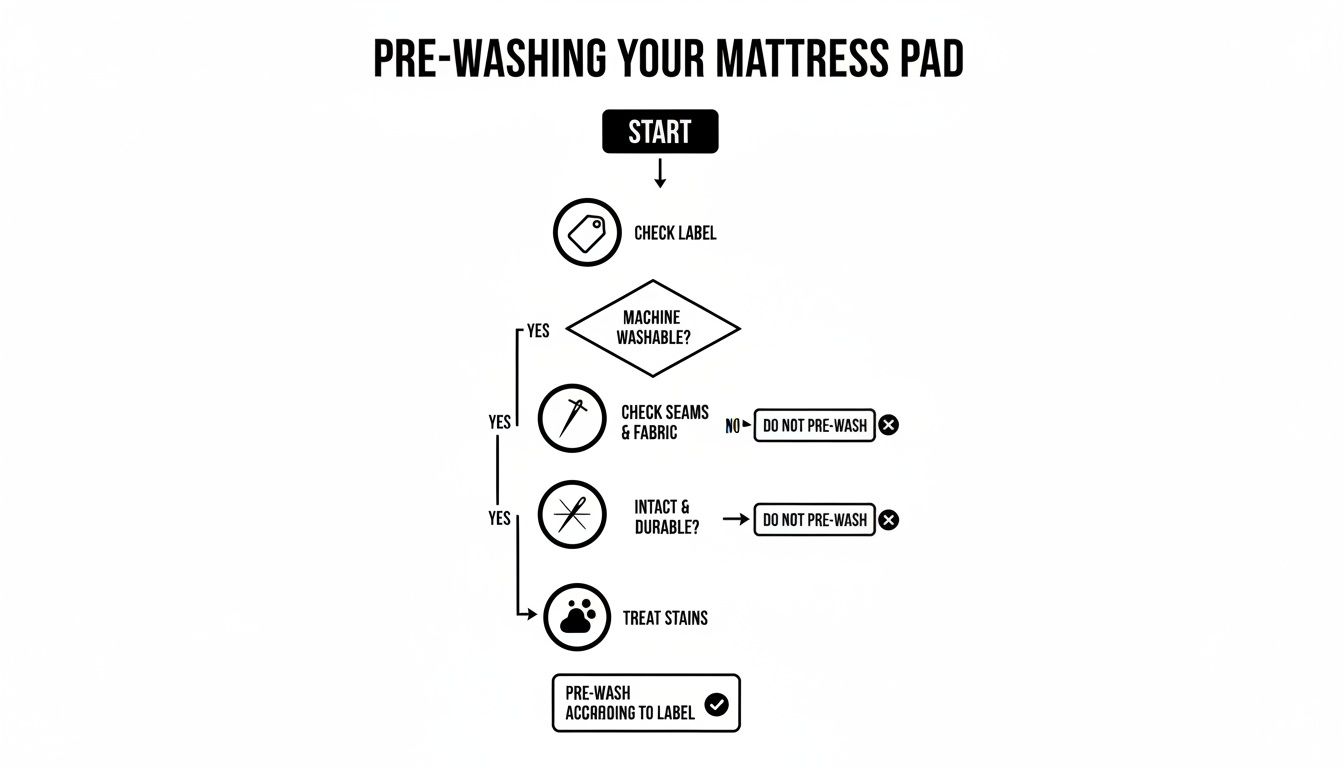
By following this simple path, from checking the care label to spot-treating stains, you’re setting yourself up for a successful, damage-free wash every time.
Choosing the Right Settings
The settings on your washing machine are crucial here. You’ll want a cycle that cleans effectively but isn't so aggressive that it causes the filling to bunch up or the fabric to shrink.
- Select a Gentle or Delicates Cycle: These cycles have a slower spin and less agitation, which is much kinder to the stitching and padding inside.
- Use Cool or Lukewarm Water: A wash at 30°C or 40°C is generally ideal. This temperature is warm enough to deal with germs and dirt but won't risk shrinking cotton or harming waterproof layers.
- Go for a Mild Detergent: Harsh chemicals can leave a residue and degrade the fibres over time. A gentle, non-bio liquid detergent is always the safest choice.
These principles are quite similar to how you’d care for other bedding. For more on this, our guide on how to wash bed sheets offers some great complementary advice. Using the right settings actively protects the materials, which means your pad stays soft and comfortable for much longer.
Washing Guide for Different Mattress Pad Materials
Use this quick reference guide to select the right settings based on your mattress pad's material.
| Material Type | Recommended Water Temperature | Washing Cycle | Detergent Type |
|---|---|---|---|
| Cotton | Cool to Warm (30°C to 40°C) | Gentle or Normal | Mild, non-bio |
| Polyester | Cool (30°C) | Gentle or Synthetics | Mild, all-purpose |
| Waterproof | Cool (30°C) | Delicates | Mild, non-bleach |
| Bamboo | Cool (30°C) | Delicates | Gentle, eco-friendly |
Remember, this is a general guide. Always double-check the care label on your specific mattress pad, as manufacturer recommendations can vary.
Balancing the Load for a Better Clean
Have you ever washed a single bulky item and heard it thumping around inside the machine? That’s an unbalanced load, a common problem when washing things like mattress pads. An unevenly distributed load not only sounds terrible but also prevents a proper clean and rinse.
Thankfully, the fix is easy: balance the weight.
By adding a couple of similar items, like bath towels or a small blanket, you help the drum spin evenly. This allows water and detergent to circulate freely, giving you a much more thorough and consistent clean.
Just be careful not to cram everything in. Your mattress pad needs room to move about to get properly washed. If it’s packed in too tightly, you’ll probably find dry spots and soap residue when you pull it out. If your home machine is on the smaller side, it’s often better to take your pad to a launderette with larger-capacity machines than to risk an ineffective wash.
Tackling Stubborn Stains and Spills
Let's be honest, life happens, and your mattress pad is often on the front line. From a morning tea mishap to a child's nighttime accident, it sees a lot. The good news is that most of these marks aren't a lost cause. With the right approach, you can lift stains without reaching for harsh chemicals, keeping your pad fresh and clean.
The golden rule is to act fast and always dab, never rub. Rubbing only grinds the stain deeper into the fabric and can make a small spot a much bigger problem. A gentle blotting motion with a clean, damp cloth should always be your first move. For similar advice on keeping your whole bed protected, our guide on how to wash a mattress protector has some great related tips.
Your At-Home Stain Removal Kit
You probably have a powerful stain-fighting arsenal in your kitchen cupboards already. These simple, everyday items are surprisingly effective and much gentler on fabrics than many commercial cleaners.
Here’s what we recommend keeping on hand:
- White Vinegar: Its natural acidity is perfect for breaking down mild stains and getting rid of odours. Just mix one part vinegar with one part cool water in a spray bottle for an easy, all-purpose spot treatment.
- Baking Soda: A real star for absorbing moisture and neutralising smells. You can make a thick paste with a little water to tackle more stubborn, set-in stains.
- Hydrogen Peroxide: This is your go-to for organic stains like blood or sweat. Just make sure you're using a standard 3% solution. It’s always a good idea to test it on a small, inconspicuous area first, as it can have a mild bleaching effect on certain materials.
When it comes to stains, a 3% hydrogen peroxide solution is incredibly effective, dealing with up to 95% of common organic spills like urine or blood, and it's generally safe for most mattress pads. It's all part of a move towards using simple home remedies, which are far more economical than calling in professionals.
Dealing with Common Bedding Stains
Not all stains are created equal, so you’ll want to tweak your method depending on what you're up against. For general yellowing or sweat stains, a paste of baking soda and water often does the trick. Just apply it, let it sit for about an hour, and then launder as usual. For urine, that vinegar and water spray is fantastic for both cleaning the stain and neutralising the odour.
For really tough, older stains, sometimes a combination approach is best. We’ve had success treating an area with the vinegar solution first, blotting it dry, and then following up with a baking soda paste to lift any lingering residue.
This spot-treating method means you can handle the problem without needing to drench the entire pad. If you're facing something particularly tricky, it can be useful to look at professional techniques for cleaning various mattress stains for more ideas. No matter what, always let the treated spot air dry completely before putting the pad back on your bed.
Getting Your Mattress Pad Properly Dry
You’ve done the hard work of washing your mattress pad, but don’t fall at the final hurdle. How you dry it is just as important as how you wash it. Get it wrong, and you could end up with a lumpy, misshapen pad, or worse, damp patches that become a breeding ground for mould and mildew.
High heat is the enemy here. It can shrink natural fibres like cotton and damage waterproof backings. Likewise, an aggressive tumble cycle can wreck delicate stitching and cause the filling to clump into uncomfortable lumps. The goal is to get it completely, evenly dry, so it feels as soft and fluffy as the day you brought it home.
Air-Drying: The Gold Standard
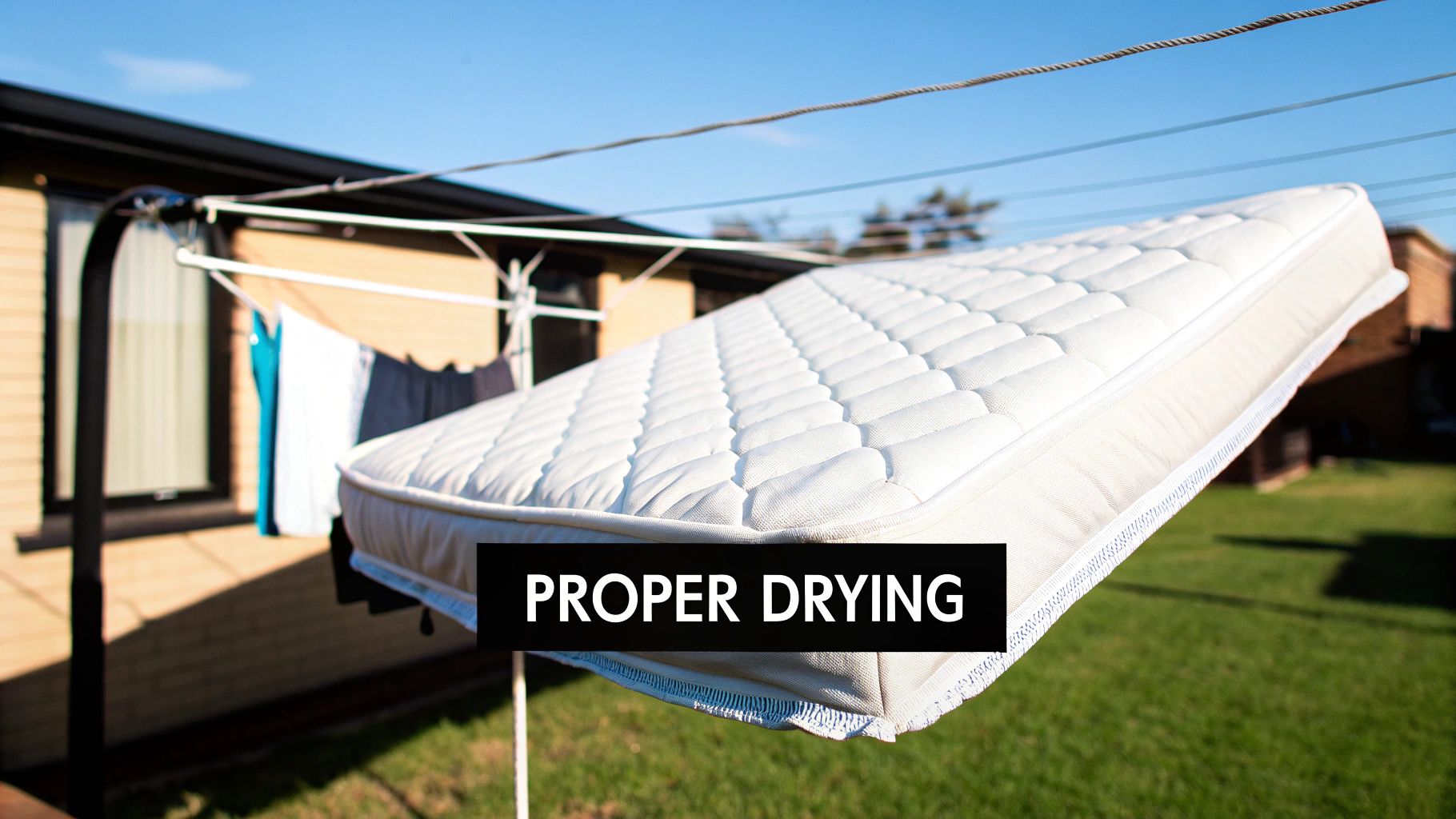
If you have the time and space, air-drying is always our first recommendation. It's by far the gentlest method for any mattress pad, and the fresh air and sunlight do a fantastic job of eliminating any lingering odours. Plus, it’s completely free.
For best results, hang your pad over a sturdy washing line. Try to distribute its weight as evenly as possible to avoid stretching or putting strain on the seams. If the British weather isn't playing ball, an indoor clothes airer set up in a room with good ventilation will do the trick. Just be sure to flip it over every few hours so that both sides get a chance to dry thoroughly.
A Guide to Tumble-Drying
Sometimes, you just don’t have the option to air-dry. The good news is that a tumble dryer can work perfectly well, as long as you approach it with a bit of care. The golden rule is low and slow, so a low heat and a gentle cycle are essential to protect the fabric and filling.
Here are a few tips for a flawless tumble dry:
- Go for Low Heat: Always select the lowest heat setting on your dryer. An ‘air dry’ or ‘delicates’ cycle is even better. This is essential for preventing shrinkage and protecting any waterproof layers from delaminating.
- Bring in the Dryer Balls: We never dry bedding without throwing in a couple of wool or rubber dryer balls. They're brilliant for preventing the filling from clumping together, creating air pockets that help the pad dry faster and more evenly.
- Do a Regular Check-In: This isn't a job you can set and forget. Make a point of pausing the dryer every 30 minutes to pull the pad out. Give it a vigorous shake to fluff up the filling and then pop it back in a different position. This little trick helps break up any damp spots hiding in the middle.
The most important takeaway? Your mattress pad must be 100% bone dry before it goes anywhere near your bed. Even the slightest hint of dampness can lead to musty smells or mould, and all your cleaning efforts will have been for nothing.
Keeping Your Mattress Pad Fresher for Longer
Once your mattress pad is beautifully clean and dry, the final step is keeping it that way. It’s not about constant deep cleans, but rather small, consistent habits that maintain hygiene and prolong that fresh-laundry feeling.
These simple routines will not only extend the life of your mattress pad but also ensure your bed remains an inviting sanctuary, night after night.
How Often Should You Wash Your Pad?
As a general rule, popping your mattress pad in the wash every two to three months works well for most households. This schedule is frequent enough to manage the natural build-up of dust, allergens, and skin cells without being a constant chore.
Of course, life happens. You might want to increase this to a monthly wash if:
- Someone in the family suffers from allergies or asthma.
- You share your bed with a furry friend.
- You've had a recent illness or a significant spill.
Smart Storage and Daily Care
One of the easiest things you can do is simply air your bed out each morning. Instead of making it immediately, pull the duvet right back for at least an hour. This lets any moisture from the night evaporate, which is a fantastic way to discourage dust mites and stop any musty odours from settling in.
When it's time to store a spare pad, doing it properly is key. You need to protect it from dust, dampness, and pests so it’s fresh and ready when you need it. Our guide on bedding bag storage has some excellent tips for keeping everything organised and in perfect condition.
Here's a pro tip: Use a separate, washable mattress protector over your mattress pad. Think of it as an extra barrier that catches minor spills and daily grime, meaning you can get away with washing the bulkier pad much less frequently.
Your Mattress Pad Questions, Answered
Over the years, we've heard just about every question there is when it comes to keeping mattress pads fresh. To save you some guesswork on laundry day, we've gathered our answers to the most common queries right here.
How Often Should I Really Be Washing It?
For the average household, giving your mattress pad a good wash every two to three months is a great rule of thumb. This simple routine is usually enough to keep dust mites, allergens, and everyday grime from building up.
That said, you might want to ramp it up to a monthly wash. This is a smart move if you've got pets who share the bed or if someone in the family is prone to allergies. A more frequent wash can make a world of difference in keeping the sleep environment truly fresh and clear.
What if the Label Says ‘Spot Clean Only’?
If you see a ‘spot clean only’ tag, take it seriously. It's there for a reason. These pads, particularly ones with memory foam or delicate waterproof membranes, can be completely ruined by a spin in the washing machine. The high heat and vigorous tumbling can cause the materials to warp, shrink, or delaminate.
Your best option is to tackle any spills or marks as they happen. Just mix a little mild detergent with water, dip a clean cloth in, and gently dab at the stain. To freshen up the entire pad, let it air out in the sun for a few hours. The UV rays are fantastic natural sanitisers.
Don't be tempted to throw a 'spot clean only' pad in the machine, even on a gentle cycle. The risk of ruining the filling or waterproof membrane just isn't worth it.
My Pad Is Too Big For My Machine – What Now?
Whatever you do, don't try to cram an oversized mattress pad into your washing machine. A machine that's too full can't clean effectively, and worse, you could end up with a very expensive repair bill for a broken drum or motor.
Luckily, you've got a couple of solid options.
- Head to a launderette: They have commercial-grade, large-capacity machines that can handle bulky items with ease.
- Wash it by hand: The bathtub is your best friend here. Fill it with lukewarm water and a small amount of gentle detergent, and give the pad a good old-fashioned hand wash.
At Morgan and Reid, we believe a clean bed is the foundation of a great night's sleep. From our cosy comforters to our essential bedding, we create products that bring comfort and style together. Explore our full collection and create your perfect sleep sanctuary at https://www.morganandreid.com.
Share:
How to Wash Bed Sheets for Lasting Freshness and Comfort
Can You Wash a Mattress Topper? A UK Guide to Keeping It Fresh