


Yes, you absolutely should be washing your mattress protector. Think of it as the unsung hero of your bedding, silently catching everything from sweat and skin cells to dust mites and accidental spills night after night. By not washing it, you're letting all that build-up get one step closer to your mattress, which is a far bigger and more difficult cleaning job.
Why Washing Your Mattress Protector is So Important
A mattress protector is a key piece of high-performance bedding. Its main job is to keep your mattress in pristine condition, shielding it from life's little mishaps and the allergens that can disrupt a good night's sleep. A clean protector simply does its job better, ensuring your bed remains a healthy and comfortable place to rest.
Before we get into the how-to, it’s worth taking a moment to appreciate the general overview of mattress protectors and the vital part they play. Proper care doesn't just improve your sleep, it also significantly extends the life of your mattress, which is one of the most important investments you'll make for your home.
Creating a Healthier Place to Sleep
Washing your mattress protector is a straightforward yet incredibly effective step towards better sleep hygiene. It's easy to forget just how much our bodies produce and shed while we sleep, and your bedding catches it all.
By keeping your protector clean, you’re actively removing:
- Allergens: It acts as the first line of defence against common triggers like dust mites and pet dander, which helps you breathe more easily.
- Bacteria and Germs: Sweat can create a damp environment where bacteria thrive, leading to unpleasant odours and potential skin irritation.
- General Grime: A build-up of dead skin cells, body oils, and even leftover bits of moisturiser can accumulate, making your bed feel less than fresh.
A clean bed is the foundation of truly restful sleep. Taking care of your protector is a key part of maintaining that peaceful sanctuary.
How Often Should You Wash It?
Most of us are pretty good about washing our sheets regularly, but the mattress protector often gets overlooked. It might be surprising to hear, but one UK survey revealed that 22% of Brits have never cleaned theirs.
As a general rule, aim to wash your mattress protector every two to three months. This schedule is usually enough to clear out trapped sweat, dust, and grime. A well-cared-for protector should last you about two years, keeping your bed a true haven for rest.
Of course, this can change based on your situation. If you suffer from allergies, for example, washing it monthly is a much better idea to keep those sniffles at bay.
For a quick reference, here’s a simple guide to help you decide on the best washing schedule for your home.
Mattress Protector Washing Frequency Guide
| Situation | Recommended Washing Frequency |
|---|---|
| General Use (No allergies or spills) | Every 2-3 months |
| You Suffer From Allergies or Asthma | Every 3-4 weeks |
| Someone Has Been Ill | Immediately after recovery |
| You Eat or Drink in Bed | Monthly, or after any spills |
| You Share Your Bed With Pets | Every 3-4 weeks |
| After a Spill or Accident | Immediately |
This table provides a great starting point, but always use your best judgement. If the protector looks dirty or starts to smell, it’s definitely time for a wash, regardless of when it was last cleaned.
How to Prepare Your Protector for Washing
Before a mattress protector ever sees the inside of a washing machine, a few minutes of prep work can make all the difference. This isn't just about getting it cleaner, it is also about protecting the protector itself, ensuring it lasts for years to come. It’s a small investment of time for a big return.
The first, and most important, thing to do is find the care label. I know it’s tempting to skip, but those little symbols are the manufacturer's direct instructions. This is especially critical for waterproof protectors, where the wrong temperature can easily ruin the delicate waterproof membrane.
Check the Care Label First
Think of the care label as your roadmap to a perfect wash. It spells out everything from the ideal water temperature to whether it can handle a tumble dryer. Following these instructions is the best way to avoid common mishaps like shrinking a cotton protector or, worse, melting the waterproof backing and rendering it useless.
A quick glance at the label can save you from accidentally destroying your protector in a single wash. High heat is the number one enemy of most specialised bedding materials, so it’s always wise to check first.
If the symbols look like a foreign language, do not worry. You can quickly get up to speed with our guide to common fabric care symbols and wash with total confidence.
Pre-Treat Any Stains
Life is messy. Spills from your morning coffee, a cup of tea in bed, or a child’s juice are bound to happen. Dealing with these spots before the main wash is your best shot at getting them out completely. For most fresh stains, a simple, gentle approach is surprisingly effective.
- For liquid spills: Gently blot the area with a clean, damp cloth. The goal is to lift the liquid out, not rub it in, which only pushes the stain deeper into the fabric's fibres.
- For tougher marks: A simple paste made from baking soda and a bit of water works wonders. Apply it to the stain, let it sit for about 15 minutes, and then gently dab it away. This trick is great for organic stains and also helps neutralise any lingering odours.
A Final Quick Inspection
Once you've spot-treated any stains, there are just a couple of final checks to tick off. These quick steps will protect both your protector and your washing machine from damage.
If your protector is an encasement style with a zipper, make sure it’s zipped up completely. This simple action stops the zipper's teeth from snagging on other items in the load or catching on the inside of the machine's drum.
Lastly, give the whole thing a quick look over for any small rips or loose threads. The agitation of a wash cycle can turn a tiny hole into a major tear. A few stitches now can add years to your protector’s life, ensuring it keeps doing its job for the long haul.
The Best Way to Wash Your Mattress Protector
With your protector prepped and ready, it's time to get it properly clean without damaging its special features. The aim is to wash away all the grime, sweat, and allergens while keeping the fabric and, crucially, any waterproof layers in perfect shape. It's a lot easier than it sounds.
Choosing the Right Detergent and Settings
First things first, let's talk about detergent. For nearly every type of mattress protector out there, your best bet is a mild, non-biological liquid detergent. These gentler formulas clean beautifully without the aggressive enzymes found in biological powders, which can, over time, break down waterproof membranes and delicate fibres.
If you have anyone with sensitive skin or allergies at home, this step is even more important. Opting for gentle cleaning products for asthma sufferers ensures no irritating residue is left behind in the bedding.
The prep work we just covered, checking the label and spot-treating stains, is the key to a successful wash.
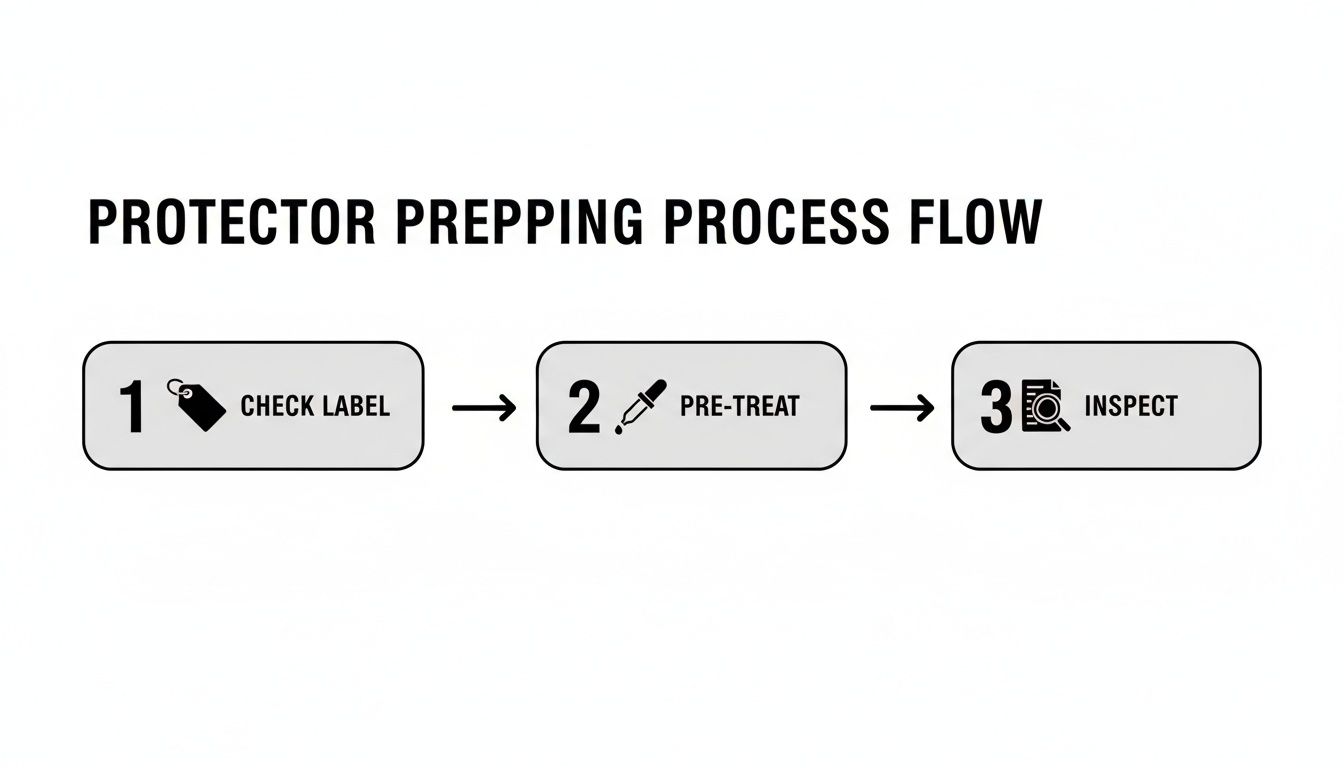
This quick check ensures you're following the manufacturer's specific advice and have dealt with any little problems before the main wash even starts.
When it's time to pop it in the machine, think cool. A 40°C wash is usually the sweet spot. This temperature is warm enough to effectively kill bacteria and shift dirt, but not so hot that it risks damaging the waterproof backing, which can crack or delaminate in high heat.
Always choose a gentle or delicates cycle. This setting uses a lower spin speed and a less aggressive washing action, which is much kinder to the fabric and prevents the protector from being stretched or pulled out of shape.
A great tip is to wash your mattress protector by itself, or maybe with a couple of light-coloured pillowcases. Overloading the machine is a common mistake. It stops the protector from moving around freely, meaning it won’t get properly clean.
Giving it space allows the water and detergent to circulate properly for a thorough, even wash. If you're tackling all your bedding at once, our guide on how to wash bed sheets has some excellent advice for getting everything perfectly fresh.
To make things even clearer, here’s a quick reference table for the most common types of protectors you'll find.
Washing Settings for Different Protector Types
| Protector Type | Recommended Temperature | Spin Speed | Detergent Type |
|---|---|---|---|
| Waterproof (PU) | Cool to Warm (30-40°C) | Low / Gentle | Mild, Non-Biological |
| Cotton / Terry Cloth | Warm (40°C) | Low to Medium | Mild, Non-Biological |
| Quilted / Padded | Cool (30°C) | Low / Gentle | Mild, Non-Biological |
| Wool / Bamboo | Cool (30°C) or Hand Wash | Low / Gentle | Wool-Safe / Mild Liquid |
Always double-check the care label on your specific protector, as these are general guidelines, but they cover the vast majority of products on the market.
A Quick Guide to Hand Washing
If the label says ‘hand wash only’, which is often the case for delicate natural fibres like wool or bamboo, do not worry. It’s a straightforward process that just requires a little hands-on effort.
- Fill a clean bathtub or a large basin with cool to lukewarm water. Add a small amount of your mild liquid detergent and swish it around to create some suds.
- Place the protector in the water, making sure it's fully submerged. Gently agitate it with your hands for a few minutes, then just let it soak for about 30 minutes.
- After it has soaked, drain the soapy water. Refill the tub with clean, cool water to rinse. Gently press the protector against the side of the tub to work the suds out. Repeat this until the water runs clear.
- The most important thing here is to avoid wringing or twisting it out. This can stretch and ruin the fibres. Instead, gently squeeze out as much excess water as you can before moving on to drying.
Drying Your Protector Without Causing Damage
How you dry your mattress protector is just as crucial as how you wash it. The wrong move here can shrink the fabric or, even worse, completely destroy the waterproof membrane, leaving your mattress defenceless. Getting this final step right is the key to making sure your protector does its job and lasts for years to come.
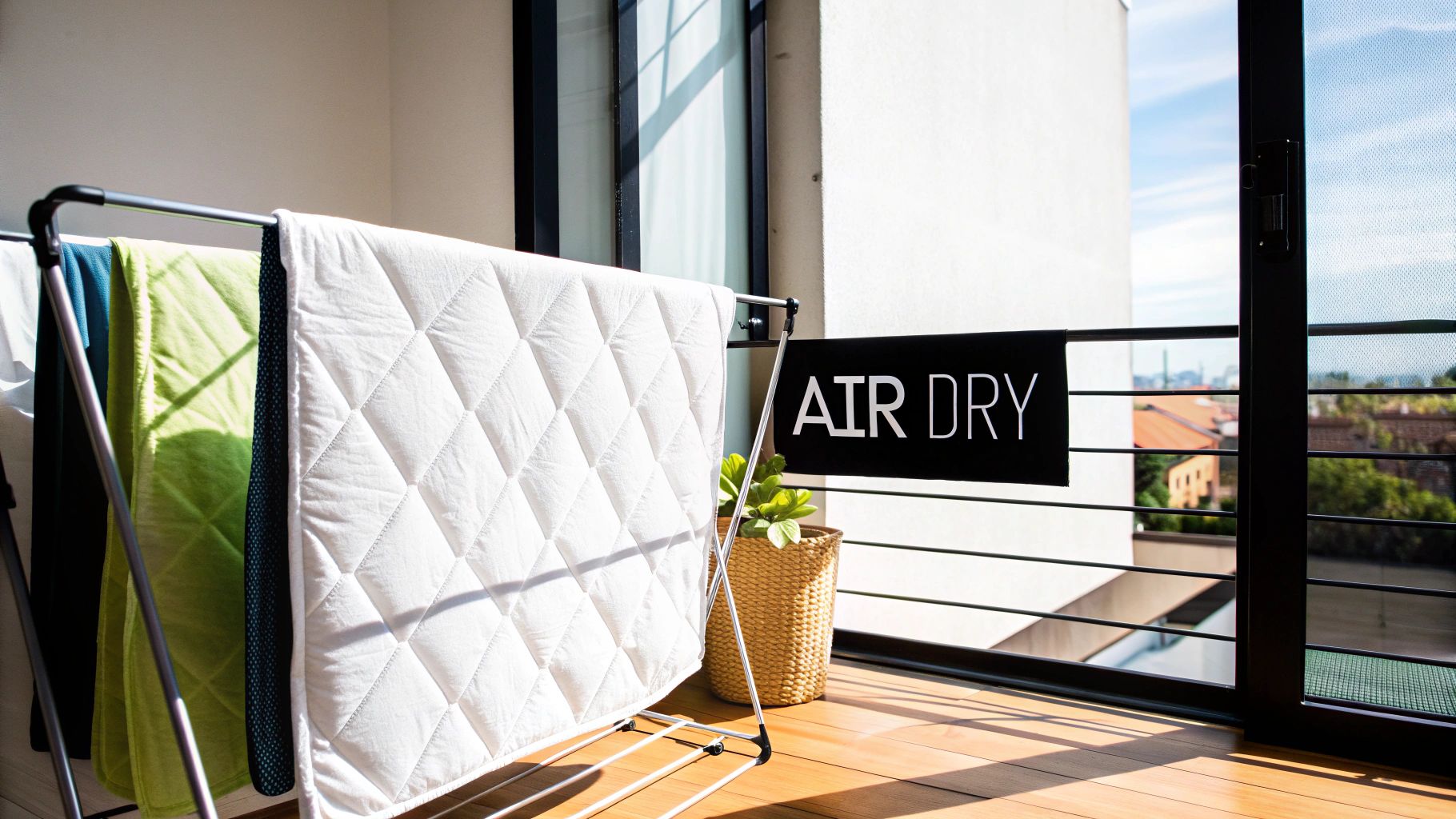
Without a doubt, the safest and most gentle method is to air-dry it. If you have the space, hanging it on an outdoor clothesline is perfect. The fresh air naturally whisks away any lingering odours, and a bit of sunlight can help keep your whites bright.
When air-drying, just drape the protector over the line, spreading its weight as evenly as possible. This stops the wet fabric from stretching out of shape. If you're using an indoor rack, give it a flip halfway through the drying process to make sure both sides get properly dry.
Using a Tumble Dryer Safely
Let's be realistic, sometimes you just do not have the time or space to air-dry. While you can use a tumble dryer for most modern protectors, you absolutely must be careful. The golden rule is to always use a low heat and a low tumble setting.
High heat is the number one enemy of waterproof materials. It can cause the delicate backing to crack, peel, or even melt, which instantly ruins its protective qualities. A protector that's been damaged by heat will often feel stiff and make a weird crinkly noise.
Here's a little trick I've learned: toss a couple of dryer balls or even clean tennis balls into the drum with the protector. This simple move stops it from bunching up into a big, damp ball and helps the air circulate more freely, speeding up the drying time and ensuring it dries evenly.
Final Checks Before It Goes Back on the Bed
Before you even think about putting the protector back on your mattress, you need to be certain it’s 100% dry all the way through. Even a tiny bit of trapped moisture can create a damp spot, which is an open invitation for mould and mildew.
Take a moment to run your hands along any quilted seams or thicker edges, as these are always the last parts to dry out completely. This quick final check is a simple but vital part of the process when you wash mattress protectors. If you're after more tips, our detailed advice on how to clean mattress pads offers some extra insights you might find handy. A little extra care at this stage guarantees a fresh, hygienic, and perfectly protected bed.
Knowing When to Replace Your Mattress Protector
Even with the best care in the world, your mattress protector won’t last forever. Just like any hardworking piece of bedding, it eventually wears out. Knowing when it’s time for a replacement is a crucial part of keeping your bed the clean, comfortable sanctuary it should be.
Think of it less as a chore and more as a simple investment in your sleep hygiene. A fresh protector ensures your mattress stays shielded from allergens, spills, and general wear and tear, helping you rest easy. After all, the whole point of washing a protector is to keep it effective, and replacing it when it's worn out is the final step in that cycle.
Signs of Visible Wear and Tear
The most obvious clues that your protector is past its prime are the ones you can see and feel. After countless washes and nights of use, the fabric will naturally start to break down.
Next time you change your sheets, give it a proper inspection. Look for:
- Thinning Fabric: Hold it up to the light. If you can see patches that are noticeably thinner or almost transparent, the material has lost its integrity.
- Small Holes or Tears: Even tiny pinpricks are big enough to let dust mites, skin cells, and liquids sneak through to your mattress, completely defeating the purpose of the protector.
- Fraying Edges: Check the seams and the elasticated skirt. If they're unravelling or the elastic has gone slack, it won’t fit snugly anymore and can’t protect your mattress effectively.
A Compromised Waterproof Layer
For a waterproof protector, the condition of that protective membrane is everything. This is the delicate layer that stands between a spill and your expensive mattress, but it's surprisingly vulnerable to damage over time, especially from heat.
A key sign of a failing waterproof layer is a change in its texture. If it starts to feel stiff, brittle, or makes a crinkly sound when you move it, the backing has likely been damaged, usually by washing at too high a temperature or tumble drying on a hot setting. You might even see visible cracks or peeling on the underside. Once this happens, its ability to repel liquid is gone.
A protector that no longer feels soft and pliable is a clear signal that its best days are behind it. This change means the waterproof barrier is breaking down and can no longer be trusted to do its job.
Lingering Stains and Odours
Finally, a protector that still looks stained or holds onto a musty smell even after a thorough wash is telling you it’s time to say goodbye. Over time, the fibres can become so saturated with body oils and residue that even the best detergent can’t fully get them clean.
This isn’t just about looks, it’s a sign that the fabric is no longer hygienically clean. For more advice on keeping all your bedding fresh, you might be interested in our guide on how to clean a mattress cover. Upgrading to a new protector is a simple way to restore that fresh, clean feeling to your bed.
Common Questions About Mattress Protector Care
Even with the best guide, a few questions always pop up when it comes to looking after your bedding. To finish up, I’ve put together answers to some of the most common queries we get about washing mattress protectors. Let’s clear up those last few details so you can feel confident you’re doing everything right.
Can I Use Fabric Softener on My Mattress Protector?
My advice is to always skip the fabric softener. I know the idea of adding extra softness is tempting, but the chemicals in these products can do more harm than good. They tend to leave a residue on the fabric's fibres.
With a waterproof protector, this coating can clog the microscopic pores in the protective membrane, which stops it from being breathable and working properly. For absorbent materials like cotton or terry cloth, that same residue actually makes them less effective at wicking away moisture. A gentle, high-quality detergent is genuinely all you need.
Why Is My Waterproof Protector Making a Crinkling Noise?
If your once-soft waterproof protector now makes a stiff, crinkling sound, that’s almost certainly a sign of heat damage. This usually happens in the tumble dryer, but a too-hot wash can also be the culprit.
High temperatures literally cook the delicate waterproof layer, causing it to harden, crack, and peel away from the fabric. To prevent this, always stick to a cool wash, 40°C is ideal, and tumble dry on the lowest heat setting available. Honestly, the best method is to air-dry it whenever you can. Once the damage is done, it is unfortunately permanent.
A healthy waterproof protector should feel soft and flexible, not stiff or noisy. That crinkling sound is its way of telling you it's been exposed to too much heat and can no longer offer reliable protection.
How Often Should I Wash My Child's Mattress Protector?
For a child's bed, washing the protector more often is a smart move. Given the higher chance of spills, nighttime accidents, and general mess, washing it every two to four weeks is a brilliant routine.
Of course, when an accident happens, spot-clean the area as soon as possible and then give the whole thing a proper wash when you next can. From experience, having a spare protector on hand is a lifesaver for parents. It makes those middle-of-the-night bed changes far less of an ordeal.
Will Washing My Protector Help With My Allergies?
Absolutely. This is one of the biggest benefits of using and washing a protector regularly. It acts as a physical barrier, trapping dust mites, dead skin cells, and pet dander that would otherwise work their way deep into your mattress.
Dust mites are a huge trigger for allergies and asthma, and they feed on the skin cells we naturally shed while we sleep. Washing your protector in warm water, around 40°C, is incredibly effective at getting rid of both the mites and their waste. If you or someone in your family struggles with allergies, washing the protector every three to four weeks can make a world of difference to sleep quality. It’s such a simple step for a much healthier bed.
Ready to create your perfect sleep sanctuary? Explore the beautifully designed and irresistibly comfortable bedding essentials from Morgan and Reid and discover the difference a little luxury can make. Find your new favourites at https://www.morganandreid.com.
Share:
Your Guide to the All Seasons King Size Duvet
Your Guide to UK King Size Duvet Dimensions