


Ever snuggled into a warm comforter on a chilly evening and wondered what makes it feel so incredibly soft and comforting? The magic behind that feeling is often fleece. In simple terms, fleece is a modern, man made fabric designed to give you all the warmth of wool, without the weight or scratchiness.
What Is Fleece and Why Is It So Cosy?
Fleece is a wonder of modern textiles, loved for being exceptionally soft, lightweight, and incredibly warm. Unlike many traditional materials that can feel heavy, fleece is brilliant at insulating you by trapping tiny pockets of air between its fibres. Think of it as wearing a warm, gentle hug, which is perfect for everything from outdoor jackets to the luxurious bedding we all crave.
The secret to its signature cosiness is all in the way it’s made. Fleece is a soft napped, knitted fabric, which means it has a fluffy, raised surface that feels amazing against your skin. This unique texture is what gives our Morgan & Reid comforters their buttery soft feel.
So, what exactly goes into this popular material?
- It’s primarily synthetic: The vast majority of fleece is made from polyester, a type of plastic. While that might sound surprising, these ultra fine plastic threads are what make the fabric so durable, moisture resistant, and remarkably easy to look after.
- It’s engineered for comfort: From start to finish, the entire manufacturing process is designed to create a fabric that’s both warm and breathable, helping you stay at the perfect temperature all night long.
- It’s a modern alternative to wool: Fleece was originally developed as a lighter, less bulky, and often more affordable alternative to traditional wool, offering similar warmth with fewer drawbacks.
Here’s a quick overview of what makes fleece a go to choice for comfort.
Fleece at a Glance: Key Characteristics
| Characteristic | Why It Matters For Your Comfort |
|---|---|
| Warmth | The fluffy fibres create air pockets that trap body heat, keeping you warm without the bulk of traditional materials. |
| Lightweight | Despite its excellent insulation, fleece is incredibly light, making it comfortable for bedding and layering. |
| Softness | The brushed surface feels incredibly gentle and smooth against the skin, adding a touch of luxury. |
| Breathability | Fleece allows moisture vapour to escape, which helps regulate your body temperature and prevents you from feeling clammy. |
| Durability | As a synthetic fabric, it holds up well to wear and tear, maintaining its softness and shape after many washes. |
These core features work together to create a fabric that’s perfectly suited for a cosy, restful night's sleep.
Interestingly, the buttery soft material that makes Morgan & Reid's Snuggle Comforters so irresistibly cosy is primarily made from 100% polyester, a synthetic fibre derived from petroleum. This is a far cry from the traditional wool fleeces from sheep, which were the cornerstone of UK textiles until the late 20th century. This innovative fabric was pioneered by companies like Polartec in the 1980s as a lightweight, high performance alternative to natural fibres.
Understanding how different materials perform is key. You can gain a deeper appreciation for fabrics by comparing them to other textures and substances, even natural materials like wood, stone, and ceramics. By knowing what fleece is made of, it becomes clear why it's the perfect choice for creating a warm, inviting, and practical home.
How Cosy Fleece Fabric Is Actually Made
Ever wondered how the soft, cloud like fleece in your favourite comforter actually comes to be? It’s a fascinating process, transforming simple raw materials into the incredibly cosy fabric we all know and love. Let’s pull back the curtain on this clever journey, breaking it down into a few simple steps.
The story of modern fleece begins with polyester. This synthetic fibre is the foundation, offering both amazing durability and softness. While traditionally derived from petroleum, a growing amount now comes from recycled plastics like water bottles, which is a fantastic step towards more sustainable textiles.
This diagram gives you a quick visual of the basic transformation.
As you can see, the process refines a basic resource into the high performance fabric we use for everything from warm jackets to comfortable bedding.
From Tiny Threads to a Knitted Sheet
The first real step involves creating the polyester threads themselves. The raw material is melted and then pushed through a device with tiny holes, forming long, continuous filaments, a bit like squeezing icing from a piping bag. These fine threads are then spun together to create a strong, smooth yarn.
Next, this yarn is loaded onto huge, circular knitting machines. These machines work tirelessly, looping the yarn together to create a large, flat sheet of fabric. At this point, it looks a lot like the material you would find in a basic t-shirt. It is smooth, but it does not yet have that signature fluffy texture.
The real magic of fleece happens not in the knitting, but in the finishing. It’s a mechanical process, not a chemical one, that unlocks the fabric’s famous softness and warmth.
Creating the Fluffy Fleece Texture
This is where the true transformation takes place. The flat, knitted fabric is fed through a machine fitted with a series of fine wire brushes. As the fabric passes through, these brushes move across its surface, pulling up the tiny knitted loops to create a deep, dense pile.
Think of it like gently combing a pet’s fur to make it soft and fluffy. This technique, known as napping or brushing, creates millions of tiny air pockets within the fabric's structure. These pockets are the secret to fleece’s incredible ability to trap body heat, which is precisely why it keeps you so warm without feeling heavy or bulky.
Finally, another machine called a shearer trims the raised fibres to a perfectly uniform length, giving the fleece its smooth, velvety finish. It’s a clever piece of textile engineering that turns a simple knitted material into the buttery soft fabric perfect for a snuggly comforter. This process is quite different from how other fabrics are made, and if you're curious, you can learn more about what is microfiber bedding in our detailed guide.
Exploring the Different Types of Fleece
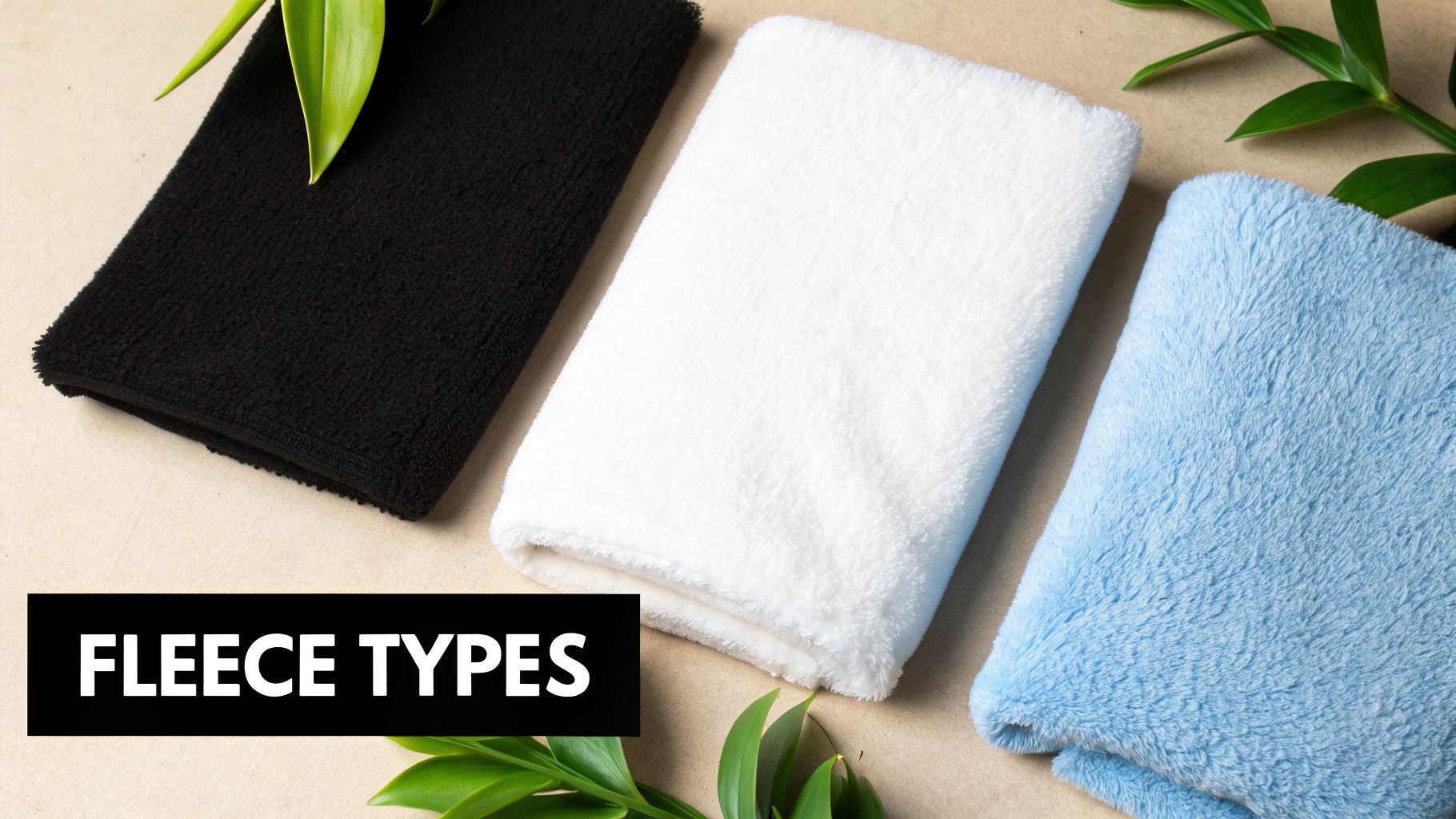
Just as there are many kinds of comforting cups of tea, fleece is not a one size fits all fabric. It comes in several wonderful varieties, each with its own unique personality and purpose. Understanding the differences is the key to choosing the perfect level of cosiness for everything from a lightweight top to a deeply warming comforter.
Think of it like choosing a coat for the season. Some days you just need a light jacket, while others call for something much more substantial. The world of fleece offers a similar range, allowing you to find just the right balance of softness, weight, and insulation.
Classic Polar Fleece
When you picture classic fleece, you are almost certainly thinking of polar fleece. This is the original, the fabric that started the cosy revolution back in the day. It’s a medium weight material, incredibly durable, and has that signature velvety feel that makes it perfect for warm jackets, blankets, and throws.
Because it offers excellent warmth without being too heavy, it’s a brilliantly versatile choice. Its ability to wick moisture away from the skin also makes it a popular material for outdoor clothing, keeping you dry and comfortable when you're on the move. Better yet, polar fleece is known for resisting pilling, meaning it stays soft and looks great for years.
Lightweight Microfleece
Next up is microfleece, the lighter, more delicate sibling in the fleece family. As its name suggests, it’s made from much finer fibres, which gives it a wonderfully smooth and supple feel against the skin. While it provides less insulation than its thicker counterpart, its lightweight nature makes it ideal for a completely different set of jobs.
Microfleece is perfect for:
- Layering: It works beautifully as a base layer or a light jumper without adding any bulk.
- Activewear: Its excellent breathability helps to regulate your body temperature during exercise.
- Baby blankets: The incredibly soft texture is gentle enough for even the most sensitive skin.
Fluffy Sherpa Fleece
Finally, we have sherpa fleece, a material designed to mimic the look and feel of natural sheep’s wool. It typically has one smooth, knitted side and one with a fluffy, bumpy texture that is incredibly soft and plush. This dual sided construction makes it exceptionally good at trapping heat.
You will often find sherpa fleece used as a lining in winter coats, hats, and slippers because it provides a serious dose of warmth. Its luxuriously thick pile also makes it a fantastic choice for ultra cosy throws and bedding. This is the fleece you turn to when you want the maximum snuggle factor on the coldest of nights.
To make things a little clearer, here’s a quick breakdown of how these popular fleece types stack up against each other.
Comparing Common Fleece Types
| Fleece Type | Key Feature | Best For |
|---|---|---|
| Polar Fleece | The versatile, durable original; great warmth to weight ratio. | Everyday jackets, throws, outdoor gear. |
| Microfleece | Ultra soft, lightweight, and breathable. | Layering, activewear, baby products. |
| Sherpa Fleece | Exceptionally warm and plush with a wool like texture. | Winter coat linings, super warm blankets, slippers. |
Ultimately, choosing the right material is central to creating the perfect sleep environment. It's why understanding the benefits of a fleece comforter in the UK can make all the difference in getting a truly restorative night's sleep.
The Real Benefits of Using Fleece in Your Home
So, we understand what fleece is and the different varieties you can find, but what makes it such a staple in homes across the UK? The answer is more than just its invitingly soft feel. Fleece brings a whole host of practical benefits that make daily life cosier and a little less complicated, especially for a busy household.
Its most famous trait is, without a doubt, its incredible warmth to weight ratio. Traditional materials like wool are fantastic insulators, but they can be quite heavy and cumbersome. Fleece, with its cleverly lofted structure, traps body heat just as effectively but in a feather light package. It means you can be perfectly snug under a comforter without feeling pinned down.
Warmth and Practicality Combined
Another one of fleece’s brilliant features is the way it deals with moisture. The polyester fibres are naturally hydrophobic, a fancy way of saying they repel water rather than soaking it up. Unlike cotton, which can hold onto moisture for ages, fleece lets it pass right through to evaporate.
This simple quality has some fantastic real world advantages for your home:
- Fast Drying: A fleece blanket or comforter will be ready to go back on the bed much quicker after a wash. That’s a real lifesaver on laundry day, particularly during a damp British winter.
- Moisture Wicking: If you tend to get a bit too warm at night, fleece helps pull moisture away from your skin, keeping you comfortably dry instead of clammy.
- Stain Resistance: Spills often bead up on the surface for a moment, giving you a precious window to grab a cloth and wipe them away before they set.
Fleece is engineered for real life. Its blend of warmth, low maintenance, and durability makes it the perfect choice for creating a home that is both stylish and genuinely comfortable for everyone in it.
Everyday Durability and Easy Care
Beyond its cosy credentials, fleece is also wonderfully resilient. It’s a tough fabric that holds up beautifully to repeated use and washing, resisting the common pitfalls of shrinking and stretching. Your favourite throw or comforter will keep its shape and softness for years, making it a smart, long lasting investment for your home.
This unique combination of features is precisely what makes fleece the go to for everyday luxury. If you’re looking for more ways to stay comfortable, our guide on how to stay warm in winter has plenty more tips for creating a snug retreat. Ultimately, fleece delivers on its promise of comfort without any fussy care instructions, letting you simply enjoy a warmer, softer living space.
How to Care For Fleece and Its Environmental Impact
When you've found the perfect, gorgeously soft fleece comforter, you will want to keep it feeling that way for years to come. The good news is that one of the best things about high quality fleece is just how simple it is to look after. With a little bit of care, you can maintain that buttery soft feel, wash after wash.
Keeping Your Fleece Fluffy and Soft
The golden rule for fleece care is gentleness. High heat is the absolute enemy of those soft fibres, it can cause them to melt just enough to become matted and lose their texture. A cool, gentle wash cycle is all you need to get your fleece clean without any drama.
To keep that signature softness and prevent pilling, just follow these simple steps:
- Wash on a cool, gentle cycle: Stick to a mild detergent and try to wash it with other soft items. Avoid heavy fabrics like denim that can cause a lot of friction.
- Skip the fabric softener: It might seem like a good idea, but fabric softener can actually coat the fibres, making the material less breathable and reducing its soft feel over time.
- Air dry whenever you can: If you need to use a tumble dryer, make sure to use the lowest heat setting available or, even better, a no heat air fluff option.
For a complete walkthrough, our guide on how to wash fleece blankets has all the details you need to get it right every single time.
An Honest Look at Fleece and the Planet
It's also important to have a frank conversation about the environment. We know that fleece is made from polyester, which is a plastic, so what does that mean for our planet? Thankfully, the textile industry has made some huge strides in sustainability, and recycled polyester is a major part of that positive change.
Today, a huge amount of fleece is made from recycled PET plastics, like old drink bottles. This process gives a second life to materials that might otherwise clog up a landfill, which reduces waste and conserves the resources needed to create new plastic from scratch.
Choosing a high quality, durable fleece product is one of the most sustainable choices you can make. An item that lasts for years reduces waste and the need for frequent replacements, which is a powerful way to lessen your environmental footprint.
Fleece's popularity in the UK marks a fascinating shift from traditional wool to modern synthetics. The market for fleece jackets alone is projected to grow by 4 to 6% annually, showing just how much we've embraced it in our homes and wardrobes. By choosing well made items, we can ensure the materials we bring into our lives are both comforting and responsible.
Why Buttery Soft Fleece Is Our Material of Choice
At Morgan & Reid, every decision circles back to one simple question, how can we make your home a more comfortable place to be? For our signature comforters, the answer has always been fleece. When you understand what fleece is and how it performs, it’s easy to see why this incredible fabric is the very heart of our collection.
We landed on fleece for its remarkable ability to provide exceptional warmth without the heavy, restrictive feel you get with so many traditional bedding materials. Its clever, lofty structure traps air, creating a cloud like experience that wraps you in a gentle warmth. It is like a soft hug at the end of a long day. This unique quality allows us to craft bedding that is both deeply comforting and wonderfully lightweight.
Connecting Comfort to Quality
Of course, it’s about more than just warmth, it’s about creating a better sleep experience. We believe your bedroom should be a true sanctuary, a place where you can completely unwind and recharge. The buttery soft fleece we use is carefully selected for its luxurious feel against the skin, turning a simple night's rest into something truly special.
This commitment to comfort is woven into every product we create. The technical advantages of fleece translate directly into tangible, emotional rewards for you.
- Effortless Cosiness: You feel that instant, snug warmth the moment you climb into bed. No more shivering while you wait for the sheets to warm up.
- Practical Luxury: Its impressive durability and easy care nature mean you can enjoy that premium feel every single day, without any fuss.
- Peace of Mind: The breathable fabric helps regulate your body temperature throughout the night, leading to a more peaceful and uninterrupted sleep.
At its core, our mission is to create products that make your home feel as good as it looks. Fleece is the perfect material to help us do this, blending practicality with the pure, simple joy of comfort.
We are genuinely passionate about creating the ultimate sleep experience, and our specially selected fleece is how we bring that vision to life. We invite you to feel the difference for yourself with our beautiful Blue Spec Snuggle Fleece Comforter Set and completely transform the way you rest.
A Few Common Questions About Fleece
We often get asked about what makes fleece so special and how to best care for it. To help you get to know this incredible fabric a little better, here are the answers to some of the most common questions we hear.
Is Fleece a Breathable Material?
Yes, absolutely. For all its warmth, one of fleece's standout features is its breathability. The fabric's unique knitted construction creates tiny air pockets that allow air to circulate freely.
This is key to regulating your body temperature, stopping that clammy, sweaty feeling you can get with other materials. It's precisely this quality that makes fleece perfect for bedding, it keeps you wonderfully cosy all night long without making you overheat.
How Do I Stop My Fleece From Pilling?
Those tiny, fuzzy balls that can pop up on fabrics are known as 'pilling'. While it’s often a sign of a lower quality fleece, you can keep it at bay with a bit of gentle care.
Always wash your fleece inside out on a gentle cycle with cool water. It’s also wise to skip the fabric softener, which can leave a residue on the fibres. For drying, either let it air dry or use the lowest heat setting on your tumble dryer. The best defence, though, is starting with a high quality, densely woven fleece in the first place.
The secret to long lasting fleece is simple, gentle care. Avoiding high heat and harsh chemicals preserves its softness and structure, giving you years of dependable comfort. This approach keeps your favourite comforting items feeling as good as new.
Is Fleece Suitable For People With Sensitive Skin?
For the most part, yes. Fleece is generally considered hypoallergenic, making it a fantastic choice for those with sensitive skin. This is particularly true when you compare it to natural fibres like wool, which some people find itchy or irritating.
Because fleece is synthetic, it's also less likely to harbour common allergens like dust mites. Our signature buttery soft fleece is specifically designed to be incredibly gentle on the skin, making it a soothing, comforting option for everyone in the family.
At Morgan & Reid, we believe that true comfort is born from quality materials designed for real life. Explore our collection of irresistibly soft comforters and experience the difference for yourself. Find your perfect night's sleep at morganandreid.com.
Share:
The Best Fabric for Sheets: A Guide to Your Perfect Sleep
What Is Percale Cotton a Guide to Crisp Bedding