


When you’re shopping for new bedding, the term ‘thread count’ is thrown around a lot. But what does it actually mean? It’s often seen as the ultimate measure of quality, but the truth is a little more nuanced.
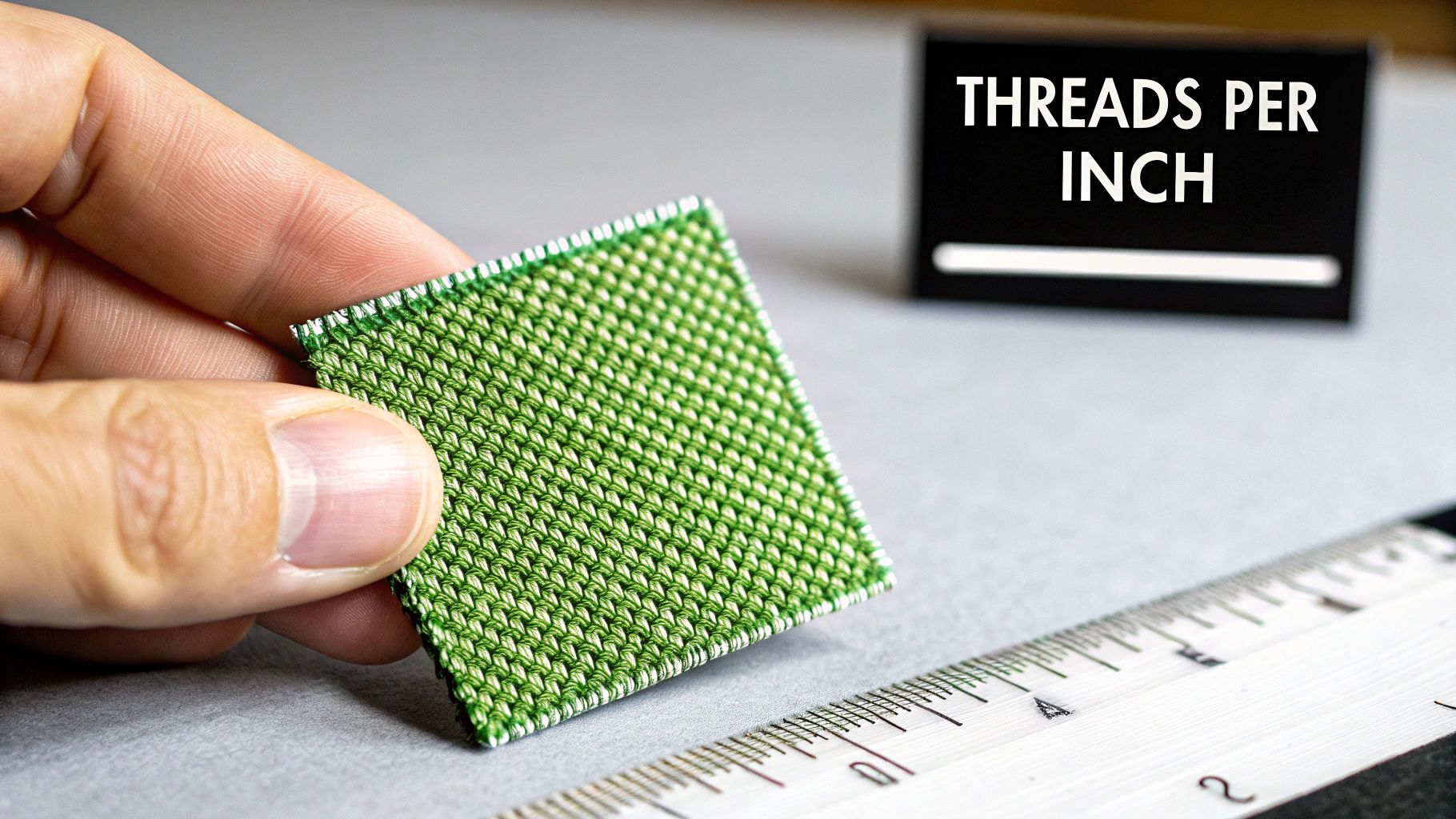
Simply put, thread count is the total number of threads woven into a single square inch of fabric. Understanding this is your first step toward picking sheets you’ll genuinely love sleeping in for years to come.
Decoding the Numbers on Your Bedding
Let's demystify one of the most common, and commonly misunderstood, terms in the textile world.
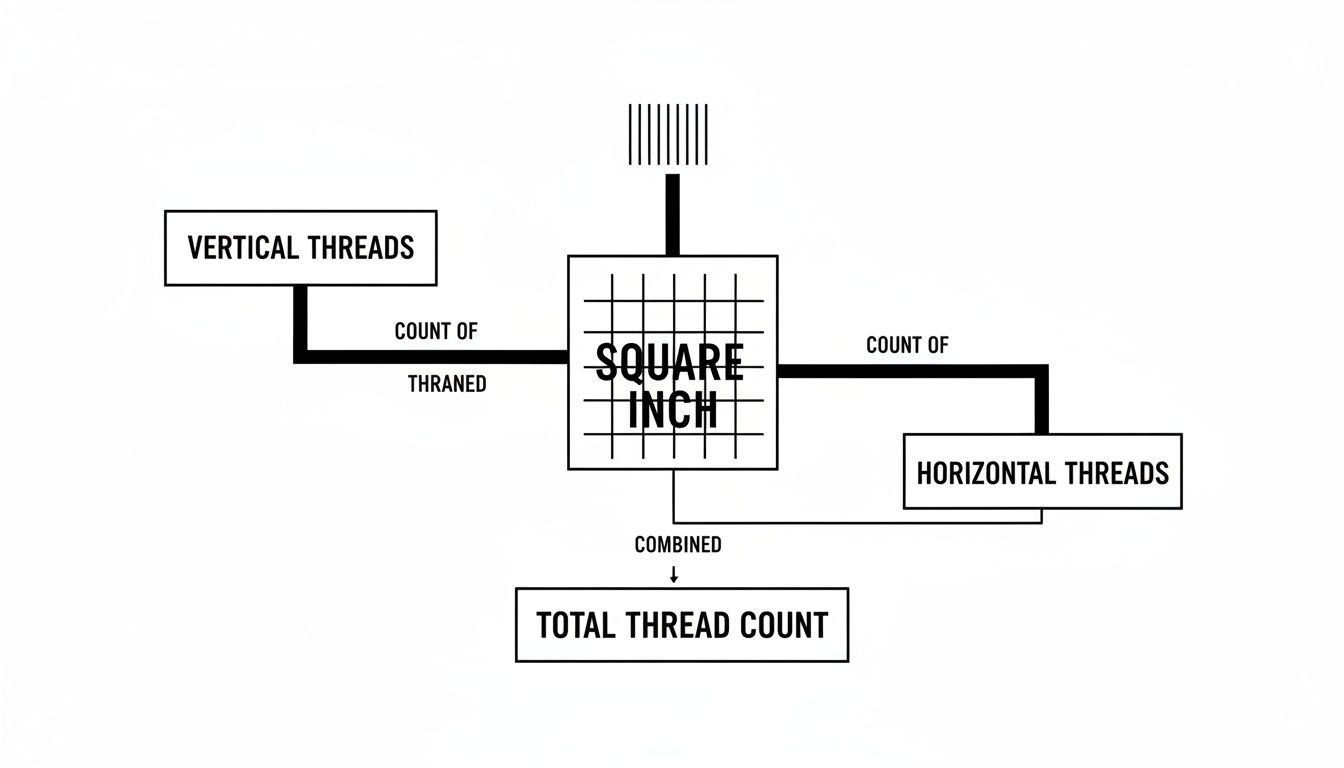
Picture a tiny, one-inch square of fabric. The thread count is calculated by adding the number of threads running lengthwise (the warp) to the number of threads running widthwise (the weft).
So, if you have 150 warp threads and 150 weft threads in that square inch, the fabric has a 300 thread count. It is that simple. Think of it like pixels on a high definition screen, where a higher number can lead to a finer, more detailed picture. But just like with pixels, the quality of the individual components, in this case, the threads themselves, is what truly determines the final result.
This straightforward measurement of fabric density gives you a starting point for what to expect, but it is only the beginning of the story.
Why This Measurement Matters
Grasping this basic formula helps you see past marketing claims and understand what you are really buying. It is an important piece of the puzzle, but it is not the whole picture. The quality of the cotton fibre and the type of weave play an equally crucial role in how your sheets feel and perform.
For example, a beautifully crisp and cool sheet often comes from a specific type of weave, not just a high number. You can learn more about this in our guide to what is cotton percale.
Ultimately, knowing what thread count really means empowers you to make smarter, more informed choices. It helps you focus on what creates a genuinely comfortable, durable, and inviting bed. As we will explore later, this is exactly why a premium 400 thread count sheet can feel far more luxurious than one with an inflated 800 thread count label.
Why a Higher Thread Count Isn’t Always Better
We have all been there, standing in the bedding aisle, conditioned to believe the biggest number on the packet equals the best quality. It seems logical, but when it comes to thread count, this is one of the biggest myths in the textile world. A sky high number is often more of a marketing gimmick than a genuine hallmark of luxury.
The real secret to incredibly soft, long lasting sheets lies in the quality of the individual threads, not just how many are crammed into a square inch. A beautifully made 400 thread count sheet using strong, silky, long staple cotton will feel far more luxurious and outlast an 800 thread count sheet woven from weaker, shorter fibres.
Unpacking the Myth of High Numbers
So, how do some manufacturers manage to advertise astronomical figures like 1,000 thread count? The trick often lies in using multi-ply threads. This technique involves twisting several lower quality, thinner threads together to form a single, thicker one before weaving.
While this inflates the thread count on paper, as each of those thin strands gets counted, it rarely improves the feel. In fact, it often does the opposite. These bundled threads can result in a fabric that feels heavy, coarse, and far less breathable. That is the last thing you want when you are trying to get a comfortable night’s sleep.
Think of it like cooking. Would you rather have a delicious meal made from a few high quality, fresh ingredients, or one packed with cheap, artificial fillers? The same logic applies to your sheets. Quality over quantity is the only way to get genuine, lasting comfort.
This is why focusing on the fibre itself is so critical. A single ply thread spun from long staple cotton is inherently strong, smooth, and creates a beautifully soft fabric all on its own.
Finding the Real Sweet Spot
Instead of chasing the highest number you can find, it is much smarter to aim for a specific, well regarded range. Through years of textile experience and extensive testing, the ideal thread count for premium cotton sheets consistently lands somewhere between 300 and 500. As many experts agree, anything significantly higher offers diminishing returns on comfort and quality. You can see similar findings in this guide to thread counts from Good Housekeeping.
This range is the true sweet spot, offering a perfect balance of softness, durability, and breathability. Within this range, you can find different textures to suit your personal preference, from crisp and cool to silky smooth. Our guide comparing sateen vs percale is a great place to start exploring which feel is right for you. By understanding these nuances, you can shop with confidence, see past the inflated numbers, and choose bedding that delivers true, five star comfort.
How Fibre and Weave Create True Comfort
While thread count often steals the spotlight, the real secret to luxurious bedding lies in two other factors. These are the quality of the fibre and the style of the weave.
It is a bit like baking a cake. You can have the most advanced oven, but if you start with low grade, gritty flour, you will never end up with a light, fluffy sponge. The same logic applies to your sheets, because the raw ingredients are everything.
The Importance of High Quality Fibres
When it comes to cotton, the length of the individual fibres, what we call the staple, is the most crucial factor for creating fabric that is soft, strong, and built to last.
- Long Staple Cottons (like Egyptian and Pima): These are the premium players. Their incredibly long, fine fibres can be spun into a beautifully smooth and silky yarn that resists pilling and fraying. The result is sheets that feel softer from the very first night and only get better with every wash.
- Short Staple Cottons: To create a thread from shorter fibres, more ends have to be twisted together. This often creates a coarser, weaker yarn that can feel rough against the skin and wear out much faster.
A fabric woven from high quality, long staple cotton will always feel more luxurious than one with a higher thread count made from inferior, short staple fibres. It is this focus on the core ingredient that guarantees a truly comfortable sleep experience.
The type of fibre and weave dramatically impacts comfort. For instance, understanding specific materials like Jersey Cotton bed sheets can provide insights into their unique feel and breathability. For a deeper dive into materials, explore our guide on finding the best bed sheets material for your home.
How Weave Shapes the Feel of Your Sheets
Once you have that top quality yarn, the way it is woven together determines the final texture and performance of the fabric. This is where your personal preference really comes into play. The two most popular weaves for cotton bedding, percale and sateen, offer completely different sleep experiences.
Percale is created with a simple one thread over, one thread under grid pattern. This tight weave produces a light, crisp fabric with a cool, matte finish, which is reminiscent of a freshly laundered shirt.
Sateen, on the other hand, uses a one thread under, three or four threads over pattern. This technique exposes more threads on the surface, giving the fabric its signature silky smooth feel and subtle lustre.
Choosing between them is all about how you want your bed to feel when you climb in. Do you crave the cool crispness of a classic hotel sheet, or the buttery softness of something more opulent?
Percale vs Sateen Weave: A Quick Comparison
This table breaks down the key differences to help you decide which weave is right for you.
| Feature | Percale Weave | Sateen Weave |
|---|---|---|
| Feel | Crisp, cool, and airy with a matte finish. | Silky, smooth, and drapey with a slight sheen. |
| Best For | Hot sleepers or those who love a classic, fresh feel. | Anyone seeking a luxurious, warmer, and cosier feel. |
| Durability | Extremely durable and gets softer with each wash. | Very soft, but can be slightly more prone to snagging. |
Ultimately, there is no right or wrong answer. Both weaves offer incredible comfort when made with high quality cotton, it just comes down to the sensation you prefer at the end of a long day.
Finding Your Ideal Thread Count Sweet Spot
So, we have unpacked the roles of fibre and weave. Now for the practical bit, what is the right thread count for you? Honestly, finding your perfect bedding is less about chasing a high number and more about matching the fabric to your personal comfort, how you sleep, and even the time of year.
Forget the marketing hype for a moment. Instead, ask yourself what you want your bed to feel like. Do you run hot at night and kick off the covers? Or do you love to feel completely snug and bundled up? Answering that simple question is the key to finding your perfect thread count range, and getting a truly wonderful night’s sleep.
For a Cool and Crisp Sleep
If you are a hot sleeper or just adore that fresh, crisp feel of a classic hotel bed, your sweet spot is actually on the lower end of the scale. A lower thread count means more space between the threads, allowing air to circulate freely. This is brilliant for wicking away heat and moisture while you sleep.
- Recommended Range: Look for a thread count between 200 and 400.
- Best Weave: A percale weave is your best friend here. Its simple, grid like structure is what makes it so breathable.
- Real-Life Benefit: These sheets are an absolute lifesaver during warm summer nights and provide year round comfort for anyone who cannot stand feeling stuffy. It is the secret to that cool, clean feeling every time you slip into bed.
For a Soft and Silky Sleep
Do you dream of sinking into a bed that feels buttery soft and impossibly smooth? If so, a slightly higher thread count is what you are after. The denser weave creates a warmer, cosier fabric that drapes beautifully and feels incredibly gentle against your skin.
- Recommended Range: Aim for a thread count between 300 and 600.
- Best Weave: Sateen is the ideal choice for this feel, as its unique structure is what produces that signature silky lustre.
- Real-Life Benefit: This range offers a genuine touch of opulence. It is perfect for colder months or for anyone who wants their bed to feel like a warm, comforting hug. You can explore this level of luxury in our guide to Egyptian cotton bedding.
Choosing quality is becoming a real priority for many people. The UK luxury bedding market shows a strong consumer appetite for premium linens with thoughtfully chosen thread counts. This reflects a wider trend in how British households are prioritising sleep comfort, with the UK bed and bath linen market projected to grow significantly in the coming years.
How Thread Count Affects Price and Durability
When you are investing in new bedding, it is easy to think a higher price tag guarantees a longer lifespan. But the truth is a little more nuanced. Getting the best value comes down to understanding the relationship between thread count, price, and durability, and realising that quality materials often trump high numbers.
In fact, a beautifully made sheet with a moderate thread count will frequently outlast a pricier, high count alternative. This is because the price of bedding tends to jump sharply once you go past the 600 thread count mark. While these are often sold as the absolute peak of luxury, that extra cost does not always mean you are getting a more durable product. Sometimes, incredibly dense fabrics can be more fragile and less equipped to handle the rigours of regular washing.
The True Cost of High Thread Counts
Chasing the highest possible number can be an expensive game of diminishing returns. Here in the UK, the sweet spot for a brilliant balance of quality, feel, and value is usually found in sheets with a thread count between 300 and 500.
Once you start seeing counts of 600 or 800, the price can increase dramatically. This is partly driven by the luxury hotel industry, where 600 thread count linens are often used to create that opulent, five star experience for guests, which in turn shapes what many of us think of as 'premium'. For more on this, you can find great insights into luxury bedding trends at King of Cotton.
This often means you end up paying for a number on the label rather than a real, noticeable improvement in comfort or longevity. A far smarter approach is to invest in sheets made from excellent fibres that fall within that ideal mid range. They will feel incredible from the very first night and prove to be a much more sensible, long lasting choice for your home.
Maximising the Lifespan of Your Sheets
No matter what the thread count, the single most important factor in making your bedding last is proper care. Gentle washing and careful drying are your best tools for protecting the fibres from unnecessary stress, which preserves their softness and strength for years.
A great set of sheets is an investment in your comfort. Taking a little extra care in how you wash them protects that investment, ensuring they stay soft and beautiful for as long as possible.
Following the right steps can add years to the life of any fabric, from a crisp 200 thread count percale to a silky 500 thread count sateen. For detailed guidance on keeping your bedding in pristine condition, take a look at our guide on how to wash bedsheets properly.
By pairing a quality purchase with good habits, you ensure every night feels just as cosy as the first.
It’s All About the Feeling
We have journeyed through the world of thread counts, fibres, and weaves, and if there is one thing to take away, it is this. Creating the perfect bed is an art, not just a science. At Morgan & Reid, this philosophy is woven into everything we create. Our focus is not on a single number on a label, it is on the complete sleep experience, that sense of pure comfort you feel the moment you slip between the sheets.
Of course, we obsess over the technical details behind the scenes. But our real goal is to craft products that deliver on a simple promise of cosiness and practicality. We believe the true test of great bedding is how it feels against your skin. That is why we search for the most buttery soft materials and focus on thoughtful designs that do not just feel incredible, but also make your life that little bit easier.
More Than Just a Number
Knowing what thread count means is a great start, but it should never get in the way of the simple pleasure of a genuinely comfortable bed. Our entire purpose is to craft that feeling for you and your family. We hold a firm belief that the warmth, softness, and inviting quality of your bedding are what truly make for a wonderful night’s sleep.
A truly great set of sheets is not defined by a single metric. It is about the balance of beautiful materials, expert craftsmanship, and a design that feels like it was made just for you. This holistic view is at the heart of everything we do.
This is our approach to creating a sanctuary in your bedroom. It is about looking past the spreadsheets and specifications to embrace what really makes a difference. We are in the business of creating bedding that feels like a warm hug at the end of a long day, because that is the experience that helps you rest, recharge, and wake up ready for whatever comes next. It is our promise of genuine, heartfelt comfort.
Your Thread Count Questions, Answered
Shopping for new bedding can feel a bit overwhelming with all the numbers and terms flying around. To help you make a choice you will love for years to come, here are the answers to some of the questions we hear most often from people trying to find their perfect sheets.
Is a 1000 Thread Count Really Better?
Honestly, probably not. While a 1000 thread count sounds luxurious, it is often a sign that something is not quite right. To achieve that number, manufacturers sometimes cram together multiple, thinner strands of lower quality cotton. The result is a sheet that can feel surprisingly stiff, heavy, and trap heat.
You will almost always get a better night's sleep with a sheet in the 400-600 thread count range. When made with premium, long staple cotton, these sheets offer a far superior feel. They are softer, more breathable, and will stand the test of time. Think of it like cooking, where it is the quality of the ingredients that matters, not just how many you can squeeze into the pot.
Should I Care About Thread Count for My Duvet Cover?
Absolutely. Since your duvet cover is right up against your skin, its thread count matters just as much as your sheets. The same logic applies, you are looking for that sweet spot between softness, durability, and breathability.
A duvet cover with a thread count between 300-500, woven from a quality fibre like cotton, is a fantastic choice. It will feel comfortable and inviting, wash beautifully, and provide that perfect blend of comfort for a great night's sleep.
Your hands are often the best judge. High quality bedding feels smooth and substantial, never coarse or flimsy, no matter what the number on the package says.
How Do I Know If a Thread Count Is Genuine?
This can be tough, but a few tell tale signs can guide you. The biggest red flag is an incredibly high thread count paired with a suspiciously low price. Quality materials and craftsmanship simply cost more.
Your best bet is to buy from brands you trust, ones that are open and honest about where their cotton comes from and how their products are made. Transparency is key.
What Is the Best Thread Count if I Sleep Hot?
If you tend to overheat at night, breathability is everything. Look for sheets in the 200-400 thread count range, especially those with a percale weave.
Percale is a simple, grid like weave of one thread over, one thread under that creates a light, crisp fabric with plenty of room for air to circulate. It is famous for that cool to the touch feeling that hot sleepers dream of, helping heat dissipate so you stay comfortable all night long.
Ready to feel the difference that quality makes? Discover the perfect balance of softness, warmth, and style with the thoughtfully crafted bedding collections from Morgan & Reid. Find your perfect match and create the cosy bed of your dreams.
Share:
Percale vs Sateen: Which Bed Sheet is Right for You?
Putting on a Duvet Cover: A Simple Guide to an Effortless Change