


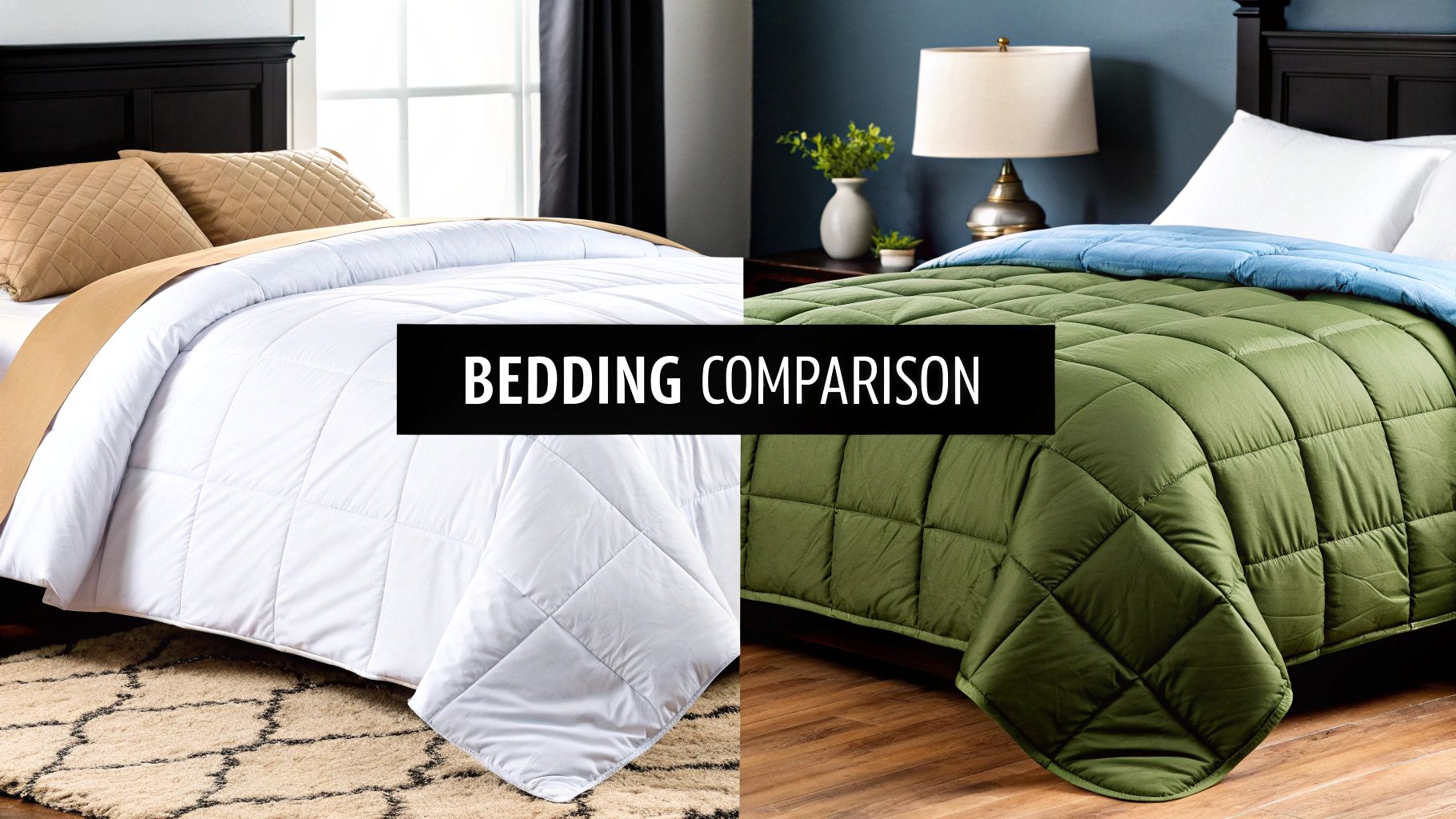
Trying to choose between a quilt, comforter, and duvet can feel a bit overwhelming, but the differences are actually quite straightforward once you know what to look for.
A quilt is a relatively thin, layered blanket with decorative stitching. A comforter is a single, fluffy piece that is ready to go straight onto your bed. A duvet is a plain insert designed to be slipped inside a separate, washable cover. It really all comes down to what you prioritise: styling options, all in one warmth, or easy cleaning.
1. Quilts, Comforters, and Duvets: The Basics
Picking the right top layer for your bed is one of the most important steps in creating a truly inviting and comfortable sanctuary. While all three options will keep you warm, they function quite differently in terms of style, feel, and day to day upkeep. Getting a handle on these core distinctions is the key to finding the perfect match for a great night's sleep.
So, let's start by breaking down what truly sets each piece apart. A quilt is all about its construction, a comforter is defined by its convenience, and a duvet is known for its clever two part system.

Bedding Types at a Glance
This quick table highlights the essential features of each bedding type, helping you see the main distinctions at a glance before we dive deeper into the details.
| Feature | Quilt | Comforter | Duvet |
|---|---|---|---|
| Construction | Three layers stitched together (top, batting, back) | A single, filled and stitched piece | Two pieces, an insert and a separate cover |
| Typical Appearance | Often patterned or textured, lies flat on the bed | Lofty and puffy, usually sold in sets with matching pillows | Plain white or off white insert; style comes from the cover |
| Flexibility | Used as a top layer or an extra blanket | A standalone piece; style is fixed | Style can be changed easily by swapping the cover |
| Cleaning | Usually machine washable, but can be bulky | Often requires a large machine or professional cleaning | The cover is easily machine washable; the insert is washed less |
The main thing to remember is that a duvet is a system, while a quilt and a comforter are single items. This simple fact influences everything from how you style your room to how you do your laundry.
Each option brings something unique to the bedroom. Quilts provide a lightweight, traditional charm and are perfect for layering. Comforters offer instant, coordinated style and plush comfort right out of the bag. For an even more detailed comparison, you can learn more about the differences between a comforter and a quilt in our guide. Finally, duvets deliver unmatched versatility, allowing you to refresh your decor as often as you like with minimal fuss.
Comparing Bedding Construction and Warmth
How your bedding is actually made is the biggest factor in how warm and cosy you will feel. The specific materials and construction methods used for quilts, comforters, and duvets are what give them their unique character and warmth levels. Getting to grips with these differences is the secret to choosing the right one for a perfect night’s sleep.
Let's start with quilts. Their signature construction, which involves three distinct layers stitched together, creates a surprisingly effective warmth without any bulk. This layered design makes them brilliantly breathable, which is ideal if you cannot stand the weight of heavy bedding but still want to feel snug.
Comforters, on the other hand, are all about delivering instant, plush warmth. They achieve this with a generous amount of fluffy filling encased in a single, stitched through cover.

How Comforters Keep You Cosy
The real magic of a comforter lies in its fill and construction. Most are designed with baffle box stitching, which creates a grid of pockets to keep the filling evenly distributed. It is a clever bit of engineering that stops the fill from clumping, preventing those dreaded cold spots and giving you consistent warmth all over.
Common fill materials include:
- Down or Feathers: These are incredibly light and masters at trapping air, providing fantastic insulation without weighing you down.
- Wool: A natural wonder when it comes to regulating body temperature. It keeps you warm in the winter but also helps you stay cool in the summer.
- Synthetic Microfibre: A brilliant hypoallergenic alternative that cleverly mimics the soft, lofty feel of down, offering superb warmth and comfort.
Understanding Duvet Warmth with Tog Ratings
When it comes to duvets, we have a wonderfully straightforward system in the UK for measuring warmth: the tog rating. This simple number tells you exactly how much thermal insulation a duvet offers, completely removing the guesswork.
The scale makes it easy to find what you need. A low 4.5 tog is light and airy, perfect for hot summer nights. For the coldest depths of winter, a toasty 13.5 or 15 tog will provide all the cosiness you could want. Most people find a 10.5 tog duvet hits the sweet spot for year round use. This system is a game changer if you want to perfectly match your bedding to the season. You can learn more in our detailed guide to duvet tog ratings.
The choice between these options often mirrors wider trends in home comfort. While quilts have a timeless, decorative appeal, consumer spending in the UK is heavily skewed towards duvets and comforters. The UK's home bedding market is projected to grow significantly, reaching nearly £8.5 billion by 2030. This growth is fuelled by our desire for that plush, hotel style luxury that only filled bedding can provide. You can read more about UK bedding market trends in this insightful report.
Styling Your Bedroom with Different Bedding
Your bedding is really the centrepiece of the bedroom, setting the entire mood for the space. Deciding between a quilt, comforter, or duvet goes far beyond simple warmth; it is a choice that defines your personal style. Each option brings its own distinct aesthetic, capable of transforming your room from a cosy, traditional retreat into something sleek and modern.
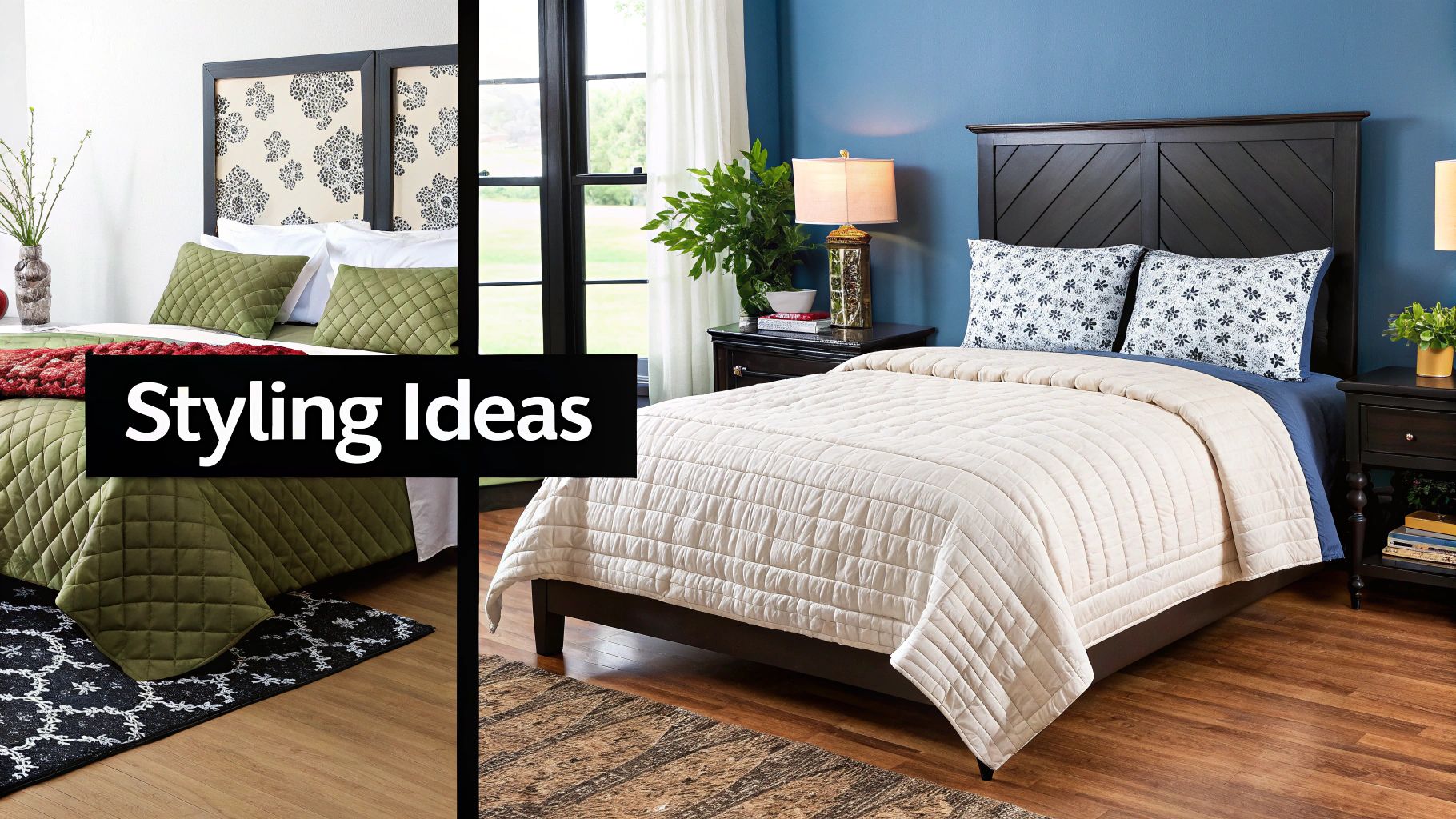
It is worth understanding how each type contributes to the overall look. A quilt, for instance, brings a wonderful texture and a sense of heritage. A comforter offers a plush, unified appearance, while a duvet acts as a blank canvas you can reinvent whenever you like.
The Traditional Charm of a Quilt
For a layered, inviting look, nothing beats a quilt. Their intricate stitching and often colourful patterns add real depth and character, making them a perfect fit for a homely, rustic, or heritage inspired bedroom.
Because a quilt does not have the lofty puffiness of a comforter, it lies much flatter on the bed. This makes it a brilliant piece for layering with other blankets and throws. You can play with different textures and colours to create a rich, considered style that makes the room feel instantly welcoming.
The All in One Style of a Comforter
A comforter is basically effortless style in a bag. As it is a single, complete piece of bedding, it delivers a clean, coordinated look right away, which is ideal if you lean towards a simple and tidy aesthetic.
Many comforters are sold as part of a "bed in a bag" set, complete with matching pillowcases and sometimes even a valance. This unified approach takes all the guesswork out of styling, giving your bed a polished, hotel like finish with very little effort. It is a fantastic option for anyone who wants a beautiful bedroom without spending hours coordinating different elements. For more inspiration on creating a cohesive space, check out our guide to the best bedroom decor ideas.
The Unmatched Versatility of a Duvet
If you are someone who loves to change their decor with the seasons, the duvet is the ultimate champion of versatility. The real magic is in its two part system: the plain insert and the decorative cover.
By simply changing the duvet cover, you can completely refresh your bedroom's design in minutes. This makes it the ideal choice for updating your decor seasonally, following new trends, or just changing the mood whenever you feel like it.
This flexibility is not just cost effective; it is also incredibly practical for storage. When thinking about how bedding can elevate your room's look, it is also useful to explore effective home staging techniques to maximise visual appeal. You would be surprised at the impact a simple swap of a duvet cover can make.
A Practical Guide to Bedding Care and Maintenance
Keeping your bedding fresh is one of the best things you can do for a healthy, inviting sleep space. But when you are weighing up a quilt versus a comforter or a duvet, the practical side of laundry day can be a deal breaker. Let's get real about what it takes to look after each one.
The long term effort and potential costs of cleaning your bedding can vary massively. What feels like a minor detail now could easily become a weekly chore you dread, so it is something worth thinking about before you buy.
Caring for Quilts and Comforters
Quilts are generally quite straightforward to look after. Most modern quilts are made from cotton or polycotton blends, which means you can usually just pop them straight into your home washing machine. Their stitched construction is sturdy, so they stand up well to repeated washing and can last for years. The only real challenge might be their bulk; a king size quilt can be a tight squeeze in a standard machine.
Comforters, on the other hand, can be a bit more demanding. Because they are so thick and fluffy, many simply will not fit into a domestic washing machine without being crammed in, which can damage the fill. This often means a trip to the launderette or paying for professional cleaning, adding extra cost and hassle to your routine. For any piece of bedding, it is always wise to check the label first. You can find out more about decoding those symbols in our guide to fabric care symbols.
The Simple Genius of a Duvet System
This is where the duvet system really comes into its own. The genius lies in its two separate parts: the insert and the cover.
- The Duvet Cover: Think of this as the first line of defence. It protects the inner duvet from dirt, sweat, and spills, and you can whip it off and wash it as easily and often as your bedsheets.
- The Duvet Insert: Since it is protected by the cover, the insert itself needs cleaning far less often, maybe just two or three times a year.
This practical setup makes laundry day so much simpler and quicker. You are only washing a lightweight cover each week, not the entire bulky item. It is this convenience that has made duvets such a popular choice in homes across the UK.
Proper bedding care extends beyond just washing. Understanding how to manage your indoor environment, such as controlling household humidity, is crucial for preventing dampness and maintaining freshness in any type of bedding.
Ultimately, for anyone who values convenience, the duvet has a clear edge. While a durable quilt is a fantastic low maintenance option and a plush comforter offers instant luxury, the simple, washable duvet cover makes keeping your bed fresh and hygienic an absolute breeze.
Choosing the Right Bedding for Your Lifestyle
The best bedding is not just about comfort, it is about finding something that genuinely fits into your life. When weighing up a quilt, comforter, or duvet, think less about the product and more about your daily reality. Your routine, style, and even who you share your home with will point you towards the perfect choice.
Let's break it down by looking at a few common lifestyles.
For Busy Families and Pet Owners
If your home is a whirlwind of kids, pets, and general chaos, you need bedding that is tough and, above all, easy to clean. Fuss free is the name of the game here.
For this reason, a duvet with a removable cover is often the hands down winner. When spills happen or muddy paws make an appearance, you can just whip the cover off and throw it in the wash with the rest of your sheets. It is a simple solution that saves a lot of hassle.
A well made, machine washable quilt is another fantastic choice. Their tightly stitched construction makes them incredibly durable, so they can handle repeated washing without falling apart. They also make a great protective top layer.
For Lovers of Hotel Luxury
Ever wish you could recreate that sumptuous, five star hotel bed feeling at home? If you dream of sinking into a fluffy, cloud like cocoon at the end of the day, then a high quality comforter or a lofty duvet is what you are looking for.
A plush comforter gives you that instant, enveloping warmth and a truly luxurious look straight out of the bag. Likewise, a duvet with a high tog rating, think 10.5 or above, offers that deep, satisfying insulation that is perfect for chilly nights. Both give you that irresistible, sink in feeling that turns a bedroom into a proper sanctuary.
Your lifestyle really is the deciding factor. A duvet brings unbeatable convenience to a busy home, a comforter provides instant, plush luxury, and a quilt offers a versatile, hard wearing layer for just about any situation.
For Renters and Decor Enthusiasts
When you are renting or just love to switch up your interiors, bedding is your secret weapon. A full scale room makeover can be expensive and impractical, but the right bedding offers a shortcut to a fresh new look.
This is where the duvet system truly shines. It is a decorator's dream. By simply changing the duvet cover, you can instantly introduce new colours, patterns, or textures. It is a brilliantly affordable way to play with seasonal trends or completely alter the mood of your room without having to buy and store multiple bulky items.
And for anyone who tends to overheat at night, finding the right material is key. You can discover some great options in our guide to cooling bedding solutions.
Your Top Bedding Questions Answered
Choosing between a quilt, comforter, or duvet often brings up a few practical questions. Getting clear, simple answers can make the final decision much easier, helping you land on the bedding that genuinely suits your lifestyle for years to come.
This simple decision tree can help you visualise which path might be best for you, based on your priorities for laundry, style, and that all important feeling of luxury.

As you can see, your daily habits and personal style naturally lead to a specific bedding choice, connecting the practical side of things with your ideal bedroom aesthetic.
Can I Put a Duvet Cover on a Comforter?
Technically, yes, you can. However, it is often not a seamless experience. Comforter and duvet insert sizes are not standardised in the same way, which can lead to your comforter bunching up or shifting around inside the cover.
While it is a clever way to protect your comforter and simplify cleaning, a dedicated duvet and cover are designed to work together perfectly. If you love the idea of switching up your bedroom's look with new covers, a duvet is definitely the more practical choice.
What Is a Tog Rating and Does It Matter?
A tog rating is a standardised UK measurement of a duvet's thermal insulation, in simple terms, how warm it is. The scale typically runs from a cool 4.5 tog for summer nights to a very cosy 15 tog for the depths of winter.
This system is exclusive to duvets and is incredibly useful for choosing the right level of warmth for the season.
Quilts and comforters do not have official tog ratings. Their warmth is usually described by material and weight, which can be a bit of a guessing game. For precise, seasonal comfort control, a duvet with a clear tog rating is the way to go.
Which Bedding Is Best for People with Allergies?
If you are an allergy sufferer, the ability to wash your bedding easily and often is a top priority. A duvet is often the best option here because the cover can be removed and washed at high temperatures to kill dust mites and remove other allergens.
When choosing any bedding, look for hypoallergenic synthetic fillings like microfibre, which are less likely to cause irritation. Natural, breathable fibres like the cotton used in many quilts are also a solid choice, as long as they are machine washable. Just be sure to check the care label first.
For an effortless blend of modern style and irresistible comfort, explore the Morgan & Reid Snuggle Comforter collection. Discover your perfect comforter today.
Share:
Comforter vs Quilt vs Duvet: A Guide to Your Perfect Bedding
The Best Comforter For Cold Sleepers To End Night-Time Shivers