



Yes, linen can shrink, but please don’t let that put you off. Think of it less as a flaw and more as a natural fabric settling into its new life with you. It is a sign of its authentic, plant based origins, and with a few simple tips, you can keep your favourite linen sheets and clothes perfectly sized for years to come.
Why Does Linen Shrink?
Linen is a wonderfully breathable material made from the fibres of the flax plant. During the weaving process, these fibres are pulled taut and held under constant tension. The first time you introduce that linen to water, especially warm water, the tension is finally released.
The fibres relax, settle back into their natural state, and contract slightly. This is a completely normal, expected part of owning a natural fabric. It is not a defect, it is just the linen getting comfortable. And the good news? You can easily manage it.
Pre-Washed vs. Untreated Linen
The biggest factor in how much your linen will shrink is whether it arrives pre-washed or completely untreated, often called ‘raw’ linen. Most high quality linen bedding and clothing are pre-washed by the manufacturer specifically to handle that initial shrinkage for you. By the time it gets to your home, the fabric is far more stable, giving you peace of mind.
This distinction is crucial. Untreated linen can shrink by around 4% on its first wash, whereas premium pre-washed linen, which is what you will find in most good homeware stores, often shrinks by less than 2%. This means you get a better, more reliable fit from day one.
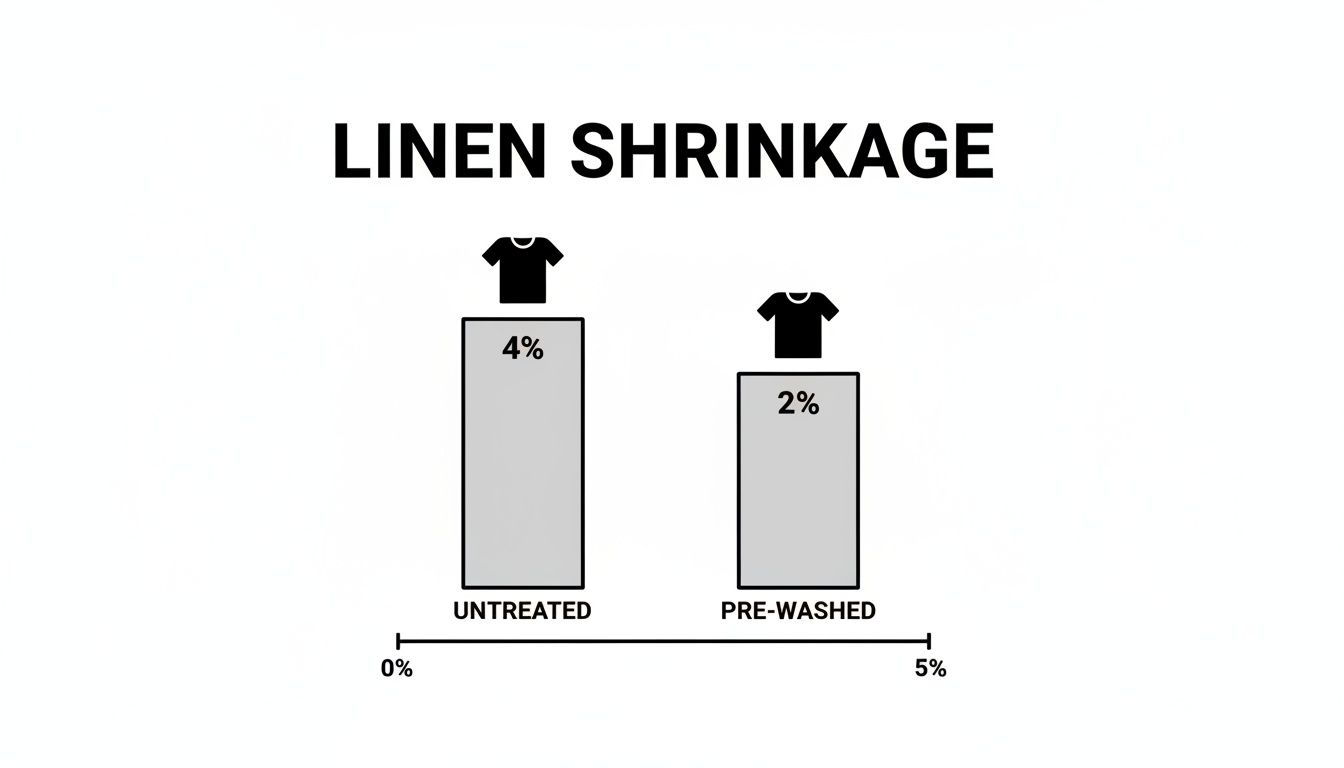
As you can see, opting for pre-washed linen makes a huge difference, giving you much more control. This makes it a far better choice for items where a precise fit is important, like a fitted sheet or a tailored shirt. The small amount of care required is a tiny price to pay for the incredible comfort linen offers. If you are weighing your options for bedding, our guide to linen vs cotton can help you decide.
Linen Shrinkage at a Glance
For a quick overview, here is what you can generally expect from different types of linen on their first wash.
| Linen Type | Typical First Wash Shrinkage | Best Care Practice |
|---|---|---|
| Untreated Linen | Up to 4-5% | Wash cold, hang to dry |
| Pre-Washed Linen | Usually under 2% | Follow label, cool wash is safest |
| Linen Blends | Varies (1-3%) | Check the blend, wash cool |
This table highlights why checking the label and choosing pre-washed linen is almost always the best path to avoiding any laundry day surprises.
Understanding Why Your Linen Shrinks
So, you have brought home some beautiful new linen, and you are wondering why it might get a little cosier after the first wash. It is a great question, and the answer lies in the very nature of the flax plant it comes from.
Think of the individual flax fibres in your linen sheets or shirt like tiny, tightly wound springs. During the weaving process, these fibres are pulled taut and put under a fair bit of tension to create a smooth, even fabric. They are essentially stretched out and locked into place.
When you introduce water and a bit of warmth from your washing machine, it is like a signal for those fibres to finally relax. The water allows all that built up tension from the manufacturing process to release.
The Great Fibre Relaxation
Imagine finally letting go of a stretched rubber band. It immediately pings back to its original, more compact size. The fibres in your linen do something very similar.
They contract, they settle, and they return to their more natural, unstressed state. This collective sigh of relief from millions of tiny fibres is what we see as shrinkage. It is a completely normal, one time event, especially noticeable after the very first wash.
It is not a fault in the fabric, it is a sign that you are dealing with a genuine, natural material. For those weighing their options for bedding, understanding these unique traits is crucial. You can learn more about the best fabrics for sheets to see how linen compares to other popular choices.
The change in size is a hallmark of a genuine, plant based material. It is a reminder that your linen is a natural product, full of character, and not a synthetic material designed to be rigid and unchanging.
This is precisely why you will often see "pre-washed" or "pre-shrunk" on the labels of high quality linen goods. The maker has already guided the fabric through this initial relaxation process for you.
By doing this, they ensure the item you bring home is already at its stable, final size. Any further change you see will be minimal, usually less than 2-3%.
Knowing what to expect takes all the stress out of laundry day. With just a little care, you can enjoy the incredible comfort of linen without any surprises, watching it get softer and more inviting with every single wash.
The Main Causes of Linen Shrinkage
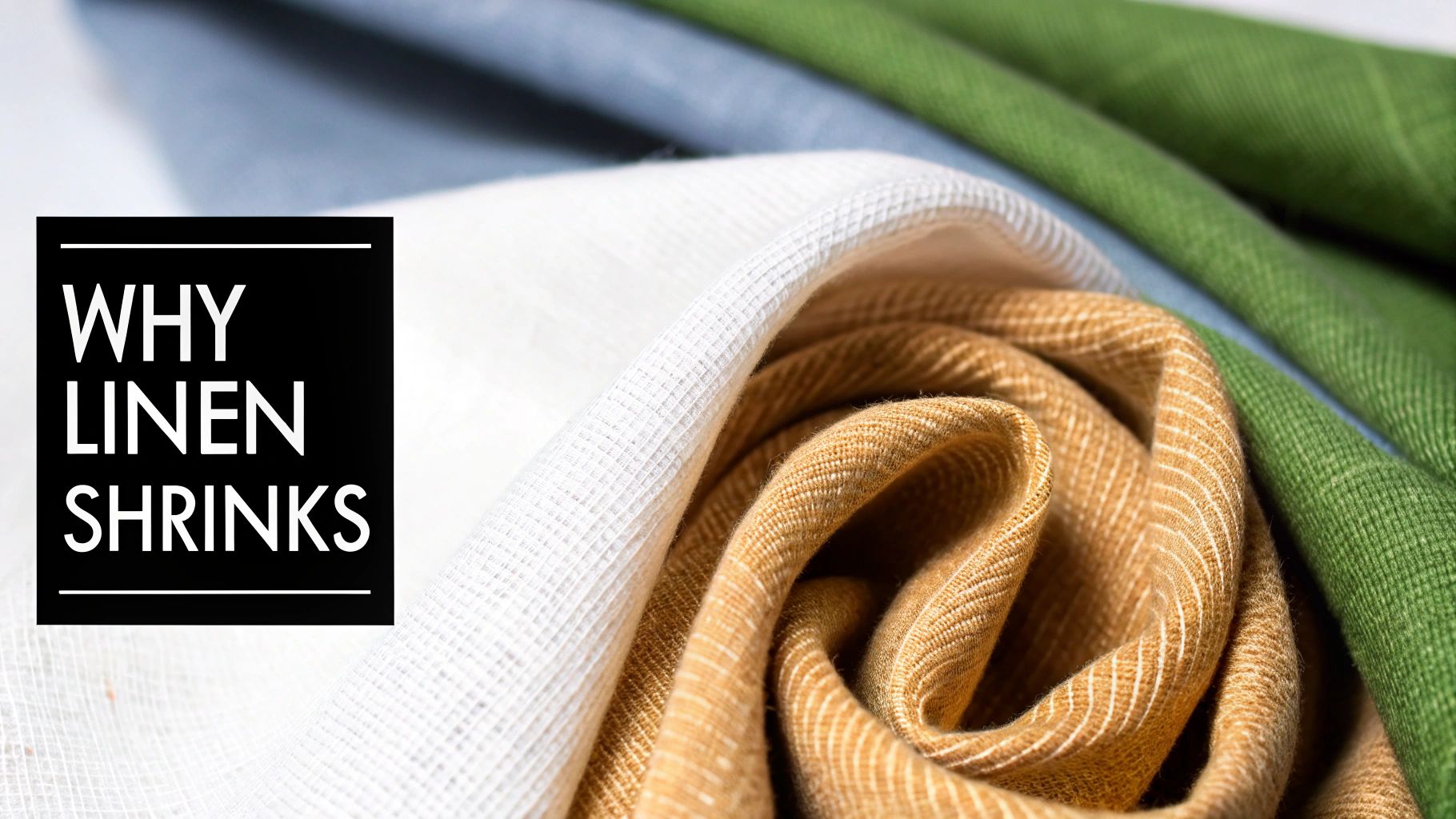
Understanding why linen shrinks is the first step to mastering its care. It is not some random laundry mishap, it is a predictable reaction to specific conditions. Once you know the triggers, you can easily adjust your routine to keep your favourite linen shirts and bedding in perfect shape.
The three big culprits behind linen shrinkage are heat from water, agitation from the washing machine, and heat from the dryer. Each one plays a part in encouraging the natural flax fibres to relax and contract, but when they team up, the effect is much more pronounced. Let's look at exactly how each one contributes.
Hot Water: The Main Trigger
Think of the linen weaving process. The flax fibres are pulled taut and held under constant tension to create the fabric. A hot wash acts like a warm, relaxing bath, giving these fibres the first chance they have had to let go of that tension and shrink back to their natural, more compact state.
This is, by far, the single biggest cause of shrinkage.
While you might think a hot wash is necessary for deep cleaning, it is overkill for linen and works against the fabric's integrity. A cool or lukewarm wash at 30°C is perfectly sufficient to get your linen clean without shocking the fibres into tightening up. Just by turning down the temperature dial, you have dealt with the primary reason linen shrinks.
Machine Agitation: The Stress Factor
Next up is the physical stress from a rough wash cycle. Vigorous spinning and tumbling can pull and twist the delicate flax fibres, distorting the weave. This mechanical stress essentially bullies the fabric, causing it to contract even more as it dries.
A gentle touch is always the best approach here.
- Stick to the Delicate Cycle. This setting is designed for fabrics just like linen, using slower spin speeds and a much gentler washing action.
- Do not overload the machine. Give your linen items space to move around freely. A crowded drum increases friction and can cause items to get tangled and stretched.
- Wash with similar fabrics. Avoid throwing linen in with heavy duty items like denim jeans or bath towels, which can batter the delicate fibres during the cycle.
If you are ever unsure what the symbols on your machine mean, our guide to understanding fabric care symbols can help clear things up.
High Heat Drying: The Final Squeeze
If a hot wash loosens the fibres, a hot tumble dryer is what seals the deal, locking that shrinkage in place. The blast of intense heat rapidly evaporates moisture, forcing the fibres to constrict quickly and often permanently. It is the final, and often most frustrating, step in the shrinkage process.
We have all been there. You take care to wash everything perfectly, only for the dryer to undo all your good work. The extra shrinkage caused by high heat can be the difference between a sheet that fits and one that does not, so it is best avoided.
How to Wash Linen and Prevent Shrinking
Now that we have covered why linen changes shape, let's talk about how to stop it from happening. The good news is that caring for your linen is remarkably simple. Once you get into the habit of following a few easy steps, you can wash your favourite bedding and clothes with total confidence, knowing they will stay soft, beautiful, and perfectly sized.
The secret is a gentle approach. Think of it less as an intense clean and more as a kind refresh. From reading the label to choosing the right settings, here is everything you need to know for perfect linen care, every single time.
Your Simple Step by Step Washing Guide
You can forget complicated laundry rules. Washing linen properly just comes down to a few key choices. Follow this simple routine to keep your items in pristine condition and put the question "does linen shrink in the wash?" to bed for good.
-
Check the Care Label First. This is your most important guide. While most pre-washed linen is perfectly happy in the machine, a quick check confirms the best temperature and care instructions.
-
Wash with Similar Items. Group your linen with other lightweight fabrics in similar colours. Steer clear of washing it with heavy things like towels or denim, as their rough textures can cause friction and damage the delicate flax fibres.
-
Use a Mild Detergent. Harsh chemicals and bleaches really are not necessary and can weaken the fibres over time. A gentle, liquid detergent is all you need to get your linen beautifully clean.
Choosing the Right Machine Settings
Your washing machine can be your best friend in linen care, as long as you treat it right. It is all about being gentle and avoiding those two main culprits of shrinkage: high heat and aggressive agitation.
The goal is to treat your linen with the same care you would a delicate blouse or your favourite jumper. A gentle wash not only prevents shrinkage but also helps your linen last longer and become even softer over time.
For the best results, always opt for a cool or lukewarm wash at 30°C. A hot wash over 40°C can cause significant shrinkage, so keeping things cool preserves your linen's size and integrity for dozens of washes.
On top of that, make sure to select the delicate or hand wash cycle on your machine. This setting uses a much lower spin speed, which is far kinder to the fabric's natural weave and structure. Whether it is bedding or other textiles, learning how to wash fabrics without shrinking is a fantastic skill for preserving everything in your home.
Finally, do not overload the machine. Giving your linen plenty of room to move around stops it from getting tangled or stretched out of shape, ensuring a gentle, even clean. Taking these small steps will make a huge difference. For more detailed advice, you might be interested in our guide on how to wash bedsheets correctly.
The Best Way to Dry Linen and Keep Its Shape
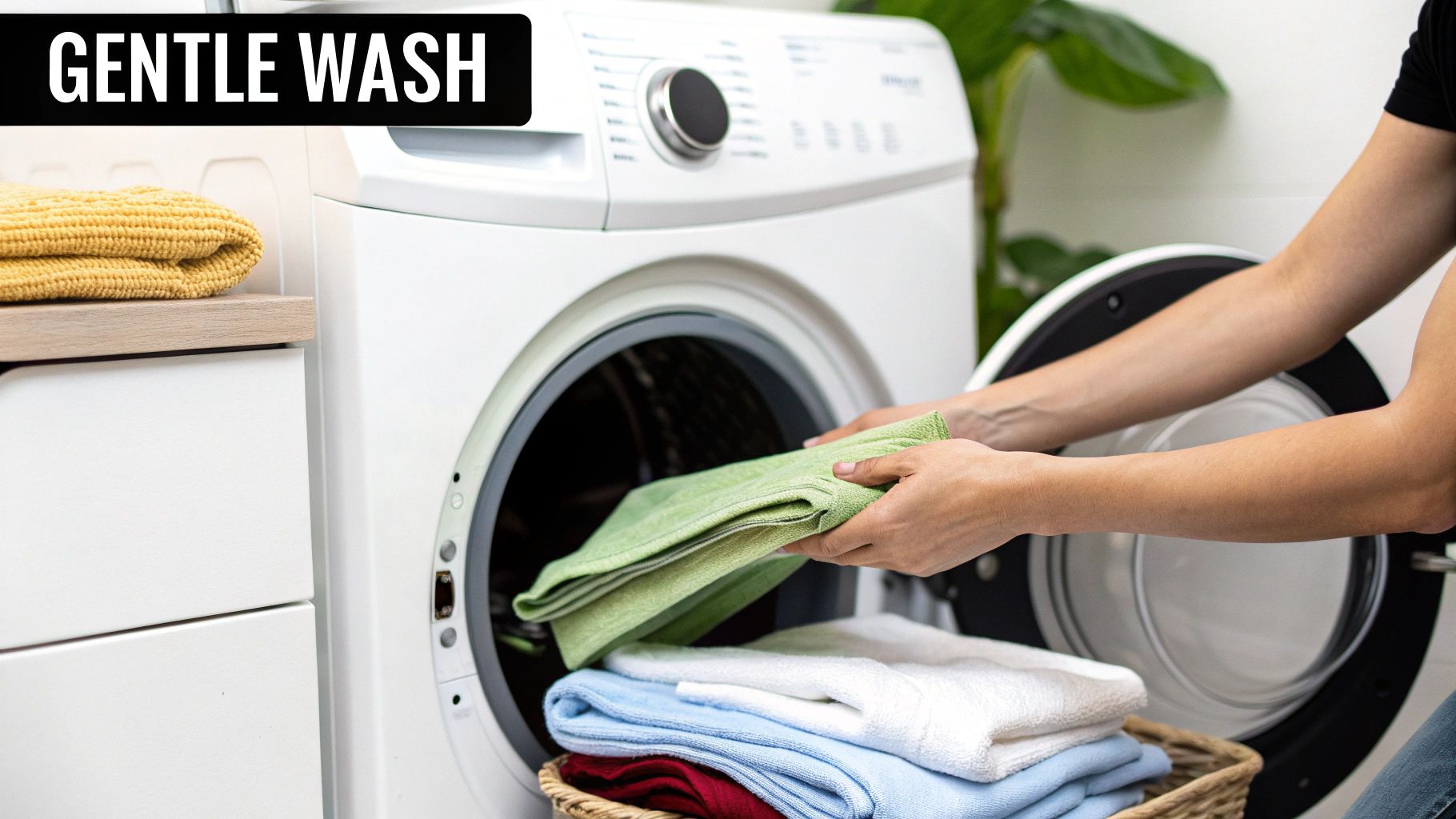
How you dry your linen is just as important as how you wash it when it comes to keeping its original shape. If there is one single piece of advice to remember, it is this: air drying is always best. High heat is the main culprit behind shrunken linen, as it forces the natural fibres to constrict and lock into a smaller size.
Letting your linen dry naturally on a washing line or an indoor airer is the gentlest approach. This slow, gradual process gives the fibres time to relax and settle back into their weave without the stress of a hot tumble dryer. It is also much kinder to the fabric itself, helping to maintain its strength and ensure your beautiful bedding stands the test of time.
Making Air Drying Work for You
Of course, we know that relying on an outdoor washing line in the UK can be wishful thinking. The good news is that you can get the same fantastic results indoors. All you need is a clothes airer set up in a room with decent ventilation.
For the best results, try to position the airer away from direct heat sources like radiators. This prevents "hot spots" that can cause parts of the fabric to dry too quickly and unevenly. Cracking a window open will not only speed things along but also leave your linen with that unbeatable fresh air scent.
Using a Tumble Dryer with Caution
Let's be realistic, sometimes life is too busy, and the tumble dryer is the only practical option. If you absolutely have to use one, the trick is to proceed with extreme care. Think of it as a final finishing tool, not the primary method of drying.
- Stick to the Lowest Heat Setting. Never, ever use a hot cycle. Choose the coolest setting your machine offers, or better yet, a 'no heat' or 'air fluff' option if you have one.
- Do not over dry. This is the golden rule. Pull your linen out of the dryer while it still feels very slightly damp to the touch. Bone dry is a step too far.
- Finish by Air Drying. Once you have removed the slightly damp linen, hang it over an airer or lay it flat on a bed to finish drying completely. This final step allows the fibres to relax and de-stress.
Taking your linen out while it is still a little damp is the secret to using a dryer without regrets. It stops the heat from aggressively contracting the fibres and gives you perfectly soft, beautifully fitting sheets every time.
By embracing these gentle drying methods, you will safeguard your investment from unwanted shrinkage and keep it feeling wonderfully soft and luxurious. For more tips on crafting the perfect sleep environment, you might enjoy our guide to choosing luxurious bed linens.
What to Do If Your Linen Has Already Shrunk
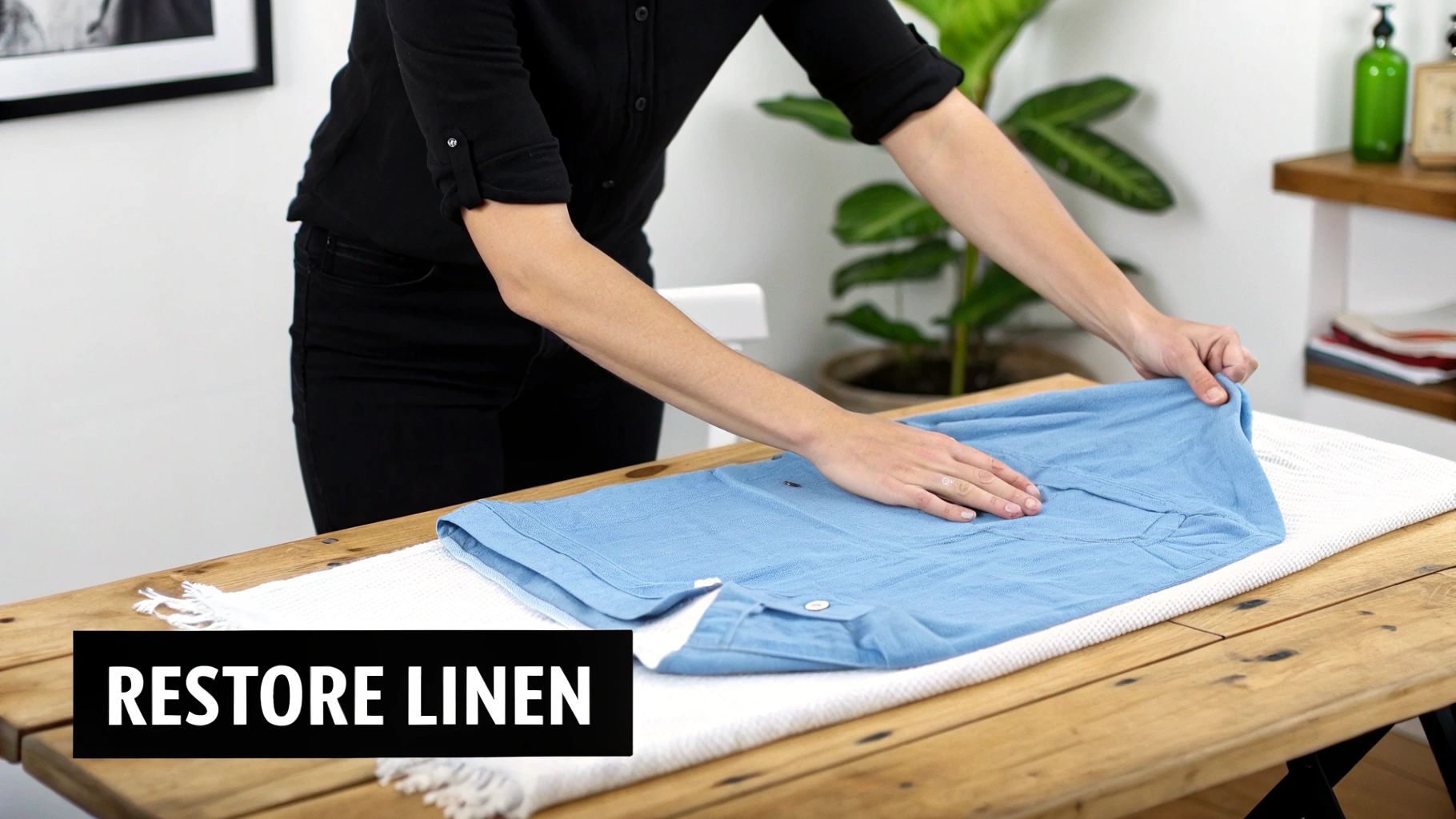
We have all felt that sinking feeling when a favourite garment comes out of the wash looking suspiciously like it belongs to a much smaller person. But if your best loved linen shirt or a piece of your bedding has shrunk, do not panic just yet. It is often possible to gently coax it back into shape.
The secret lies in relaxing the natural flax fibres, which allows you to carefully stretch them out again. Think of it like using conditioner on tangled hair. It softens the fibres and makes them more pliable. This simple method is your best shot at saving a piece you really love.
A Gentle Rescue Remedy for Shrunken Linen
Before you start, take a deep breath. The key here is patience and a gentle touch, you want to avoid putting any more stress on the fabric. Follow these steps carefully to give your linen the best possible chance of recovery.
-
Prepare a Lukewarm Soak Fill a clean sink, basin, or bathtub with lukewarm water. You do not want it hot or cold. Add a generous capful of gentle hair conditioner or even baby shampoo, and give it a good swirl to make sure it dissolves completely.
-
Soak and Soften Submerge the shrunken linen item in the water, pressing it down gently until it is fully saturated. Now, let it be. Leave it to soak for at least 30 minutes, though an hour is even better for more significant shrinkage. This gives the conditioner time to really get into the fibres and relax them.
-
Gently Remove Excess Water After its bath, lift the linen out of the water. Whatever you do, do not wring it out. Twisting and wringing can stretch the delicate fibres unevenly and cause permanent damage. Instead, gently squeeze the water out. Then, lay the item flat on a thick, clean towel, roll it up like a swiss roll, and press down firmly to absorb most of the moisture.
-
Reshape and Air Dry Unroll the towel and lay your damp linen on a fresh, dry one, or a flat drying rack. This is where the magic happens. Carefully start to stretch the item back towards its original size and shape. Work slowly and evenly across the fabric, paying special attention to areas like sleeves, hems, and seams. Leave it to air dry completely, checking on it every so often to smooth out any wrinkles and continue reshaping as needed.
Common Questions About Linen Care
We get a lot of questions about looking after linen, and for good reason, you want your pieces to last. So, to wrap things up, here are some quick answers to the queries we hear most often.
Does Pre-Washed Linen Shrink at All?
Yes, but it is a very small amount. Think of pre-washing as doing the heavy lifting for you before the fabric ever gets to your home.
Even so, you might still see a tiny bit of shrinkage, usually around 1-3%, over the first few washes. Sticking to cool water and a gentle cycle is your best bet to keep that change almost unnoticeable.
Should I Use Fabric Softener on Linen?
It is much better to skip it. One of linen’s most loved qualities is how it gets softer and softer with every wash, all on its own.
Fabric softeners actually work against this by coating the natural fibres. This waxy residue can interfere with linen's famous breathability and moisture wicking magic. If you want a natural softening boost, try adding a splash of white vinegar to the rinse cycle instead.
How Can I Handle Wrinkles Without an Iron?
Honestly, the best way to handle wrinkles is to embrace them. That relaxed, slightly crumpled look is part of what makes linen so effortlessly stylish.
For deeper creases, a vigorous shake after washing and before hanging it to dry works wonders. If you do want a smoother finish, a garment steamer is a brilliant and much gentler alternative to a hot iron.
At Morgan and Reid, we create bedding that makes your home feel as good as it looks. Discover our collection of irresistibly soft and stylish comforters, sheets, and essentials designed for the whole family. Explore the comfort of Morgan and Reid today.
Share:
How to Wash a Mattress Protector: A Simple Guide to Keep It Like New
Percale vs Sateen: Which Bed Sheet is Right for You?