


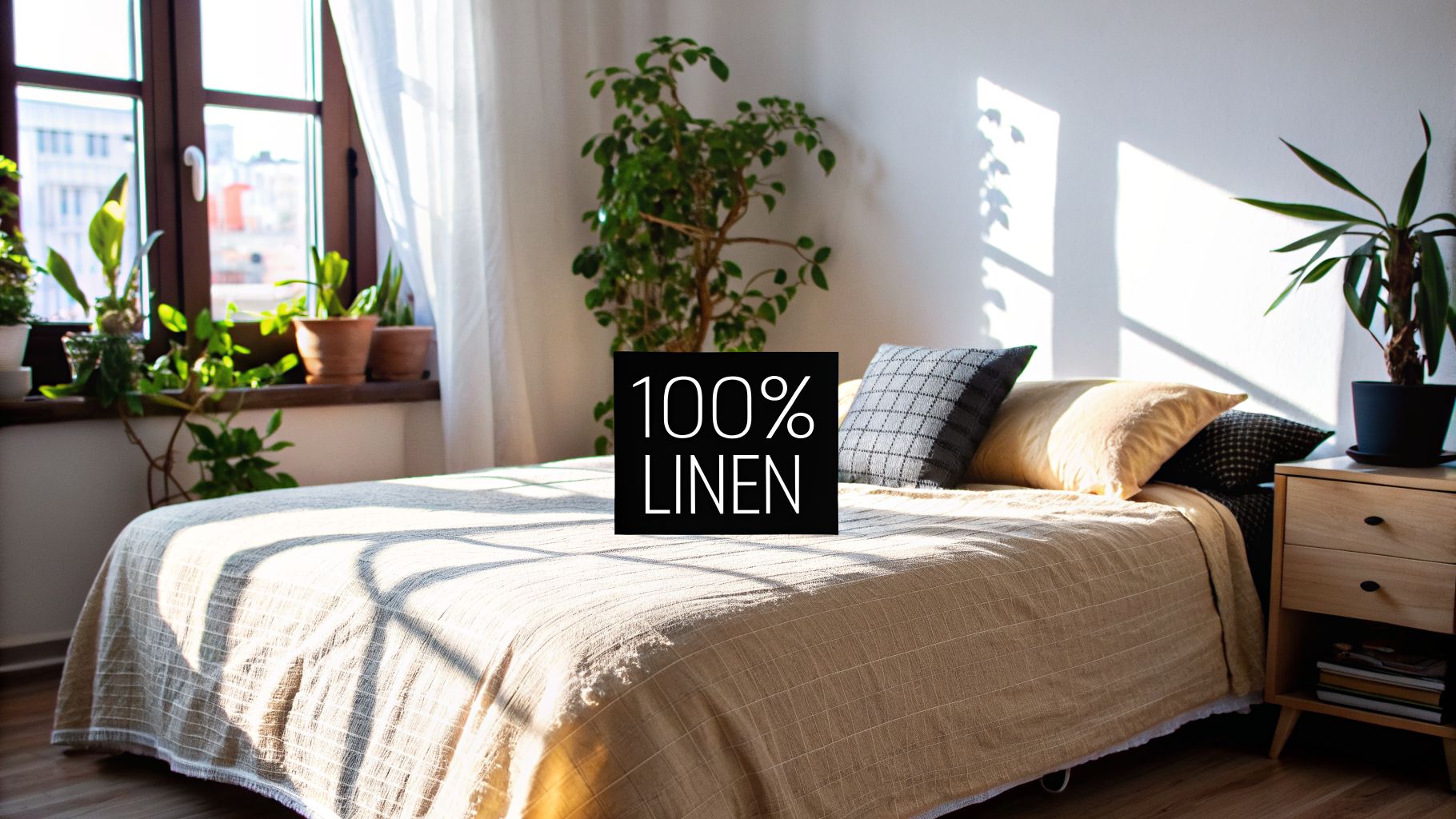
Picture this: you climb into bed at the end of a long day, and the sheets feel cool, soft, and effortlessly inviting. That is the feeling of pure linen. It is a fabric that gets softer and more comfortable with every wash, turning your bed into a genuine sanctuary.
Welcome to the World of 100% Linen Bedding
So, what is it that makes real linen so different? It all comes down to its unique origins. Linen is woven from the long, robust fibres of the flax plant. Turning flax into fabric is a far more labour intensive process than producing cotton, which is why 100% linen is rightly seen as a luxury. Think of it not just as buying new sheets, but as a long term investment in your comfort and sleep.
Choosing high quality linen is about more than just how it looks. It is a practical upgrade for your wellbeing, especially with the UK's notoriously changeable weather.
Why Is Linen So Popular?
Linen's appeal runs much deeper than its relaxed, lived in look. It has become a favourite in modern homes simply because it performs so brilliantly all year round. The natural hollow fibres make it incredibly breathable, wicking away moisture to keep you cool and comfortable on those warm, humid nights.
But when winter arrives, those same fibres act as a natural insulator, trapping your body heat to provide a cosy warmth without that stifling feeling. This amazing ability to regulate temperature is a huge reason why so many people find they sleep better wrapped in linen.
This is not just a niche trend, it is a significant shift in what we want from our home textiles. The UK's demand for premium bedding is growing fast, with the market expected to reach £1.47 billion by 2030. It shows we are moving away from fabrics that just look nice and towards materials that genuinely improve our quality of life.
Linen offers a unique combination of strength and softness. Unlike other fabrics that can wear out, linen becomes more supple and inviting with every wash, promising years of comfort.
Here is a summary of the key advantages of choosing 100% linen for your bed.
A Quick Look at Linen Bedding Benefits
| Benefit | Why It Matters for Your Comfort |
|---|---|
| Temperature Regulating | Keeps you cool in the summer and warm in the winter for sound sleep all year. |
| Highly Absorbent | Wicks away moisture, making it perfect for hot sleepers. |
| Durable and Strong | One of the strongest natural fibres, ensuring your bedding lasts for years. |
| Gets Softer with Age | Becomes more supple and comfortable with every single wash. |
| Naturally Hypoallergenic | Its antibacterial properties make it ideal for sensitive skin and allergy sufferers. |
| Effortlessly Chic | The relaxed texture looks beautiful without needing to be ironed. |
As you can see, the benefits go far beyond simple aesthetics, contributing directly to a better night's rest.
A Smart Choice for Modern Homes
For busy households and anyone who values both style and substance, linen strikes the perfect balance. Its natural, slightly crumpled texture is part of its charm, which means you can finally say goodbye to the ironing board. This effortless elegance helps create a calm, welcoming atmosphere in any bedroom.
Ultimately, choosing genuine linen is about embracing a more thoughtful approach to the things you surround yourself with.
- Lasting Durability: Linen is one of the strongest natural fibres out there. Your bedding will not just last, it will endure for years, making it a truly sustainable investment.
- Gets Better with Age: It is one of those rare materials, like a fine wine, that actually improves over time. Learn more about finding luxurious bed linens that share this quality.
- Hypoallergenic Qualities: Naturally resistant to bacteria and microbes, linen is a fantastic choice if you have sensitive skin or are prone to allergies.
Comparing Linen to Cotton and Other Fabrics
When you are searching for new bedding, the choices can feel endless. You have classic cotton, silky soft synthetic microfibres, and then there is 100% linen bedding. So, what really sets them apart, and which is the right one for your bedroom? Let's break it down in a simple, practical way.
The biggest difference comes down to the very fibres of each fabric and what that means for your comfort. Linen is woven from the long, hollow fibres of the flax plant. The best way to picture it is to think of these fibres as millions of tiny, hollow straws. This unique structure is the secret behind linen's famous ability to breathe, allowing air to circulate freely. This is a real gift during those warmer, humid UK nights.
This natural airflow also means linen is brilliant at managing moisture. It can absorb a remarkable amount of it, up to 20% of its own weight, before it even starts to feel damp. For anyone who tends to sleep a bit warm, this is a game changer. It wicks perspiration away from your skin, helping you stay dry and comfortable all night long.
Linen vs Cotton at a Glance
To make things even clearer, here is a straightforward comparison to help you choose the right fabric for your needs.
| Feature | 100% Linen | Cotton (Percale/Sateen) | Polyester/Microfibre |
|---|---|---|---|
| Breathability | Exceptional | Good | Poor |
| Durability | Excellent, gets stronger | Good, can weaken over time | Very good, but can pill |
| Moisture Wicking | Superior | Moderate | Very poor, traps moisture |
| Feel Over Time | Softens with every wash | Can become thinner | Can feel static or oily |
| Hypoallergenic | Yes, naturally | Yes, generally | Can trap allergens |
| Sustainability | High (uses less water) | Varies (organic is better) | Low (petroleum based) |
Ultimately, each fabric has its place. Cotton is a familiar comfort and synthetics offer a budget friendly option, but linen truly excels in performance and longevity.
Linen Versus Classic Cotton
Cotton has been the go to for bed sheets for generations, and for good reason. It is soft, relatively affordable, and comes in lovely weaves like crisp percale or silky sateen. However, cotton fibres are quite different from linen's. They are shorter and less hollow, which means they are not quite as good at regulating temperature.
While a fresh set of cotton sheets feels wonderful, cotton tends to hold onto moisture more than linen does. This can lead to that slightly damp, clingy feeling on a particularly warm night. Over time, repeated washing can also weaken cotton fibres, sometimes leading to thinning or pilling.
Linen, on the other hand, is one of the strongest natural fibres you can find. It actually gets stronger when wet, and with every single wash, the fibres relax and soften. This means your linen sheets will not just last for years, they will get more comfortable and supple with age. If you would like to dive deeper, you can explore more about linen versus cotton bedding to see which fits your sleep style.
The choice between linen and cotton often boils down to performance and longevity. Cotton offers instant softness and familiarity, while linen delivers superior breathability and a durability that only improves over time.
What About Polyester and Other Synthetics?
Synthetic fabrics like polyester or microfibre are often pitched for their immediate softness and budget friendly price tag. These materials are made from plastic based fibres that feel silky and are resistant to wrinkling, which certainly has its appeal.
However, the major drawback with synthetics is their complete lack of breathability. Because they are essentially a form of plastic, they do not allow air or moisture to pass through. This traps heat and sweat against your skin, creating a stuffy, clammy environment, especially for warm sleepers. While they might feel soft at first, they simply do not offer the natural, climate controlling comfort that 100% linen bedding provides.
This concept map helps visualise how linen's natural origins directly link to its premium qualities.

As you can see, the journey from the flax plant to your bed is what gives linen its signature blend of comfort and strength.
Choosing the right fabric is all about matching its properties to your personal comfort and what you value most.
- For year round comfort: Linen’s amazing ability to keep you cool in summer and warm in winter makes it a versatile choice for the UK’s varied climate.
- For a relaxed style: If you love an effortlessly elegant, lived in look, linen’s natural texture is perfect. It looks beautiful without ever needing an iron.
- For a long term investment: While the initial cost may be higher, linen’s incredible durability means it will outlast other fabrics, making it excellent value over the years.
How to Spot Genuine 100% Linen Bedding

As linen has surged in popularity, the market has become crowded with clever descriptions like ‘linen look’ and ‘linen blend’. While these fabrics can be perfectly nice, they simply do not deliver the unique experience of the real thing. Learning how to spot genuine 100% linen bedding is the secret to making a sound investment in your sleep and comfort.
Your first line of defence is always the label. It is a simple, non negotiable step. By law, the fabric composition must be clearly stated, so you are looking for those two magic words: 100% linen. If it says anything else, like a 55% linen and 45% cotton blend, you will not get the full spectrum of benefits, like linen's unmatched breathability and famous durability.
The desire for authentic, premium textiles is booming. In fact, the UK bed and bath linen industry, which includes high end materials like 100% linen bedding, is set to become a £4.35 billion market by 2025. This growth is fuelled by a 25% jump in demand for sustainable, high performance fabrics, making the UK a European leader. You can read more about the trends in the UK's home textile market.
Look for the Telltale Signs
Beyond what the label says, you can often identify true linen just by using your senses. It has a distinct personality that imitations cannot quite replicate.
- A Unique Texture: Run your hand across the fabric. Genuine linen feels crisp yet soft, with a noticeable texture that is cool to the touch. It should never feel artificially smooth or slippery, which is often a giveaway for polyester.
- Visible Imperfections: Look closely at the weave. You will notice tiny, thickened knots that appear at random. These are called ‘slubs’, and they are a beautiful, natural hallmark of authenticity, not a flaw.
- Natural Lustre: Real linen has a subtle, organic sheen. It is not the flat, matte look of some cottons, nor is it the synthetic shine of man made fabrics. It just catches the light in a very gentle, elegant way.
These characteristics are the fingerprints of genuine linen, left behind by the time honoured process of turning flax fibres into thread.
Understanding Price and Provenance
Let’s be honest, genuine 100% linen bedding carries a higher price tag. This is not about branding, it directly reflects the long and labour intensive journey from a tiny flax seed to a finished sheet. Growing flax is a delicate process, and the steps of harvesting, retting, scutching, and spinning are far more involved than those for mass produced cotton.
When you invest in 100% linen, you are paying for an agricultural and artisanal process that results in a uniquely strong, breathable, and long lasting fabric. It is a purchase for years of comfort, not just a season.
You may also spot a certification like '100% European Flax' on the label. This is a fantastic sign of quality. It is a guarantee that the flax was grown in Western Europe, mainly France, Belgium, and the Netherlands. This region is world renowned for its perfect climate and generations of expertise, which produces the long, strong fibres needed for truly premium bedding.
Seeing this certification gives you traceability and confidence in what you are buying. By keeping these key details in mind, you can shop with the certainty that you are choosing authentic linen that will truly deliver on its promise of lasting comfort and style.
A Practical Guide to Buying Your Perfect Linen Set
So, you are ready to bring the unique comfort of 100% linen bedding into your home. Fantastic choice. Choosing your first set might seem a bit daunting, but I promise it is a straightforward and even enjoyable process. Let's walk through the key things to look for, so you can pick a set that feels like it was made just for you.
We will demystify some of the jargon you will come across, like GSM, and explore how the fabric's weight, finish, and colour come together to create your perfect sleep sanctuary. By the time we are done, you will feel completely confident in choosing linen that not only looks beautiful but truly delivers on its promise of incredible comfort.
Understanding Fabric Weight or GSM
One of the first terms you will likely see when shopping for 100% linen bedding is GSM, which simply stands for grams per square metre. Do not let the technical acronym put you off, it is just a straightforward measure of the fabric's density. Think of it as how much a square metre of the fabric weighs.
Unlike cotton, where a higher thread count is often marketed as "better", a higher GSM in linen is not automatically superior. It all comes down to personal preference and how you want your bed to feel.
- Lighter Weight (120–150 GSM): This linen feels wonderfully airy and ethereal, almost floating over you as you sleep. It is exceptionally breathable, making it a brilliant choice for hot sleepers or for those long, warm summer nights.
- Mid Weight (150–190 GSM): This is the sweet spot and the most common weight you will find for linen bedding. It strikes a beautiful balance between durability and softness, with a lovely drape that feels substantial yet breathable all year round. It is the perfect all rounder.
- Heavier Weight (190+ GSM): Heavier linen has a more robust, almost blanket like quality. It is incredibly durable and provides a comforting weight that is perfect for anyone who loves a cosy, cocooning feel, especially through the colder winter months.
If you are just starting your linen journey and feel a bit unsure, most high quality sets fall into that mid weight category. It is a fantastic starting point that gives you that signature linen texture and longevity without feeling too heavy.
Stonewashed Versus Standard Linen
Another key decision you will make is about the fabric's finish. You will frequently see linen described as stonewashed, and for good reason. This is a special finishing process that essentially fast forwards the natural softening of the fibres, giving you that buttery soft, lived in feel from the very first night.
Stonewashing involves tumbling the finished linen fabric with large, smooth stones (like pumice). This process gently agitates and relaxes the fibres, giving the linen its beautifully rumpled, laid back appearance and a wonderfully supple texture right out of the box.
Standard, untreated linen can feel a little crisp or even stiff at first. It will absolutely soften up beautifully over time with every wash, but stonewashed linen gives you a massive head start on that process. For anyone new to linen, I always recommend a stonewashed set. It is the best way to immediately experience its famous, cloud like comfort.
Choosing Colours and Sizes
Finally, let's talk about the practicalities of colour and size. Linen is renowned for its gorgeous palette of earthy, muted tones that are perfect for creating a calm and restful bedroom atmosphere. Soft whites, natural oatmeals, and gentle greys are timeless choices that layer beautifully with other textiles and textures.
To help you choose the ideal linen set, it is also useful to understand the key components of your bedding, like the difference between a comforter and a duvet cover. If you would like to learn more about that, you can read our guide to choosing a beautiful linen duvet cover.
When it comes to sizing, always measure your mattress, especially its depth. Many modern mattresses are far deeper than older styles, so look for fitted sheets specifically described as ‘deep’ or check the pocket depth measurement. This is the secret to getting a snug, secure fit that will not frustratingly ride up at the corners.
Caring for Your Linen to Ensure It Lasts a Lifetime
One of the best things about investing in 100% linen bedding is its incredible longevity. With the right care, your sheets will not just last, they will actually get better, softening beautifully for years to come. Thankfully, these simple, no fuss instructions are all you need to keep your linen looking and feeling its best, wash after wash.
The real secret to happy linen is a gentle touch. There is absolutely no need for harsh chemicals or complicated washing rituals. A few easy habits are all it takes to protect the natural strength and softness of the flax fibres.
The Ideal Washing Routine
Getting the wash right is the single most important step. Always choose a gentle cycle with lukewarm water, ideally around 40°C. This temperature is the sweet spot. It cleans your bedding effectively without putting any unnecessary stress on the natural fibres.
When it comes to detergent, a 'less is more' approach works wonders. Stick with a mild, liquid detergent and be careful not to overdo it. Powder detergents can sometimes clump and leave a residue if they do not dissolve properly, so a liquid option is a much safer bet for keeping your linen soft and pure.
Here is a crucial piece of advice: always avoid fabric softeners and bleach. Fabric softeners work by coating the fibres in a waxy film, which completely ruins linen's natural breathability and moisture wicking powers. Bleach, even the oxygen based kind, is just too harsh. It weakens the fibres over time and can lead to discolouration.
Drying Your Linen for Ultimate Softness
How you dry your linen makes a huge difference to how it feels. If you can, line drying is always the best choice. It is incredibly gentle on the fabric, saves energy, and leaves your bedding with that unbeatable, naturally fresh scent.
If you have to use a tumble dryer, just be sure to select a low heat and a gentle cycle. You want to avoid 'baking' the fibres, which can make them brittle. A brilliant trick is to pull your bedding out of the dryer while it is still slightly damp. You can then hang it up or lay it flat to finish air drying. This one simple step does wonders for minimising wrinkles and keeping the fabric feeling supple. For a deeper dive, check out our detailed guide on how to wash linen properly.
The Great Ironing Debate
And now for some excellent news: you can officially put the iron away. A huge part of linen's charm is its relaxed, slightly rumpled texture. It is what gives it that inviting, lived in feel, and most people embrace this effortless look and never iron their linen at all.
Of course, if you really prefer a crisper, smoother finish, the best time to iron is while the fabric is still a little damp. Use a medium hot iron, and the steam will help the creases fall away with ease.
Beyond the specifics of linen, you might also be wondering how often you should change your sheets to keep things hygienic and comfortable. Sticking to a regular schedule is key for that always fresh feeling.
By following these straightforward steps, you are doing more than just cleaning your bedding. You are nurturing the fabric, ensuring it continues to soften and reward you with incredible comfort for many, many years.
Styling Your Bed with Linen for Effortless Elegance

One of the best things about 100% linen bedding is how it seems to style itself. That natural, slightly rumpled texture is the perfect starting point for creating a bedroom that feels both deeply personal and effortlessly chic.
The whole point of linen is to move away from stiff, formal perfection. It is all about creating a relaxed, lived in feel that invites you to kick off your shoes and unwind. This is your chance to turn the bed into the true centrepiece of your sanctuary. Forget fussy rules, think in layers of comfort that look every bit as good as they feel.
The Art of Layering with Colour and Texture
If you want a bed that looks like it belongs in a design magazine, the secret is layering. It is a simple technique that adds instant depth, warmth, and character. Linen’s unique texture plays beautifully with other materials, so this is the perfect opportunity to mix things up.
Think of your linen sheets as the foundation. Starting with a calm, neutral shade like oatmeal, soft white, or a gentle grey gives you a versatile base. From there, you can introduce a new colour or a different texture with your quilt, duvet cover, or a simple throw blanket.
Here are a few of my favourite ways to bring a layered look to life:
- Go Tonal: Stick to one core colour family but play with different shades. For instance, you could pair light grey linen sheets with a charcoal linen duvet and finish it with a silver knitted throw. The result is incredibly sophisticated and calming.
- Mix Your Textures: This is where the magic really happens. Combine the relaxed handle of your linen with something completely different, like a chunky woollen blanket, a few plush velvet cushions, or a smooth cotton quilt. It creates a wonderful contrast you can see and feel.
- Add a Pop of Colour: With a neutral linen base, you have the perfect canvas for a bold accent. A rich terracotta, deep forest green, or vibrant mustard cushion can instantly lift the entire room and tie together other decorative pieces.
It is all about making your bed look inviting and thoughtfully curated, not just made. If you are looking for more ideas, you can learn more about how to layer your bedding for that perfect cosy finish.
Nailing the Relaxed Pillow Arrangement
The way you arrange your pillows can completely transform the feel of your bed. To achieve that signature relaxed look linen is famous for, step away from the rigid, hotel style stacks. You are aiming for a soft, welcoming pile of cushions that you want to dive right into.
I find the best method is to start by propping your sleeping pillows against the headboard. Then, layer two or three larger, decorative square cushions in front, perhaps in a complementary shade or pattern. A single, smaller accent cushion placed at the very front is the perfect finishing touch.
Do not overthink it. The charm of a linen bed lies in its beautiful imperfection. A slightly rumpled duvet and casually tossed pillows look far more inviting than a bed that is too pristine to touch.
By playing with these simple ideas for colour, texture, and styling, your 100% linen bedding becomes more than just sheets. It is the foundation for a beautiful retreat that perfectly reflects your personal style.
Your Linen Bedding Questions Answered
Making a thoughtful investment in something as personal as your bedding is a big deal, and it is only natural to have a few questions before you commit. We get it. Let’s walk through some of the most common queries we hear, clearing up any final doubts so you can feel genuinely excited about the incredible comfort of 100% linen bedding.
Think of this as a friendly chat to make sure you have all the details. We want you to feel confident and ready to completely transform the way you sleep.
Will My New Linen Sheets Feel Scratchy at First?
This is probably the number one question people have, and it is a fair one. Brand new, unwashed linen can have a certain 'crispness' to it. This is not a flaw, it is just the natural state of the strong, raw flax fibres before they have had a chance to relax.
But any initial stiffness is very short lived. High quality linen, particularly if it has been stonewashed, is designed to be soft right out of the packaging. The real magic, though, happens over time. With every wash, the fibres soften and relax, developing that famously supple, luxurious feel that only gets better with age.
Is 100% Linen Bedding Good for People with Allergies?
If you or someone in your family struggles with allergies or sensitive skin, linen is not just a good choice, it is a brilliant one. It is naturally hypoallergenic and antibacterial, meaning it actively works against the very things that can trigger irritation.
A huge part of this is how well it breathes. Linen wicks moisture away from your body and allows it to evaporate quickly. This creates a dry environment where dust mites, mould, and bacteria simply cannot thrive, helping you maintain a cleaner, healthier place to rest.
For those with sensitive skin, asthma, or common allergies, linen offers a naturally pure and gentle sleeping surface. Its ability to stay clean and dry makes it one of the healthiest bedding choices available.
Do I Really Have to Iron My Linen Bedding?
Good news: you can put the iron away! For most people, one of the best things about 100% linen bedding is its beautifully relaxed, lived in look. Those gentle crinkles are part of its inherent charm, creating an inviting and effortlessly stylish bed that does not look overly fussy.
Most linen lovers embrace this casual elegance and never dream of ironing their sheets. However, if you happen to prefer a neater, crisper finish, you absolutely can iron it. The trick is to do it on a medium hot setting while the fabric is still slightly damp.
Is Linen Bedding Worth the Higher Price?
While linen does have a higher price tag than cotton upfront, it is best to think of it as a long term investment in your wellbeing. Linen is one of the strongest natural fibres on the planet. A well cared for set can last for decades, not just a few years.
When you weigh up its incredible durability against its year round breathability and timeless style, linen offers fantastic value over its lifespan. It is one of those rare purchases that pays you back, night after night, with years of better sleep.
Ready to experience the unmatched comfort for yourself? Explore the beautiful range of comforters and bedding at Morgan and Reid and discover your perfect set today.
Share:
A Style Guide to Decorative Pillows for Couches
A Guide to Jacquard Bed Linens for Luxurious Comfort