

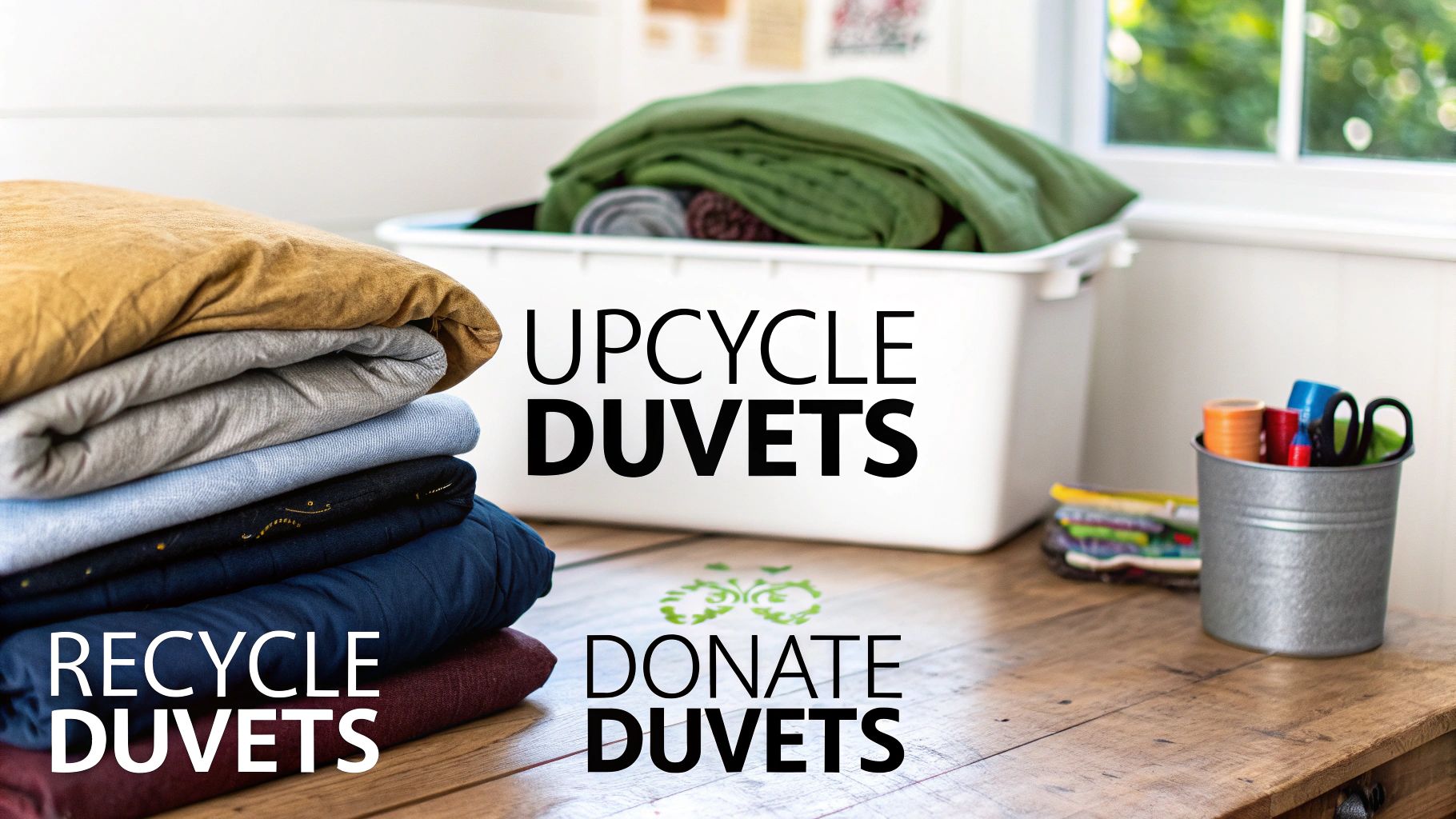
That bulky old duvet tucked away in your cupboard is more than just clutter. Think of it as a bundle of potential waiting for a second life. The best options for what to do with old duvets are to recycle, donate, or upcycle them. A shocking number are simply thrown away, but choosing a more sustainable path is far easier than you might think.
Your old duvet has more potential than you think
Figuring out what to do with an old duvet can feel like a chore, but it is actually a brilliant opportunity to declutter your home responsibly. Instead of just sending it to a landfill, you can give it a new purpose. This helps your community, protects the environment, and might even save you a bit of money. It is surprising just how useful old bedding can be.
The scale of textile waste is genuinely staggering. In UK homes, an astonishing 331,580,000 items of unused home textiles are just sitting idle, not touched even once in the last year. On top of that, research shows that 22% of people admit to regularly tossing unused textiles straight into the household bin, which is a huge missed chance for reuse. Giving your duvet a second chance is a small act with a really big impact.
Making a sustainable choice
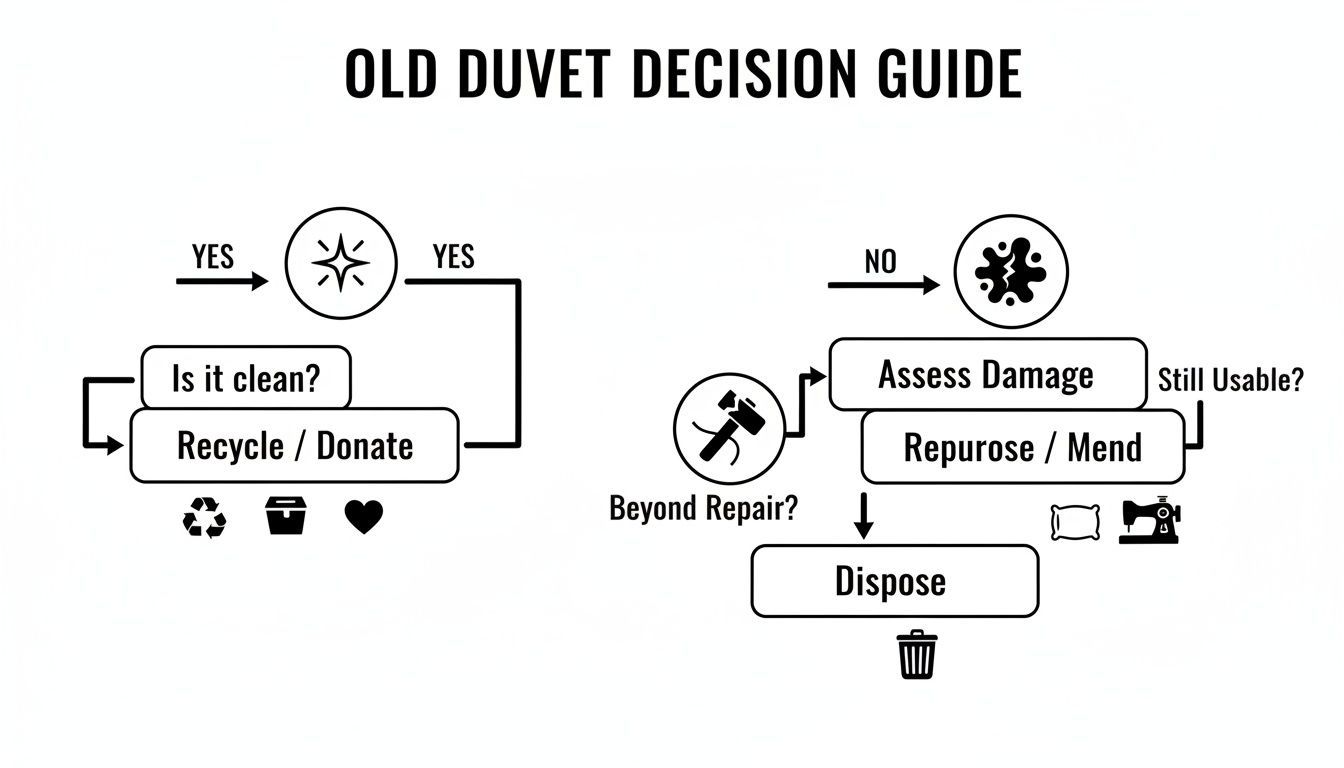
So, where do you start? The first step is to quickly check your duvet's condition. Is it clean and gently used, or has it seen better days? This simple check will point you toward the best option, whether that is finding it a new home or transforming it into something completely new.
This simple decision guide can help you quickly figure out the best path forward.
Here is a quick summary to help you decide at a glance.
Quick guide: what to do with your old duvet
This table breaks down the best options for your old duvet based on its material and condition, helping you make a quick and informed decision.
| Duvet Condition | Best Option | Why It Works |
|---|---|---|
| Good (Clean, no stains) | Donate or Sell | Gives the duvet a second life, helping others and reducing waste. |
| Okay (Minor wear) | Upcycle/Repurpose | Perfect for creative projects like pet beds, draught excluders, or packing material. |
| Poor (Stained, damaged) | Textile Recycling | The materials can be recovered and used to make new products like insulation. |
Ultimately, cleanliness and condition are the most important factors in determining your duvet's next chapter. It is also helpful to know the difference between duvets and their covers, as this can help you better understand how to care for all your bedding and extend its life from the start.
How to responsibly recycle your old duvet
Trying to recycle a bulky old duvet might feel like a hassle, but once you know where to look, it is surprisingly straightforward. While you cannot just toss it in your regular household recycling bin, there are specific places that can give its materials a second life and keep it out of landfill. It is a fantastic way to make a real environmental difference right from your own home.
The first step is figuring out what your duvet is made of. The type of filling decides its recycling path, as different materials need to be processed in completely different ways.
Check the filling first
Before you start looking for a drop-off point, take a peek at the care label. Is your duvet filled with natural or synthetic materials? This one detail is crucial, as recycling centres have very specific rules for each type.
- Natural Fillings (Feather and Down): These are brilliant for recycling. The feathers can be professionally cleaned, sterilised, and used again in brand new bedding, as insulation, or even in fertilisers. Specialist textile recyclers love these materials because of their value.
- Synthetic Fillings (Polyester, Microfibre): These are a bit more complex but can absolutely be recycled. The fibres are typically shredded down and repurposed into things like building insulation, carpet underlay, or stuffing for cushions. To see how synthetics are used, you can learn more about what fleece fabric is made from.
Knowing what you have got saves you time and makes sure your old duvet ends up in the right place. There is nothing worse than a wasted trip to a centre that cannot take what you have brought.
Finding your local recycling point
Okay, so you know your duvet's composition. The next step is finding a facility that will actually accept it. Do not be tempted by those standard high street textile banks you see in supermarket car parks. They are usually not designed for something as bulky as a duvet. It could easily block the chute and create a real problem for the collection teams.
Instead, you have got much better options.
Your local Household Waste Recycling Centre (HWRC), often just called ‘the tip’, should be your first port of call. Most councils have dedicated facilities for textile recycling, but it is always smart to check their website or give them a quick call to confirm they take duvets.
Many councils now work with specialist companies to handle bulky textiles properly. A quick search on your local council's website for "textile recycling" or "duvet recycling" should give you clear, local instructions. You can also use handy online tools like the Recycle Now locator to find nearby facilities that accept bedding. A simple check beforehand makes the whole process a breeze.
Give your duvet a second life through donation
If your old duvet is still clean and in good condition, passing it on is a fantastic way to give it a new purpose and bring warmth to someone, or something, else. It is a simple action that frees up space at home while making a real difference. Honestly, it is one of the best solutions for what to do with old duvets that still have plenty of life left in them.
You might hit a snag at your local high street charity shop, though. Many cannot accept duvets, pillows, or other bedding due to strict hygiene rules and not having enough storage for bulky items. But do not let that put you off. Plenty of other places would be genuinely grateful for your donation.
The best places to donate your duvet
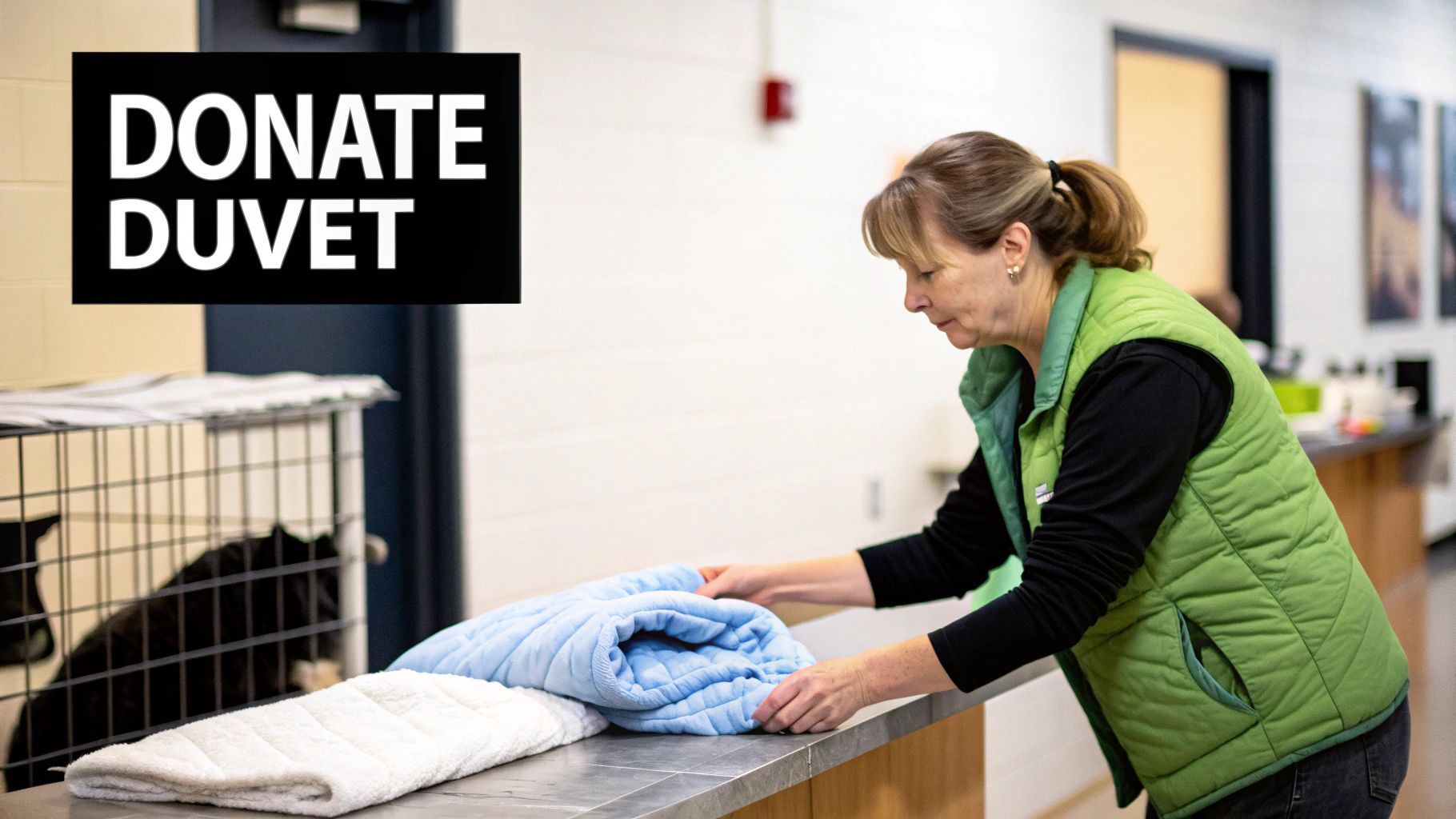
Animal shelters and rescue centres should be your first port of call. These places are nearly always looking for warm bedding to keep their animals comfortable and cosy, particularly through the colder months. Your clean, soft duvet could provide a huge amount of comfort to a rescued dog or cat waiting for its forever home.
It is always a good idea to give your local animal shelter a quick ring or send an email before you head over. This helps you check they are accepting donations and makes life easier for their small, often volunteer-run, teams.
Beyond the animal rescues, there are a few other local options worth exploring.
- Homeless Shelters: Some organisations that directly support people experiencing homelessness may accept clean duvets. Their policies can differ quite a bit, so it is vital to contact them first to see what they need.
- Local Community Groups: Have a look at online community noticeboards or local social media groups. You can often offer a duvet directly to someone in your area who needs it, which means it goes straight to a new home.
If you are ready to donate, finding local drop-off locations for charities is a great next step. A quick search can point you towards places that are actively looking for the very things you no longer need.
How to prepare your duvet for donation
A little bit of prep work goes a long way in making sure your duvet is ready for its new home. The most crucial step is to wash it thoroughly, following the instructions on the care label. It must be perfectly clean and, just as importantly, completely dry to prevent any risk of mould.
Once it is fresh and dry, give it a final check for any major rips or stains. A bit of light wear and tear is usually fine, especially for an animal shelter, but the duvet should still be in decent condition. This thoughtful approach to donating fits perfectly with the process of decluttering your bedroom in a mindful and generous way. Finally, fold it up neatly and pop it in a clean bag to make it easy for the charity to handle when you drop it off.
Creative ways to upcycle your old duvet
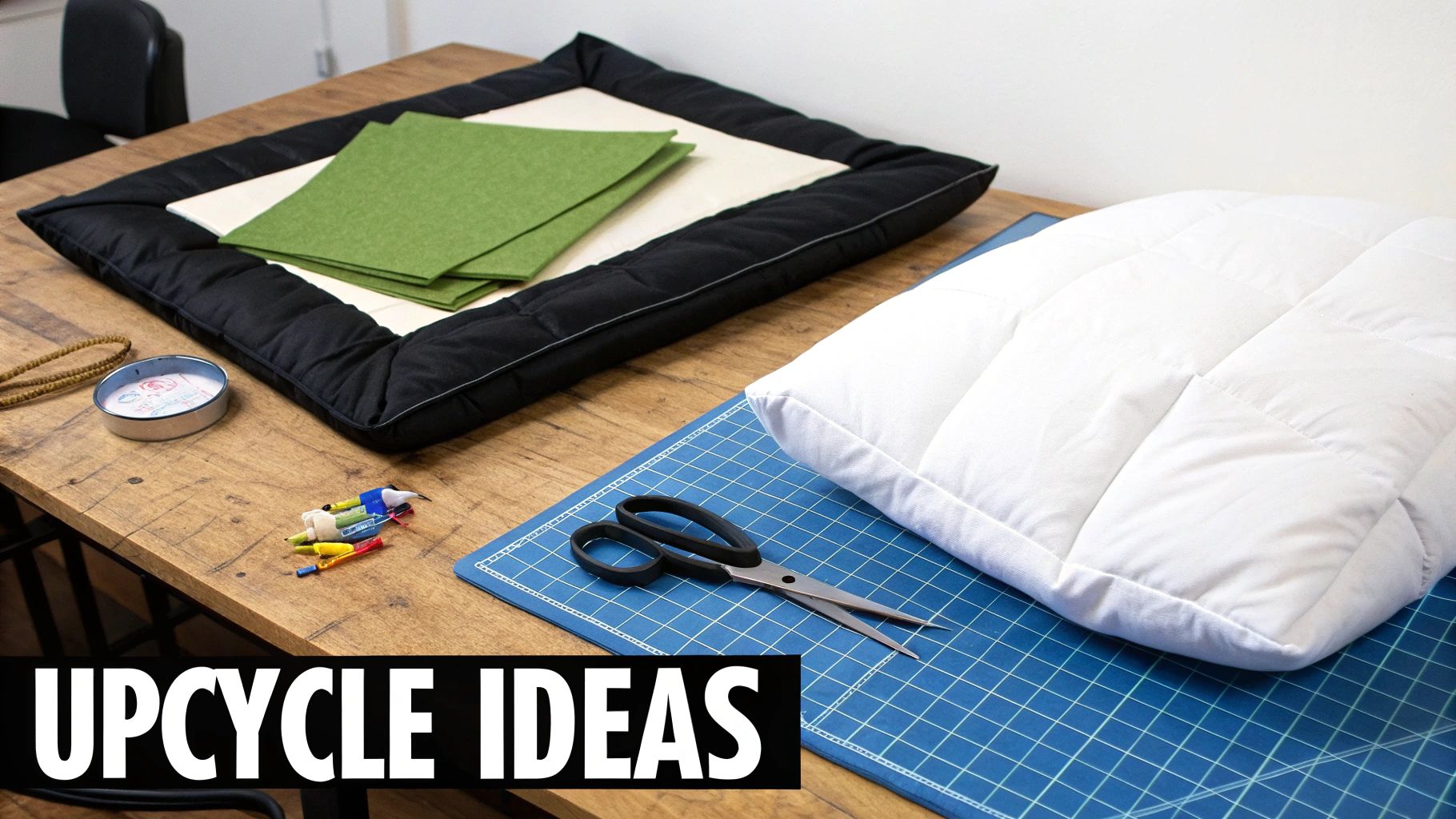
So, you are ready to get your craft on? Instead of letting that old duvet clog up a cupboard, you can breathe new life into it, transforming it into something genuinely useful and charming for your home. An old duvet is really just a big bag of soft filling and fabric, which is a goldmine for a weekend project that saves you money and keeps waste out of landfill.
The best part is that these ideas are surprisingly simple and do not require you to be a sewing expert.
Just one tip before you start. Give the duvet a good wash and make sure it is bone dry. Working with clean, fresh materials is always a much nicer experience. If you are cutting into a synthetic duvet, it is also a good idea to work somewhere with good airflow, as the fine fibres can get a bit fluffy.
Right, let us get stuck in.
Make a cosy bed for your pet
Honestly, one of the easiest and most rewarding things you can do is turn that old duvet into a plush, comfortable bed for your furry best mate. Even a single duvet provides more than enough material for a really generous dog or cat bed. This gives them a soft spot to curl up that already has your familiar, comforting scent on it.
Making one is incredibly straightforward.
- Measure and Cut: First, decide how big you want the bed to be. Cut two identical pieces of fabric from the old duvet cover itself or another sturdy material you have lying around.
- Fill it Up: Next, cut a section of the duvet filling to fit inside your new cover. Do not be shy here. You can stack a few layers to make it extra plump and supportive.
- Sew it Shut: Place the filling between your two fabric pieces and sew around the edges, but leave a small gap. Turn it the right way out through the gap, and then hand-stitch the opening closed.
And that is it. You have just made a custom bed your pet will absolutely adore, and it cost you next to nothing.
Create practical household helpers
The potential for your old duvet does not stop at pet beds. That soft, squishy filling is perfect for a whole range of handy items that can make your home a bit more comfortable and organised. If you are looking for other ways to spruce up your space without breaking the bank, you can find more great tips for affordable bedroom decor that will go perfectly with your handmade creations.
Here are a few more projects to get you inspired.
- Plush Floor Cushions: These are brilliant for creating extra seating in the living room or a comfy reading nook in a kid's bedroom. All you need to do is make a simple cushion cover and stuff it generously with chunks of the duvet filling.
- Draught Excluders: This is a fantastic way to keep your home warmer and knock a bit off your energy bills. Just cut a long, thin tube of fabric, stuff it tightly with duvet filling, and sew the ends shut. Pop it at the bottom of a door and say goodbye to chilly breezes.
- Protective Padding: The wadding is brilliant for protecting delicate items when you are moving house or putting things into storage. It functions much like professional removal blankets, keeping your valuables safe from knocks and scrapes.
- Garden Kneeling Pad: Save your knees when you are weeding. Create a small, durable pad using a waterproof or tough fabric for the cover and fill it with a thick, compressed layer of duvet material.
With just a bit of imagination, that old duvet can find a whole new purpose and serve you well for years to come.
If you are looking for a quick overview of what you can create, this table breaks down a few popular ideas.
Simple upcycling ideas for old duvets
| Project Idea | Difficulty Level | Primary Use | Extra Materials Needed |
|---|---|---|---|
| Pet Bed | Easy | Comfort for dogs or cats | Sturdy fabric for the outer cover, thread |
| Floor Cushions | Easy | Extra seating, reading nooks | Fabric for covers, zipper or buttons (optional) |
| Draught Excluder | Easy | Blocking cold air from doors/windows | Long strip of fabric, thread |
| Garden Kneeler | Medium | Protecting knees during gardening | Waterproof/durable fabric, thread |
| Packing Padding | Easy | Protecting fragile items during a move | None, just use sections as they are |
| Beanbag Filler | Easy | Topping up a saggy beanbag chair | None, just add the filling |
As you can see, you do not need a massive toolkit or years of experience to get started. Most of these projects can be done in an afternoon with things you likely already have at home.
How to prepare your duvet for its next chapter
Before your old duvet heads off on its next adventure, whether donation, recycling, or a creative upcycling project, a little prep work goes a long way. Taking a few simple steps ensures it is clean, hygienic, and ready for whatever comes next. It is a small effort that makes a huge difference.
The first, and most important, step is to give it a thorough clean. Nobody wants a pre-loved duvet that is not fresh, and if you are getting crafty, it is just safer to work with clean materials. The main hurdle here is usually the sheer size of the thing.
Most standard washing machines can just about manage a single duvet. But once you get into double, king, or super king sizes, you are often pushing your machine to its limits. Squeezing it in too tightly means it will not get a proper wash, and you could even risk damaging the drum. If there is still a bit of room for it to move around, you should be fine.
Washing and drying at home
If you have got the space in your machine, a good wash is essential, particularly if it is heading to a charity.
- Check the Label First: This is non-negotiable. The care label is your guide to the right temperature and cycle, telling you exactly what the duvet can handle.
- Go Gentle: A delicate cycle with a mild, non-bio detergent is the way to go. It will get the job done without being too harsh on the fabric or the filling.
- Dry, Dry, and Dry Again: This part is absolutely critical. Tumble dry it on a low heat and throw in a couple of dryer balls, or even clean tennis balls, to help break up clumps and re-fluff the filling. You need it to be 100% dry through and through to stop any chance of mould or mildew setting in.
If your machine is not up to the task or the label says "dry-clean only," do not risk it. Your best bet is a trip to the local launderette, where their industrial-sized machines will make light work of it.
Inspect and store correctly
Once your duvet is spotlessly clean and bone dry, give it a quick check. Look for any major rips, tears, or stains that just would not shift. This little inspection helps you decide its fate. A duvet in great nick is perfect for donation, whereas one showing a bit of wear and tear is a prime candidate for your next DIY project.
Not planning to deal with it right away? Storing it properly is key to keeping it fresh. You can find some great tips in our guide to bedding bag storage. A breathable cotton bag is ideal, as it keeps the dust off while letting air circulate, preventing that musty smell from developing.
Let us be honest, sometimes a duvet is just done. It has seen better days, and no amount of washing or mending is going to bring it back. While we are big fans of giving items a second life, there are times when an old duvet is simply too worn out, stained, or damaged to be donated or repurposed.
When you have exhausted all the other avenues, the only option left is to dispose of it. But even then, there is a right way and a wrong way to go about it.
Tossing a duvet straight into your wheelie bin is a real no-go. For one, it is a space hog. A single duvet can easily take up the room of several bags of regular rubbish. More importantly, textiles are a massive contributor to landfill. Once they are buried, they take an incredibly long time to break down.
Getting in touch with your local council
So, what is the best plan? Your first port of call should always be your local council. Most councils across the UK provide a bulky waste collection service specifically for those larger household items that will not fit in the bin. This is, without a doubt, the most responsible way to say goodbye to a duvet that is beyond saving.
Arranging a collection is usually pretty simple. Just pop onto your local council's website, and you will find all the information you need, including how to book and whether there is a small charge.
The process is generally straightforward and follows a few simple steps.
- Book Your Slot: You will usually need to book a specific collection day, which you can often do online or with a quick phone call.
- Tell Them What You Have Got: Be ready to specify the items you need collecting, in this case, one or more duvets.
- Prepare for Collection Day: The council will let you know where to leave the duvet for their crew to pick it up, which is typically just outside your property on the designated day.
Using a proper bulky waste service means your old duvet will be handled correctly by waste management professionals. It is the final, responsible step in closing the loop on its lifecycle.
Your old duvet questions, answered
We have covered a lot of ground, from recycling to upcycling. But when it comes to the nitty-gritty of getting rid of an old duvet, you might still have a few questions lingering. Let us clear those up so you can make your final choice with confidence.
Can I just put an old duvet in a textile recycling bin?
That is a definite no, in most cases. The textile banks you see dotted around supermarket car parks are really just for clothes, shoes, and smaller fabrics. A big, bulky duvet can easily jam the chute, creating a real headache for the collection teams.
Your best bet is to check with your local council first. Many household waste recycling centres have dedicated skips for bedding, but it is always smart to confirm they actually take duvets before you make the trip. Some places can handle natural fillings like feathers but are not set up for synthetics, so a quick look at your council’s website will give you the right answer for your area.
Do animal shelters wash donated duvets?
It is a fantastic gesture to donate your old duvet to an animal shelter, but it is crucial to do a little prep work first. While some of the bigger rescue centres might have heavy-duty laundry facilities, many smaller, volunteer-run shelters simply do not. They count on donated items being ready to use right away.
As a rule of thumb, it is always best practice, and hugely appreciated, to wash and completely dry your duvet before dropping it off. This simple step means it is hygienic and can be put to immediate use, keeping a deserving animal warm and cosy.
Is it safe to cut up an old duvet for crafting?
Absolutely. Cutting up an old duvet for a new project is generally very safe. The main thing to watch out for is the mess, as those fine fibres from synthetic fillings can get everywhere.
We would suggest doing any cutting outdoors if you can, or at least in a well-ventilated room. Popping on a simple dust mask is also a good idea to avoid breathing in any of the finer particles. Once you have contained the filling inside its new cover, whether that is a pet bed or a draught excluder, it is perfectly safe to have around your home.
At Morgan and Reid, we design bedding to give you years of comfort and style. When it is finally time for a change, we hope these tips help you find a worthy next chapter for your old duvet. Ready for a refresh? Explore our collection of irresistibly cosy comforters at https://www.morganandreid.com.
Share:
Sleep Soundly with an Anti Allergy Duvet: A UK Guide
How to Layer Bedding: Create a Cosy, Designer-Style Bed