


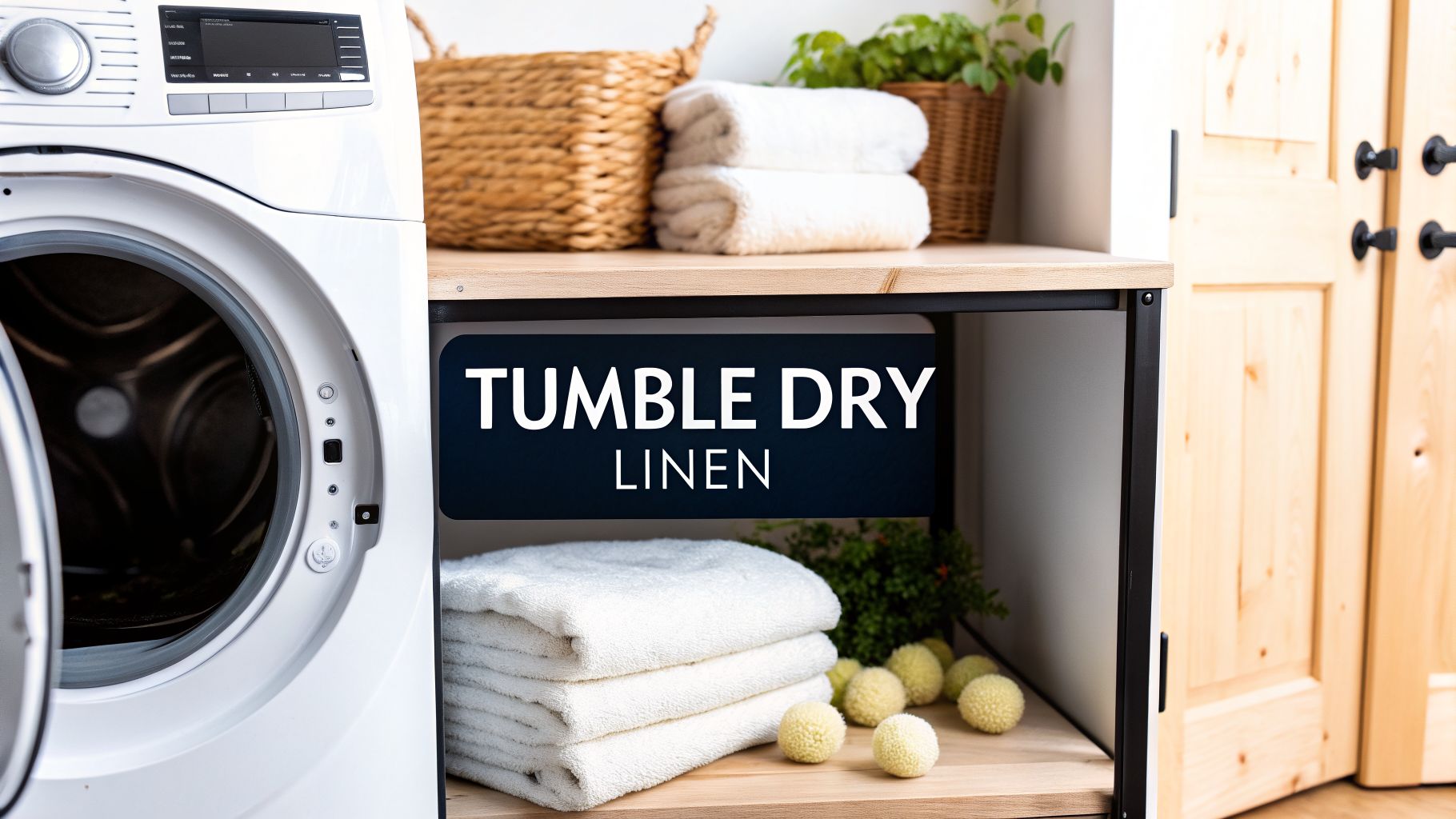
Let's clear up a common question straight away: can you tumble dry linen? The answer is a resounding yes. In fact, if you love that incredibly soft, relaxed feel of well loved linen, a gentle tumble dry is your best friend. It’s the quickest way to get that signature cosy texture, which is far nicer than the slight stiffness you can get from air drying alone.

Why a Tumble Dryer Can Be Your Linen's Best Friend
The right drying method can transform your linen from simply clean to wonderfully comfortable. The tumbling motion is what works the magic, relaxing the natural fibres to create that soft, inviting texture that only gets better over time. It’s a simple way to care for your linen without a complicated laundry routine.
The most important thing to remember is to always use a low heat setting. This is absolutely key for protecting the fibres. High heat is the enemy of linen, as it can cause the fibres to constrict and shrink, sometimes by as much as 5 to 10%. Sticking to a low and slow approach keeps your linen perfectly soft and sized correctly.
When you get it right, the benefits are clear:
- Exceptional Softness: The tumbling action fluffs up the linen fibres, giving you a much softer result than just line drying.
- Fewer Wrinkles: The real trick is to pull your linen out when it's still slightly damp. A quick shake and the weight of the fabric will help most of the wrinkles fall out naturally.
- Sheer Convenience: It's a lifesaver. On a rainy day or when you need your favourite bedding ready in a hurry, the dryer is an efficient and effective solution.
For a quick reference, here’s a simple breakdown of how to approach tumble drying your linen items.
Tumble Drying Linen at a Glance
| Action | Why It Matters | Best Practice |
|---|---|---|
| Use Low Heat | Prevents the natural fibres from shrinking and becoming brittle. | Select the ‘delicate’ or ‘low heat’ setting on your dryer. |
| Don’t Overcrowd | Gives items space to tumble freely, reducing wrinkles and ensuring even drying. | Dry linen in small batches. Give sheets and duvet covers plenty of room. |
| Remove While Damp | Prevents over drying, which can make linen stiff and cause deep set wrinkles. | Aim for about 95% dry. The linen should feel cool to the touch. |
| Use Dryer Balls | Wool dryer balls help separate items, improve airflow, and soften the fabric naturally. | Toss two or three dryer balls in with your load. |
Following these simple guidelines will help you achieve that perfect, soft to the touch finish every time without damaging the fabric.
Of course, the performance of any fabric comes down to its inherent qualities. If you’re curious about how linen stacks up against other options, our guide to choosing the best bed sheets material can help you explore your choices.
How to Prepare Your Linen for the Dryer
Getting that perfectly soft, tumble dried finish for your linen starts well before you ever press the 'on' button. A few thoughtful preparations can make all the difference, turning what could be a laundry mishap into beautifully cared for linen. These checks are simple, but they are the secret to success for both your bedding and clothing.

Before you do anything else, get into the habit of checking the care label. Honestly, those tiny symbols are your single best source of truth. A square with a circle inside gives you the green light for the tumble dryer, while a cross through it is a clear sign to air dry instead. If you want a deeper dive into these symbols, you can find more detail in our complete guide on how to wash your linen properly.
Next, give your dryer a quick once over. A crucial but often overlooked step is cleaning the lint trap. Doing this before every load not only helps your machine run efficiently but is also a key fire safety measure.
Set Your Linen Up for Success
Once you've confirmed your linen is suitable for the dryer and your machine is ready to go, it’s time to prep the laundry load itself. These small actions have a surprisingly big impact on how your linen will look and feel.
Don't underestimate the power of a good shake. Linen, especially larger pieces like duvet covers, can get quite tangled and bunched up in the wash. Giving each item a firm shake helps unravel it and smooth out the worst of the creases before it even sees the heat. This one simple motion can significantly reduce wrinkles later on.
Always sort your laundry properly. Avoid mixing lightweight linen with heavy duty items like denim or thick towels. Heavier fabrics take much longer to dry, and their rougher texture can cause friction that damages delicate linen fibres.
Finally, resist the urge to cram everything in. Your linen needs plenty of room to tumble freely in the drum. Proper air circulation is what ensures even, efficient drying and, most importantly, fewer wrinkles. A lighter load truly leads to a softer, smoother finish.
Choosing the Best Dryer Settings for Soft Linen
Getting the dryer settings right is the secret to protecting your linen's natural fibres while bringing out that wonderfully soft, lived in feel. This is the crucial step that transforms a damp linen sheet or shirt into something truly delightful to touch and wear.

Go Low and Gentle, Every Time
When it comes to linen, your default should always be "low and slow." High heat is the absolute enemy, causing those beautiful plant fibres to constrict, shrink, and eventually turn brittle. To avoid this, always select a low or medium heat setting.
Pair that low heat with a gentle or delicate cycle. The slower tumbling is much kinder on the fabric, preventing the unnecessary stress and friction that a vigorous cycle can inflict. You’re aiming to gently relax the fibres, not beat them into submission.
Using low heat is essential. It protects the fabric's integrity, prevents any drastic shrinkage, and is the key to ensuring your linen gets softer and more beautiful with every wash.
If your dryer has advanced options like a specific delicates programme or an air dry function, even better. And if you’re ever stumped by the hieroglyphics on your machine, our guide to understanding fabric care symbols is a great resource to have on hand.
A Natural Trick for Extra Softness
For an extra touch of softness, I always recommend throwing a few wool dryer balls into the drum. They’re a fantastic, chemical free alternative to dryer sheets and work wonders.
- Better Airflow: They get in between items and stop everything, especially large duvet covers, from tangling into one big, damp ball.
- Quicker Drying: Because the air can circulate more freely, your linen dries faster and more evenly, saving both time and energy.
- Natural Softening: As they bounce around, they gently agitate the fibres, making them noticeably softer without any added chemicals.
This simple trick makes a huge difference in achieving that signature, relaxed linen texture. For something plush like our Snuggle Comforters, a low heat tumble at around 40-50°C for 30 to 45 minutes usually gives a perfect, wrinkle free finish that locks in the warmth. Especially in the UK, where a rainy day can make air drying impossible, this method also keeps your bedding hygienic and allergen free, a point noted by market analysts like those at Mordor Intelligence.
Common Mistakes to Avoid When Drying Linen
We’ve all had that moment of pulling laundry from the dryer only to find it’s not quite right. With a beautiful natural fabric like linen, a few common missteps can be the difference between soft, inviting sheets and a stiff, wrinkled mess. The good news is that these pitfalls are easy to sidestep once you know what to look out for.
By far, the most frequent mistake I see is simply over drying. It’s tempting to crank up the heat and let the cycle run until everything is bone dry, but this is exactly what makes linen feel harsh and causes those stubborn wrinkles to set in. Your goal should be to catch the items when they’re still slightly damp to the touch. This little trick makes a world of difference and makes ironing so much easier, if you even need to do it at all.
Resisting Heat and Overloading
Another classic error is cramming too much into the machine. Linen needs room to move and breathe as it tumbles. A crowded drum traps moisture and prevents air from circulating, resulting in a tangled bundle of unevenly dried, creased fabric. For the best results, always stick to smaller, more manageable loads.
You should also fight the urge to use high heat for a quicker drying time. While it might save a few minutes, high temperatures are the fastest way to cause long term damage. In fact, research shows that high heat can weaken linen fibres, causing up to 15% strength loss after just 50 cycles. Thanks to initiatives like 'Turn to 30', modern dryers are more efficient than ever, and they can successfully sanitise bedding by killing 99% of bacteria even on cooler settings. You can dive deeper into the science behind this with UK textile research examining the impact of modern laundry habits.
A simple rule to remember is that heat is linen's enemy. Consistently using high heat will break down the natural fibres over time, leading to shrinkage and a shorter lifespan for your cherished items. Our guide on whether linen shrinks in the wash offers more detail on this.
Of course, caring for your linen also means caring for your appliances. Neglecting basic dryer maintenance is a surprisingly common oversight that can have serious safety implications. Taking a moment to learn how to prevent dryer fires by keeping your machine clean is just as important as choosing the right setting.
When You Should Air Dry Your Linen Instead

As much as I love the convenience of a tumble dryer for my everyday linen sheets and towels, it’s not always the best choice. For some items, taking the time to air dry is the only way to go, preserving their beauty and integrity for years to come.
There are a few clear instances where the tumble dryer should be strictly off limits. Think of it as a golden rule for your most precious linen pieces.
- Linen with Embroidery or Lace: The rough and tumble of a dryer, even on its most gentle setting, can be a disaster for delicate needlework. It can easily snag threads, pull at lace, and ruin intricate patterns. Air drying is the only safe bet here.
- Garments with Special Finishes: Some linen is blended or treated in a way that makes it unsuitable for high heat. If the care label says "Do Not Tumble Dry," believe it. It's there for a reason, and ignoring it can lead to permanent damage.
The Case for Clothes-Line Freshness
Beyond protecting delicate items, there's a simple, old fashioned charm to air drying. On a bright, breezy day, hanging your linen outside is not just better for the environment, it’s also kinder to your energy bills.
Don't have a garden? No problem. Drying linen indoors on a clothes airer works perfectly well, especially when placed in a well ventilated room or near an open window. If you're worried about creating damp air, running a dehumidifier nearby is a great trick. It will speed up the drying time considerably and keep the room from feeling humid.
Ultimately, deciding whether to tumble dry or air dry comes down to balancing convenience against careful preservation. The dryer offers that lovely softness in a hurry, but sometimes the slow, gentle approach of air drying is exactly what your best linen needs to truly last.
Frequently Asked Questions About Drying Linen
Tumble drying linen for the first time can feel a little daunting, we get it! You've invested in a beautiful natural fabric, and you want to care for it properly. Let’s clear up a few of the most common questions we hear, so you can feel completely confident every time you do the laundry.
Will Tumble Drying Linen on Low Heat Still Cause Shrinkage?
Let’s be upfront: you might notice a tiny bit of shrinkage, around 2-3%, the first time you wash any natural fibre. That's perfectly normal as the fibres settle into their new life with you.
The real enemy of linen, however, isn't the tumble dryer itself, it's high heat. As long as you stick to a low or delicate heat setting every time, your linen will keep its intended size and shape for years to come. Just make that high heat button a no go zone.
How Can I Get Wrinkles Out of Linen Without an Iron?
This is one of my all time favourite tricks for linen care, and it saves so much hassle. The secret is to catch your linen before it’s fully dry. Pull your items out of the tumble dryer while they still feel just a little damp to the touch.
Once they're out, give each piece a good, firm shake to loosen things up. Then, you can either hang them or lay them flat, using your hands to smooth out any large creases. Gravity takes care of the rest as they finish air drying, letting most wrinkles simply fall away. This method works brilliantly for bedding, and putting a slightly damp linen duvet cover straight back onto the bed gives you a beautifully smooth, relaxed finish.
For any particularly stubborn wrinkles that just won't give up, a simple water spray is your best friend. Lightly mist the creased area, smooth it out with your hand, and let it dry. The moisture helps the linen fibres relax and release the fold.
Are Wool Dryer Balls Better Than Dryer Sheets for Linen?
Without a doubt. We always recommend choosing wool dryer balls over single use dryer sheets, especially when you're drying natural fabrics like linen.
Wool balls are a fantastic, chemical free alternative. They work by bouncing around in the drum, improving air circulation so your linen dries faster and more evenly. This gentle tumbling action also naturally softens the fabric. Dryer sheets, on the other hand, can coat linen fibres with a waxy residue, which builds up over time and reduces the fabric's wonderful natural absorbency and breathability.
At Morgan and Reid, we believe a home feels truly special when it’s filled with beautiful, practical textiles. From our irresistibly cosy Snuggle Comforters to our timeless linen essentials, every piece is designed to bring more comfort and style into your life. Discover the collection at https://www.morganandreid.com.
Share:
Your Guide to Styling Blue Gingham Bedding
Can You Wash Towels with Clothes? A UK Laundry Guide