


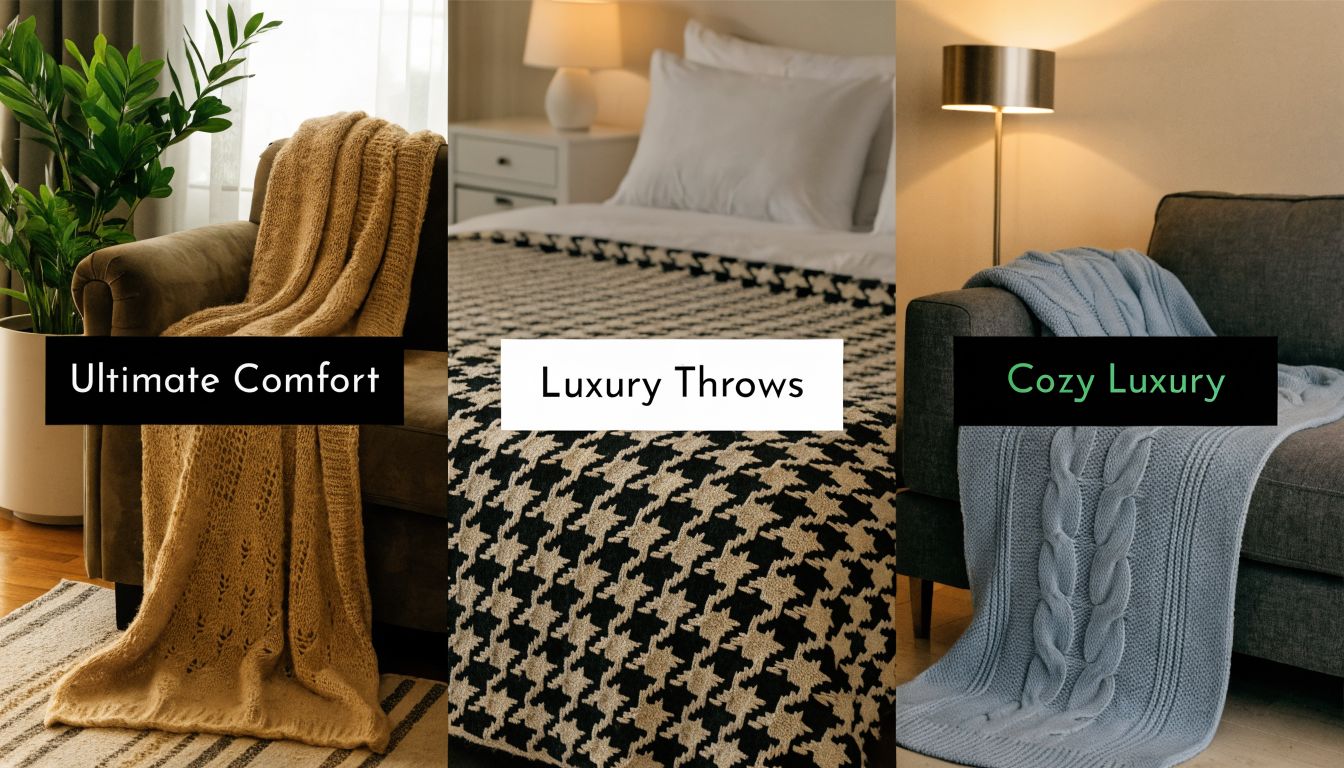
You know the moment. The kettle has just boiled, the house is finally quiet, and you’re ready to sit down for ten minutes that somehow turn into an hour. You reach for a throw blanket, hoping for warmth, softness, and that settled feeling that helps you switch off.
Sometimes a throw does that straight away. Sometimes it looks lovely on the chair but feels scratchy, too heavy, too flimsy, or awkward to wash. That’s usually the difference between an ordinary throw and a well chosen luxury one.
Luxury throws blankets aren’t only about appearance. They change how a room feels and how you feel in it. A good one can soften the edge of a busy day, add warmth without making you overheat, and make a sofa, bed, or reading chair feel more inviting. For families, they can also be practical. They’re the layer you grab during a film, fold at the end of the bed, or keep close for chilly mornings.
The nicest part is that “luxury” doesn’t have to mean fussy. It often means the opposite. Better fibres, better finishing, and better comfort in real life.
The Simple Magic of a Truly Luxurious Throw
A luxurious throw often earns its place in the home in quiet ways. It might be the one you pull over your knees while answering late emails at the kitchen table. It might live on the arm of the sofa and end up wrapped around a child who’s fallen asleep before bedtime. It might be the layer that makes a guest room feel thoughtful rather than just tidy.
That’s why the best luxury throws blankets don’t feel like extras. They feel useful, comforting, and ready.

A friend once told me she didn’t understand expensive throws until she borrowed one after a long winter walk. Her old blanket was warm enough, but it felt stiff and a bit clammy after a while. The better throw felt light, smooth, and easy to tuck around her shoulders. That tiny difference changed the whole evening. She wasn’t adjusting it every few minutes. She could just relax.
Comfort you notice straight away
A good throw works on two levels.
First, there’s the immediate feeling. The touch matters. Softness matters. So does weight. A throw that drapes neatly and sits comfortably around the body feels far more soothing than one that slides off or bunches up.
Then there’s the atmosphere it creates in the room. Folded at the end of the bed, it adds a sense of care. Draped over an armchair, it makes the space feel warmer before anyone even sits down. If you enjoy a polished, layered bedroom, ideas like a hotel style bed set-up often rely on details like this.
A throw should never feel like decoration you’re afraid to use. The nicest ones look elegant and invite touch.
More than a finishing touch
Many people think of throws as styling pieces first. In reality, their greatest value is everyday comfort. They help with those in between moments when a duvet feels too much, but the air still feels cool. They’re easy to move from room to room. They soften hard edges in modern interiors. They give you a little comfort without much effort.
That’s the simple magic. A luxury throw doesn’t shout for attention. It makes home feel better.
What Makes a Throw Blanket Truly Luxurious
Price alone doesn’t tell you much. Some throws are costly because of branding or presentation. Others feel wonderful for years because the fibre, weave, and finishing were chosen with care. That’s the difference worth paying attention to.
In the UK and across Europe, interest in premium home textiles is clearly established. Europe, including the UK, holds a 27% share of the global throw blankets market, which is valued at USD 4.32 billion in 2026, according to Business Research Insights on the throw blankets market. That tells us people aren’t only buying throws for warmth. They’re choosing them for design, feel, and quality.
Material comes first
The fibre is the heart of the throw. It affects softness, breathability, drape, warmth, and how the blanket ages with use. A throw made from fine natural fibres usually feels smoother and more comfortable than one made from coarse yarns, even before you know what it’s made from.
That’s why it helps to start with the question, “How do I want it to feel?” rather than “What colour should I buy?”
For example, some people want a light, airy layer for evenings on the sofa. Others want a throw with a little body, something that sits neatly at the end of the bed. If you already care about how your bed linens feel against the skin, the same thinking applies here. Thoughtful layering with luxurious bed linens and a well made throw creates a more comfortable room overall.
Weave and finish change the experience
Two throws can use similar fibres and feel completely different. The weave controls that.
A tight weave often feels smoother and looks cleaner. A looser or brushed finish can feel cosier and softer, but it may also show wear sooner if the quality isn’t there. Knit throws can feel comforting and relaxed, while woven throws often hold their shape better and look a bit more structured.
Look at the edges too. A neat hem, tidy fringe, and even stitching show care. These details affect how the throw drapes and how well it stands up to regular use.
Practical rule: If a throw feels good only when you touch one small corner in the shop, it may not feel good in daily life. Check the body of the fabric, the edges, and the back as well.
Luxury is comfort without fuss
The most convincing sign of luxury is ease. The throw sits well, feels good quickly, and doesn’t demand constant adjusting. It suits the room, but it also suits your life.
A luxurious throw should offer a mix of these qualities:
- Soft hand feel, so it feels pleasant against bare arms and legs
- Balanced warmth, so you feel cosy rather than trapped
- Good drape, which helps it sit neatly on furniture and around the body
- Strong finishing, so it keeps its shape and appearance
- Practical care, especially if it will be used every day
That’s what turns a simple blanket into one of the most useful comfort pieces in the home.
A Guide to the Finest Throw Materials
Material is the part you feel first, and remember longest. It decides whether a throw lands on your shoulders like a soft layer of warmth, stays breathable during a long evening on the sofa, or ends up folded for display because it never feels quite right in real life.
A useful way to choose is to start with the moments the throw needs to serve. Quiet reading. Family film night. A cool bedroom in winter. A house with children, pets, or someone who reacts badly to dust and rough fibres. Once you know the job, the right material becomes much easier to spot.

Cashmere for light warmth and softness
Cashmere is prized for a reason. According to this material guide covering throw dimensions and fabric traits, fine cashmere fibres are extremely slender, which helps explain why a good cashmere throw can feel warm without feeling heavy.
The sensation is the luxury here. Cashmere tends to settle against the skin with very little resistance, almost like warm air held in fabric form. If bulky blankets make you fidget, cashmere often feels easier to live with.
It suits:
- Evening use close to the skin
- Bedrooms and reading corners
- Anyone who wants warmth without much weight
The drawback is practical. Cashmere usually needs gentler care, and busy family homes may prefer a fibre that can handle more washing and more rough-and-tumble use.
Virgin wool for breathable comfort
Virgin wool has a different personality. It usually feels a little drier and more grounded in the hand, with a comforting sort of warmth that builds gradually rather than instantly. The same guide notes that wool can absorb moisture while still feeling comfortable, which helps explain why it often works so well in cooler, slightly damp homes.
That balance matters. Some throws warm you up but soon feel stuffy. Good wool behaves more like a well-insulated knit jumper. It holds warmth, yet still lets the body breathe.
Virgin wool is often a strong choice for:
- Living rooms that cool down in the evening
- Layering across the foot of the bed
- Homes that need comfort and durability together
If anyone in your home is texture-sensitive, check the finish carefully. Fine wool can feel smooth and cosy, while coarser wool can feel scratchy on bare arms or legs.
Cotton and linen for relaxed layering
Cotton is often overlooked in conversations about luxury, but that misses its quiet strengths. High quality cotton feels familiar in the best way. It is breathable, easy to live with, and often kind to skin that dislikes itchier fibres.
For modern families, that matters more than people admit. If a household includes children with sensitive skin or adults who prefer washable, lower-fuss layers, cotton can be a smart luxury choice rather than a compromise.
Linen creates a different experience. It feels cooler, cleaner, and a little crisp at first touch. Over time, good linen often softens while keeping that airy character, which makes it lovely for warmer bedrooms, summer layering, or houses that already run warm.
Choose cotton or linen if you want:
- Breathable, year-round layering
- A lighter, less cocooning feel
- Materials that are often easier for sensitive households
Premium fleece and modern synthetics
Synthetic fibres deserve a fairer reputation than they sometimes get. A well-made fleece throw can feel soft, warm, and reassuringly easy to care for, which is why many families reach for it every day instead of saving it for special occasions.
Construction makes the difference. The pile, knit, and finish all affect whether fleece feels plush or overly slick. If you want a clearer sense of how fleece polyester fabric for interiors performs, that guide explains why some versions feel dense and cosy while others feel thin or shiny.
This category can also be helpful for allergy-conscious homes. Tightly made, washable synthetic throws can be simpler to clean regularly, which may suit households trying to reduce dust, pet hair, or pollen lingering in soft furnishings. If you want a closer look at what fleece fabric is and how it feels, Morgan & Reid offers a useful explanation alongside its factual mention of fleece in its Snuggle Comforters range.
Premium fleece often works well for:
- Busy households
- Children’s rooms and family sofas
- Anyone who wants soft texture with straightforward care
Faux fur, alpaca and silk
These materials are more distinctive, and each creates a different kind of comfort.
Alpaca is often loved by people who want softness with a slightly lighter, smoother feel than many wool throws. It can feel gentle and airy, with a soft glow rather than a fluffy finish. For some households, alpaca is also worth exploring because it is sometimes better tolerated than traditional wool, though sensitivity still varies from person to person.
Faux fur is about depth and drama. A good one feels dense, supple, and inviting, almost like a winter coat translated into home form. It can be wonderfully cosy, but the heavier pile means it may also trap more dust if not cleaned regularly.
Silk is the outlier. It feels cool, fluid, and refined rather than warming. As a full lounging throw it is less common, but for decorative layering or a bedroom that needs a light, elegant touch, silk has a beauty that few other fibres can match.
| Luxury Throw Material Comparison | Feel & Texture | Warmth Level | Best For | Care Level |
|---|---|---|---|---|
| Cashmere | Silky, featherlight, smooth | High without bulk | Evenings, bedrooms, refined layering | Higher care |
| Virgin wool | Dry, breathable, structured | Warm and balanced | Cool rooms, everyday luxury | Moderate care |
| Cotton | Soft, familiar, light | Light to medium | Warmer homes, casual layering | Easier care |
| Linen | Crisp, airy, relaxed | Light | Decorative layering, summer use | Moderate care |
| Premium fleece | Plush, cosy, smooth | Medium to warm | Family homes, easy everyday use | Easier care |
| Alpaca | Soft, light, slightly glossy | Warm | Gentle luxury, elegant lounging | Moderate care |
| Faux fur | Deep pile, dramatic texture | Warm | Statement styling, snug corners | Easier to moderate |
| Silk | Sleek, cool, fluid | Light | Decorative use, refined bedrooms | Higher care |
A luxurious throw should feel good in the life you live. The best material is the one that gets used, washed when needed, and reached for without hesitation.
Finding the Perfect Size and Weight
A throw can be made from beautiful material and still disappoint if the size feels wrong. Too small, and it looks skimpy on the furniture and barely covers your legs. Too large, and it can swallow a chair or slip off the sofa in a heap.
The right size depends on where you’ll use it most.
How size changes the look
For an armchair, a smaller throw often looks neater. You want enough fabric to soften the chair and wrap around your lap, but not so much that it pools heavily on the floor. On a sofa, a larger throw gives more flexibility. It can be folded over the arm, draped across the back, or used properly when someone wants to curl up under it.
On a bed, most throws are there to layer rather than fully cover. They add colour, texture, and an inviting finish. A throw that looks generous at the foot of the bed usually feels more luxurious than one stretched tight across the width.

A simple way to choose
Use the room and the main purpose as your guide.
- For a reading chair, choose a throw that can cover your lap and tuck around the arms without trailing too much
- For a sofa, go larger if two people might share it or if you like a loose, relaxed drape
- For the bed, think visually first. You want it to sit comfortably at the foot of the bed or across one corner
- For guest rooms, choose a size that looks welcoming and is easy for visitors to understand and use
A throw shouldn’t fight the furniture. It should sit naturally.
Why weight matters just as much
People often focus on dimensions and forget weight. Yet weight affects nearly everything you notice when living with a throw. A lighter throw can feel airy, elegant, and easy to move from room to room. A heavier one can feel grounding and substantial, especially in winter.
Weight also changes drape. Lightweight cashmere tends to float and fold softly. Chunkier wool and dense fleece usually create more presence, which can be lovely on a bed or larger sofa.
Quick check: Hold the throw at one end if you can. A quality throw should fall with some grace. If it feels stiff or awkward, it may never look quite right in your room.
Match size and weight to real use
The easiest mistakes happen when shoppers buy with only the eye.
A chunky knit may look perfect in a styled photo, but if you want something to use while reading, it may feel bulky on your knees. A very fine throw may look elegant at the end of the bed, but if your house runs cool, it may not give enough comfort during everyday use.
Ask yourself:
- Will I mostly display it or use it daily
- Do I want it to cover one person or more than one
- Will it live on a chair, sofa, or bed
- Do I prefer light layering or a weightier feel
Those answers usually lead you to the right throw more quickly than the label does.
How to Spot Quality and Craftsmanship
A throw can feel soft in the shop and still wear poorly at home. That’s why craftsmanship matters. The little details often tell you more than the fibre name on the label.
When you know what to look for, it becomes much easier to separate a throw that’s merely attractive from one that will keep its beauty and comfort.

Start with what your hands can tell you
Run your hand across the surface. Does the texture feel even, or are there rough patches? If the throw is brushed or fluffy, does it feel dense and soft, or loose and synthetic in a harsh way?
Then lift it slightly. Quality often shows in the balance. A well made throw usually feels coherent. The body, edges, and finish all seem to belong together.
Check these signs closely:
- Even weave or knit, with no obvious thin spots or pulled threads
- Clean edges, whether that means a hem, blanket stitch, or fringe
- Consistent colour, with no patchy fading or dull areas
- Good recovery, so the fabric doesn’t stay crushed after handling
Look at the finishing details
Edge finishing matters more than many people realise. Tassels and fringe should look intentional, not sparse or uneven. Hemmed edges should lie flat. If the throw puckers at the sides, that can be a sign of weaker construction.
Pattern alignment matters too in woven designs. You don’t need perfect symmetry in every style, but the throw should still look considered.
A quality throw often feels calm to the eye. Nothing about it looks rushed.
Allergy friendly details deserve more attention
This part is often skipped, but it matters in real homes. If anyone in your household has sensitive skin, breathing issues, or known allergies, the throw’s finish and certification are worth checking carefully.
According to Gessato’s discussion of an underserved allergy friendly angle in throws, 40% of children in the UK have at least one allergy, and searches for hypoallergenic bedding have grown 15% year on year. The same source highlights OEKO TEX certification as a useful sign that no harmful substances are used.
That doesn’t mean every family needs the same material. It does mean you should look beyond softness and colour.
Consider these points:
- Certification matters, especially if the throw will touch skin often
- Washability helps, because easy cleaning makes regular care more realistic
- Low shed surfaces can be useful, particularly in homes managing sensitivities
- Simple finishes are often easier, especially when you want less fuss
A beautiful throw that irritates skin or traps too much dust won’t feel luxurious for long.
A simple quality checklist
If you want a quick in-store test, use this short checklist:
- Touch the centre, not just the edge. That’s where comfort is most evident.
- Inspect the reverse side. Quality usually carries through the whole throw.
- Check the label for fibre clarity. Vague wording can be a warning sign.
- Look for care instructions you can live with. Luxury only works if it suits your household.
- Notice whether it still looks good when folded casually. That’s how it will live most of the time.
The best crafted throws don’t need much explanation. You can usually feel the difference within a few seconds.
Styling Your Throw in Any Room
A throw changes a room fastest when it looks natural there. The mistake many people make is arranging it too carefully. If it feels stiff and overdone, it loses some of its charm.
The goal is simple. Make the room feel softer, warmer, and more lived in.
In the living room
The living room is where throws often work hardest. They add colour, break up large blocks of upholstery, and make seating look more inviting.
Try one of these approaches:
- The relaxed arm drape, where the throw falls over one sofa arm and part of the seat. This works well with soft wool, fleece, and cashmere blends.
- The corner fold, where the throw is folded in half or thirds and placed over one corner of the sofa. It looks tidy without feeling formal.
- The back layer, where a patterned or textured throw sits across the back of a neutral sofa to add depth.
If your room already has plenty of colour, use the throw for texture instead. A boucle look, brushed wool surface, or smooth cashmere finish can add interest without making the space busy.
In the bedroom
A bedroom throw is less about staying wrapped up in it all night and more about adding that final layer that makes the bed feel complete.
A few reliable ideas:
- Fold it across the foot of the bed for a neat, hotel inspired look
- Drape it over one lower corner if you prefer a softer, less symmetrical style
- Layer it with cushions to connect colour and texture across the bed
If you’re already playing with texture through quilts, sheets, and coverlets, throws help pull everything together. Pairing one with decorative pillows for bedrooms can make even a simple bed arrangement feel more thoughtful and cosy.
Soft styling often looks better than perfect styling. A slight fold, a relaxed drape, and a bit of texture usually feel more inviting than strict symmetry.
In a reading corner or home office
This is one of the most overlooked spots for a throw. A blanket over a desk chair or reading chair makes the space feel less functional and more personal. It also gives you a practical layer for early starts or late evenings.
Choose a throw that suits the room’s rhythm. In a home office, something easy care and neat looking usually works best. In a reading corner, you can be a bit more tactile and indulgent.
Good placements include:
- Folded over the chair back
- Resting across the seat
- Draped with one end touching the floor for softness
In the guest room
A guest room can feel sparse very quickly. A throw helps fix that. It tells visitors the room is ready for comfort, not just sleep.
Keep it simple. Place the throw where it’s easy to understand and easy to use. The end of the bed is usually best. If the room has a chair or bench, that can work too.
Choose colours and textures that feel calm. Guest spaces often benefit from subtle tones and familiar materials rather than anything too dramatic.
In family spaces
Family rooms need throws that can cope with real life. That means snacks, naps, quick den building, and frequent washing.
Styling still matters, but practicality matters more. Use baskets, benches, or sofa arms to keep throws within reach. If a throw is meant to be used often, it shouldn’t be tucked away so neatly that nobody wants to touch it.
The most successful styling choice is often the simplest one. Put the throw where people naturally reach for comfort.
Caring for Your Investment in Comfort
A luxury throw lasts longer when care feels manageable. If the routine is too complicated, care is often neglected, and that’s when blankets start to lose their softness or shape.
Always read the care label first. That’s the rule that saves the most disappointment. If you’d like help decoding laundry icons, a guide to fabric care symbols makes things much clearer.
Keep care simple by material
Cashmere and fine wool usually benefit from gentle washing or specialist cleaning, depending on the maker’s instructions. Airing them out between uses can also help keep them fresh without over-washing.
Cotton throws are often more forgiving. They usually suit regular washing better, which makes them useful for guest rooms and family spaces.
Fleece and other easy care synthetics are practical because they tend to wash well and dry more quickly. Use a gentle cycle and avoid excessive heat, which can affect the finish.
Storage matters too
When the seasons change, store throws clean and fully dry. Fold them neatly rather than cramming them into an overfilled cupboard. Natural fibres especially appreciate space and airflow.
If you own alpaca, this guide to caring for alpaca garments is a handy reference because many of the same gentle habits apply to alpaca throws.
Care reminder: The throw you use most often should also be the one you can care for confidently.
Luxury doesn’t need to mean high stress. The right throw should fit your comfort needs and your cleaning habits.
Conclusion An Investment in Everyday Comfort
A luxury throw earns its value in ordinary moments. It warms the end of the day, softens a room, and makes simple routines feel gentler. That’s why choosing well matters.
The fibre affects the feel. The size changes how it works in your home. The craftsmanship decides how long it stays beautiful. And for many families, allergy friendly details and easy care matter just as much as softness.
Luxury throws blankets aren’t only decorative pieces for special occasions. The right one becomes part of daily life. It’s there for chilly mornings, quiet evenings, guest rooms, and those small pauses that make home feel restful.
When you choose a throw with both comfort and practicality in mind, you’re not buying clutter or a passing trend. You’re choosing a layer that supports how you live.
If you’re building a home that feels calm, warm, and easy to enjoy, Morgan and Reid offers comfort focused pieces designed to make everyday spaces feel softer and more inviting.
Share:
Percale Bed Linen: A Guide to Crisp, Cool Sleep
Luxury Towelling Bathrobes: Your Expert Buying Guide