


Tired of waking up in a sweat, tangled in damp sheets? A cooling duvet cover can make all the difference, helping to regulate your body temperature for a dry, comfortable, and truly restful night. It is a simple swap that can completely transform how your bed feels, especially during warmer months or if you are just a naturally hot sleeper.
Why Do I Keep Waking Up Too Warm?
If you constantly find yourself kicking off the covers, you are certainly not alone. Many of us struggle with sleeping too warm, a frustrating cycle that can sabotage our sleep and leave us feeling groggy the next day. This is not just about summer heatwaves, it can happen for all sorts of reasons.
The culprit might be a stuffy bedroom, a mattress that traps heat, or simply your own body’s natural temperature changes. Whatever the cause, this constant battle for comfort can seriously get in the way of quality rest.
The Simple Solution in Your Bedding
The good news is that you do not need an elaborate or expensive fix. Often, the most effective change you can make is right there in your bedding. Upgrading to one of the many duvet covers cooling fabrics offer is a practical and stylish way to regain control over your sleep environment.
This has become a popular solution across the UK, reflecting a wider trend where temperature regulation is a top priority for shoppers. The home bedding market is expected to grow significantly, with a projected UK value of USD 10,788.3 million by 2030, driven by people just like you seeking better sleep.
Of course, beyond your bedding, environmental factors can also play a part. Learning how to combat high humidity can also contribute to an even cooler night's sleep.
A better night’s sleep is well within reach. By choosing the right materials, you can create a cool, calm, and comfortable sanctuary that helps your body rest and recharge properly.
This guide will walk you through how these clever fabrics work their magic to keep you feeling fresh all night long. For those who experience more persistent issues, you might also find our guide on the best bedding for night sweats helpful.
The Science Behind How Cooling Fabrics Work
Ever wondered how a simple piece of fabric can genuinely keep you cool through the night? It is not magic, but some pretty clever textile science. The secret is all in how specific materials interact with your body heat and sweat, actively working to keep you comfortable.
Think about the difference between wearing a classic cotton t,shirt and a high,performance bit of gym kit. One gets heavy and damp when you sweat, while the other whisks it away to keep you dry. Cooling bedding operates on very similar principles, and it all boils down to three key ideas.
Why Breathability and Airflow Matter
First and foremost, a cooling duvet cover has to be breathable. In simple terms, breathability is just a measure of how easily air can move through the fabric. If a material traps air, it creates a pocket of warm, humid air right next to your skin, which is a fast track to feeling stuffy and overheated.
Picture a fine mesh screen versus a solid plastic sheet. The screen lets a breeze pass through effortlessly, but the plastic blocks it completely. Highly breathable fabrics like linen or bamboo act like that mesh screen, allowing your body heat to escape and letting cooler, fresh air circulate. This constant airflow is your number one defence against that sauna,like feeling under the covers.
The Power of Moisture Wicking
Next up is moisture,wicking. Even if you do not struggle with night sweats, everyone perspires a little while they sleep. Standard fabrics like traditional cotton simply absorb this moisture and hold onto it, leaving them feeling damp and clammy. This trapped moisture holds onto heat, making you feel even warmer.
Moisture,wicking fabrics work differently. They are designed to pull moisture away from your skin and move it to the outer surface of the fabric, where it can evaporate quickly. This process keeps you feeling dry and comfortable, actively cooling you down as the moisture disappears.
This technology is an absolute game,changer for anyone who wakes up feeling a bit sticky. It is the difference between feeling trapped and damp, and feeling fresh and dry. You can explore a variety of these smart textiles in our full guide to choosing the best cooling bedding.
How Feeling Cool to the Touch Works
Finally, we have thermal conductivity. It sounds a bit technical, but it is really just about how well a fabric conducts heat away from a source, which in this case, is your body. Some materials are natural insulators, they trap heat, which is great for winter. Others are excellent conductors, actively drawing heat away from you.
Materials with high thermal conductivity often feel cool to the touch. They do not just passively let heat escape through airflow, they actively pull it away from your skin. This constant, gentle siphoning of warmth helps your body maintain a stable, comfortable temperature, allowing you to stay in a deeper, more restorative sleep for longer.
Choosing The Perfect Cooling Fabric For You
With so many brilliant cooling fabrics on the market, picking the right one is less about which is "best" and more about what feels right for you. This is where we get practical, looking at what each material brings to the bedroom so you can find your perfect match.
Think of it like picking a coat. A light waterproof jacket is perfect for a drizzly spring day, but you would want a breathable fleece for a crisp autumn evening. In the same way, each cooling fabric has its own unique strengths, and the best choice depends entirely on what you need for a truly comfortable night's sleep.
Your Guide To Cooling Materials
Let's dive into the most popular choices for cooling duvet covers and see what makes them tick.
- Bamboo: Famous for its silky,smooth feel that is incredibly gentle on the skin. If you have sensitive skin or just crave that luxurious, buttery softness, bamboo is a fantastic choice. It is also highly breathable and brilliant at wicking away moisture, making it a superb all,rounder.
- Linen: This one has a distinctly crisp, airy, and natural texture. Do not be put off if it feels a little stiff at first, linen has a wonderful way of softening up and becoming more supple with every wash. Its naturally open weave promotes maximum airflow, putting it at the top of the list for sheer breathability.
- Tencel™ (Lyocell): Celebrated for being exceptionally soft, even smoother than cotton, with a beautiful, elegant drape. Tencel is also a more eco,conscious option, made from sustainably sourced wood pulp. It truly shines in moisture management, pulling sweat away from the body to keep you dry all night long.
It is clear that people are catching on to these smarter textiles. In the UK, we have seen a 15% spike in demand for bedding that is both sustainable and temperature,regulating. It is no surprise when you find out that some cooling duvet covers can wick moisture away up to 30% faster than traditional cotton, that is a serious upgrade for anyone who struggles with overheating.
This decision tree gives you a visual shortcut to figuring out which fabric might suit you best.
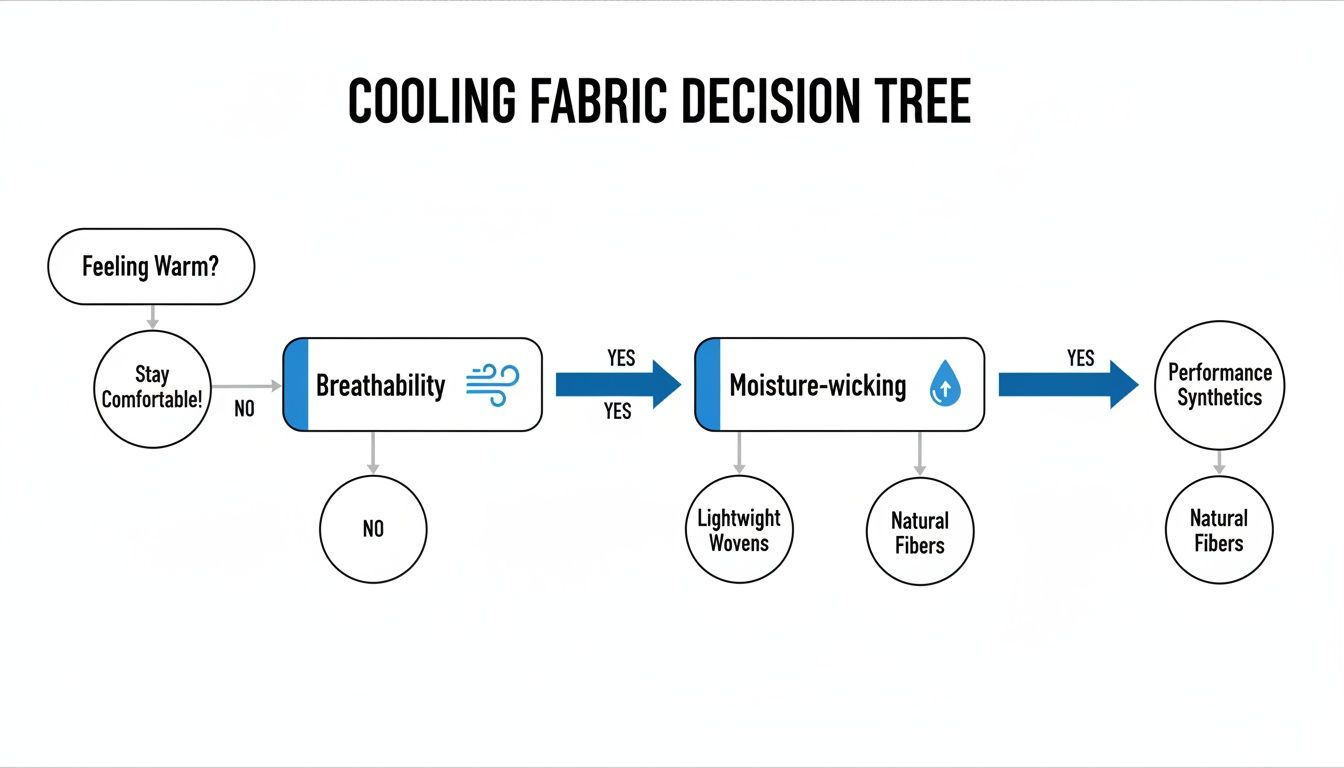
The flowchart makes it easy to see which path to take. If your biggest issue is feeling stuffy, you will head towards one material. If it is night sweats, another path will be better for you.
To make things even simpler, here's a quick guide to help you choose the best cooling fabric based on feel, breathability, and care needs.
Comparing Cooling Duvet Cover Fabrics
| Fabric Type | Best For | Feel | Care Level |
|---|---|---|---|
| Bamboo | Softness & Moisture,Wicking | Silky, smooth, and gentle | Moderate (gentle wash, low heat) |
| Linen | Maximum Airflow & Durability | Crisp, airy, and textured | Easy (softens with each wash) |
| Tencel™ (Lyocell) | Silky Feel & Eco,Consciousness | Exceptionally smooth and drapey | Moderate (gentle cycle recommended) |
Ultimately, the best material for you will tick the right boxes for how you sleep and what you want from your bedding.
Connecting Fabric To Your Needs
So, how do you make that final decision? Think about what disrupts your sleep the most.
If you often wake up feeling damp and clammy, a powerhouse moisture,wicker like Tencel™ or bamboo is your best bet. But if you just feel stuffy and trapped by heat, the unmatched airflow of linen could be the game,changer you need. Understanding the best fabric for a duvet cover really comes down to matching its natural properties to your personal sleep challenges.
The goal is to find a fabric that works with your body, not against it. Whether you need silky softness or crisp airiness, there is a cooling duvet cover that will feel just right for you.
And remember, your duvet cover is part of a team. Pairing it with other supportive bedding, like Starsleep Orin Bed Sheets and Protectors, can make a huge difference in creating a cool and comfortable sleep environment from top to bottom.
More Than Just the Material: What Else to Look For
So, you have settled on a cooling fabric that sounds like a dream. But before you click "buy," a few other details can make or break how well your new duvet cover actually works. Getting to grips with these specs is like learning the secret language of bedding, it helps you cut through the marketing fluff and see exactly what you are getting for your money.
It is easy to get swayed by fancy descriptions, but the real heroes of a cool night's sleep are often found in the technical details, like the weave and the weight of the fabric. Let’s break down what really matters.
The Truth About Thread Count
For years, the bedding industry has told us that a higher thread count equals higher quality. And while that can be true for a soft, silky feel, it is often the enemy of a cool sleep.
Think of it like this: thread count is just the number of threads packed into one square inch of fabric. When you see a super high number, say 600 or more, it means those threads are woven incredibly tightly together. That dense structure does not leave much space for air to move, effectively trapping your body heat right next to you.
For the best cooling effect, a lower to moderate thread count is usually the way to go. A count somewhere between 200 and 400 typically hits the sweet spot, offering a lovely soft feel without sacrificing the airflow you need to stay comfortable all night.
So, next time you see a duvet cover boasting an ultra,high thread count, remember that when it comes to staying cool, less is very often more.
Weaving the Perfect Sleep Environment
Just as important as the thread count is the fabric’s weave, the specific pattern used to interlace the threads. This pattern has a massive impact on how breathable, light, and cool the finished fabric feels against your skin.
It is a bit like comparing two different fishing nets. A net with a simple, open grid lets water rush through easily, while one with a tighter, more complex pattern will hold it back. The same principle applies to fabric weaves and air.
- Percale Weave: This is your classic, straightforward one,thread,over, one,thread,under pattern. It creates that crisp, light, matte,finish feel you get from a freshly made hotel bed. It is exceptionally breathable and a fantastic choice for promoting airflow.
- Sateen Weave: Sateen uses a different structure, often one thread under and three or four over. The result is a much silkier, smoother fabric with a subtle sheen. The trade,off is that this denser weave is less breathable than percale, which means it can feel a bit warmer.
Getting a Feel for Fabric Weight (GSM)
Finally, you might spot the term GSM in a product description. This stands for grams per square metre, and it is simply a measure of how dense or heavy the fabric is. A lower GSM means a lighter, more delicate fabric, while a higher GSM points to something thicker and heavier.
For a cooling duvet cover, you will want to hunt for a lower GSM. Lighter fabrics are far less insulating, allowing your body heat to escape instead of getting trapped. It is one more piece of the puzzle that adds up to a much cooler, more refreshing night’s sleep.
How to Care for Your Cooling Bedding
You have invested in a fantastic cooling duvet cover, so let's make sure it lasts. Proper care is the secret to keeping the fabric soft, fresh, and working its magic night after night. Do not worry, looking after these specialised materials is surprisingly straightforward once you know the ropes.
Most cooling fabrics, think bamboo, Tencel, and linen, really do best with a gentle touch. The aim is to clean them thoroughly without harming the very fibres that deliver those unique temperature,regulating benefits.
Simple Washing and Drying Tips
Washing your cooling duvet cover the right way will keep it in top shape for years. It is all about protecting the delicate structure of the fibres, which is what maintains that all,important breathability and soft feel.
A few simple tweaks to your laundry routine can make all the difference.
- Wash in cool water: Stick to a gentle, cold wash, around 30°C. Hot water can cause natural fibres to shrink and can weaken their moisture,wicking properties over time.
- Use a mild detergent: There is no need for harsh chemicals. A gentle, eco,friendly detergent will get your bedding perfectly clean without leaving behind any residue that might clog the fabric’s pores.
- Avoid fabric softener: This one is crucial. Fabric softeners coat fibres in a waxy film, which can completely block their ability to breathe and pull moisture away from your skin.
- Tumble dry on low or line dry: Honestly, the best method is to hang your duvet cover out to air dry. If you are short on time and need to use a tumble dryer, always stick to the lowest heat setting to prevent any damage.
Think of your cooling bedding like high,performance sportswear. You would not wash your favourite running top with harsh chemicals on a hot cycle, and the same logic applies here to protect its technical features.
These simple habits will ensure your bedding continues to provide that crisp, cool feeling you fell in love with. For more in,depth advice, you can learn more about how to wash bed sheets to keep them in perfect condition.
Your Cooling Duvet Cover Questions, Answered
Choosing new bedding can stir up a few questions. To help you feel confident in your choice, we have put together answers to some of the most common queries we hear about cooling duvet covers.
Will a Cooling Duvet Cover Actually Feel Cold to the Touch?
Not necessarily, and that is a common misconception. While some high,tech fabrics might give you an initial cool,to,the,touch sensation, the real magic is in how they prevent heat from building up throughout the night.
Their main job is to be incredibly breathable and to wick moisture away from your skin. So, instead of feeling actively cold, you just feel less hot and clammy. The goal is a stable, comfortable temperature that lets you sleep deeply without interruption.
Can I Still Use One in the Winter?
Absolutely. A good cooling duvet cover is really a temperature,regulating cover, which makes it fantastic for year,round use. During the colder months, it works in harmony with your cosy winter duvet to stop you from overheating.
Its breathability allows excess warmth to escape, keeping you dry and comfortable rather than sweaty under heavier layers. It is all about creating the perfect balance, no matter the season.
Think of it as creating a microclimate in your bed. A cooling duvet cover helps maintain the ideal temperature and humidity, so you are never too hot or too cold, just right.
Is a Higher Thread Count Better for Keeping Cool?
This is a persistent myth that is worth busting. When staying cool is the goal, a super,high thread count can actually be your enemy. It often means the fabric is woven so densely that it traps air and heat, which is the last thing you want.
A moderate thread count, typically between 200 and 400, is often far better for promoting airflow, especially in a breathable weave like percale. For a deeper dive into bedding basics, you can find out more in our guide that answers the question, what is a duvet cover?. Always remember, the type of fabric and its weave matter far more for cooling than thread count alone.
Ready to transform your sleep? Explore the beautiful and practical bedding collections at Morgan and Reid and find the perfect pieces to create your dream sanctuary. Visit us at https://www.morganandreid.com to get started.
Share:
The Ultimate Guide to King Size Bedding in CM
Sleep Soundly with an Anti Allergy Duvet: A UK Guide