

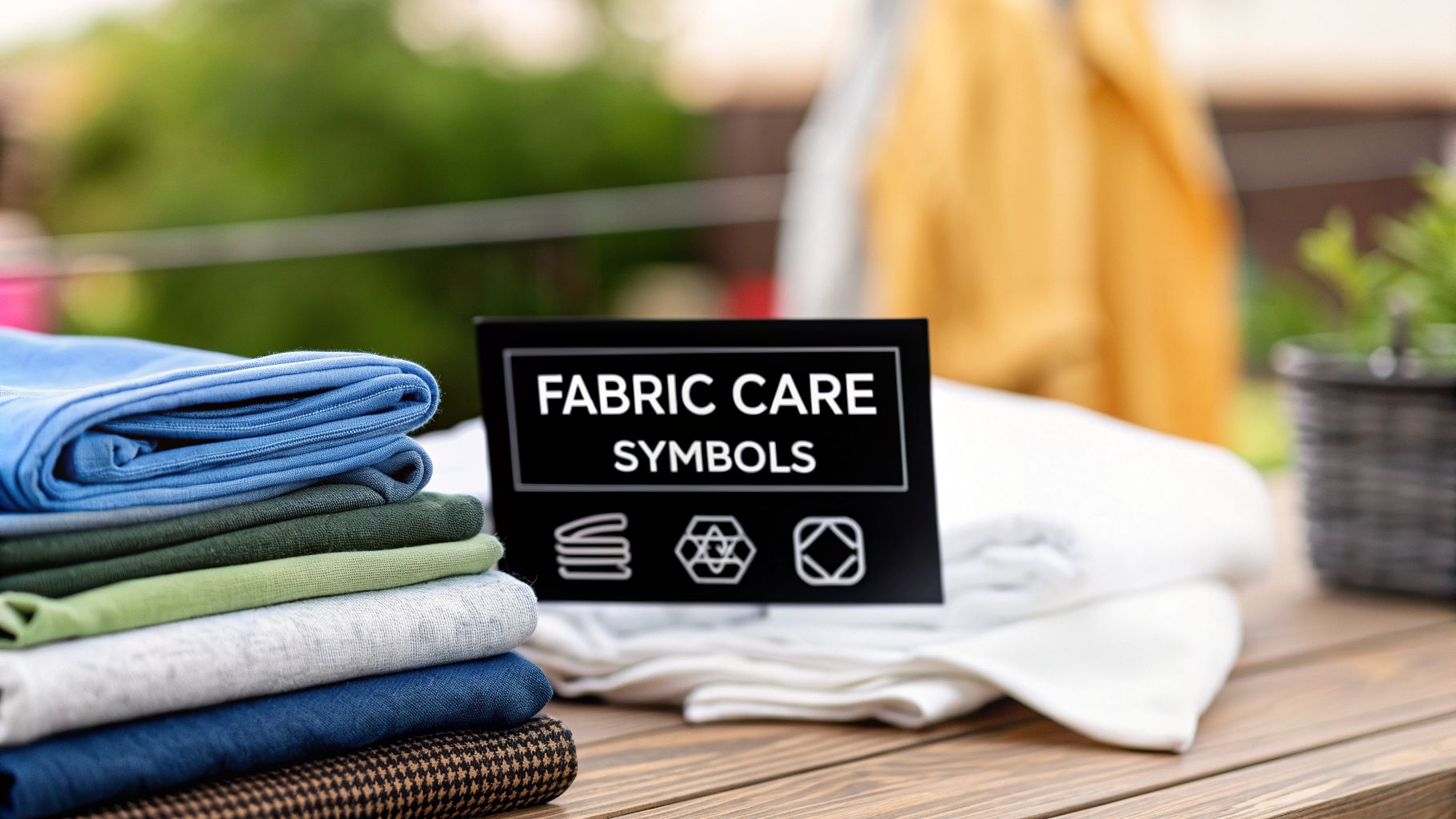
Have you ever paused before putting a new jumper or your favourite duvet in the wash, feeling a little unsure? You're not alone. Those small icons on the label, known as care symbols for fabrics, are a universal language designed to help you. They're there to protect your clothes and bedding from damage, keeping them looking and feeling wonderful for as long as possible.
Why Understanding Fabric Care Symbols Matters
Think of these symbols as a simple instruction manual from the people who made your item. Following their guidance is the secret to keeping your favourite things soft, their colours bright, and their fit just right, wash after wash. When we ignore these little pictures, we risk faded colours, shrunken knitwear, or even ruining delicate materials like fleece or silk.
For busy households, getting this right saves both time and money. Proper care means fewer trips to replace ruined items and, in the long run, less textile waste. It is how you make sure your cosy Snuggle Comforters stay wonderfully soft and your bed sheets feel fresh and inviting every time you climb into bed.
The Real Benefits of Following the Label
Getting to grips with care symbols brings practical advantages that go far beyond just having clean laundry. It is the key to maintaining the quality and feel of your textiles.
- Helps Your Favourites Last Longer: Correct washing and drying prevent fibres from breaking down too soon, which means your clothes and bedding last much longer.
- Keeps Colours Bright: Using the right temperature and cycle stops bold colours from fading and helps keep your whites from turning a dull grey.
- Maintains Softness and Shape: Gentle cycles and the right heat settings protect the texture of fabrics, preventing that stiff, stretched out feeling nobody likes.
To truly appreciate care symbols, it helps to understand what clothes are made of and how different fibres react to heat and water. Natural materials like cotton and linen have very different needs from synthetic ones like polyester.
Ultimately, taking a moment to check the label is a small step that makes a big difference to your comfort and your wardrobe. It is a simple habit that helps ensure your home feels welcoming and your favourite textiles continue to bring you joy. For more tips on keeping your bedding in top condition, you can learn how to wash bed sheets correctly in our detailed guide: https://morganandreid.com/blogs/journal/how-to-wash-bed-sheets.
The Five Main Categories of Fabric Care Symbols
At first glance, a care label can look like a baffling set of hieroglyphics. But once you realise all the symbols fall into just five main categories, decoding them becomes much simpler. Think of it as a universal language for laundry, where the shape of each symbol tells you which part of the care process it refers to.
Whether you are washing a delicate silk blouse or a sturdy comforter, every instruction fits into one of these groups: washing, bleaching, drying, ironing, or professional cleaning. Learning to recognise these core shapes is the key to quickly understanding what your fabrics need to stay in perfect condition.
The Five Core Fabric Care Symbols at a Glance
To get started, let's break down the five fundamental shapes. This quick reference table shows you what each symbol represents, giving you a clear starting point for any care label.
| Symbol Shape | Category Name | What It Means |
|---|---|---|
| A washtub | Washing | All instructions for washing, including machine cycles, temperature, and hand washing. |
| A triangle | Bleaching | Tells you if you can use bleach on the item and, if so, what kind. |
| A square | Drying | Covers everything from tumble drying settings to air drying methods like line or flat drying. |
| An iron | Ironing | Shows the right temperature setting for ironing, from cool to hot. |
| A circle | Professional Cleaning | A note for the experts, signalling that the item requires dry cleaning. |
Once you have these shapes memorised, you are well on your way to mastering laundry care. The finer details, like the dots for temperature or the lines for the cycle type, simply add more information to these core symbols.
These symbols are not just suggestions. They are the manufacturer's blueprint for keeping your textiles looking and feeling their best. Following them is the secret to preserving the softness, colour, and fit of your favourite pieces for years.

Ultimately, proper care is about protecting your investment. For items like bed linens, where the feel of the fabric is everything, understanding these symbols makes a real difference to your comfort. Choosing the right material is just the beginning, how you care for it is what truly matters, a topic we explore further in our guide to the best fabric for sheets.
A Detailed Guide to Washing Symbols
The washtub symbol is the first thing you should look for on any care label. It is the cornerstone of laundry care, and understanding its different forms is your best defence against shrinking a favourite jumper or fading a new pair of jeans. Getting this right is the secret to keeping your clothes and comforters looking and feeling fresh for years.

From the ideal temperature to the right cycle, this one little symbol gives you all the crucial information. Honestly, ignoring it is probably the fastest way to ruin a garment, so taking a moment to check it is always worth the effort.
Temperature: The Numbers Inside the Tub
The number you see inside the washtub symbol is the maximum temperature (in Celsius) your garment can safely handle. If you go any hotter, you risk irreversible shrinkage or watching the colours run.
- 30°C: This is a cool wash. It is gentle on delicates like silk and lace, and it is brilliant for dark colours that are prone to fading. It is also a much more energy efficient choice for anything that is only lightly soiled.
- 40°C: A warm wash, and probably the most common setting you will use. It is the go to for everyday items like cotton shirts, synthetics, and most mixed fibre clothing. This temperature cleans effectively without being overly aggressive.
- 60°C: This is a hot wash, reserved for items that need a really thorough clean. Think bed linens, towels, and sturdy white cottons. The higher heat is fantastic for killing bacteria and shifting stubborn grime.
When it comes to something like our cosy fleece Snuggle Comforters, sticking to a 30°C or 40°C wash is the best way to keep the fleece soft and the filling fluffy. For a bit more guidance, have a look at our tips on how to wash fleece blankets: https://morganandreid.com/blogs/journal/how-to-wash-fleece-blankets.
Cycle Type: The Lines Underneath the Tub
Do not overlook the lines underneath the washtub symbol, they are just as vital as the temperature. These lines tell you which machine cycle to select, helping you protect fabrics from being pulled, stretched, or stressed.
- No Line: This means a normal wash cycle is perfectly fine. It means the fabric is robust enough to withstand a standard spin. You will see this on durable items like cotton sheets and towels.
- One Line: A single line means you should choose a gentle or synthetic cycle. The machine will use a slower spin and less vigorous agitation, which is ideal for materials like polyester or viscose that tend to crease easily.
- Two Lines: Two lines call for the most delicate setting your machine offers, like a wool or hand wash cycle. This uses very low agitation and a slow spin to prevent damage to highly sensitive items like woollens or silk blouses.
Essential 'No-Go' Symbols
Finally, there are a couple of symbols that are less of a suggestion and more of a strict rule. Ignoring these is a recipe for a laundry disaster.
- Hand in a Tub: This symbol means hand wash only. The item is far too delicate to go into a machine, no matter how gentle the cycle. Just use lukewarm water and a mild detergent.
- Cross Through the Tub: This one is the most straightforward of all: do not wash. The item cannot be cleaned with water and will almost certainly need to be taken to a professional for dry cleaning.
It is easy to assume everyone knows these basics, but that is not always the case. A study by AEG revealed that while half of Brits check the label, only a surprising 41% can actually identify the washing symbols correctly. That knowledge gap leads to a lot of accidentally ruined clothes. Taking just a few seconds to understand the label is the simplest thing you can do to make your clothes last. Of course, beyond the symbols themselves, practical things like durable machine washable labels are essential for ensuring care instructions do not fade away after a few cycles.
Decoding Bleaching, Drying, and Ironing Symbols
Once your clothes or comforter are clean, what you do next is just as important for keeping them in pristine condition. Bleaching, drying, and ironing symbols are there to guide you through this final stage, ensuring your fabrics stay soft, vibrant, and true to size. Getting this right is the difference between a cosy, fresh smelling fleece and one that feels stiff and has lost its comforting touch.
Think of these after wash care symbols as your roadmap to long lasting textiles. Paying close attention to the triangles, squares, and irons on the label will help you avoid common laundry mishaps, like shrinking your favourite jumper or scorching a delicate blouse.
Keeping Whites Bright with Bleaching Symbols
The triangle symbol is all about bleaching. It is a simple one, but getting it wrong can be disastrous. Using the wrong type of bleach, or using it on a fabric that cannot handle it, can cause permanent yellowing or even weaken the fibres until they tear.
- An empty triangle: This gives you the green light to use any kind of bleach, including a standard chlorine based one. You will typically find this on sturdy white cottons, like hotel style bed sheets.
- A triangle with two diagonal lines inside: This symbol indicates that only oxygen based or non chlorine bleach is safe to use. These are far gentler alternatives, making them suitable for colours and more delicate fabrics.
- A solid black triangle with a cross through it: This is a clear warning: do not bleach the item at all. Any type of bleach will likely ruin its colour and texture for good.
Mastering Drying Symbols for Perfect Results
The square symbol is your guide to all things drying, from the tumble dryer to the washing line. This is where so many laundry mistakes happen, as too much heat can cause significant shrinkage, a lesson many of us have unfortunately learned the hard way.
If you are ever worried about shrinkage, especially with natural fibres like linen or cotton, it is worth understanding how different materials react to heat. For instance, you can find out more about whether linen shrinks in the wash in our detailed guide.
The most common drying symbol is the square with a circle inside, which refers to tumble drying. The dots inside that circle are the key to everything.
- One dot inside the circle: Tumble dry on a low heat setting. This is absolutely essential for delicates, synthetics, and anything you are afraid might shrink.
- Two dots inside the circle: Tumble dry on a medium heat setting. This is a safe bet for most everyday fabrics like cotton blends.
- Three dots inside the circle: You can use a high heat setting here. This is best reserved for durable items that can take the heat, like cotton towels or heavy duty bedding.
- A filled in black circle: This means you can tumble dry, but with no heat at all. Think of it as an air only cycle.
Natural Drying Methods
Sometimes, your machine is not the best option. The square symbol also covers natural, air drying methods, which are always the gentlest choice for your fabrics and the planet.
- A square with a curved line at the top: This means line dry. Simply hang the item on a washing line or clothes horse to dry naturally.
- A square with a single horizontal line in the middle: This tells you to dry the item flat. This is vital for heavy knitwear, like wool jumpers, as hanging them can cause them to stretch out of shape under their own weight.
- A square with two diagonal lines in the top left corner: This means dry in the shade. Direct sunlight can be harsh, causing vibrant colours to fade over time. This symbol helps protect your favourite pieces.
Here is a quick table to help you remember the most common drying symbols at a glance.
Quick Reference for Common Drying Symbols
| Symbol | Meaning | Best Used For |
|---|---|---|
| Tumble Dry, Low Heat | Delicate items, synthetics, knits | |
| Tumble Dry, Medium Heat | Most cottons and everyday fabrics | |
| Tumble Dry, High Heat | Heavy duty items like towels and denim | |
| Line Dry | Most clothing to save energy and prevent shrinkage | |
| Dry Flat | Heavy jumpers, woollens, and delicate knitwear | |
| Dry in the Shade | Brightly coloured and dark garments |
Bookmark this page or save the image so you always have a handy reference when you are doing the laundry.
Ironing Symbols for a Flawless Finish
Finally, the iron symbol tells you exactly how much heat a fabric can take. Just like with tumble drying, the dots inside the iron are your temperature guide.
- One dot: Use a cool iron (around 110°C). This is for delicate synthetics like nylon or acrylic that can easily melt.
- Two dots: Use a warm iron (around 150°C). This setting is perfect for wool, polyester, and silk.
- Three dots: Use a hot iron (around 200°C). This is for robust fabrics that can handle high heat, like linen and cotton.
- An iron with a cross through it: Simply put, do not iron this item. The heat will melt, scorch, or otherwise damage the fabric permanently.
Understanding Professional Dry Cleaning Symbols
Some of your most treasured items, like a tailored wool coat or a delicate silk dress, simply need a professional’s touch. This is where the circle symbol comes in, serving as a direct instruction to your dry cleaner. Understanding these specific care symbols for fabrics ensures you never accidentally ruin a special garment by trying to launder it at home.

Think of these symbols as a technical note from the manufacturer to the cleaning expert. They explain precisely which chemical solvents are safe to use, preventing disasters like discolouration, shrinkage, or even melting synthetic fibres. Getting to know them helps you understand why some items are strictly 'dry clean only' and empowers you to have a more informed chat with your local cleaner.
Decoding the Letters Inside the Circle
The letters inside the circle specify the type of solvent the dry cleaner should use. While this is highly technical, a basic grasp of what they mean is always useful.
-
A circle with a P: This is one of the most common symbols you will see. It means the item can be professionally cleaned using Perchloroethylene, a standard and highly effective solvent.
-
A circle with an F: The 'F' stands for flammable solvent. This indicates that a gentler, hydrocarbon based solvent is required, which is often the case for more delicate or sensitive fabrics.
-
A circle with a W: This symbol signifies professional wet cleaning. This is an expert, water based cleaning process that is more environmentally friendly and ideal for certain items that cannot handle traditional dry cleaning solvents.
These letters ensure your clothes get the exact treatment needed to preserve their texture, colour, and shape, keeping them looking their best for years to come.
Special Instructions for Dry Cleaners
Much like the washing symbols, lines underneath the circle provide extra guidance on the cleaning process. They communicate the need for a more delicate approach to protect the garment's integrity.
-
One line underneath the circle: This tells the cleaner to use a gentle or short cycle. This reduces the mechanical action during cleaning, which is perfect for items with delicate embellishments or fine weaves.
-
Two lines underneath the circle: This calls for a very gentle cycle. It is reserved for the most fragile garments that need the utmost care to prevent any damage whatsoever.
Knowing these details helps you appreciate the care that goes into preserving your most valuable garments. It is a quiet conversation between the manufacturer and the cleaner, all aimed at protecting the quality of your favourite pieces.
Finally, we have the one symbol in this category you must always obey: a circle with a cross through it. This means do not dry clean. This is an absolute rule for fabrics with special coatings, certain prints, or materials that would be destroyed by cleaning solvents. For these items, following the label is the only way to avoid permanent, irreversible damage.
A Brief History of UK Care Labels
Have you ever glanced at those tiny symbols on your clothes and wondered where they came from? They have not been around forever. In fact, their story begins in the 1960s, a time when British homes were experiencing a laundry revolution with the arrival of automatic washing machines and a wave of new synthetic fabrics.
Before this, labels were mostly text based, which often left people guessing how to care for these unfamiliar materials. To put an end to the laundry mishaps, a much clearer system was needed. The UK’s Home Laundering Consultative Council stepped in, introducing the first standardised, symbol based care system in 1966, a truly pioneering move for fabric care that coincided perfectly with washing machines becoming a household staple.
The Evolution to Modern Labels
That initial system was just the start. The labels we see today are the result of decades of evolution, adapting to new technologies and changing lifestyles. By 1976, symbols for ironing, dry cleaning, and bleaching had been added, and specific washing temperatures like 40°C became standard.
The familiar dryer symbol finally tumbled onto the scene in 1980, with further updates in 1986 giving the symbols the modern, clean look we now recognise. If you are interested in vintage clothing, these changes can be a fascinating way to date items, a topic explored in more detail at The Collector's Companion.
These developments directly mirrored what was happening in UK homes. By the late 1970s, an impressive 70% of households owned an automatic washer, making clear, simple instructions more crucial than ever before.
Thinking about this history adds a bit of context to the label on your cosy Snuggle Comforter. It is part of a long tradition dedicated to helping you keep your textiles feeling soft and looking their best, wash after wash.
This journey, from simple text to a comprehensive set of globally understood icons, really underscores the UK's role in improving the way manufacturers communicate with us. They are a small but mighty legacy, ensuring that the things we buy for comfort and style are made to last.
Frequently Asked Questions About Fabric Care
Even with a comprehensive guide, it is natural to have a few lingering questions about fabric care symbols. We understand. To help clear things up, we have put together some of the most common queries we receive, offering straightforward answers to make laundry day less of a puzzle.
Can I Ignore the Label if I am in a Hurry?
It is tempting, isn't it? You might want to just throw everything in on a standard wash and hope for the best. But ignoring the care label is always a gamble. Those instructions are there for a good reason, which is to protect the fabric's fibres, colour, and shape.
One wrong wash can cause irreversible damage, like shrinking your favourite jumper or fading a vibrant duvet cover. Taking a moment to check the symbols is a small investment of your time that pays off by keeping your textiles looking and feeling their best for years to come.
What if a Label Has Conflicting Symbols?
This is a rare one, but it does happen. You might find a label with seemingly contradictory instructions, like a 'do not wash' symbol right next to a 'tumble dry' icon. This is almost always a manufacturing error.
When you are faced with this, the best approach is to be cautious. Always follow the most restrictive instruction. In this case, that means not washing it yourself. Your safest bet is to take it to a professional dry cleaner and ask for their expert opinion.
Do All Countries Use the Same Care Symbols?
The symbols we have covered are part of the GINETEX system, which is the standard across the UK and Europe. This keeps things consistent for most of the items you will buy here. However, other regions, notably the United States and Japan, have their own distinct sets of care symbols.
If you have bought clothing or bedding while travelling, you might come across unfamiliar icons. A quick search for a regional care symbol guide is always a smart move to prevent any laundry mishaps. We touch on this and many other topics in our general Frequently Asked Questions section.
Why Are Care Labels So Important to UK Shoppers?
It seems people in the UK really do pay attention to their care labels. A recent survey revealed that a massive 82% of UK consumers find care labels genuinely useful for looking after their belongings. That figure is on the rise, pointing to a growing desire to make our clothes and home textiles last longer, a perfect fit for a more sustainable lifestyle. You can read more about these consumer habits from the UKFT survey.
This trust in labels is particularly strong among women and those over 25, which includes many of the busy families and home lovers who buy our products. When you invest in quality comfort, you want to know how to protect it.
Understanding these symbols also adds real value when you are buying a gift. It ensures the present you give can be enjoyed for years, staying just as soft and cosy as the day it was unwrapped. In a country where laundry is a constant task, these little labels are the unsung heroes preventing countless items from being accidentally ruined. They are a simple but vital tool for preserving the quality you love.
At Morgan & Reid, we believe true comfort comes from quality you can trust and care you can understand. We design our products to bring warmth and style into your home, and we are committed to helping you keep them feeling irresistibly soft for years. Explore our full collection and find your perfect cosy companion at https://www.morganandreid.com.
Share:
A Guide on How to Wash Bed Sheets for Ultimate Freshness
The Best Wedding Gifts for Couples in 2026